Dresser Decorating Ideas for a Calm, Useful Bedroom
A dresser often becomes the bedroom’s landing spot for everything without a home: earrings, receipts, spare chargers, and yesterday’s accessories. Adding a vase to that collection rarely makes the surface feel finished. A better arrangement begins with what you need the dresser to do.
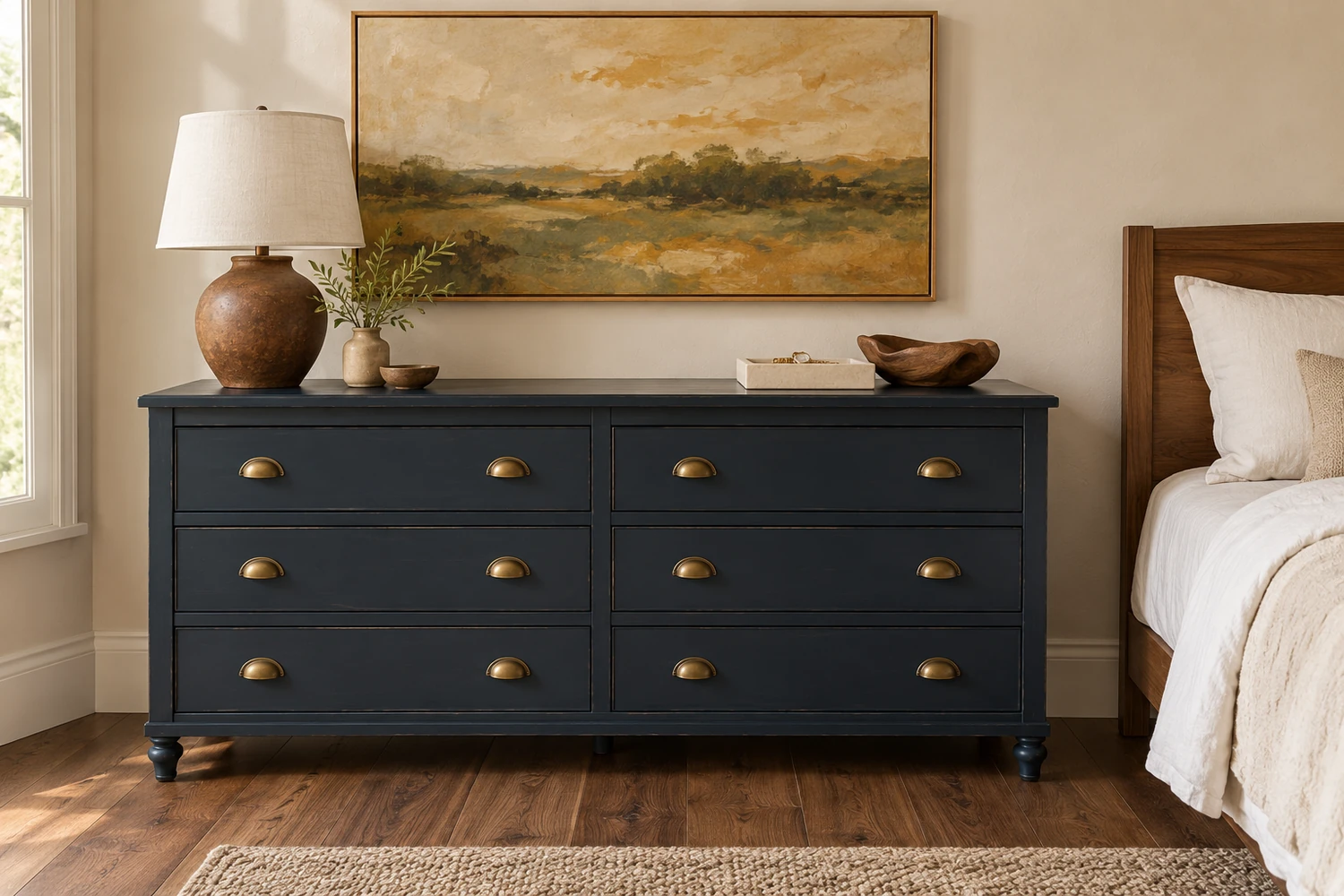
The most useful dresser decorating ideas combine one focal point, a small place for daily essentials, and enough open surface to get dressed comfortably. Art, a mirror, or a lamp can give the arrangement shape while the drawers remain the hardworking part of the furniture.
Start with the dresser you already own. Its width, finish, height, and position will help you choose the few details that belong on top.
Start With the Objects You Actually Use
Clear the top completely, then separate the things you find into daily essentials and items that belong elsewhere. A watch you put on every morning deserves an easy landing place. A stack of unopened mail probably needs a different home.
Wipe the surface according to its care instructions before returning anything. Then use the dresser for a normal morning or evening and notice where your hand naturally reaches.
Build around that movement. If you remove jewelry on the right, place the catchall there. If you fold clothes on the top, preserve an area large enough for that task rather than decorating every inch.
Choose a small tray that holds your usual pieces without encouraging a second collection. In the detail below, a shallow sage dish gives jewelry and a watch a defined home on the wood surface. The arrangement works because the surrounding space stays available.

Plan Three Simple Dresser-Top Zones
Think of the arrangement as a focal point, a useful landing spot, and open surface. These zones can overlap visually, but each has a clear job.
The focal point gives the eye somewhere to settle. It may be wall art or a mirror, with a lamp adding height at one side. The landing spot holds the small things you handle every day. The open area lets the dresser remain useful.
Before choosing accessories, test their footprints with pieces of paper. Include the lamp base, shade overhang, tray, and any freestanding frame. Open the drawers and stand where you normally get dressed.
The layout below is a planning example, not a fixed formula. Adjust the positions to your dresser and the way you use it.

Avoid treating the layout as three equal sections. A broad dresser might need a compact group at each end, while a narrow one may work with just a wall picture and a dish.
Use Artwork to Give the Dresser a Focal Point
When planning above dresser decor, look at the artwork and furniture together. A picture that feels generous over a narrow chest can look isolated over a wide six-drawer dresser.
Cut a paper template to the frame’s outside dimensions and hold it against the wall. View it from the bedroom doorway and from beside the bed. You want the picture to connect visually to the dresser without making the whole arrangement feel crowded.
In this light-wood example, a horizontal landscape echoes the width of the furniture. A low lamp and bowl support it without competing for attention.
Leave enough visual breathing room between the frame and the objects below. There is no single hanging gap that suits every dresser: frame size, furniture height, and lamp shape all affect the result.
Keep this wall connected to the dresser itself. If you are arranging the separate wall behind the bed, our above-bed decor ideas focus on that different placement.

Choose a Mirror When You Will Use the Reflection
A mirror earns its space when the dresser is part of your dressing routine. Before hanging it, stand where you would check your appearance and test whether the proposed height works.
Also notice what the mirror reflects. A doorway, window, or uncluttered stretch of room can become part of the composition. A reflection of crowded shelves may make the area feel busier.
The round mirror here softens the horizontal lines of the walnut dresser. The lamp sits to one side, while lower accessories leave the reflection visible.
Mount the mirror with hardware appropriate to its weight and wall construction. Follow its installation instructions; a dresser top is not a substitute for secure support.
Choose the mirror or artwork first, then arrange the smaller pieces around it. Trying to fit both into a limited wall area can leave neither with enough room.

Balance One Lamp With Lower Accessories
A single table lamp can give dresser top decorating ideas a clear height arrangement. It introduces an upright shape without requiring another tall object at the opposite end.
Begin with the lamp near one side, positioned so its whole base sits securely on the dresser. Check the shade against the wall art and against your view from the bed. Route the cord toward an outlet without trapping it in a drawer or leaving it across a walking route.
On this deep-green dresser, the brass lamp provides height while the bowl and rounded vessel keep the other side lower.
Balance does not require identical objects. A broader bowl or a textured vessel can have enough visual presence to answer a lamp without matching its height.
Use the dresser lamp for the role its location supports. A nearby chair still needs lighting tested from the reading position; the dresser arrangement does not need to become a separate reading nook.

Keep Modern Dresser Decor Simple and Intentional
Modern dresser decor ideas work well when the furniture’s shape remains easy to see. Let the drawer fronts, wood grain, and proportions provide much of the interest.

The walnut example uses black-framed geometric art, a dark lamp, and a small ceramic catchall. The repeated dark details relate to one another while the warm wood remains the main material.
Try choosing one strong contrast instead of several unrelated accents. That might be black against walnut, cream against charcoal, or a blue bowl against pale oak.
A modern arrangement can still feel personal. Use artwork you enjoy and a dish you like handling. The goal is a small, coherent group rather than an anonymous display assembled only to match a style label.
Let a Painted Dresser Set the Color Direction
A painted dresser already adds a substantial area of color. Build the accessories around it before introducing another strong shade.

In this example, the dusty-rose finish sits against muted blue walls. Cream ceramics and an amber lamp give the arrangement warmth without asking every accessory to become another color statement.
Repeat one of those colors elsewhere in the bedroom through an existing cushion, print, or textile. You do not need to replace the bedding or repaint the room to make the dresser belong.
Check the arrangement in your actual light. A ceramic piece that looks subtle beside the window may appear much brighter under a warm lamp. Make the decision in the bedroom rather than judging the pieces separately.
Try an Off-Center Group With Room Beside It
If the top feels crowded despite having only a few objects, move the accessories closer together. A scattered row can occupy the full width without giving the eye a clear place to rest.
The cream dresser below gathers a book and cobalt bowl to one side. Much of the remaining top stays empty, making the group feel deliberate rather than unfinished.
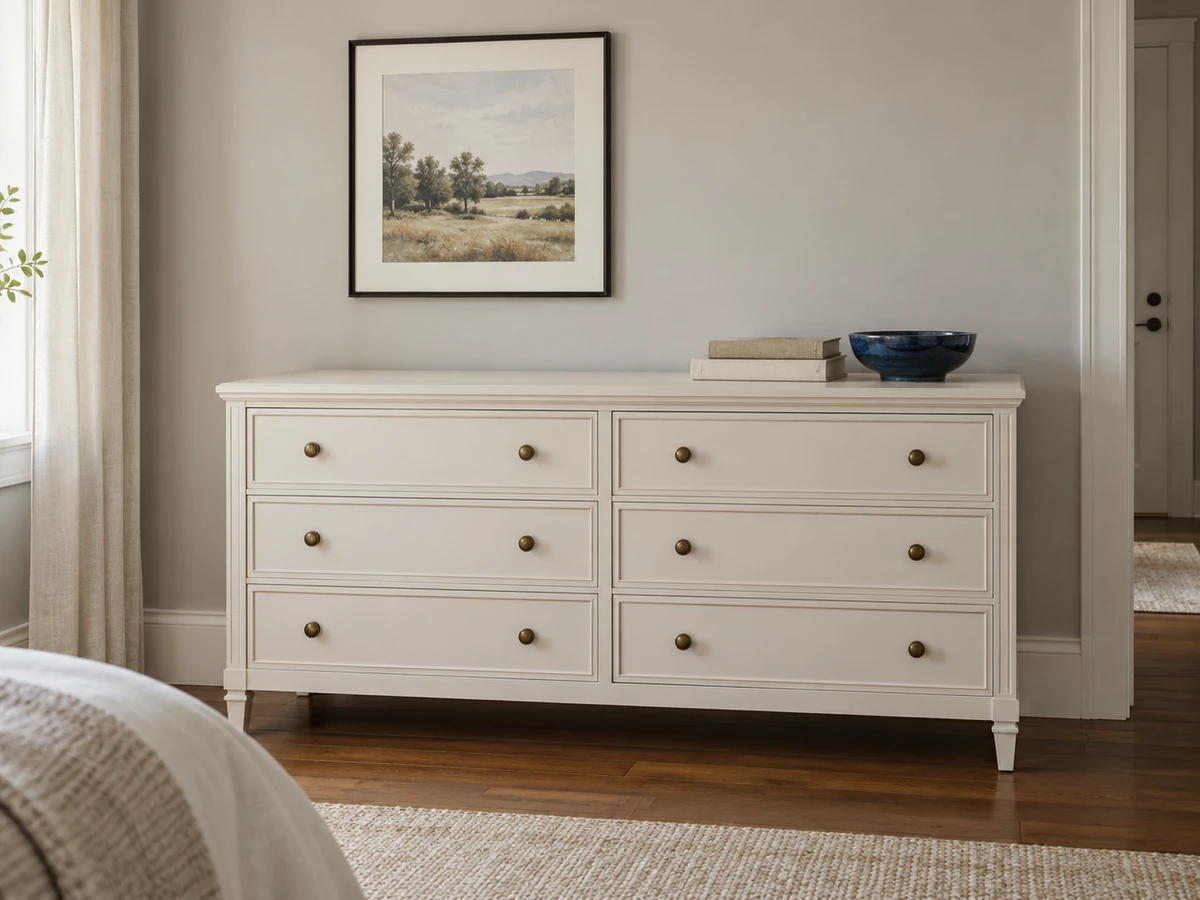
Start with a broad, low object and one supporting piece. Check the view from the doorway, then test the surface during your normal routine. If you keep shifting the display to fold clothing or open a nearby door, reduce its footprint.
A useful gap is part of the composition. It does not need a small object simply to fill it.
Add Texture Without Adding More Clutter
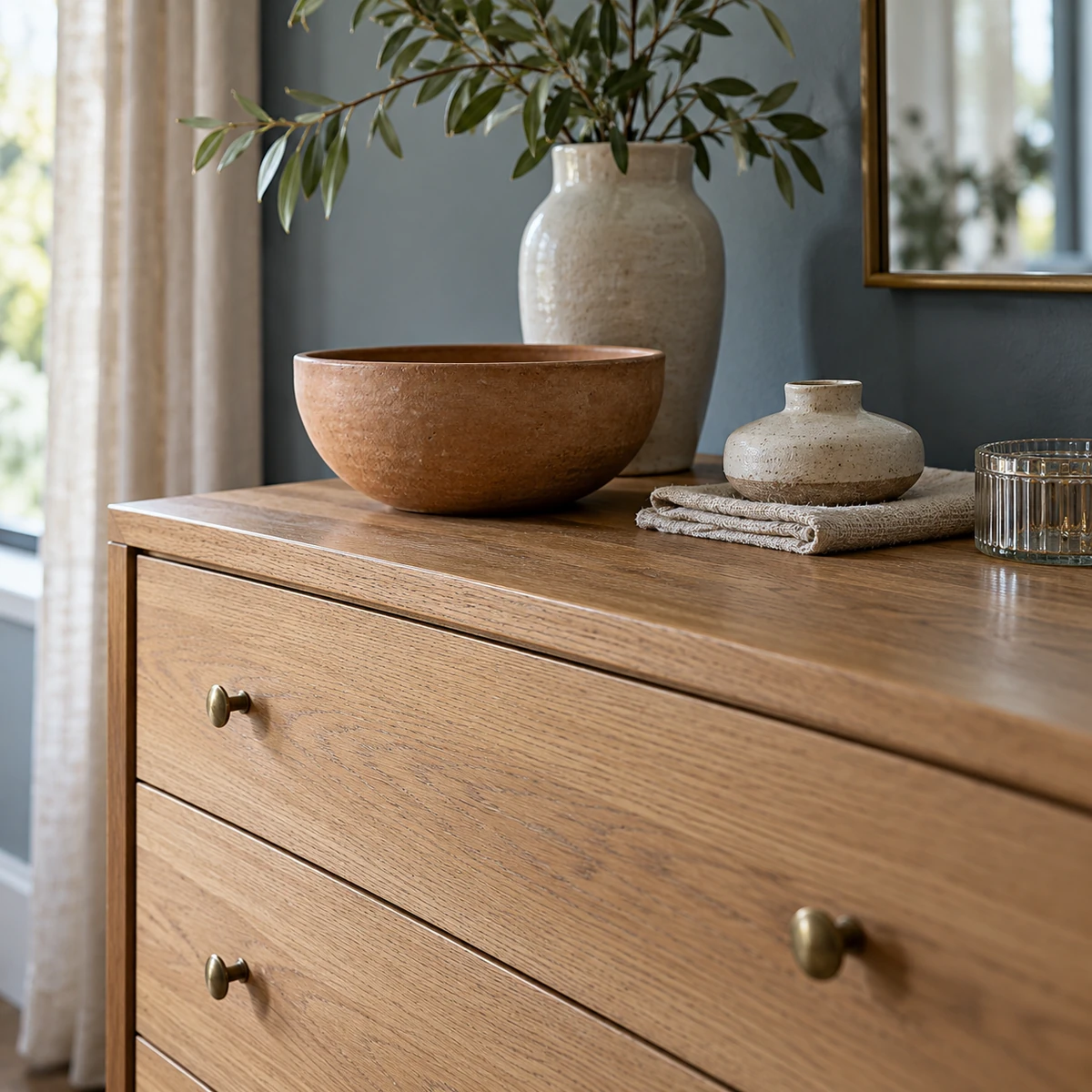
When the palette is quiet, materials can provide the variety. Matte ceramics, visible wood grain, folded linen, and ribbed glass catch light differently even when their colors are restrained.
Choose texture through pieces that already have a role: a wooden bowl for loose essentials, a small ceramic vessel, or a linen cloth used beneath a suitable accessory. Avoid adding layers that make everyday cleaning awkward.
Check the furniture’s care guidance before placing fabric, protective pads, or damp vessels on its finish. Keep water contained and inspect underneath occasionally. A pretty arrangement is easier to enjoy when caring for the dresser remains straightforward.
Use Fewer Pieces on a Small Dresser
A compact dresser benefits from a clear decision about its main job. If it stores clothing, leave room to sort a few items while keeping the drawers and nearby furniture accessible.

The yellow dresser shown here uses a low blue dish and wall-mounted artwork. The color of the furniture supplies much of the character, so the top needs very little.
Do not automatically add a lamp if its base would occupy the useful surface. Existing room lighting may suit this location better.
If the dresser is being squeezed into bedside duty, consider whether a separate compact surface would work better. Our small nightstand ideas address fitting that bedside footprint without turning the dresser top into an overloaded substitute.
Keep a Tall Dresser’s Top Especially Restrained
On a tall chest, an accessory should work from the angle at which you actually see it. Something attractive at eye level may disappear when placed above your normal reach.

One low bowl can be enough. Avoid using the top for items you need to retrieve frequently, and keep heavy or unstable decorations off an awkwardly high surface.
The CPSC’s Anchor It! guidance recommends anchoring furniture to help prevent tip-overs. Follow the dresser’s anchoring instructions regardless of how lightly you decorate it.
Use Supported Freestanding Art Where Appropriate
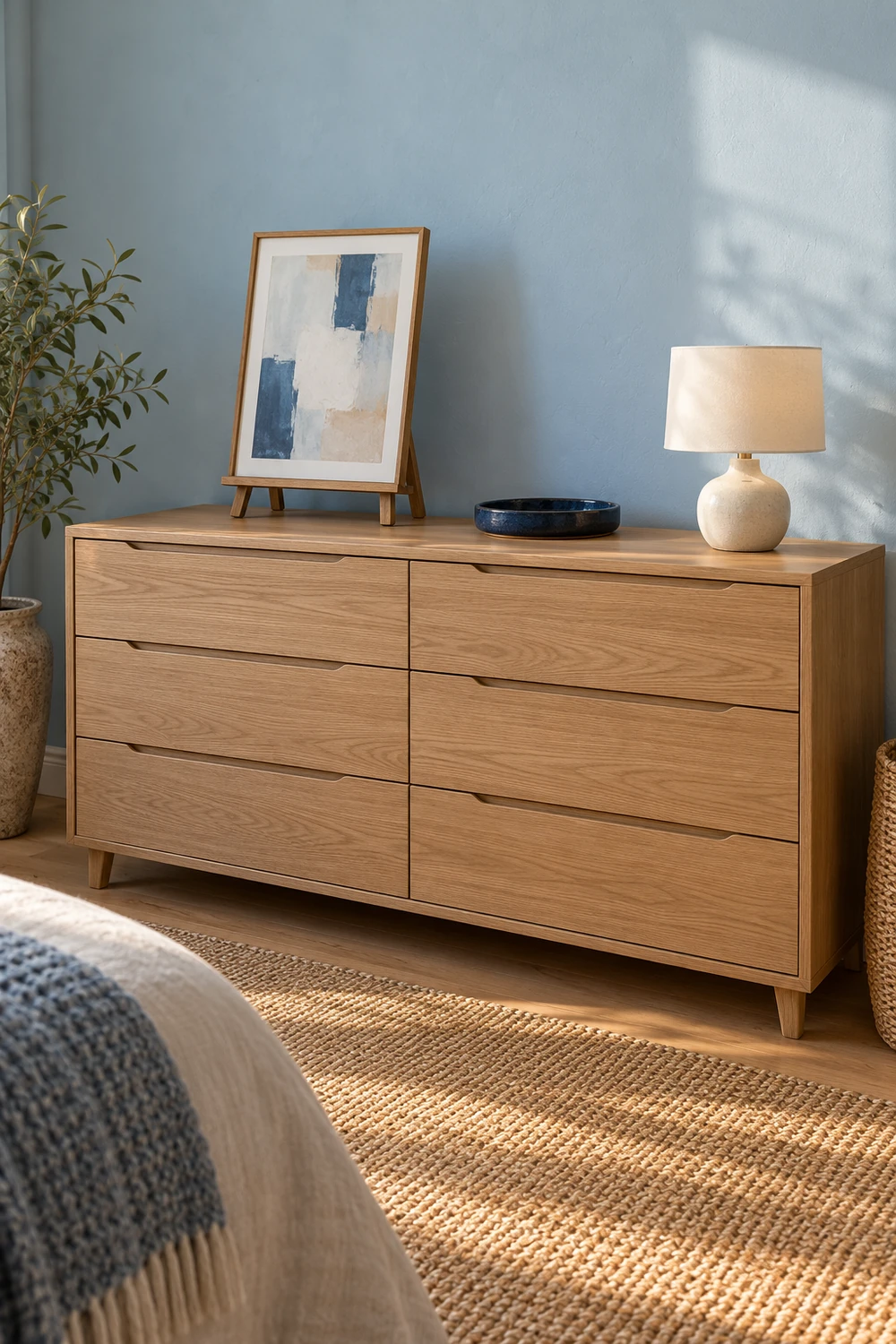
If hanging a picture is not suitable, a small frame on a stable tabletop easel can provide a focal point. The example below keeps the frame, lamp, and catchall within the ash dresser’s surface.
Check that the stand suits the frame and stays stable during normal drawer use. Keep it clear of moving curtains and places where it could be knocked. This display option does not remove the need to anchor the dresser itself.
Rental restrictions vary, so discuss appropriate anchoring with the property owner rather than assuming that every wall fixing is prohibited.
Check the Dresser After Sunset
Daylight reveals the finishes; evening light shows how the arrangement feels when you are winding down. Switch on the dresser lamp and check the room from the bed and doorway.
The aubergine dresser, glowing opal lamp, and small storage pieces create a distinct evening example of the same principles: one clear light source, useful accessories, and room between objects.
If light reflects sharply in the artwork or mirror, adjust the lamp’s position. Keep the switch reachable and make sure the surface remains useful when you put away jewelry or prepare for the next morning.

Frequently Asked Questions
How do you decorate a dresser without making it look cluttered?
Start with one focal point, one daily-storage piece, and open surface. Add a lamp only if there is room for its base and shade. Group smaller accessories instead of spreading them across the full width.
Should you put art or a mirror above a dresser?
Choose according to use and the view. A mirror helps when you get dressed there; artwork can establish the color direction. Test the scale and position with a paper template before hanging either.
What belongs on a dresser top every day?
Keep the objects you genuinely use there, such as a watch, a small jewelry tray, or a lamp. Move paperwork and overflow storage elsewhere so the dresser does not become a general drop zone.
Make the Arrangement Easy to Live With
When deciding how to decorate a dresser, let the daily routine make the final choice. Open the drawers, use the catchall, and clear a space for clothing. Keep the pieces that support those actions and the focal point you enjoy seeing. A dresser feels finished when the styling and everyday use work comfortably together.