Bedroom / Bedroom Decor
Bedroom Corner Ideas for Empty and Awkward Spaces
An empty bedroom corner can feel unfinished even when the rest of the room works well. Yet filling it with the first small piece of furniture you find can create a new problem: a chair nobody uses, curtains that cannot close, or a narrower route to the closet.
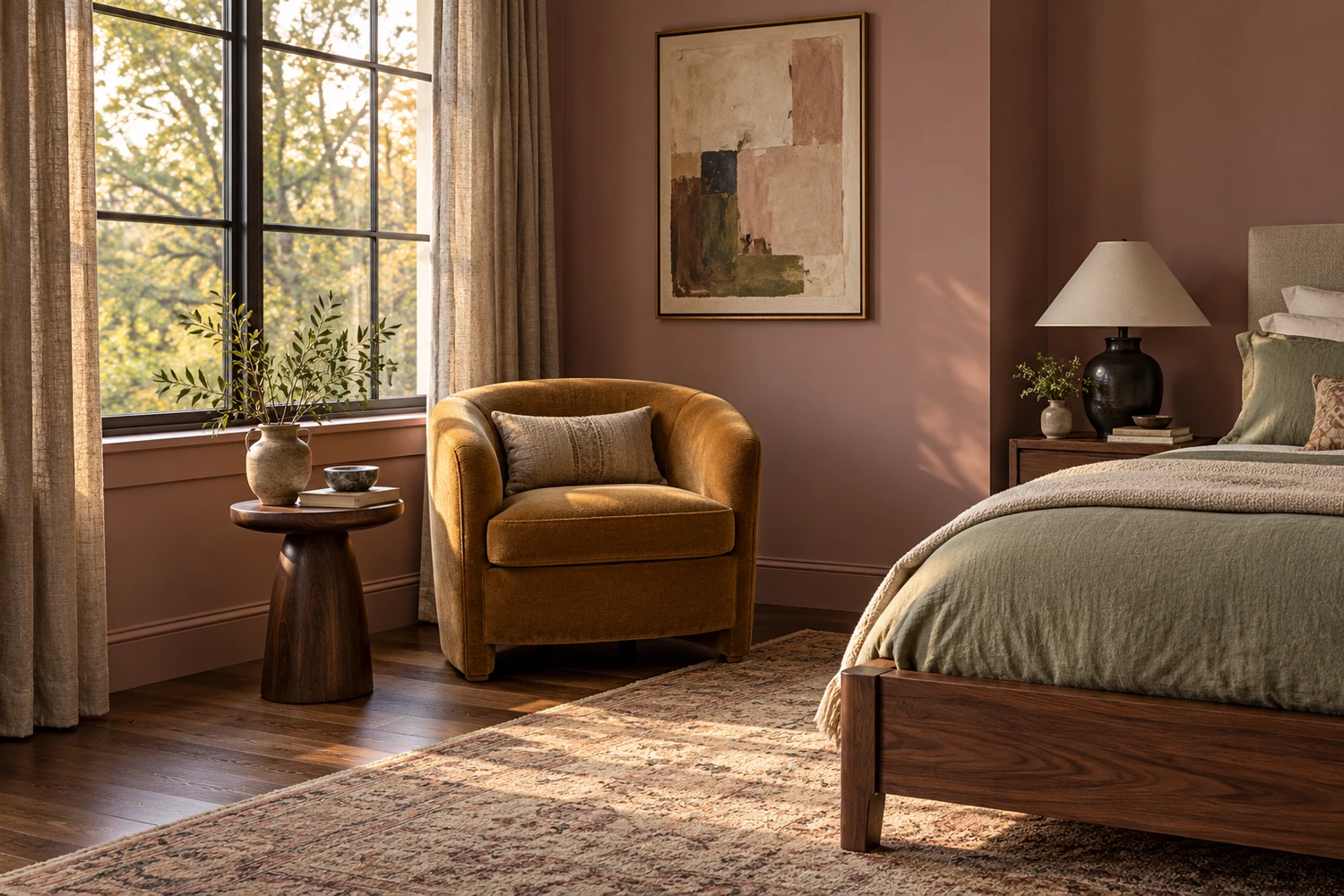
The most useful bedroom corner decorating ideas start with one purpose. Decide whether the corner should provide a seat, a place to get ready, light, greenery, or a small display. Then check that choice against the bed, doors, and everyday movement around the room.
One well-chosen element can be enough. The ochre chair in this opening example gives the corner an identifiable role without turning it into a second room.
Decide Whether the Corner Needs Anything
Look at the empty space before shopping. Notice whether it balances a larger piece opposite it or preserves the route between the bedroom door and wardrobe.
This unused terracotta corner is the starting point for a design concept revisited later in the guide. Its existing bed and window position define what can fit; the empty floor is not automatically available for any accessory.
Spend a normal morning in the room. If you already pass through the corner to open curtains or reach storage, that movement has priority. A floor lamp or a small plant may work where a chair would be intrusive. Sometimes keeping the corner clear is the more considered choice.

Measure the Whole Movement Area
Measure the usable wall lengths, the furniture footprint, and the space needed to use it. A vanity stool has to pull out; a chair needs room for someone to sit down and stand up.
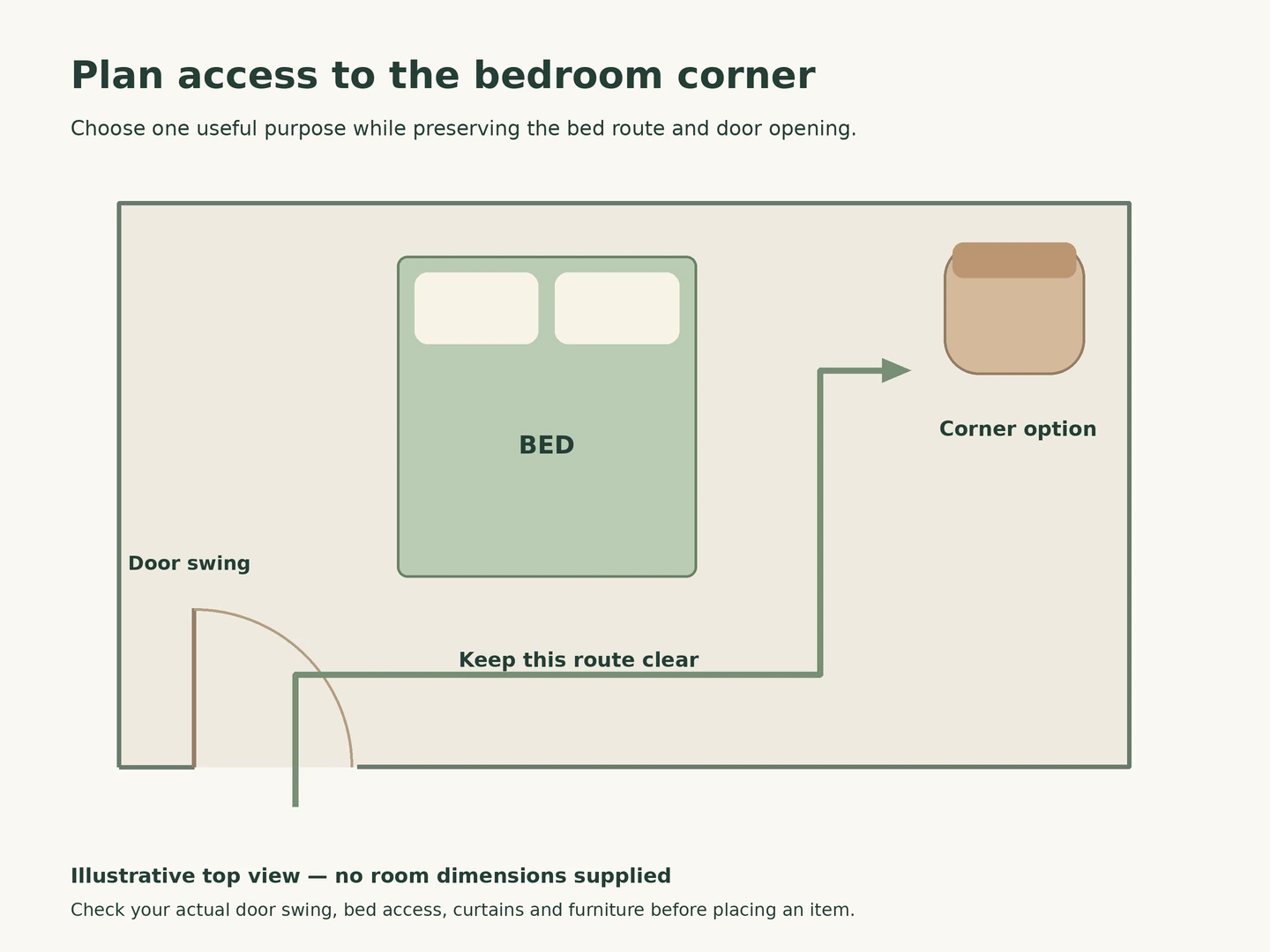
The diagram shows relationships between a bed, door, corner option, and clear route. It does not prescribe room dimensions or universal circulation measurements.
Mark a proposed footprint with painter’s tape. Include chair backs, projecting legs, and handles rather than measuring only a seat cushion or tabletop. Open nearby doors and drawers fully during the test.
Walk from the door to the bed, then to the wardrobe. If you turn sideways or repeatedly brush past the proposed furniture, choose a shallower option or leave the floor open.
Choose a Corner Purpose From Your Routine
| What the room needs | Corner option to test | Main fit question |
|---|---|---|
| A place to pause while dressing | Compact accent chair | Can you sit without blocking the route? |
| A getting-ready surface | Small vanity with tucked seat | Is there room to pull out the stool? |
| More evening light | Floor lamp | Can the base and cord stay clear? |
| A living decorative detail | One suitable plant | Does the actual light suit it? |
| A small visual accent | Pedestal or compact shelf | Does it improve the room without occupying needed space? |
Choose the role first, then the furniture. Combining a vanity, plant, lamp, and chair in a small corner usually makes each function harder to use.
Add a Reading Seat as One Possible Use
A compact chair and focused lamp can make sense when you already enjoy spending quiet time in the bedroom. The cream chair and black lamp here give the blue corner a simple reading purpose.

Keep this option proportionate to the room. A large footstool or extra bookcase may be unnecessary if the chair is used only occasionally.
If reading is the main goal, our full guide to creating a cozy reading nook covers seat comfort, task lighting, reachable surfaces, and current-book storage. Here, the decision is whether that use belongs in this particular bedroom corner.
Fit a Compact Vanity With a Seat That Tucks Away
A small vanity can give an otherwise awkward corner a useful daily role. Check the surface, mirror position, and seat together before deciding it fits.
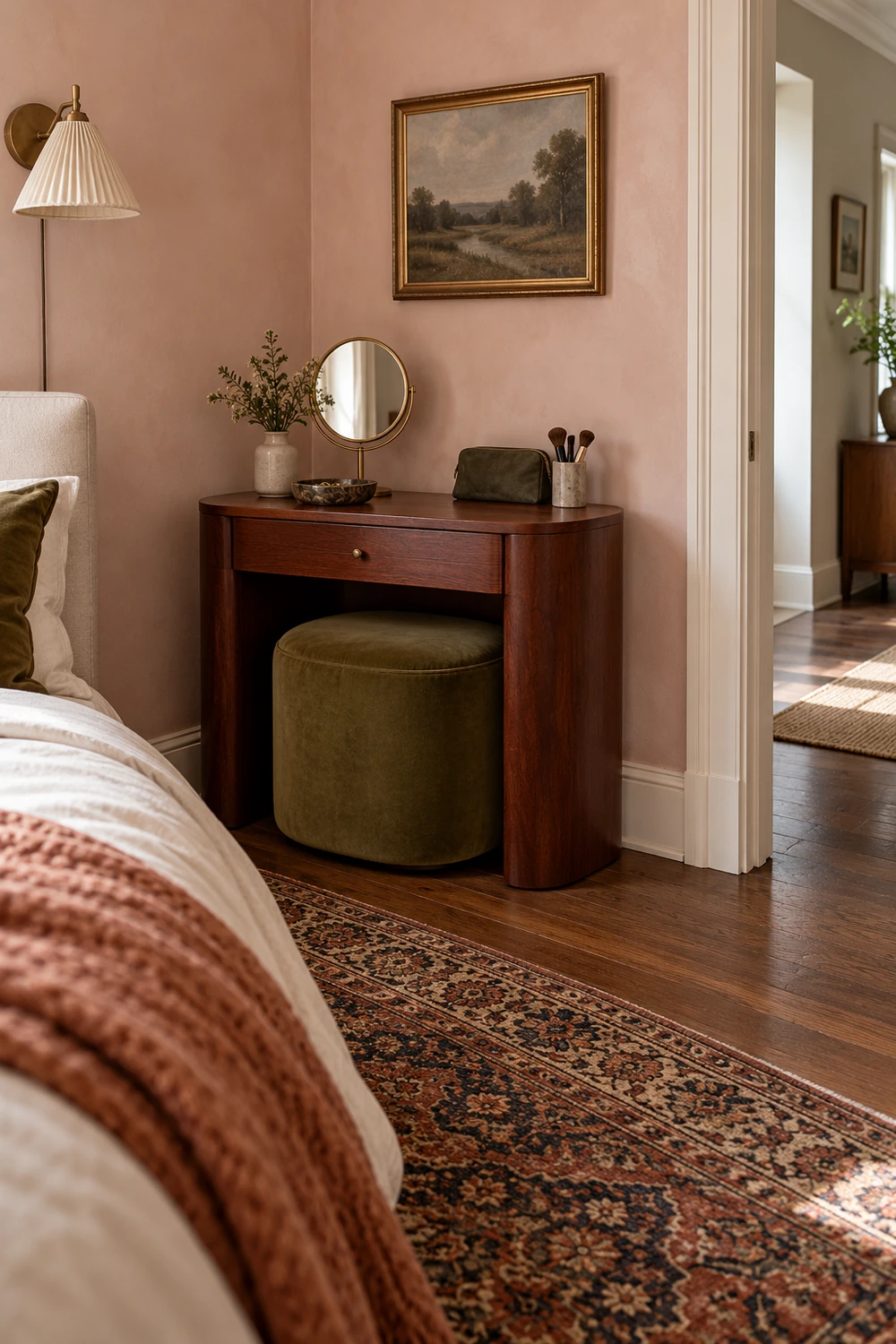
The cherry vanity uses a tucked olive stool to keep the footprint contained when the surface is not in use. That tucked position is only half the test: sit down, move the stool back, and stand again.
Choose a position where the light supports the way you get ready. Avoid assuming that any space beside a window is automatically comfortable throughout the day.
Keep only the active supplies on top and give extras a proper storage place. A vanity that attracts overflow will quickly feel larger than its measured footprint.
Let One Plant Supply the Height
A floor plant can occupy the vertical view while leaving much of the corner open. Match the plant to the real light and care conditions rather than choosing only by shape.
The proportionate rubber plant sits in filtered window light. Its leaves are part of the footprint, so allow for their spread and future growth.
Protect the floor from water and check beneath the container regularly. Keep access to the window and curtains available. If pets or children use the room, check the suitability of the exact plant before bringing it home.
A single healthy plant often gives the corner more clarity than several small pots arranged around the floor.

Use a Floor Lamp Without Adding Another Table
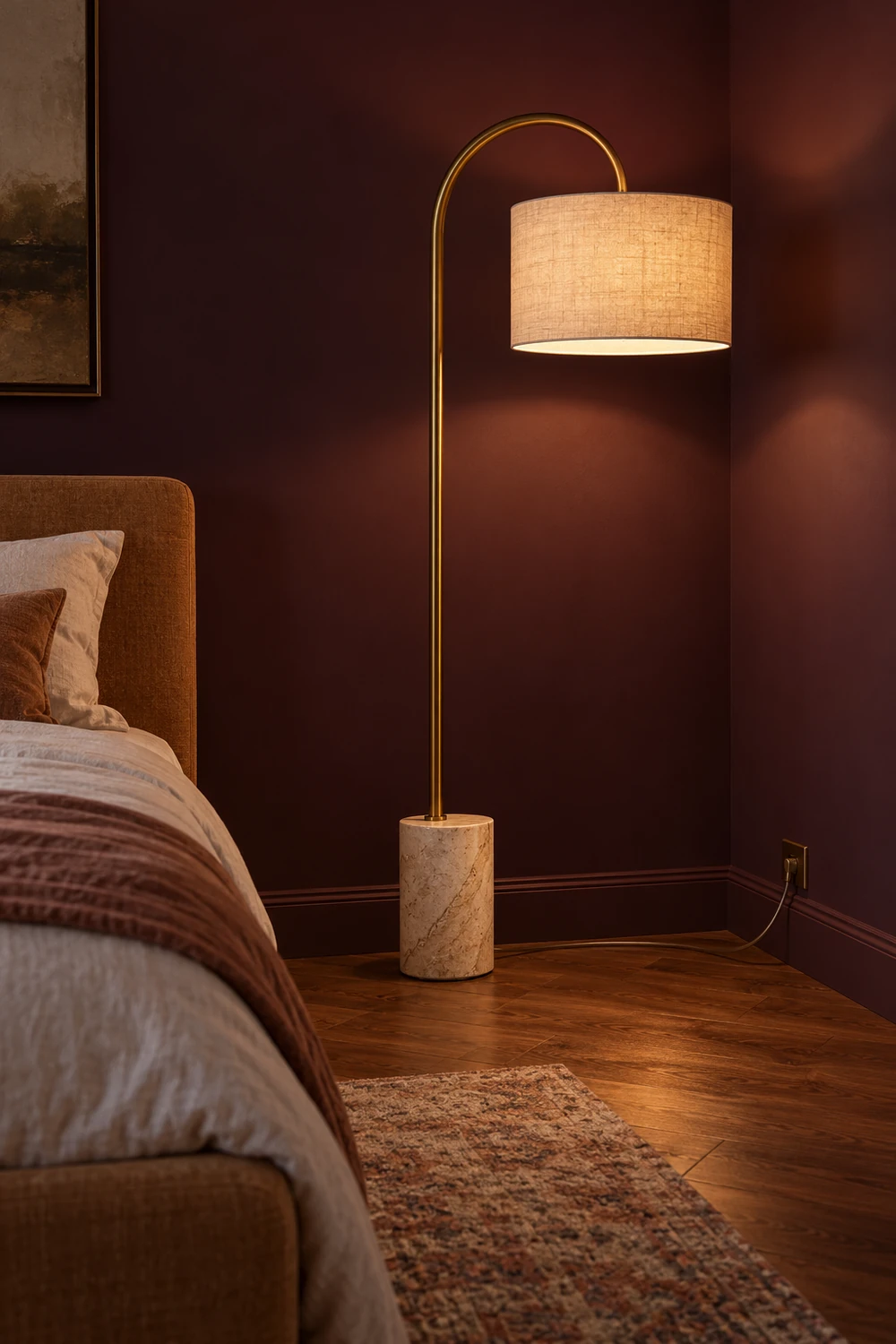
A sculptural lamp can finish a corner when the room needs light more than furniture. Its shape provides a visible vertical element while the surrounding floor remains relatively open.
Measure the base and shade, including any overhang. Place it near a suitable outlet so the cord does not cross the route to the bed or wardrobe.
Check the lamp from the bed after dark. A shade that looks attractive by day may expose the light source from a lower viewpoint. Adjust the position or choose a more suitable fixture rather than adding decor to disguise an uncomfortable light.
Try a Small Accent Chair for Dressing
Not every bedroom chair needs to become a reading nook. A compact seat can simply provide somewhere to sit while putting on shoes or choosing an outfit.

The ash chair with a burgundy woven seat preserves visible floor around it. Test the chair in the position you will actually use, with feet on the floor and nearby storage open.
Avoid letting it become permanent clothing storage. If clothes routinely pile there, address their return-to-storage routine rather than buying a larger chair.
A small chair works best when it has one understandable role and enough room for that role to happen comfortably.
Choose a Pedestal for a Purely Visual Corner
When the room needs a decorative finish rather than another function, a narrow pedestal can support one restrained object.

Check stability and the full footprint of the vessel as well as the stand. Keep the arrangement away from a place where bedding, clothing, or a moving door could catch it.
Let the pedestal and object form one clear silhouette. Additional baskets and small accessories at its feet can turn a simple accent into a cluttered group.
This is a useful option for a corner you mostly see from the doorway, provided the furniture does not occupy the practical route through the room.
Use a Standing Mirror Only With Suitable Support
A freestanding mirror can make a getting-ready corner useful without needing another cabinet. Include the stand’s rear projection when measuring the space.

The broad easel support in this example is part of the mirror’s footprint. Follow the exact product’s installation and anti-tip instructions; a photographed stand does not establish that every mirror can be left unsecured.
Check the reflected view from your normal standing position and from the bed. Keep the mirror clear of opening doors and curtains. In a rental, discuss any required securing method with the property owner rather than skipping it for the sake of removable decor.
Keep a Shelf Example Compact
A low, small shelf can hold a few books and a box when the corner genuinely needs that storage. Avoid turning this choice into a tower of decorative objects.
Measure the shelf’s depth and the space to remove its contents. Follow the manufacturer’s anchoring guidance. Keep frequently used items at a comfortable reach.
Use the shelf for a defined group rather than as a catchall for the room. A few current books and one useful box can be enough. Larger bookshelf arrangements have a different job, explored in how to decorate bookshelves.

Work With a Sloping Ceiling
A sloped ceiling changes where you can stand and what height of furniture feels comfortable. Low furniture may suit the shallow part of the corner while the taller area stays available for movement.

The storage bench below the attic slope uses that relationship. Check the lid or drawers if the bench includes storage, and test where your head moves when sitting or rising.
Do not choose a tall cabinet simply because its base fits. Measure the full height at its proposed position and account for the slope behind it.
Preserve the Window and Curtain Movement
A window corner has useful daylight, but the furniture must not interfere with operating the window covering.
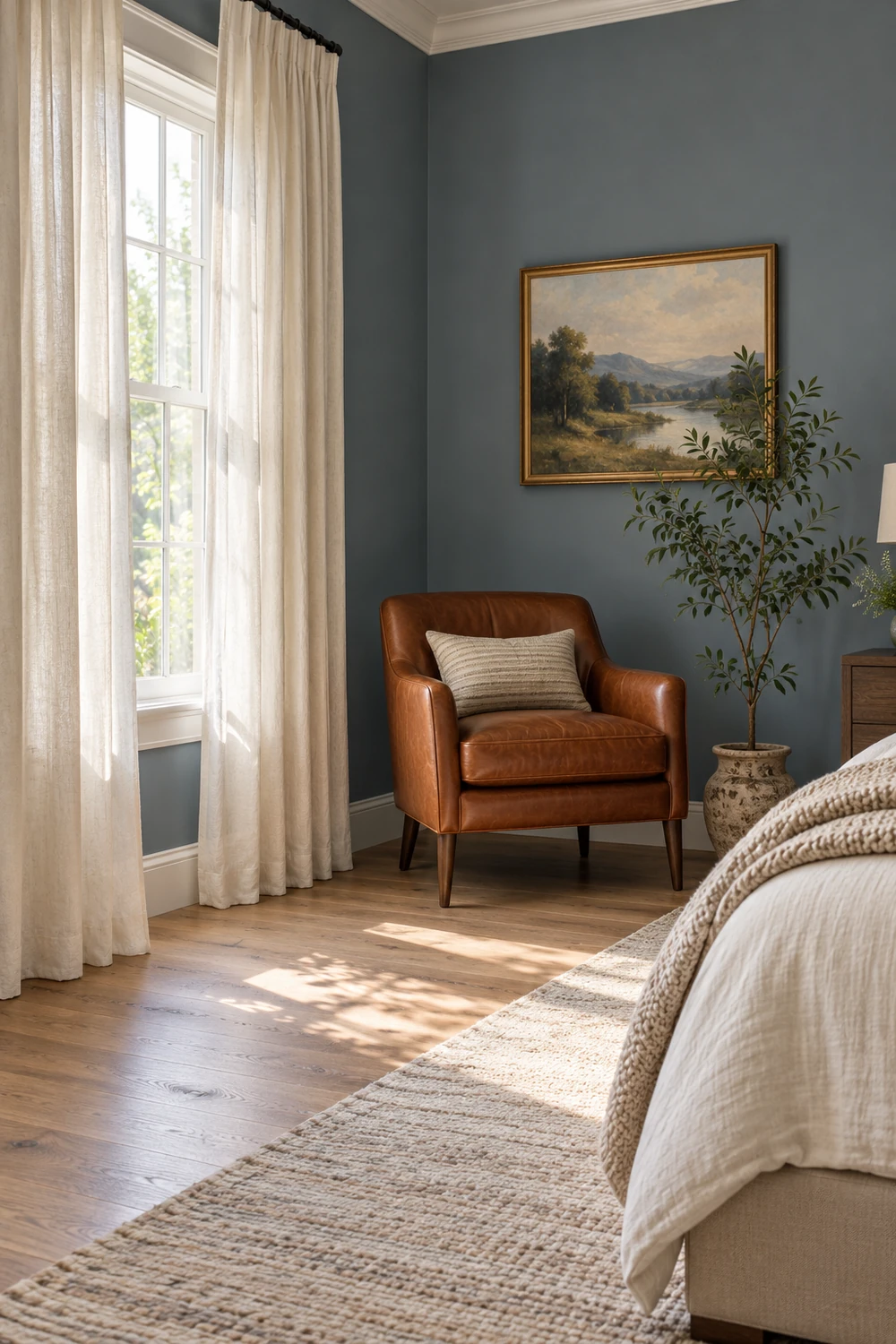
The leather chair stays clear of the floor-length curtains. Test them fully open and fully closed with the proposed furniture in place.
Include plant leaves, lamp shades, and chair backs in the check. Avoid depending on pushing the curtains around a piece every morning. The easier movement is usually a sign that the furniture is properly scaled to the corner.
Keep the Small Accessories in Proportion
Once the corner’s main role works, add the few details that support it. A ring dish, brush, and contained cosmetic pouch can serve a vanity without consuming its whole top.
Put down the things you use during the actual task before adding anything decorative. Leave room for your hands and for setting an item down temporarily.
Use texture or one repeated color to connect the group with the bedroom. The corner does not need its own separate palette or a collection of accessories to look intentional.

Judge the Corner From Across the Room
Step back to the doorway and consider the corner beside the bed and wardrobe. It should support the room rather than become a competing focal point.

If the bedroom already has a strong wall arrangement, let the corner remain quieter. Our above-bed decor ideas address that separate wall, while small nightstand ideas focus on the specific bedside gap.
Keeping these areas distinct helps each piece of furniture retain a clear purpose. You do not need to repeat the same display at the bed, dresser, and corner.
Test the Choice After Sunset
Revisit the unused terracotta corner from the opening. This proposed evening arrangement adds a plum chair and warm lamp while keeping the original room geometry.
Check your own choice in the light you use before bed. Test the approach to the seat, the lamp switch, and the route past it. A corner that works in both everyday movement and evening light is more useful than one arranged only for a daytime view.

Frequently Asked Questions
What can you put in an empty bedroom corner?
Choose according to the missing function: a small seat, vanity, suitable plant, lamp, mirror, or compact storage piece. Start with one purpose and keep the surrounding access clear.
How do you decorate a bedroom corner without adding furniture?
A suitable plant or floor lamp may provide enough shape and interest. You can also leave the floor clear when the space is needed for movement or curtain access.
What works in an awkward bedroom corner?
Measure the constraint first, whether it is a slope, window, or narrow route. Low furniture, a shallow piece, or one vertical accent may work better than a complete seating arrangement.
Give the Corner One Clear Job
The best empty bedroom corner ideas respond to the room you actually use. Choose the missing function, test its complete footprint, and add only the details that help it work. A corner feels finished when it belongs naturally to the bedroom and remains comfortable to move around.