Bedroom / Bedside Furniture
Small Nightstand Ideas for Tight Bedroom Layouts
A bedside gap can be too narrow for a standard cabinet yet still need somewhere for a phone, glasses, and a book. Choosing the smallest table available does not always solve the problem. Its top may be difficult to reach, its legs may project into the route, or its drawer may collide with the bedroom door.
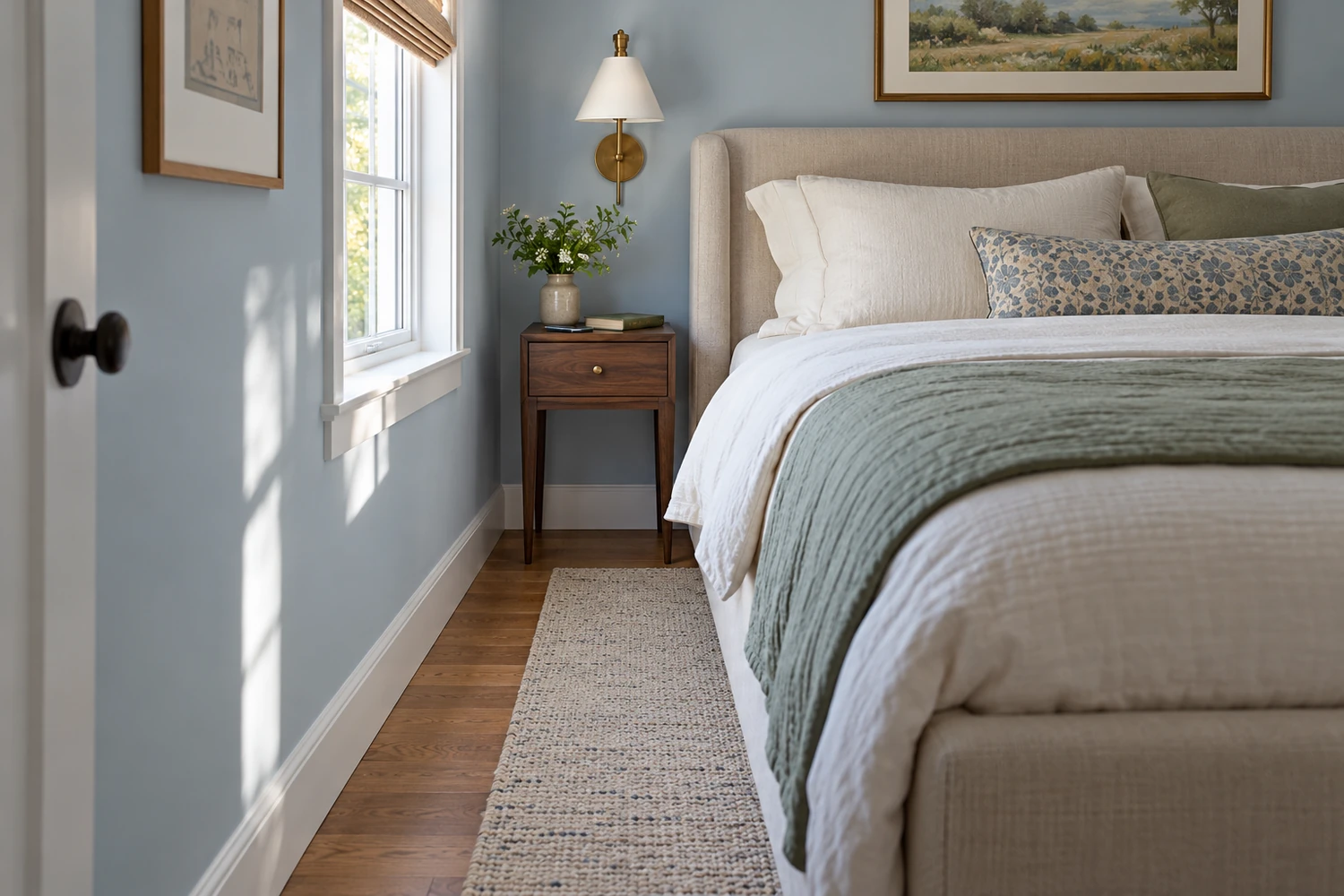
The best small nightstand ideas begin with fit. Measure the space beside the bed, test reach from the pillow, and decide how much storage you actually need. Then compare a narrow cabinet with a shelf, compact table, or other suitable bedside surface.
The aim is a useful landing place that belongs to the bedroom layout, not another obstacle beside the mattress.
Measure the Bedside Space in Use
Measure between the bed frame and the neighboring wall or furniture. Include any projecting bed rail, baseboard, window trim, or curtain stack that reduces the usable gap.

The diagram separates the bedside footprint, reach area, door swing, and clear route. It is a planning guide rather than a set of minimum room dimensions.
Check the height against the actual mattress, including the bedding you use. A surface that looks aligned with the bed frame may sit far below the top of a deep mattress.
Make a cardboard template for the proposed top and mark the base on the floor. Lie in your normal position and reach toward it without stretching awkwardly. Then get out of bed, open nearby storage, and walk past the footprint.
Decide Whether You Need Storage or Only a Surface
Write down the items that genuinely stay beside the bed. A phone, glasses, and one paperback need a different solution from medication supplies, several charging devices, or a collection of bedtime essentials.
Choose enclosed storage when it solves a real need. A drawer adds a place to put things, but it also needs room to open and an interior large enough to be useful.
If you need only a small landing place, a simpler table or shelf may preserve more floor space. Avoid choosing a cabinet for its storage capacity and then filling it with items that belong elsewhere.
Keep clothing storage separate from the bedside decision. Our small-bedroom clothing storage ideas cover that larger capacity problem.
Use a Narrow One-Drawer Nightstand
A slim cabinet can provide a familiar bedside setup without a broad footprint. Look at its full outside dimensions and the usable drawer interior.

The oak example keeps one drawer above an open lower shelf. That gives daily essentials a contained place while keeping the furniture visually light.
Check the handle projection and the room needed in front of the open drawer. A cabinet that fits beside the bed while closed may block your approach when opened.
Test the top with the objects you use. A small drawer does not compensate for a surface too cramped to put down glasses without moving a lamp.
Try a Floating Bedside Shelf
A compact wall shelf removes legs from the floor and can suit a very tight bedside gap. Its mounting position can be chosen around the bed’s actual height.

Check the wall construction, proposed load, and the manufacturer’s fixing instructions before choosing this option. A shelf must be properly supported; it is not a suitable place to lean body weight unless specifically designed for that use.
Include the shelf depth in the circulation test. Clear floor beneath does not mean its front edge cannot project into your route.
Think about access to outlets and switches before mounting. A well-fitted shelf should make everyday reach easier, not conceal the controls you use from bed.
Choose a Wall-Mounted Box for a Little More Capacity
A bedside box offers a top plus a small compartment. It can be useful when an open shelf is too limited but a full floor-standing cabinet feels bulky.

The cream box holds a paperback in its open cubby. Check that the interior depth suits your actual book rather than judging capacity from the outside.
Follow the product’s support and load guidance. Consider the complete loaded weight and whether the wall can accept the required fixing method.
Keep the compartment accessible from your ordinary position. If the opening is too low or faces an awkward direction, the box may not provide the convenient storage it appears to offer.
Use a Compact Round Table
A small round table can fit a bedside location without the projecting corners of a rectangular top. The base still deserves a close check.

The black table beside the terracotta bed provides a modest landing place. Measure the widest point of the legs, not only the tabletop diameter.
Try your phone and glasses on the surface and check that they remain comfortably inside the edge. A very small circle can lose useful space quickly when a lamp is added.
This option suits a simple bedtime routine with little need for enclosed storage. If the surface becomes crowded immediately, choose a more useful footprint rather than adding unstable tiers.
Check a C-Shaped Table Against the Bed Base
A C-shaped table can bring the top closer to the mattress while part of its base slides beneath a raised bed. It only works when the bed structure allows that movement.
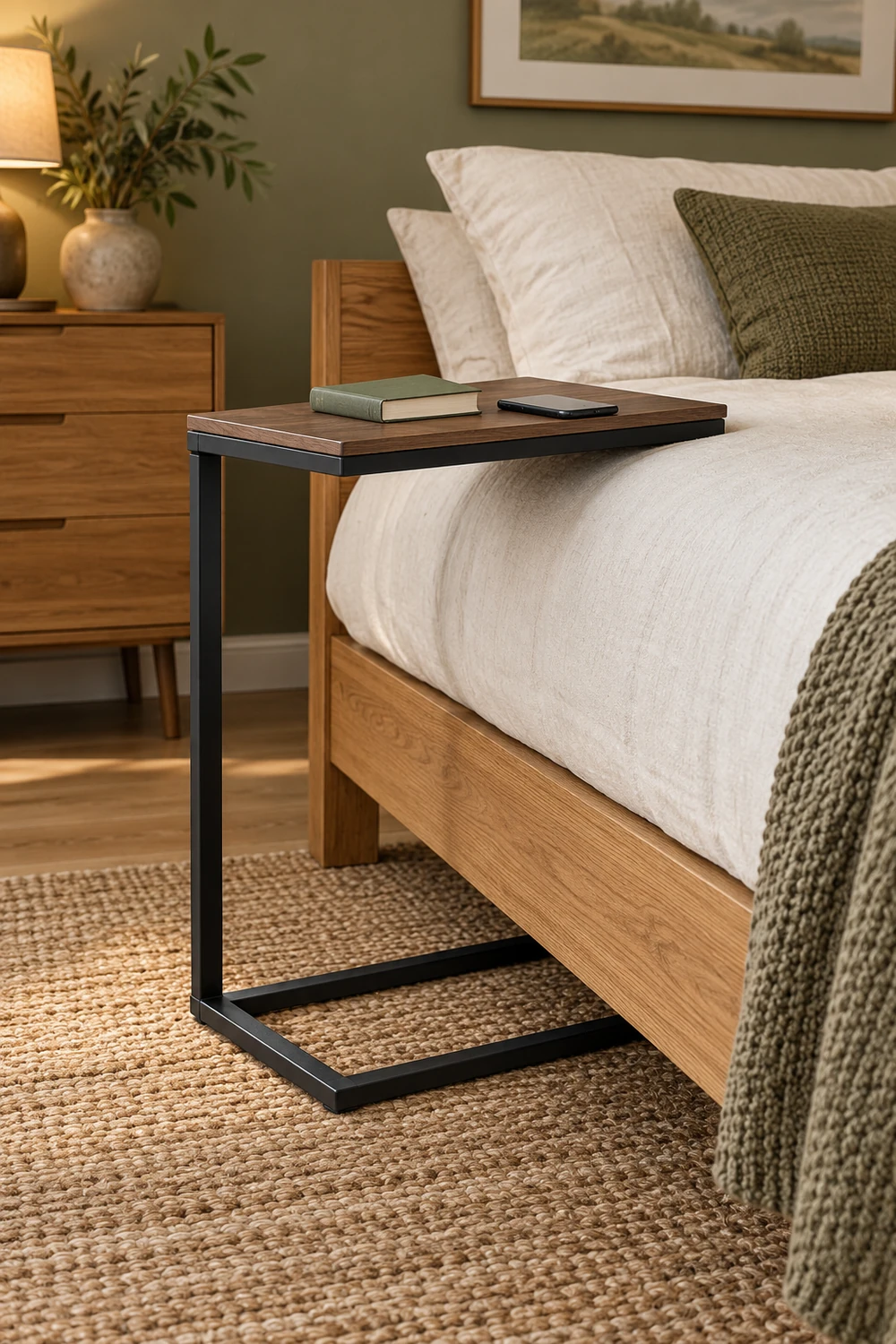
Measure the clearance beneath the bed and inspect the location of support legs and rails. Include the base’s thickness and full length.
Test stability in the position you intend to use. Follow the table’s load instructions and avoid using it as a handhold when getting up.
Keep enough room to make the bed and move bedding normally. If the top must be constantly shifted to enter or leave the bed, a separate narrow surface may be easier to live with.
Consider a Stable Stool for a Minimal Setup
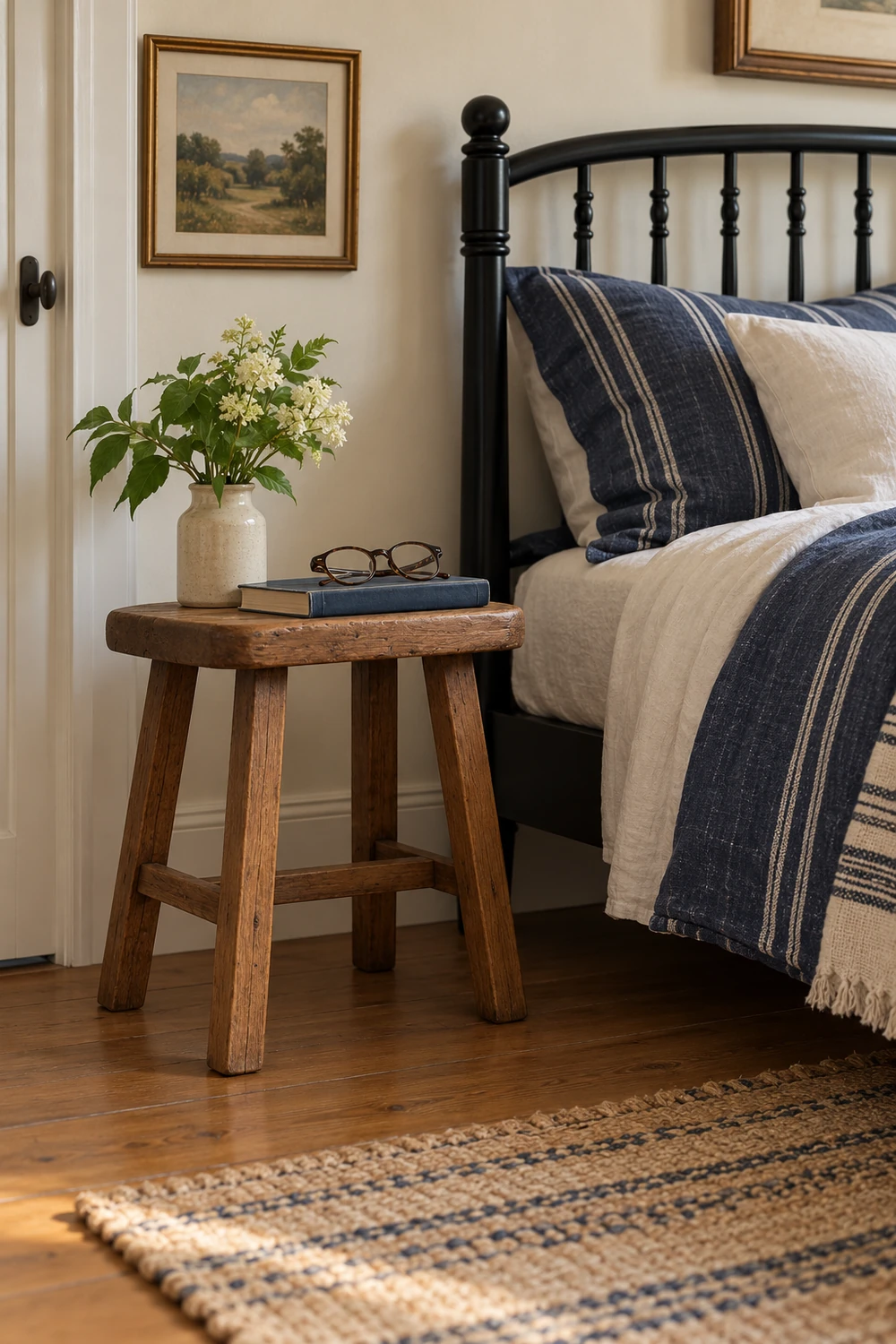
A sturdy stool can serve as a small bedside surface when its top, height, and stability suit the task. It does not provide the same storage as a nightstand, which can be an advantage when you want to keep the area simple.
Check that the top is flat enough for your objects and the stool stands securely on the actual floor. Avoid treating a curved or woven seat as a reliable surface for drinks.
Set the stool within easy reach and keep its legs clear of your exit from bed. If its top cannot comfortably hold the essentials, a purpose-made compact table may fit the routine better.
Combine a Shallow Ledge With a Book Pocket
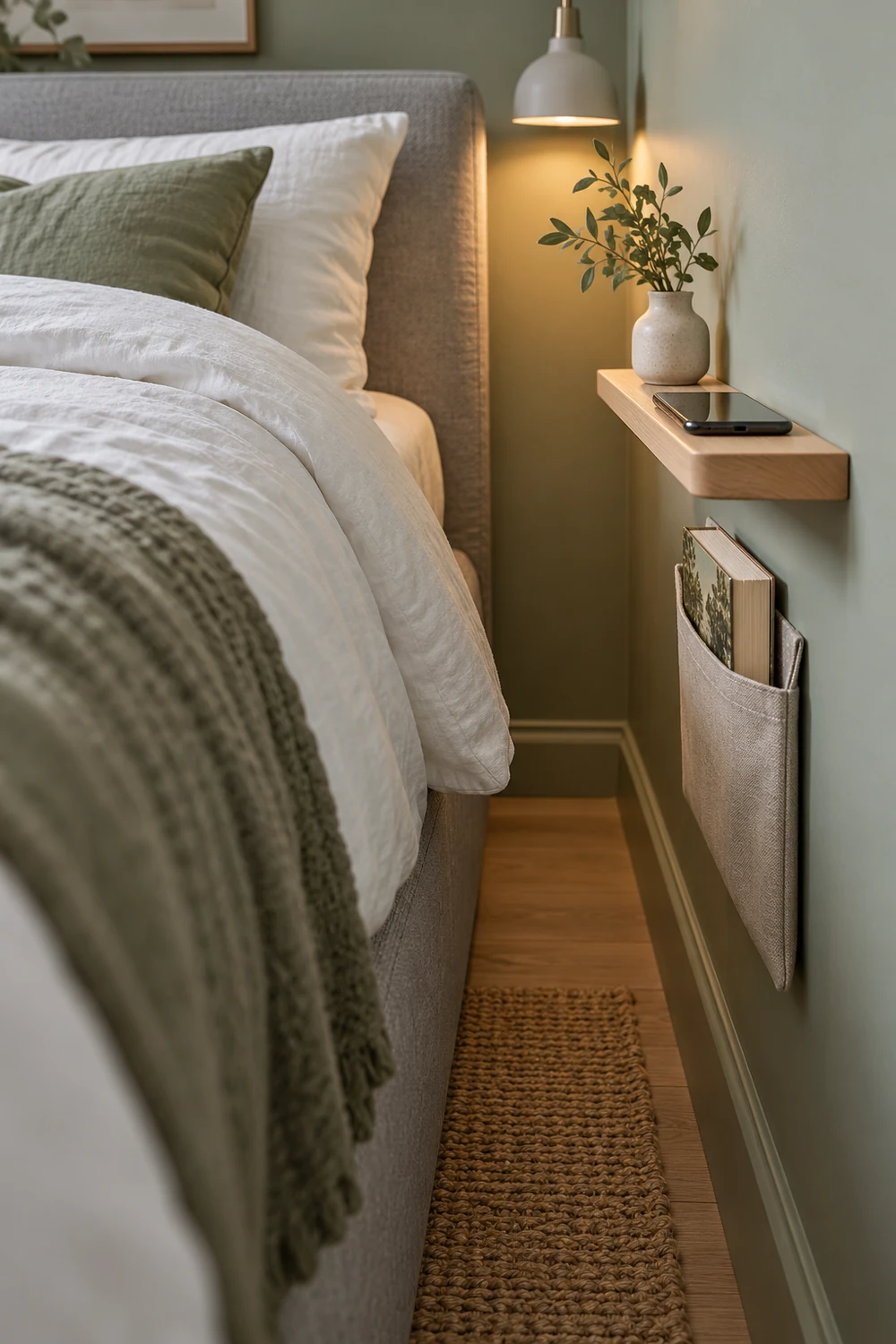
In a particularly narrow gap, a small ledge can hold a phone while a suitable wall pocket keeps a book off the surface.
Measure the pocket when filled, not just when flat. A paperback and glasses can make it project farther into the bedside area than expected.
Follow the mounting instructions for both pieces. Keep the position clear of the pillow and ordinary shoulder movement.
This is a limited-capacity solution. It works best when you genuinely need only a few items nearby, not when it is being asked to replace a larger cabinet’s contents.
Free the Top With a Suitable Wall Light
A wall-mounted reading light can release space otherwise occupied by a lamp base. That can make a small nightstand more useful without changing its footprint.
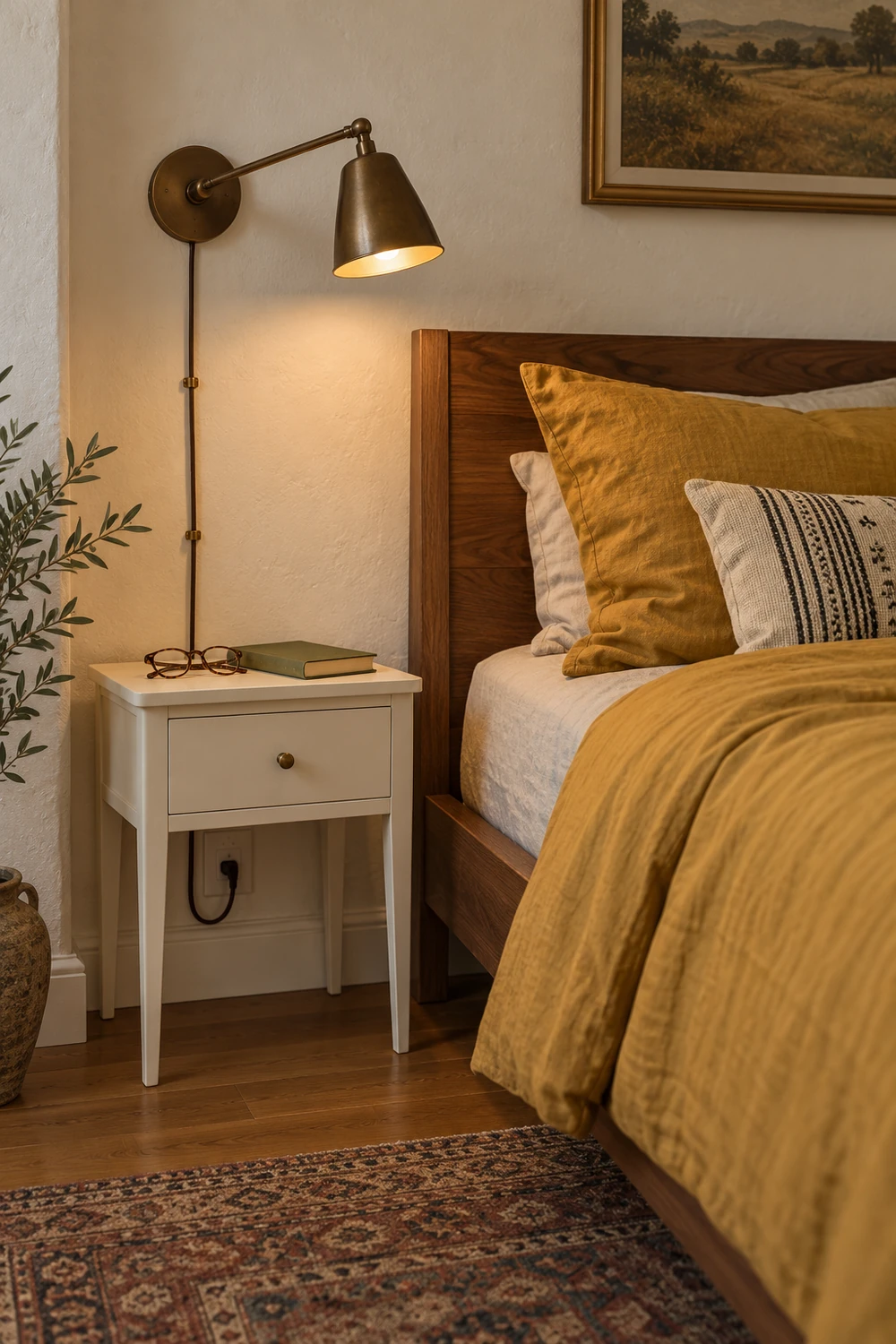
Check reach to the switch and the light’s position from your usual resting posture. Follow product and installation requirements, using qualified help for electrical work.
For a plug-in model, plan the cord route so it is not trapped or stretched across movement. A smaller top should not create a more awkward cable arrangement.
Keep this decision tied to surface fit. A full bedside styling scheme is optional; the immediate benefit is room for the objects you actually set down.
Test the Top With Real Essentials
Place your phone, glasses, and normal book on the proposed surface. Include any case, charging connection, or coaster that changes their footprint.
Pick up and replace each item while seated or lying in bed. Leave enough room that one movement does not knock another object toward the edge.
Avoid relying on a decorative arrangement that only works when every piece sits at a precise angle. A useful nightstand can tolerate ordinary use.
If you want to display more personal objects, give them another suitable location. Our dresser decorating ideas address a broader surface without asking the bedside gap to carry the whole room’s decor.

Use Different Widths on Unequal Sides
Bedrooms are not always symmetrical. A window, wall return, or door can leave one side of the bed with less room than the other.

Different-width cabinets can serve those spaces while remaining visually related. Look for a connection in finish, height relationship, or simple shape rather than insisting on identical furniture.
Test each side independently for reach and access. Matching pieces that obstruct one side are less useful than two solutions that fit properly.
Keep the overall bedroom balanced through bedding and other existing elements. The nightstands do not need to be equal to make the bed feel settled.
Open the Drawer and Nearby Door Together
Finish the layout check with every moving element in use. Open the nightstand drawer and the bedroom or wardrobe door through their normal range.

Look for handle collisions, blocked routes, and places where you cannot stand to use the storage. Repeat the test with bedding hanging as it normally does.
Measure your own furniture rather than adopting a photographed gap as a clearance standard. If the fit is awkward, consider an open shelf or a shallower cabinet instead.
For other awkward room areas, our bedroom corner decorating ideas focus on choosing a purpose beyond the bedside surface.
Keep a Freestanding Option for a Rental
A slim freestanding nightstand can provide a useful top without wall mounting. It also gives you flexibility to adjust the bed layout later.
The birch example keeps its form simple and its footprint modest. Check stability, floor contact, and any anchoring requirements for the exact product.
Do not assume freestanding means no securing instructions. Discuss required fixings with the property owner where necessary and choose furniture that can be used appropriately in the room.

Compare the Options by Their Main Constraint
| Tight-space problem | Option to test | Important check |
|---|---|---|
| Little floor area | Floating shelf or wall box | Suitable wall support and safe projection |
| Narrow gap but useful storage needed | Slim one-drawer cabinet | Drawer opening and usable interior |
| Raised bed with space beneath | C-shaped table | Base clearance and stability |
| Only a few bedtime essentials | Round table or stable stool | Enough flat usable top |
| Unequal bedside spaces | Different-width related pieces | Independent fit on both sides |
Frequently Asked Questions
What can replace a nightstand in a small bedroom?
A suitable wall shelf, wall-mounted box, compact table, or stable stool can provide a bedside landing place. Choose according to storage needs, reach, and the actual gap.
How narrow should a small nightstand be?
There is no universal width. Measure the available space, including baseboards and movement, then test the surface with your everyday items. Keep nearby doors and drawers usable.
Do bedside tables have to match?
No. Different sizes can work well when the room has unequal gaps. Relate them through a finish or simple shape while prioritizing practical fit.
Choose the Smallest Solution That Works Comfortably
Good nightstand ideas for small spaces preserve both a useful surface and a comfortable route around the bed. Measure the complete furniture, test reach with your actual essentials, and check the moving parts. The best fit is the one that makes bedtime easier without asking the rest of the bedroom to work around it.