Bedroom / Clothing Storage
Small Bedroom Clothes Storage Ideas That Use Space Wisely
A small bedroom can have enough nominal storage and still be difficult to use. Hangers crowd together, folded piles collapse, and a cabinet door takes up the only standing space beside the bed.
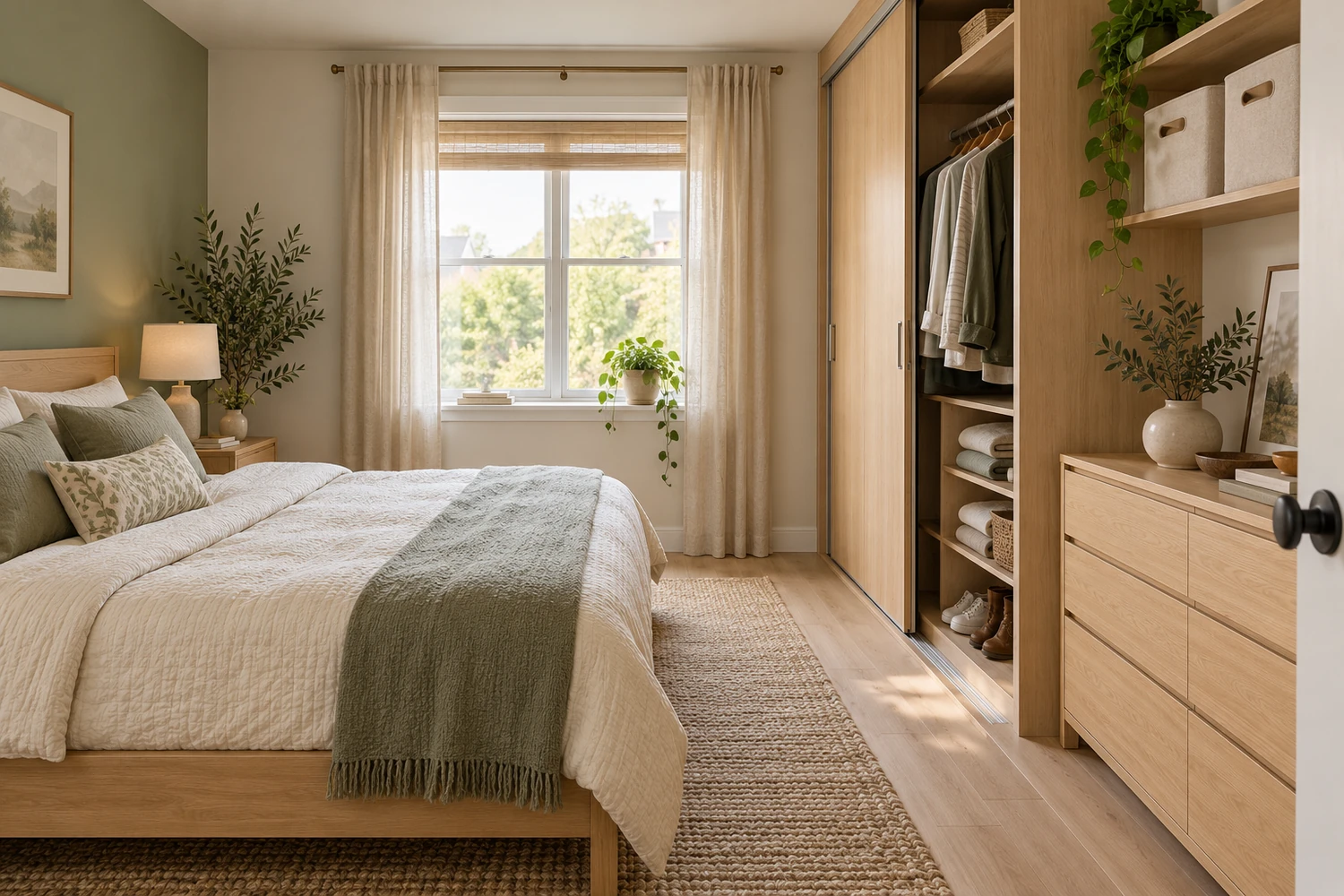
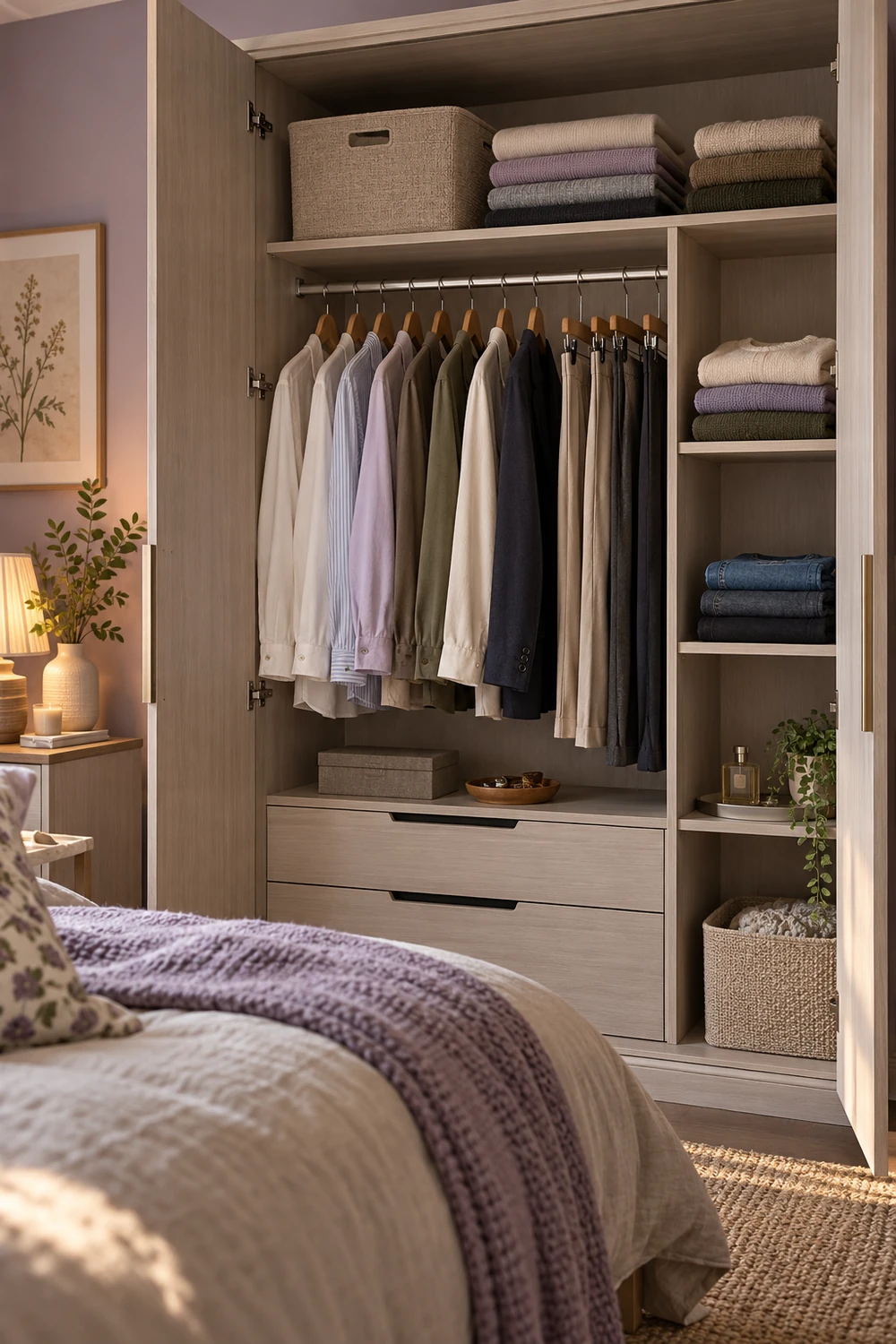
Useful clothing storage ideas for small bedrooms start with the clothes and the room together. Separate hanging, folded, and seasonal items, then give each group a place that can be reached without moving another category. Measure furniture in use, including doors, drawers, and the space needed to stand in front.
The goal is a room where getting dressed and putting things away are both straightforward. More storage only helps when you can use it comfortably.
Sort by the Way Each Garment Needs to Be Stored
Begin with the clothes currently in regular rotation. Separate items that need hanging from those that fold well, then put seasonal pieces in their own group.
Check what fits, what gets worn, and what belongs elsewhere before planning new furniture. A pile of decisions postponed is difficult to organize efficiently.
Keep the categories specific enough to maintain: short hanging garments, longer pieces, knitwear, shirts, accessories, and seasonal reserves. You do not need a separate organizer for every small variation.
Choose storage according to the garments’ care needs. The layout should support the clothing rather than require everything to be folded or hung merely to fit a matching system.
Map Daily and Occasional Zones
Sketch the available storage and mark where the different groups will live. Keep daily clothes in positions that the person using them can reach comfortably.

The diagram separates hanging, folded, and light seasonal storage. It illustrates category relationships rather than prescribing dimensions for your wardrobe.
Measure the longest garments, normal folded stacks, and proposed containers. Add the space needed to lift a bin or remove a hanger.
Leave capacity for the return journey from laundry. A system that fits only when everything is compressed perfectly will be difficult to maintain after an ordinary week.
Choose a Slim Wardrobe by Its Usable Interior
A shallow wardrobe can preserve room beside the bed, but its internal arrangement must still suit the clothes. Compare usable depth with the hanging method rather than looking only at the external dimensions.
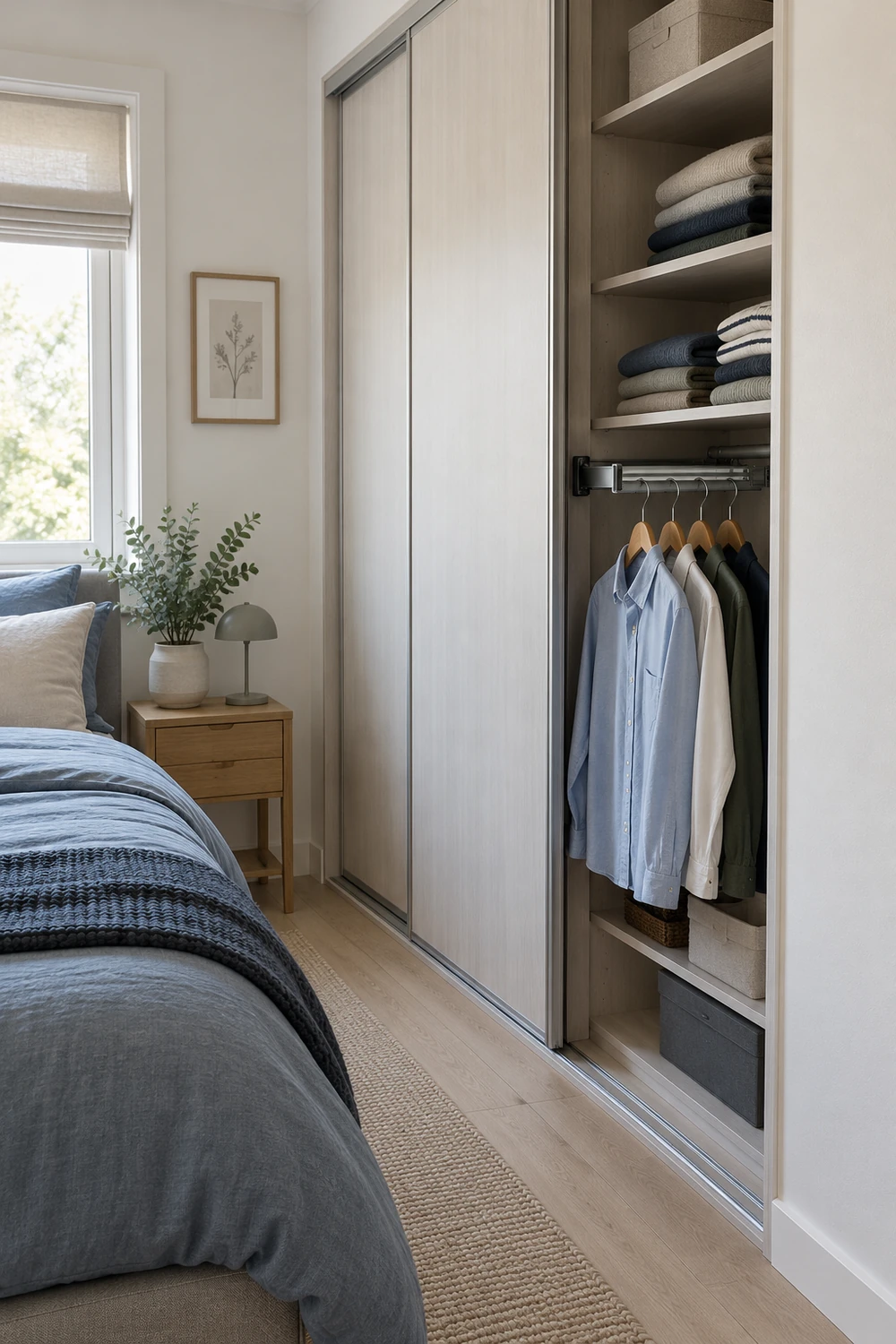
The slim example uses a pull-out rail for its hanging group. Check how that mechanism moves and whether you have room to operate it in front of the furniture.
Include door movement, handle projection, and any required wall gap. Sliding doors may reduce swing into the room, but they still need appropriate access to the sections behind them.
Test the furniture against the bedroom route before buying it. A narrower cabinet is only useful if its capacity and operation suit the wardrobe it needs to hold.
Double the Hanging Levels Only for Short Garments
Two rails can make use of vertical space when the clothes are short enough to hang without overlapping the rail below.

Measure the actual shirts, jackets, or folded-over trousers on their hangers. Include the hanger hook and the gap needed to lift it off the rail.
Keep longer dresses and coats in a separate suitable section. Forcing them into a short bay makes the lower rail harder to use and leaves the garments crumpled.
Follow the wardrobe and rail load guidance. Added hanging levels do not automatically mean the furniture can carry twice the weight. Leave enough separation between hangers that clothing can be removed without pulling out several pieces.
Use Dividers to Keep Folded Stacks Manageable
Shelf dividers can prevent neighboring knitwear stacks from merging. They work best when the stacks remain low enough to lift and return comfortably.

Sort by a practical category, such as everyday sweaters, rather than by a color arrangement you cannot maintain. Put the most frequently used group where you can see and reach it.
Avoid building tall piles simply to use the shelf height. A smaller stack with room above can be easier to handle than one packed tightly beneath the next shelf.
Choose dividers appropriate to the shelf and fabric. Check that contact points do not catch garments or prevent the wardrobe door from closing normally.
File-Fold Suitable Clothes in Drawers
Drawer divisions can help shirts and other suitable folded items remain visible from above. The useful change is seeing a category without lifting several layers.
Test the fold with the actual drawer height and the garment’s care requirements. There is no need to force every piece into the same compact shape.
Use divisions that support the group without compressing it so tightly that one item is difficult to remove. Check the contents after taking out a few pieces: the remaining clothes should still be easy to identify.
Keep each drawer’s role clear. A shirt section should not gradually become the place for unrelated spare accessories simply because a small gap appears.

Use a Narrow Tall Dresser With Proper Support
A tall dresser can provide folded-clothing capacity on a smaller floor footprint. It also requires attention to anchoring, access, and the height of daily items.
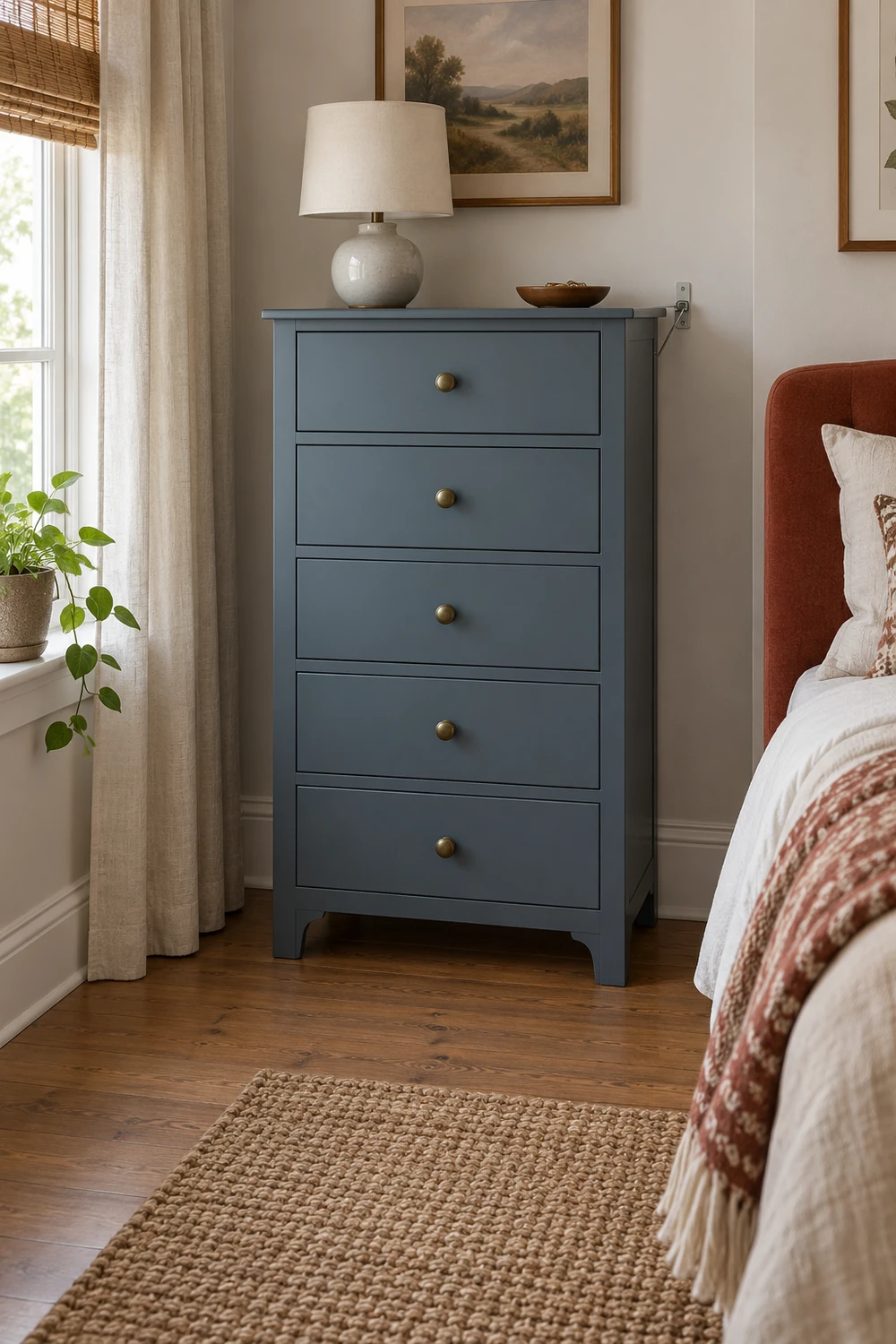
The blue dresser example includes a visible tether. Follow the exact furniture instructions for securing it; the CPSC’s Anchor It! campaign recommends anchoring furniture to help prevent tip-overs.
Keep frequent-use clothes in drawers you can use comfortably and leave standing space in front. Do not choose a taller piece merely because its base fits a narrow gap.
The dresser’s top does not need to become extra clothing storage. Our dresser decorating ideas address that surface separately, with room for everyday essentials and a restrained focal point.
Keep an Open Garment Rail Edited
An open rail can make a small active wardrobe easy to see. Its success depends on keeping the quantity within the rail’s useful capacity.
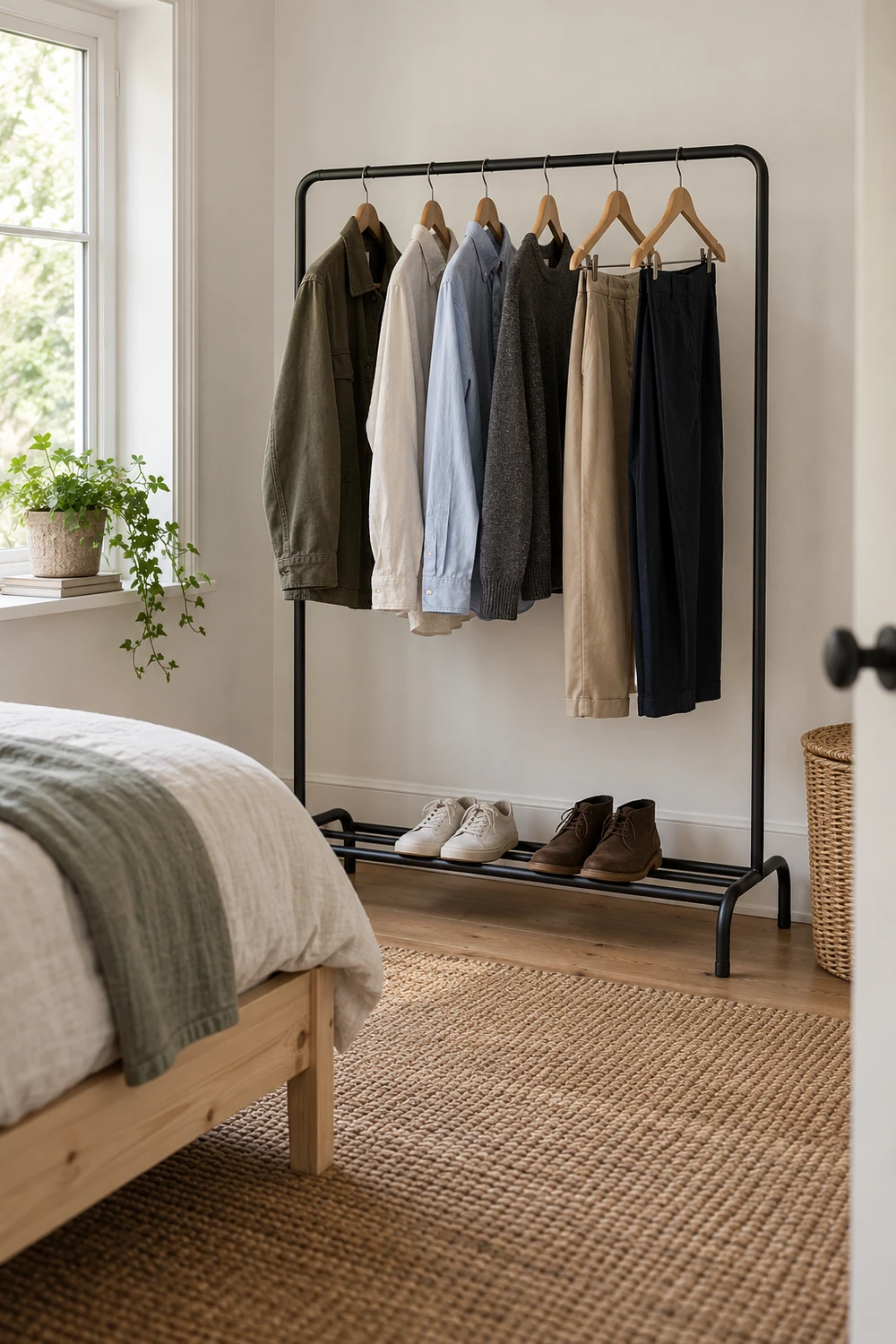
Measure the base and any projecting feet, then check the hangers and garment shoulders as part of the total depth. The clothes occupy more space than the metal rail alone.
Keep the group deliberate: current everyday pieces or outfits being prepared for the week. Avoid using the rail as a second overflowing wardrobe.
Protect the room’s route and maintain the rail according to its instructions. An open arrangement also makes dust and visual clutter more noticeable, so choose it for the routine you can realistically keep.
Check Inner-Door Storage in the Closed Position
Shallow pockets inside a wardrobe door can hold small suitable accessories. They only work if the closed cabinet has enough internal clearance.
The recessed shelves leave room for the pockets in this example. Measure your own door, shelves, stored contents, and hardware before adding an organizer.
Test the door slowly with the pockets loaded normally. Stop if the contents press against shelves or prevent the latch from operating.
Keep the load and mounting method within the product instructions. A narrow pocket is useful for lightweight accessories, not a reason to hang a heavy collection from a door that was not designed for it.

Use Under-Bed Space for One Contained Category
A low bin can hold seasonal clothing when the bed frame and floor allow easy access. Keep this as a defined supporting zone rather than a hidden collection of miscellaneous items.
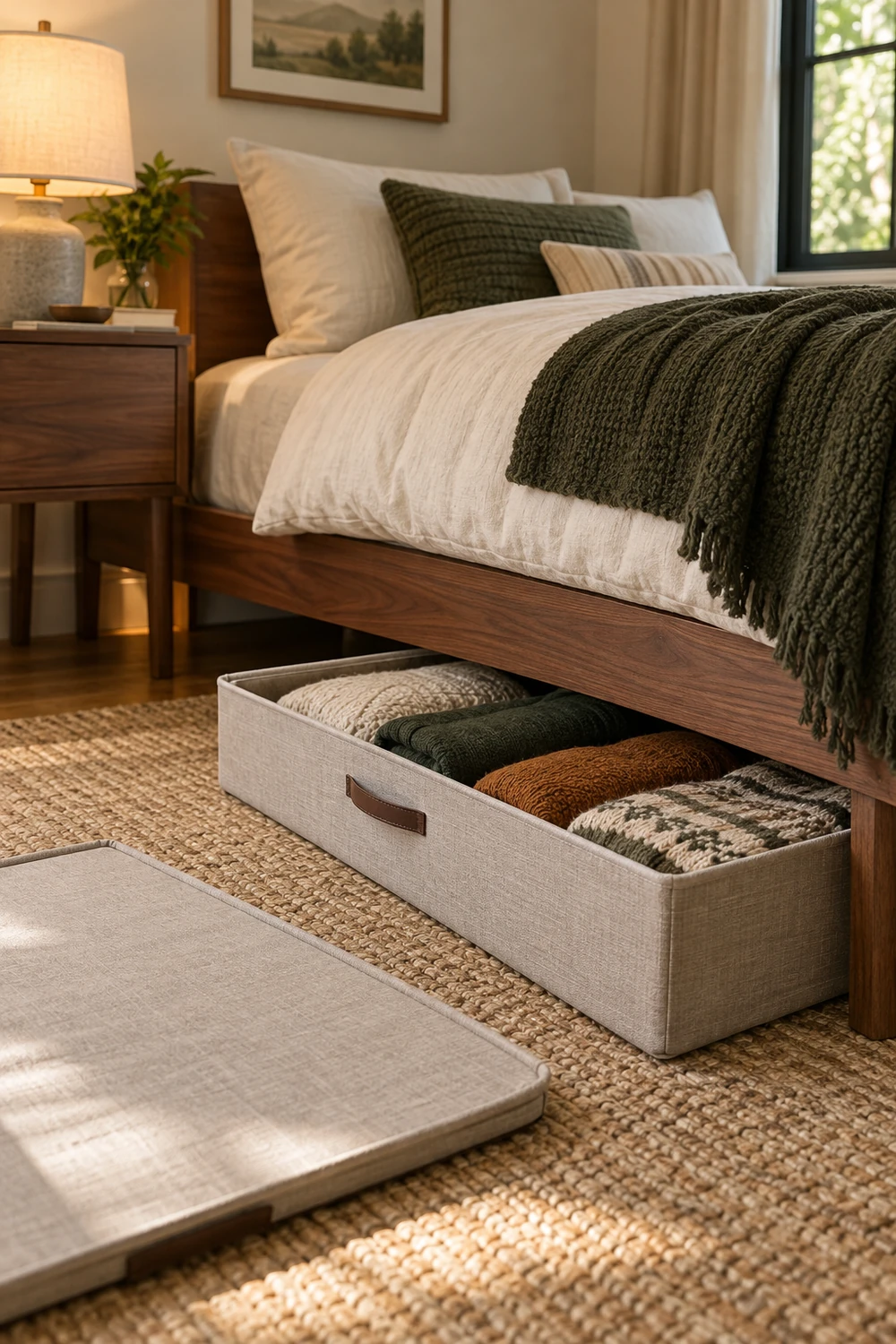
Measure the clear height, internal support legs, and the space needed to pull the bin out. Include its lid, handles, and any wheel projection.
Store clothes clean and appropriately dry, following garment and container guidance. Choose a quantity you can identify and retrieve without emptying the whole area.
If the bin cannot be removed without moving major furniture, use it only for genuinely occasional items or choose another location. Everyday clothing should not depend on dismantling the room.
Put Light Seasonal Bins Above Daily Clothes
Upper shelves can hold lighter occasional clothing in clearly identified containers. Keep everyday items lower so routine access does not depend on reaching overhead.
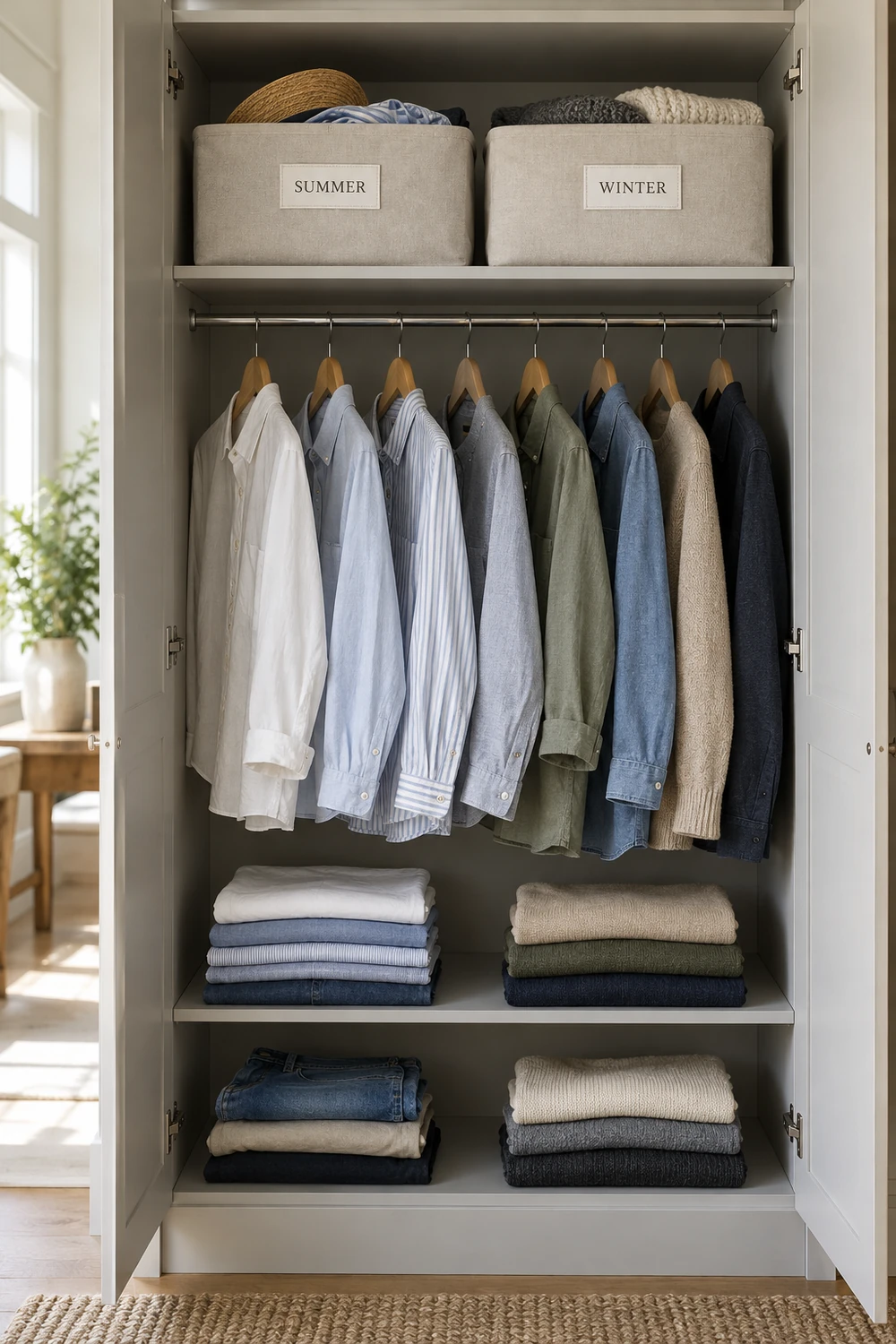
The summer and winter bins make the seasonal categories visible. Labels can describe the contents simply; a complicated inventory is not required for a small wardrobe.
Choose manageable loaded weights and an appropriate access method. Check shelf capacity and keep heavy containers out of awkward high positions.
If linens are competing for the same space, consider giving them their own system. Our guide to organizing a linen closet focuses on household textiles rather than the bedroom’s clothing categories.
Give Two Users Separate Daily Zones
Shared storage is easier to maintain when both people can recognize their own hanging and folded areas. Equal-looking compartments are less important than a useful division based on actual clothing.
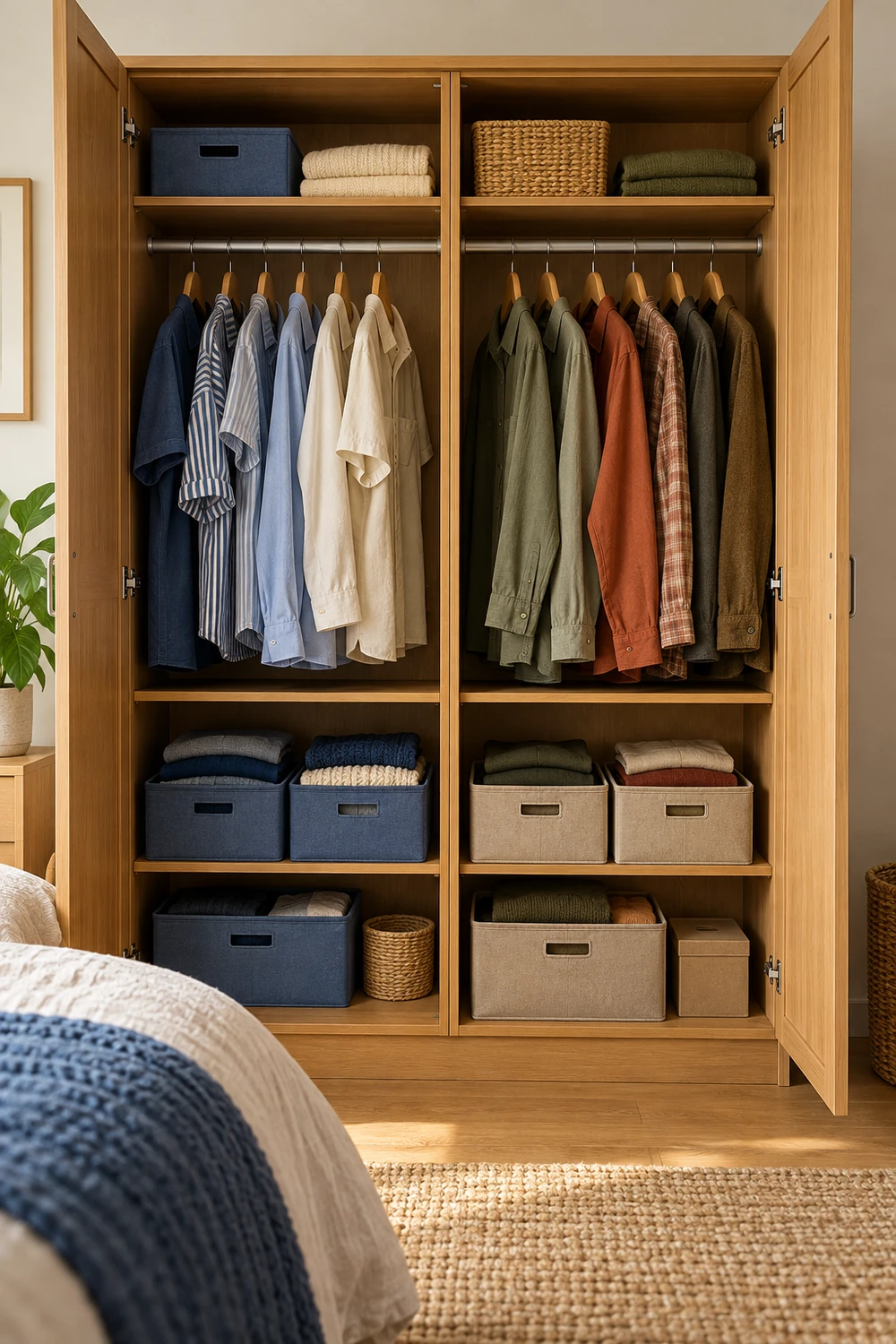
The blue and tan bins provide a simple visual distinction. Agree on which shelves are personal and which hold shared occasional items.
Keep both users’ daily categories accessible. One person’s entire wardrobe should not end up above comfortable reach simply because the other person uses the room first.
Review the arrangement after a laundry cycle. The return-to-storage process often reveals whether the division is practical or only looked balanced when the wardrobe was empty.
Fit Storage Around an Awkward Doorway
A wall return or corner can reduce the useful space for a wardrobe. Measure the room from the doorway inward rather than assuming an uninterrupted stretch of wall.
The slim sliding wardrobe sits clear of the route in this example. Check access to the sections inside as well as circulation outside it.
Include switches, outlets, trim, and the space to assemble or install the furniture. A cabinet may fit its final position while still being unsuitable for the way it must be brought into the room.
For a tight bedside gap left after the wardrobe is placed, see our small nightstand ideas rather than expanding the clothes-storage furniture into that separate function.

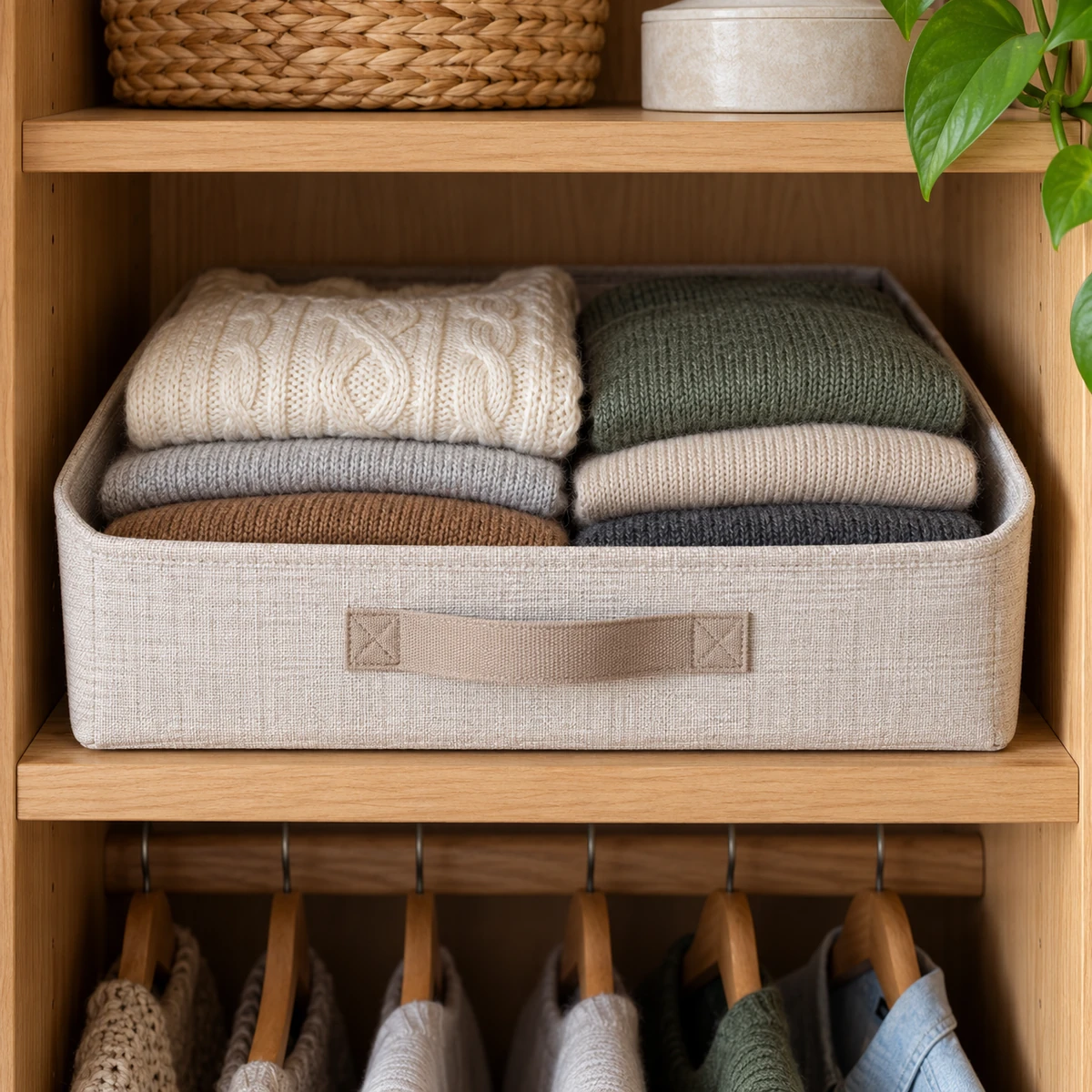
Size Containers Around the Folded Clothes
Choose bins after measuring the shelf and a realistic folded group. The outside container dimensions and the usable interior can differ considerably.
Check handle space and the room needed to lift the front. A perfectly fitted box can be inconvenient if there is no way to grasp it beneath the shelf above.
Keep the category manageable enough to browse. If finding one sweater requires unloading the bin, consider a shallower container or fewer pieces in that group.
Use a test container before buying several matching ones. Clothes storage should suit the garments you own rather than force the collection into a preset organizer size.
Test the Whole Room With Storage Open
Open drawers and doors through their usual movement, then walk from the bedroom entrance to the bed and wardrobe.

Check where you stand while dressing. A clear walking route is not enough if opening a drawer leaves nowhere comfortable to use it.
Repeat the test with laundry waiting to be put away and the bed made normally. The layout should tolerate everyday conditions rather than require every object to be tucked away perfectly.
Build a Short Daily Reset
Return hanging clothes to their category, refold the few pieces used during the day, and move items needing laundry to their proper place.
Leave the remaining gaps visible. They are useful capacity for ordinary changes in the wardrobe, not empty spaces that must be filled immediately.
If a category repeatedly overflows, review its quantity and position before adding furniture. Small rooms benefit from a system that adjusts to real use rather than a growing collection of containers.
Frequently Asked Questions
What are useful clothes storage ideas for small bedrooms?
Begin with defined hanging, folded, and seasonal zones. Compare slim furniture, divided drawers, and suitable shelves by the access they preserve, not only their advertised capacity.
Can double hanging work in every wardrobe?
No. Measure the actual garments and the space needed to lift hangers. Long clothing needs a suitable full-height area, and the rails must be used within their load guidance.
How do you stop a small wardrobe becoming crowded again?
Leave room to return laundry, keep categories recognizable, and review recurring overflow. A simple daily reset helps reveal when the layout or quantity needs adjusting.
Make Returning Clothes as Easy as Finding Them
A small-bedroom storage plan works when clean clothes have an obvious place to go. Choose furniture that fits in use, give daily categories comfortable access, and keep occasional clothing contained. The room should support both a clear morning routine and an easy evening reset.