Bedroom / Bedroom Wall Decor
Above-Bed Decor Ideas for a Balanced Bedroom Wall
The wall above a bed often becomes the bedroom’s main visual focus. A print that looks generous on its own can seem too small above a wide headboard, while a large group can crowd the ceiling or compete with nearby windows.

Useful above bed decor ideas begin with the relationship between artwork, headboard, and available wall. Choose one clear arrangement, test its full outline with paper templates, and look at it from the doorway before installing anything.
Keep weight and secure mounting part of the decision from the beginning. A beautiful composition is not enough if the objects are unsuitable for a position above a sleeping area.
Plan the Full Arrangement Against the Headboard
Measure the headboard’s outside width and the usable wall above it. Include ceiling slopes, windows, lamps, and other features that limit the arrangement.

The diagram compares a single artwork, aligned pair, and evenly spaced trio. It illustrates proportion rather than prescribing a universal artwork size or hanging height.
For a grouped arrangement, include the gaps between pieces in the total width. Two frames that each fit comfortably can form an oversized composition once their spacing is added.
Use paper templates matching the outside frame dimensions. Move the entire group together until it relates to the bed. Then sit upright against your normal pillow arrangement to check that the proposed position does not interfere with use.
Choose Weight and Mounting Before the Final Style
Prefer appropriately lightweight pieces and mounting suitable to the object and wall. Follow the manufacturer’s instructions and get qualified help when the construction or support is uncertain.
Avoid shelves loaded with objects, unsecured leaning frames, and heavy mirrors above the bed. In earthquake-prone locations, follow local preparedness guidance: the CDC recommends moving heavy mirrors and pictures away from above places where people sleep or sit.
Lightweight materials do not remove the need for secure attachment. Check the frame, hanging system, and any separate decorative parts as a complete item. Keep the arrangement clear of lamps and anything that could catch it during ordinary use.
These examples are styling options; a photograph cannot verify the mounting method for your own wall.
Use One Artwork for a Clear Focal Point
A single print gives the eye one place to settle. It can work especially well when bedding, bedside furniture, or the headboard already contains a pattern.

The sea-green botanical print sits above an ash spindle bed without competing with its lines. The light subject matter and simple frame let the bed remain visible as a separate shape.
Choose the artwork for the room, then check its scale with a template. A single piece does not have to fill the available wall. Look for a comfortable relationship rather than stretching the frame toward every boundary.
If the print feels isolated, test a different size before adding several small accessories around it. More objects will not always solve a proportion problem.
Align a Pair as One Composition
Two related frames can create an orderly arrangement above the headboard. Their combined outline matters more than whether each piece is perfectly centered over a pillow.
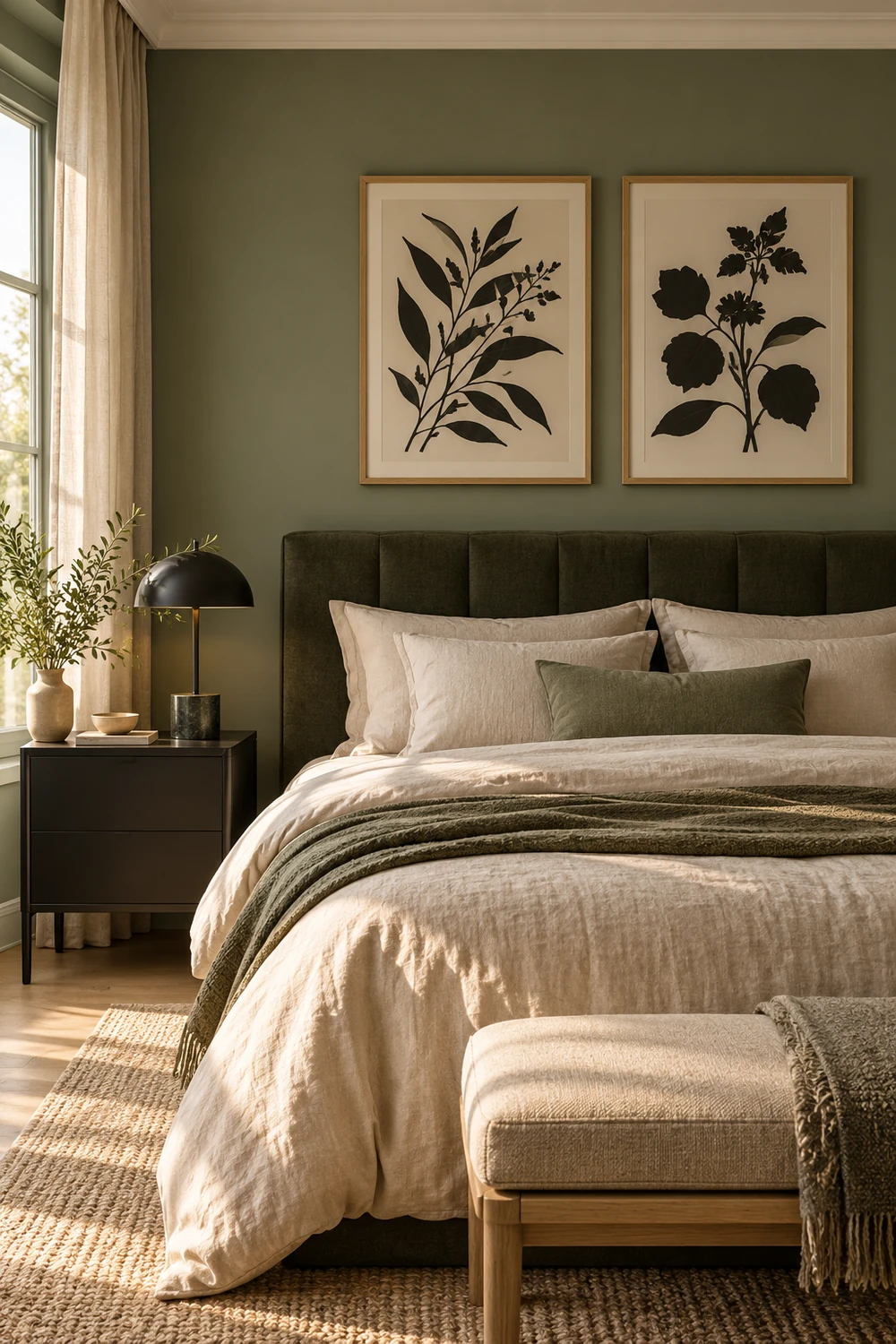
The botanical pair above the olive headboard shares a frame style and aligned edges. The gap gives each image room while keeping them visually connected.
Test the pair as one unit. Mark the outside boundaries and the gap on the wall templates, then look from across the room.
Keep the alignment deliberate. If one frame sits slightly higher by accident, the headboard’s straight line can make that difference noticeable. Use the actual hanging hardware positions when planning installation rather than assuming they match on the backs of both frames.
Give a Three-Piece Set Consistent Spacing
A trio can suit a wider arrangement when the images share a subject, palette, or graphic structure. It should read as a set rather than three unrelated prints squeezed together.
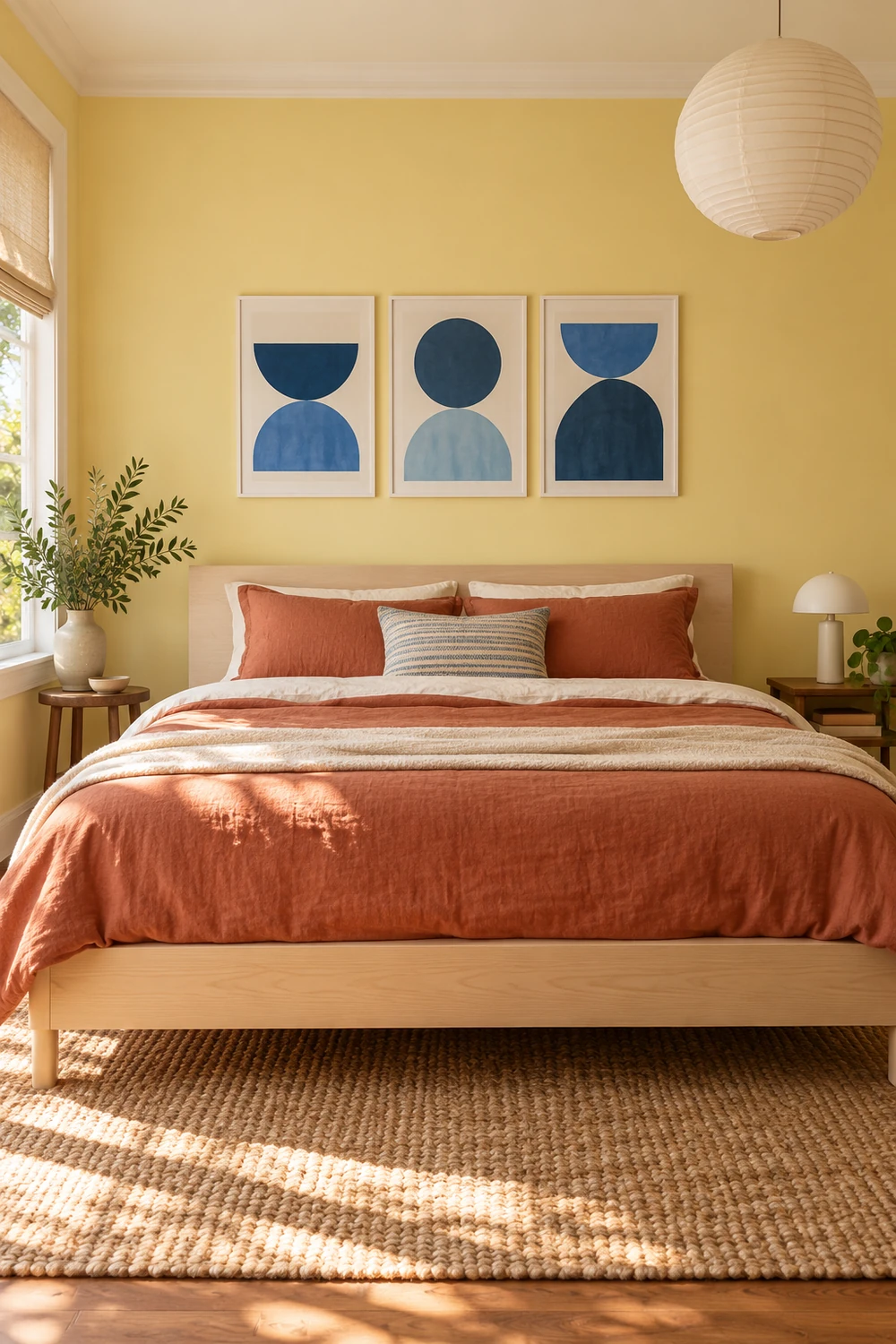
The blue geometric prints repeat a coherent visual language above the birch bed. Their consistent gaps give the group rhythm.
Measure the full width before choosing the individual frame sizes. A wide gap can make the trio feel scattered; a very tight gap may make it look like one crowded block.
Try the paper arrangement and live with it for a day before making holes. The view from the bed, the doorway, and the side of the room may reveal different spacing issues.
Consider a Lightweight Textile
A textile adds softness where another hard frame might feel repetitive. Its weave and outline can introduce texture without relying on a bold image.
The rust-and-flax example relates to the walnut bed through warm tones. Keep the textile securely supported with a method appropriate to its weight and construction.
Consider the whole hanging system, including any rod or decorative support. A soft fabric does not make a heavy support suitable above the bed.
Keep the piece clear of light fixtures, heating equipment, and ordinary head movement. Follow the textile’s care guidance and choose an arrangement you can maintain without disturbing the mounting unnecessarily.

Use Restrained Line Art in a Modern Bedroom
For above-bed wall decor, modern compositions can be as simple as one clean-lined image. The frame and empty wall around it become part of the design.
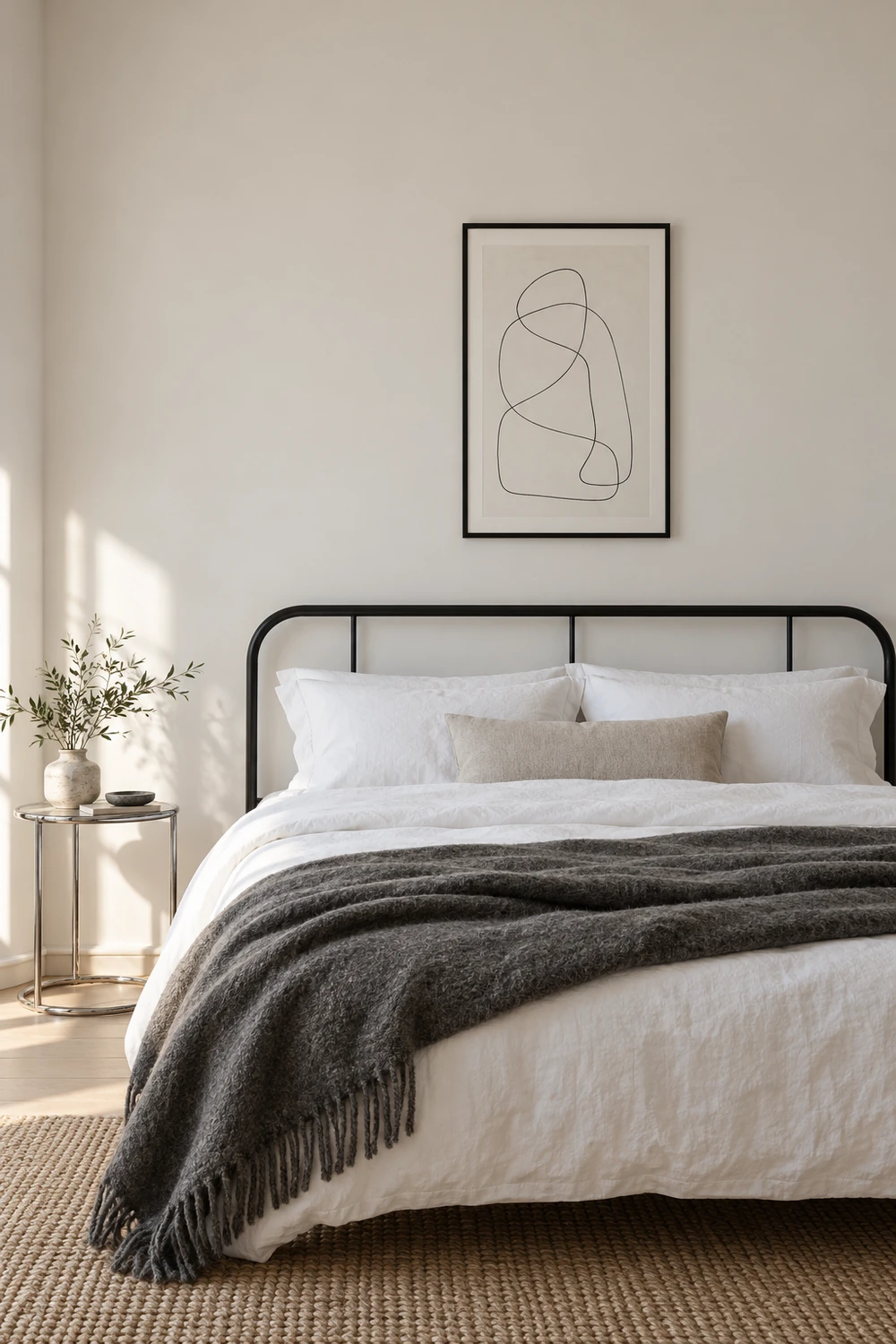
The black line artwork relates to the metal headboard without repeating every line of the bed. A quieter palette lets that relationship remain clear.
Check whether the image still reads from the doorway. Fine detail may be attractive close up but disappear at bedroom distance.
Choose a scale that makes the work visible, then keep surrounding additions limited. The arrangement does not need a second layer of signs, miniature shelves, or decorative shapes simply to make the wall seem complete.
Repeat Bedroom Colors Through an Abstract Print
Colorful artwork can connect bedding and furniture when it includes a few related tones. It works best as part of the room’s existing palette rather than an unrelated statement.
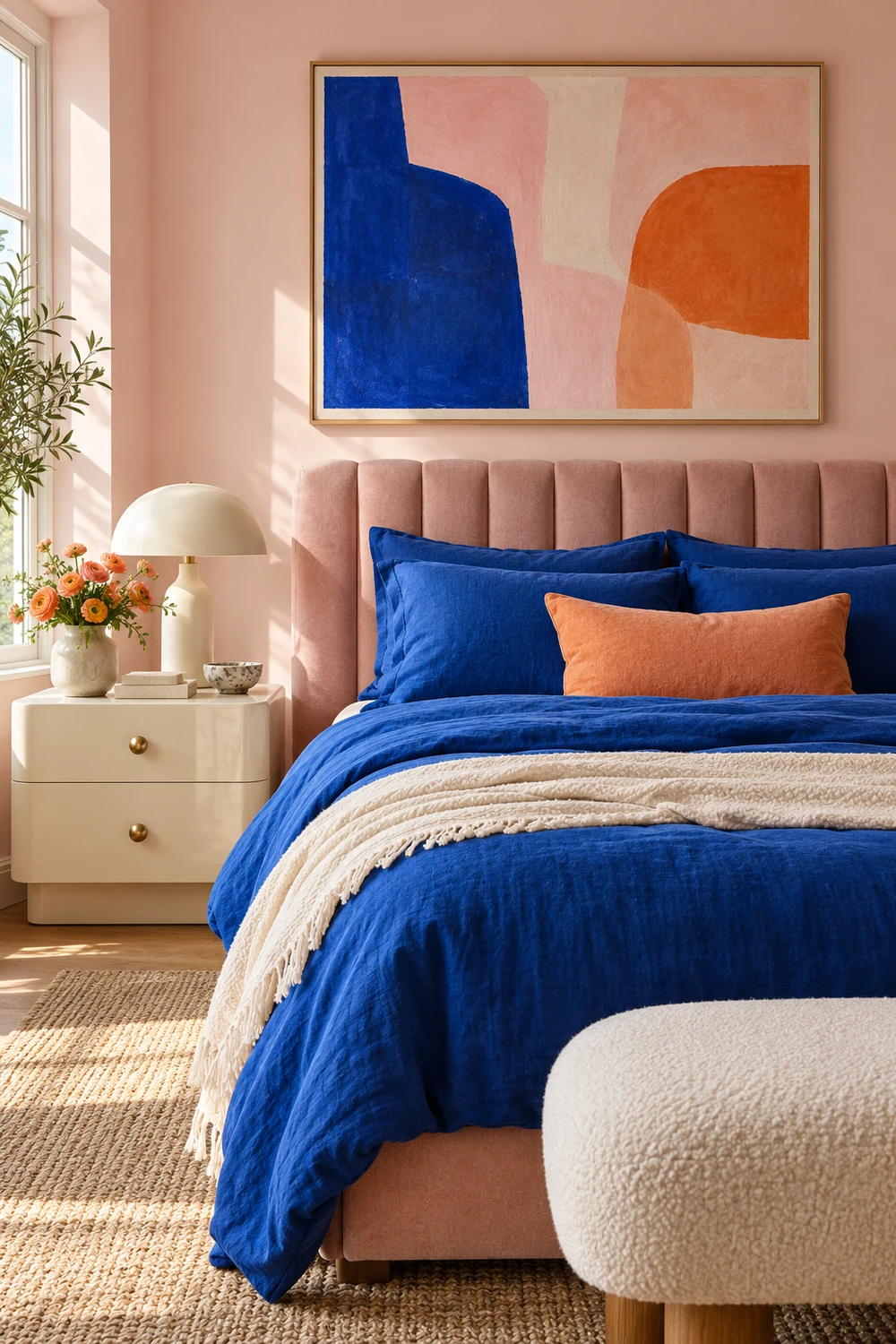
The cobalt-and-apricot composition echoes the bedroom’s color direction. It adds interest through the artwork itself, so the wall does not need more pieces around it.
Start with one or two shared colors. An exact match to every textile is unnecessary and can make the room feel overly coordinated.
Look at the artwork with the duvet, pillows, and curtains you normally use. A picture should work with the everyday room, not only with a special bedding arrangement used to style it once.
Let Neutral Texture Supply the Detail
If strong color is not right for the room, lightweight textured artwork can create a focal point through light and shadow.

The fabric-and-paper relief example stays close to the oatmeal headboard’s palette. Different surfaces create the distinction rather than a dramatic color contrast.
Check how much the work projects from the wall and how securely its components are attached. Choose an object suited to the position, not simply something described as lightweight.
View it after sunset too. A textured piece can look very different under a nearby lamp, which may emphasize certain edges and leave others quieter.
Scale the Arrangement to a Compact Bed
Small beds do not always need miniature art, but the whole composition should relate to their proportions and the wall available.

The modest landscape above the single bed gives the wall a focal point without extending into the neighboring window area.
Test one piece before considering a gallery group. The headboard, lamp, and window may already provide enough separate shapes.
Keep useful bedside space available rather than adding larger furniture to balance an oversized picture. Our small nightstand ideas focus on fitting that practical surface alongside the bed.
Balance an Extra-Wide Headboard
A broad headboard can support a grouped composition without requiring one unusually large frame. Choose a clear relationship between the pieces and let their collective width do the work.

The coordinated prints above this walnut headboard create a wider outline while staying visually separate from the bedside lamps.
Check whether the headboard extends beyond the mattress. Center the proposed group against the visual furniture composition rather than automatically using the mattress alone as the reference.
Do not stretch the spacing simply to fill every inch. A coherent group with some wall around it will often feel more settled than frames pushed toward both ends.
Respect the Usable Area Under a Slope
A sloping ceiling can make a tall arrangement feel compressed. Use the wall that is actually available rather than forcing the same layout that works beneath a flat ceiling.
The two modest nature prints sit below the slope without trying to follow it with a complicated diagonal gallery.
Use templates to check the narrowest point and the view from the room entrance. Leave the architecture readable around the arrangement.
Keep the pieces clear of the sleeping position and follow appropriate mounting guidance. A slope changes the fitting problem; it does not make a crowded or insecure arrangement more suitable.
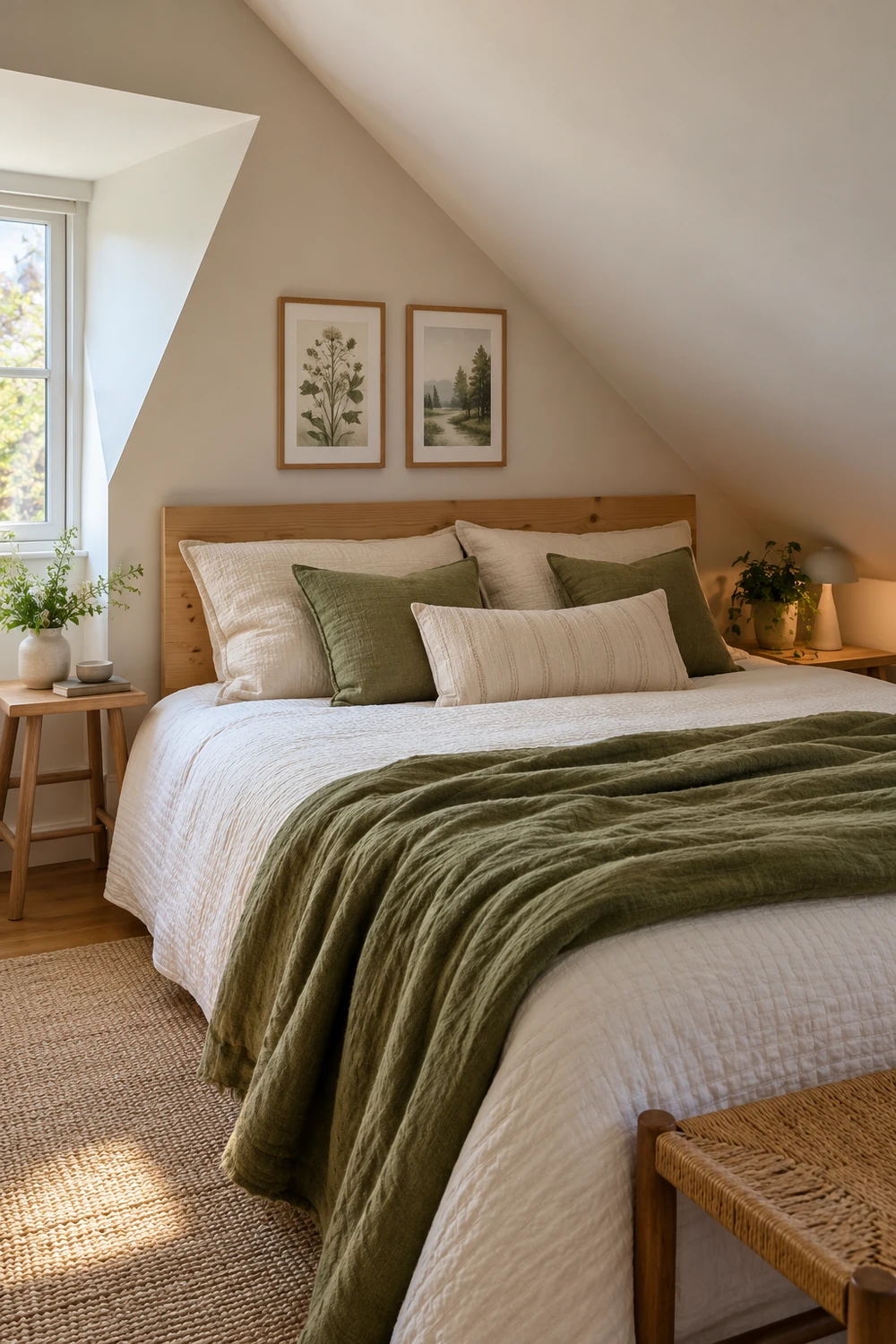
Work Around an Off-Center Window
An asymmetrical wall does not have to produce an awkward arrangement. Begin with the bed as the main reference, then see how much space the nearby window leaves.

The compact frame pair here balances the wall without pretending the window is centered. The relationship is deliberately modest.
Test curtain movement and the visual weight of the window covering. Avoid placing a frame where a curtain repeatedly brushes against it.
If a balanced group cannot fit comfortably, use one smaller artwork or leave the wall quieter. You do not need to compensate for every architectural difference with another decorative object.
Relate the Frame Finish to the Room
The frame can connect the artwork to furniture without matching every finish exactly. Look at wood tones, metal details, and the visual weight of the headboard.
The walnut frame and headboard share a material relationship while the linen pillow adds a softer texture. That small connection helps the artwork feel part of the room.
Keep the frame proportionate to the image and suitable for its mounting. A heavy decorative frame is not necessary to make a print look intentional.

Check the View From the Doorway
Step back before installing the final arrangement. The doorway view often makes scale issues more obvious than standing directly beside the bed.
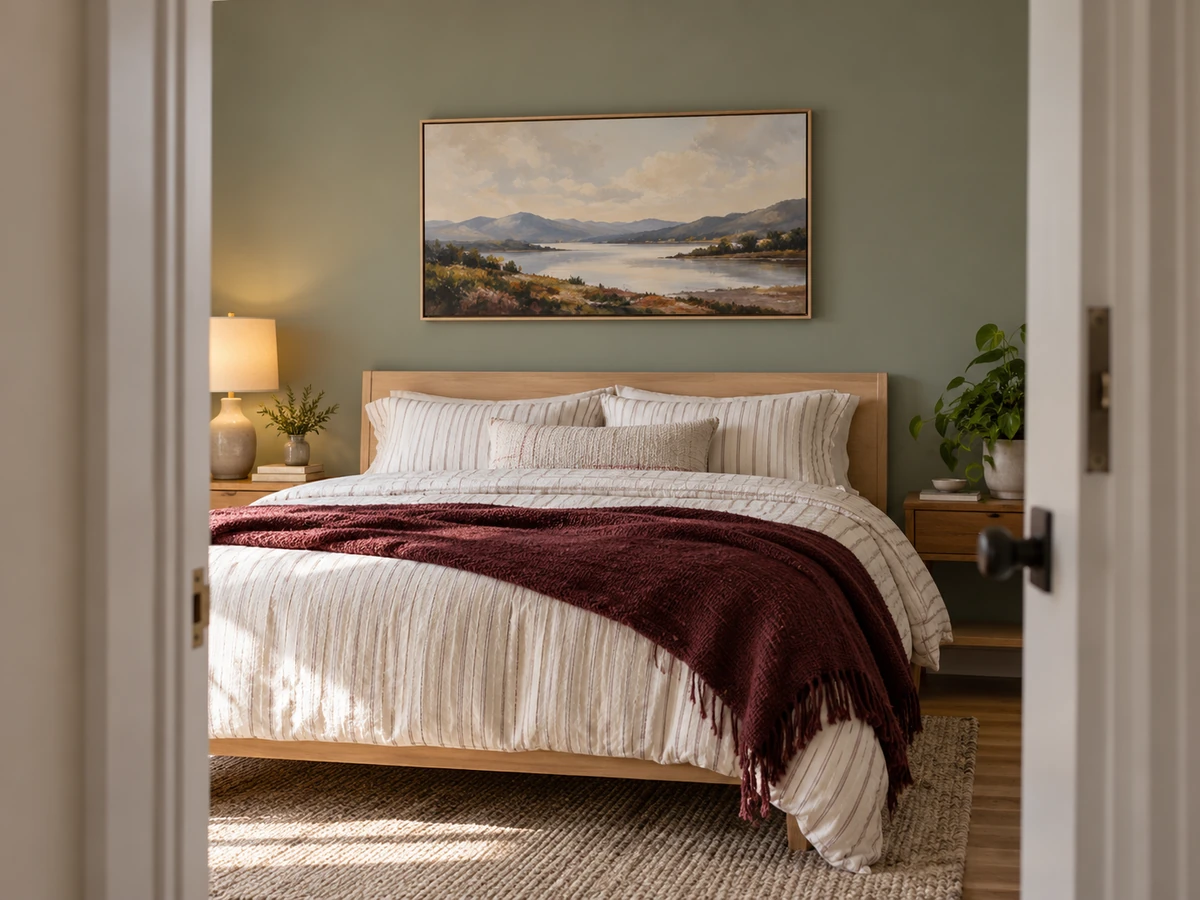
Look at the artwork and headboard together, then notice neighboring corners and dresser surfaces. The bedroom does not need equal decorative weight on every wall.
Our bedroom corner decorating ideas help choose a separate purpose for empty corners. For the wall directly over clothing storage, see dresser decorating ideas rather than extending the above-bed arrangement across the room.
Review the Wall Under Evening Light
Turn on the lamps normally used before bed. Check for distracting reflections and make sure the arrangement remains comfortable from your resting position.
The paired prints above the burgundy bed show how warm room light changes the mood without changing the composition. Adjust nearby lighting where needed rather than adding more decor to brighten the wall visually.

Frequently Asked Questions
What are good decor ideas above a bed?
A suitably lightweight print, aligned pair, coherent trio, or securely supported soft textile can provide a focal point. Choose according to the usable wall, headboard proportions, and appropriate mounting.
How do you choose the size of above-bed artwork?
Measure the headboard and available wall, then test the complete artwork outline with paper templates. Include frame spacing and nearby features instead of relying on one universal ratio.
Does the artwork have to match the bedding?
No. Repeating a color or material can connect the arrangement, but an exact match is optional. Judge the artwork with the room’s everyday bedding and finishes.
Let One Composition Finish the Wall
When deciding how to decorate above the bed, start with the real wall and one clear arrangement. Test the scale, choose suitable materials and mounting, and check both distant and seated views. A bedroom wall feels balanced when the art belongs to the bed without crowding the space around it.