How to Create a Cozy Reading Nook in Any Room
A chair beside the window, a lamp switched on before sunset, and a little table with room for your current book: a reading nook can begin with a few things you already own. What makes the corner inviting is how those pieces work together when you actually sit down.
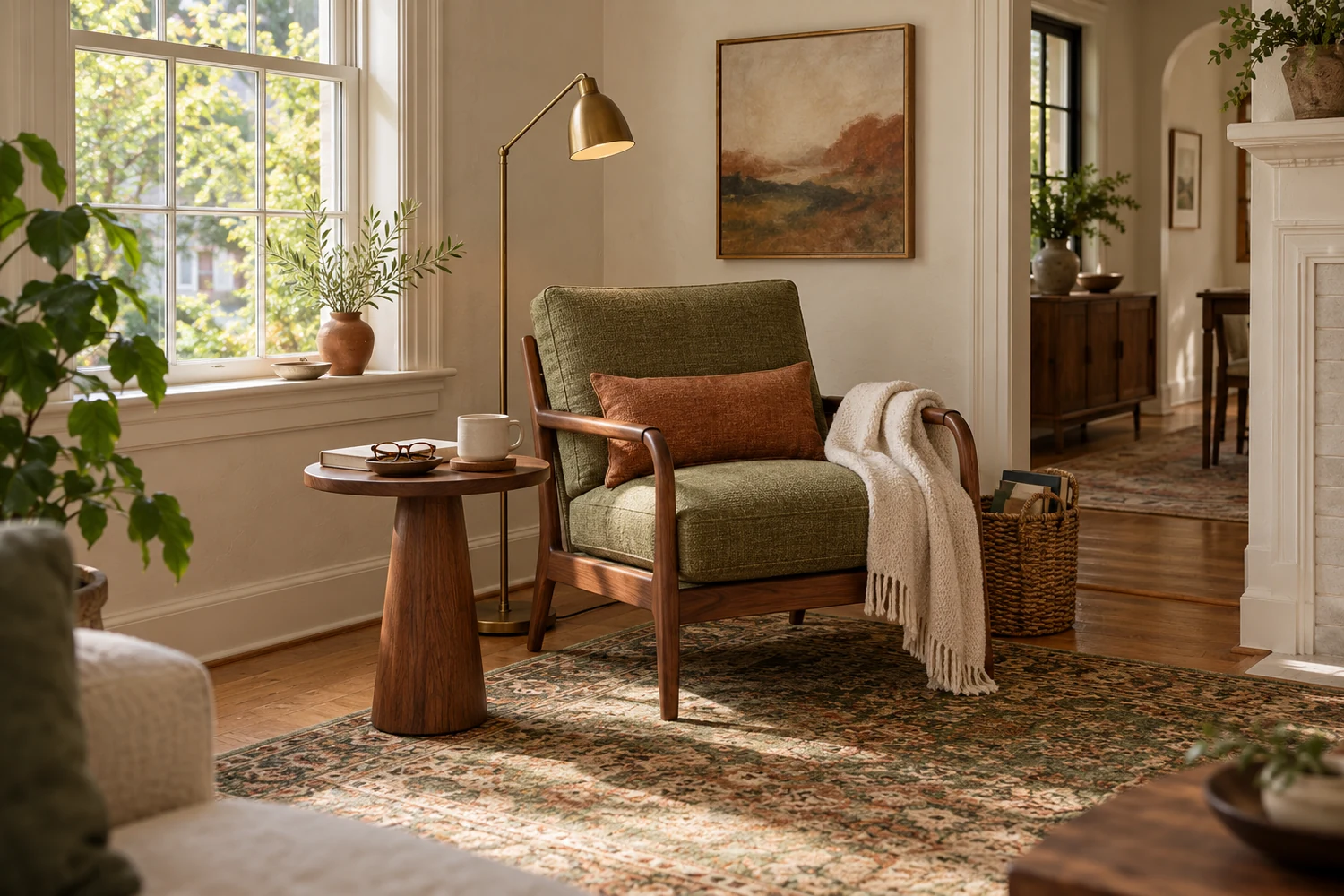
To create a reading nook, choose a comfortable seat, aim a dedicated light toward your book, add a reachable surface, and keep a small selection of books nearby. Then bring in a cushion, a throw, and a few colors that connect the corner to the rest of your room.
Start with the place you would enjoy using. The following steps will help you turn that spot into a reading corner that feels considered, comfortable, and easy to return to.
1. Choose a Spot That Fits Your Reading Routine
Think about when you usually read. A bright living-room window might suit weekend mornings, while a bedroom corner could be more appealing for a chapter before bed.
Try sitting in two or three possible spots at the time you expect to use them. Notice the daylight, nearby activity, and what you see from the chair. That short trial tells you more than an empty corner viewed from the doorway.
Look for these practical details:
- A comfortable way to approach the seat and stand up again.
- Space beside the chair for a book or drink.
- A nearby outlet for your chosen lamp.
- Access to curtains, doors, drawers, and existing furniture.
- A view or background you enjoy, whether that is a window, artwork, or a quiet wall.
For a reading nook in a living room, place the chair so you can still see into the room. A slight inward angle can make the seat feel connected to the surrounding furniture while giving it a purpose of its own.
By a window, leave enough room to operate the curtains or blinds. Test the position when sunlight reaches the glass so you can choose a comfortable chair angle and shade setting.
2. Measure the Whole Setup Before Choosing Furniture
Measure the chair, table, and lamp together. A compact chair can have a wide angled back, a swivel base needs turning space, and a floor lamp may have a base much wider than its stem.
Use painter’s tape to mark the furniture footprints on the floor. Include the chair’s full outside dimensions and any additional space required for reclining or swiveling. Then walk past the arrangement and sit down in a temporary chair.
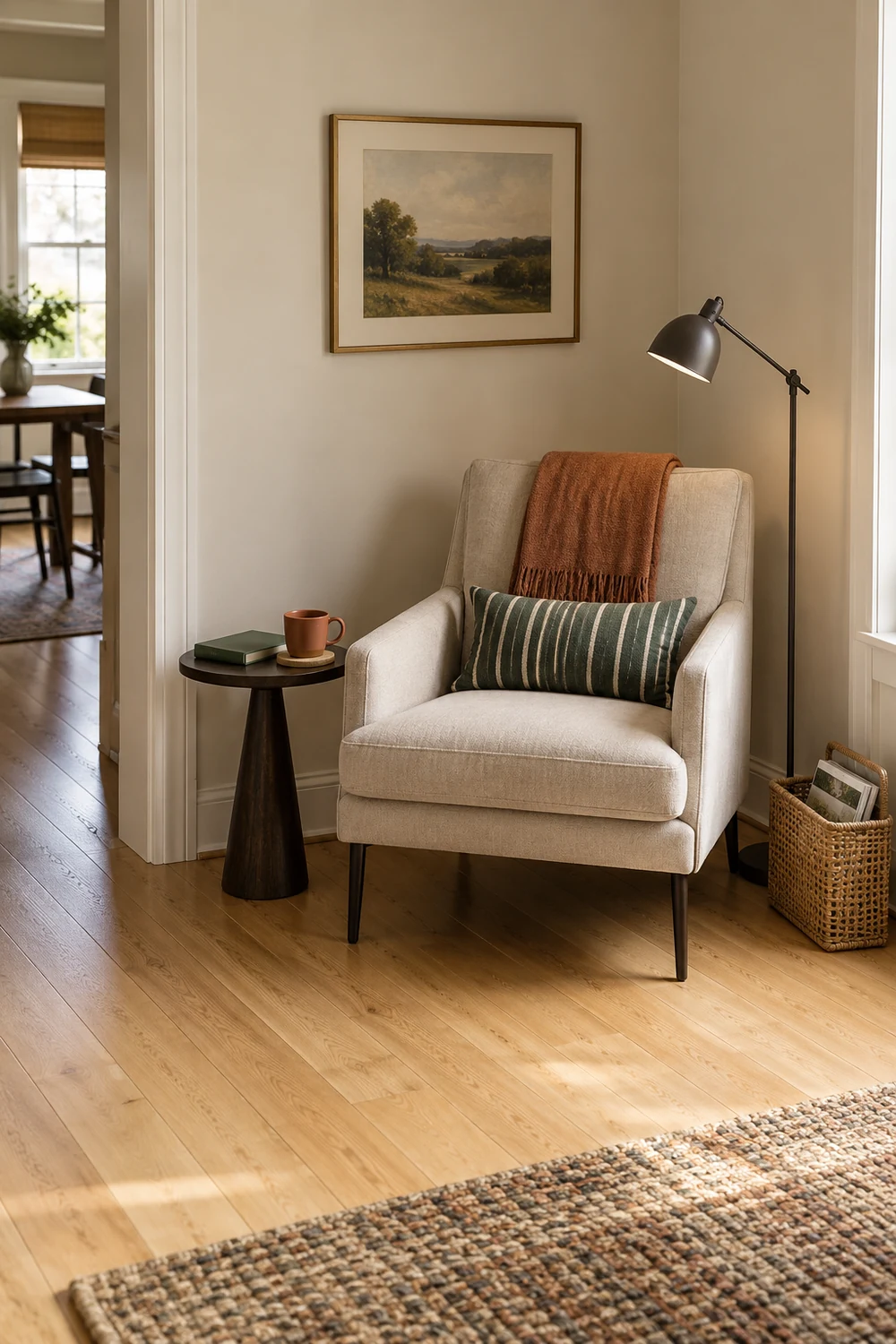
A Small Reading Nook Layout to Try
Here is an illustrative layout for a clear area measuring approximately 64 inches wide by 72 inches deep, with the room’s main walking route outside that area:
| Piece | Example size | Placement to test |
|---|---|---|
| Upright armchair | 30 inches wide × 34 inches deep | Toward the back of the nook, facing into the room |
| Side table | 14 inches in diameter | Beside the chair arm, within a seated reach |
| Floor lamp | 10-inch-diameter base | Beside the chair, with the shade directed toward the book |
| Book basket | 12 inches wide × 10 inches deep | At the rear or side where it stays easy to reach |
| Open space | Remaining area | In front of the seat for sitting down and standing up |
These are example furniture footprints, not minimum room dimensions or accessibility clearances. Draw your actual pieces to scale and account for wall gaps, lamp-arm movement, doors, and the way you move around the seat.
In a tighter room, try a table lamp on an existing sideboard or a C-shaped table that fits your chair. An ottoman is optional; add one after testing the basic arrangement so its position supports the way you use the space.
3. Choose a Seat You Enjoy Reading In
Bring a book when you try a chair. Sit as you would at home, with the book open in your lap or held in front of you. Give yourself time to settle into the seat.
Check whether the back feels comfortable, the arms support your preferred position, and the seat depth lets you sit the way you like. If you enjoy curling up, test that position too. The most useful choice is the one that suits your body, reading habits, and available space.
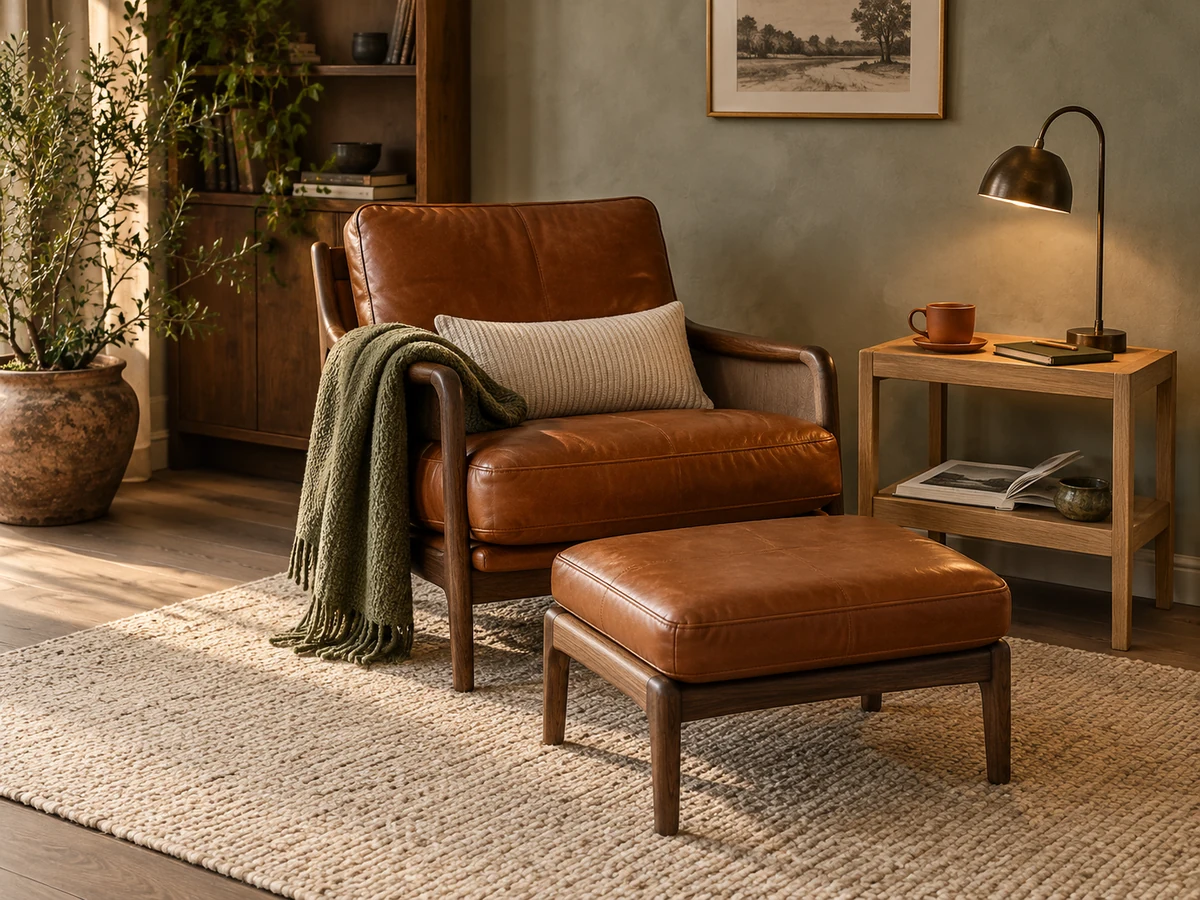
A few seating options work particularly well in different layouts:
If you already have a chair you like, build around it first. A supportive cushion and a better-positioned lamp may be the changes that make the corner work.
4. Give the Book Its Own Light
A reading corner needs light that reaches the pages comfortably after daylight fades. An adjustable floor lamp, table lamp, or suitable wall-mounted reading light lets you direct illumination toward the book.
Begin with the light beside or slightly behind your chair. Sit in your normal position, open a book, and adjust the shade so the pages are illuminated while the light source stays out of your direct view. Anglepoise’s reading-nook lighting guide recommends this approach to lamp placement.
Keep some gentle room lighting on as well. A nearby table lamp or the room’s existing ambient light can help the reading corner feel connected to its surroundings.
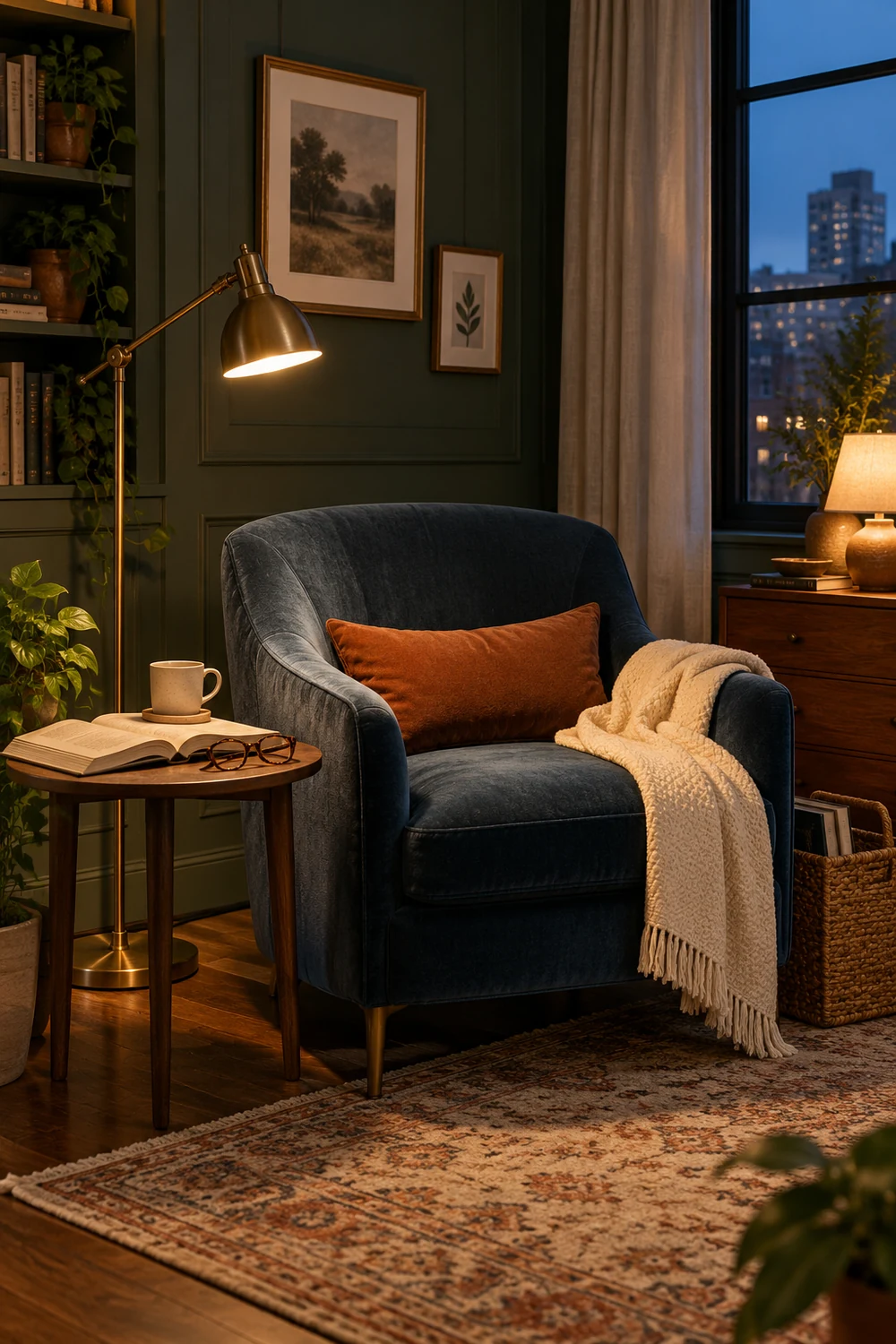
Choose Warmth and Brightness Separately
For a warm evening atmosphere, try a bulb around 2700K–3000K. ENERGY STAR identifies this range as warmer in appearance; Kelvin describes the color of the light. Lumens describe light output, which is a separate consideration.
Choose enough brightness for the print you read, then adjust the lamp’s position and any compatible dimming controls. A warm-colored bulb can still provide useful reading light. Test the result with your actual book, chair, and surrounding room lights.
Set up the lamp near an outlet so its cord can follow the room’s edge. Check that you can reach the switch comfortably from your seat.
5. Add a Surface Within a Comfortable Reach
The side table should make it easy to set down your book, glasses, or drink while staying comfortably seated. Try it beside your preferred arm before deciding on a permanent position.
Choose a top large enough for what you actually use. Set down an open book or notebook and your usual mug to test the surface. If a lamp also sits there, include its base in that trial.
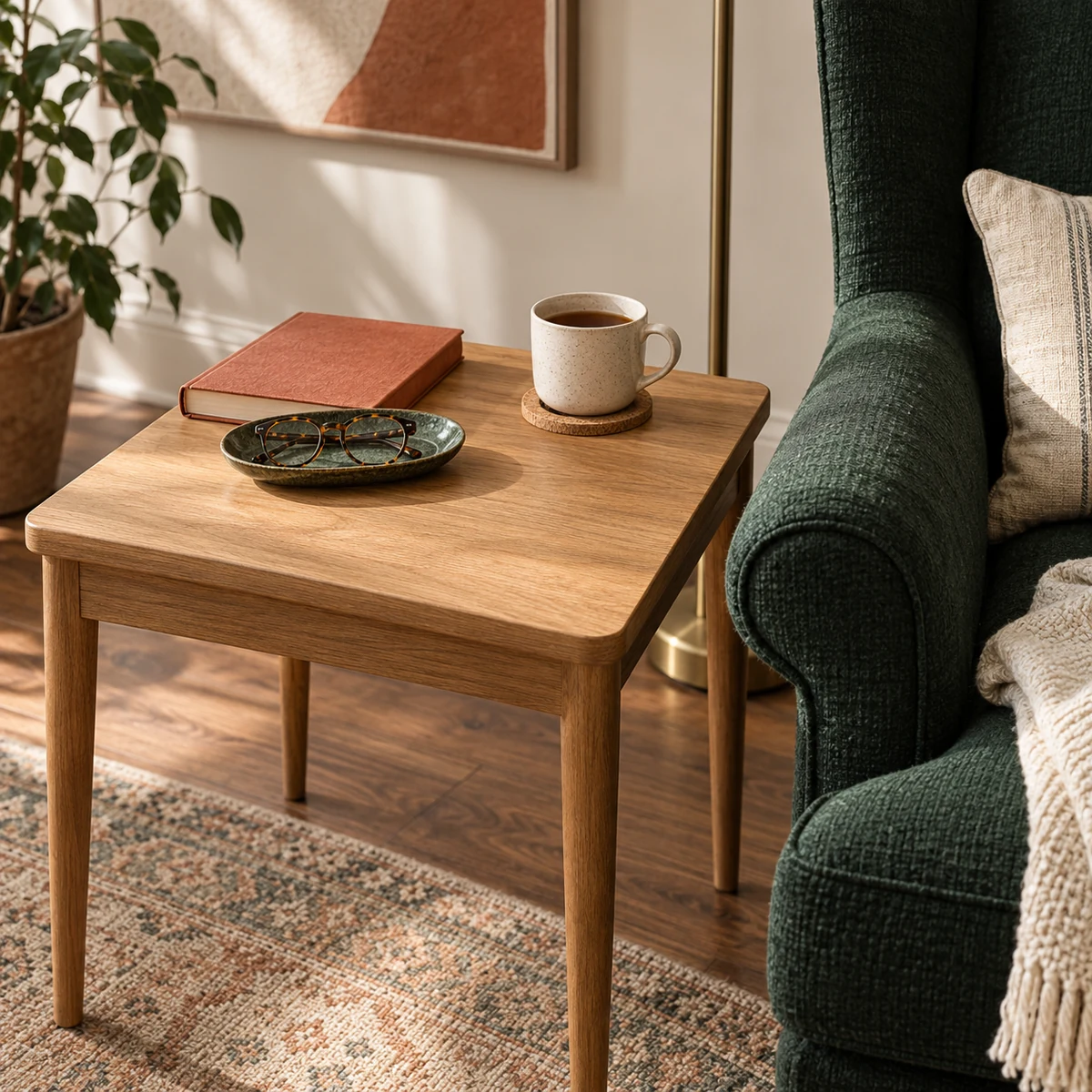
In a small reading nook corner, useful alternatives include a nesting table, a C-shaped table that fits the chair’s base, or a nearby surface already in the room. A narrow shelf can also work when its position and installation suit the wall and seating layout.
Keep the main part of the surface available for reading essentials. One small dish for glasses or a bookmark can add character while giving those items a regular home.
6. Keep Your Current Books Close
Give the books you are reading now an easy place to land. A small basket beside the chair, a low shelf, or the lower tier of a side table can be enough.
Try dividing the collection into two groups: books in current rotation near the seat, and the rest on your main bookshelf. This makes the nook easy to reset and gives you space to bring in something new.
Choose storage according to how you browse. A basket suits a few paperbacks and magazines; a short open shelf makes spines easy to scan. If the nook sits beside an existing bookcase, simply reserve a convenient section for current reads.
Let the seat, light, and book storage work as a small everyday system. The decorative arrangement of a whole bookshelf can develop separately as the room comes together.
7. Add Softness Where You Will Feel It
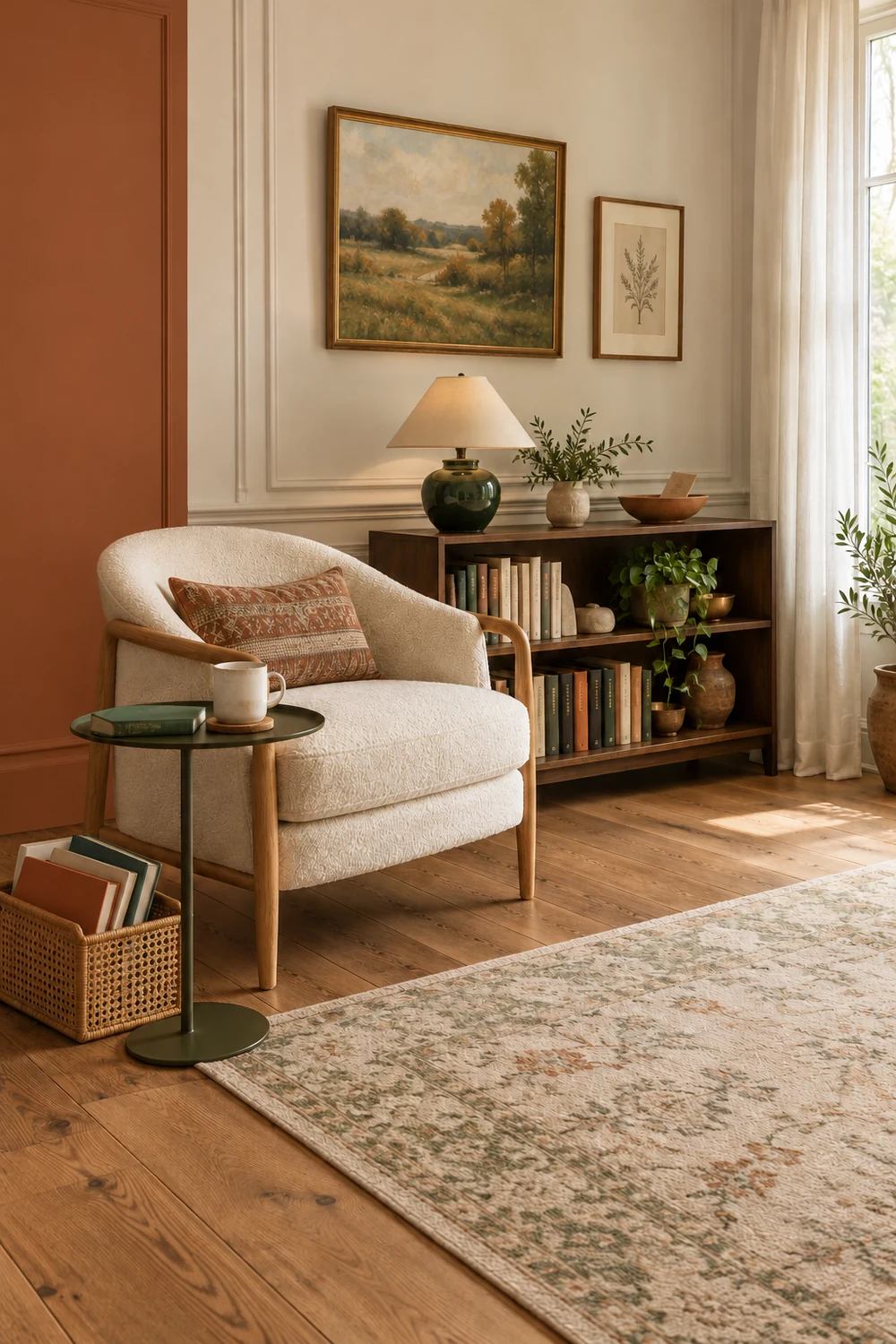
Start with one cushion and one throw. Use the cushion where it improves the seat for you, then drape or fold the throw where it is easy to pick up.
Mix textures at a scale that suits the chair. For example, a smooth upholstered seat could pair with a softly woven cushion and a brushed throw. If the chair already has a strong pattern or textured fabric, choose quieter layers around it.
A rug can help define a reading area within a larger room. Test the placement with the furniture in use so the chair feels stable and the edges sit neatly. Where the room already has a rug that includes the reading seat, let that existing piece connect the arrangement.
Curtains or a fabric shade can soften the window background while letting you adjust the daylight. Leave their full movement clear when you place the chair and table.
8. Repeat a Few Colors From the Room
A reading nook feels settled when some of its colors already appear nearby. Choose one main color, a supporting neutral, and a small accent, then repeat them through the chair, textiles, or accessories.
Here are three combinations to use as starting points:
| Direction | Main pieces | Small finishing details |
|---|---|---|
| Earthy and warm | Olive upholstery, walnut table, warm ivory textiles | A clay-colored cushion and a restrained brass lamp |
| Light and tailored | Oatmeal chair, pale wood table, cream throw | A narrow blue stripe and a dark lamp base |
| Rich and cozy | Ink-blue chair, dark wood table, rust cushion | A soft neutral blanket and warm metal details |
Adapt the palette to your existing chair, flooring, and wall color. Repeating a wood tone or a color from nearby artwork may be enough to connect the corner to the room.
Finish with one detail you enjoy looking at: a small framed print, a handmade bowl, or a plant suited to the available light. Place it where it adds to the view from the chair while keeping your reading surface useful.
Three Ways to Fit a Reading Nook Into Your Home
Beside a Living-Room Window
Position the chair near the window and angle it gently toward the room. Put the table on the side you naturally reach toward, then test the lamp on the other side or slightly behind the seat.
Leave curtain movement clear and keep the normal route through the living room open. Repeat a color from the sofa, rug, or artwork so the new seat feels part of the same arrangement.
In a Bedroom Corner
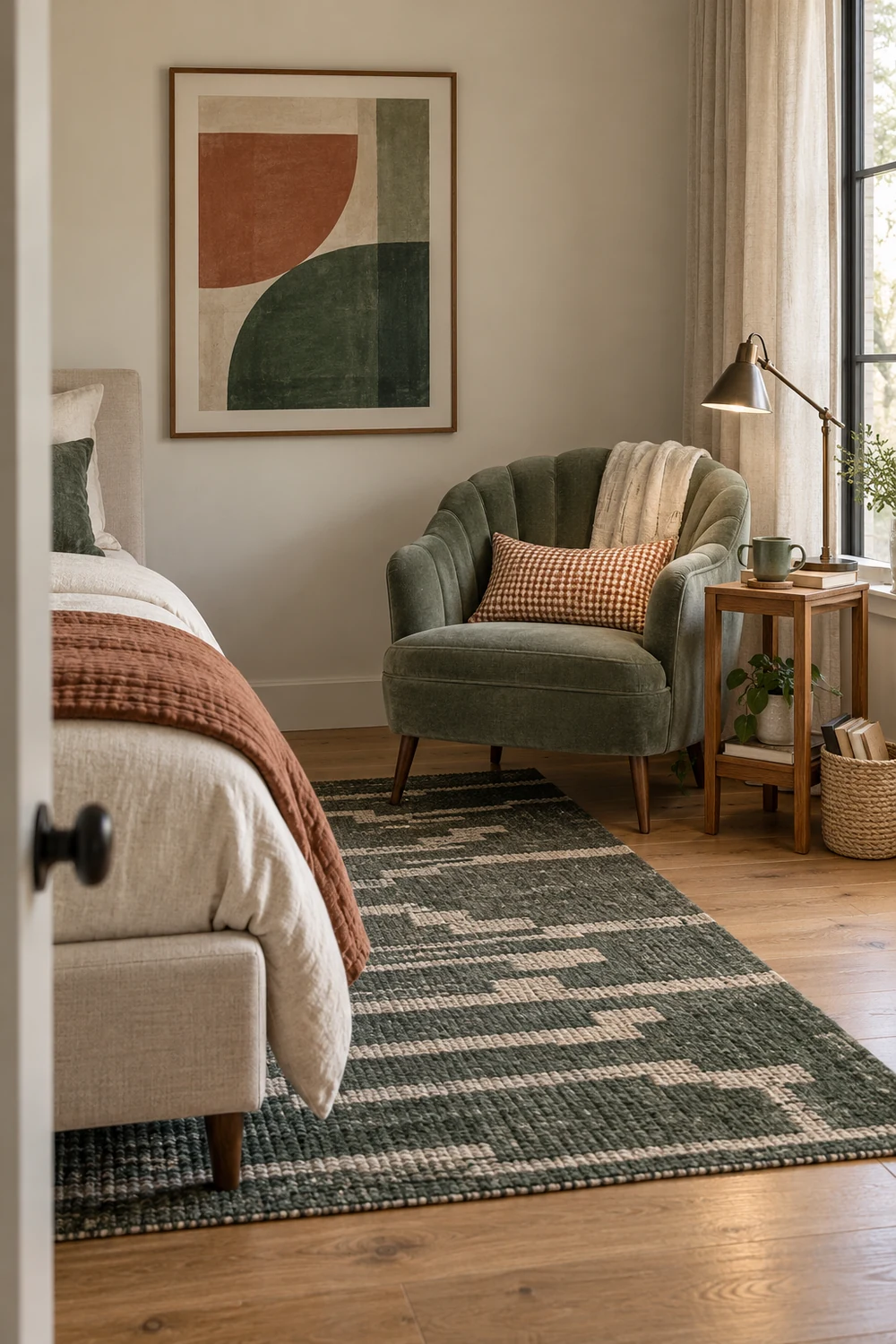
Place the chair where it works with the bed and bedroom storage. Open wardrobe doors and drawers during the layout test, and check how you approach both the chair and the bed.
Use a small table or nearby existing surface, a focused lamp, and a basket for current reads. One cushion that picks up a bedding color can give the corner a quiet connection to the rest of the bedroom.
At the End of a Sofa
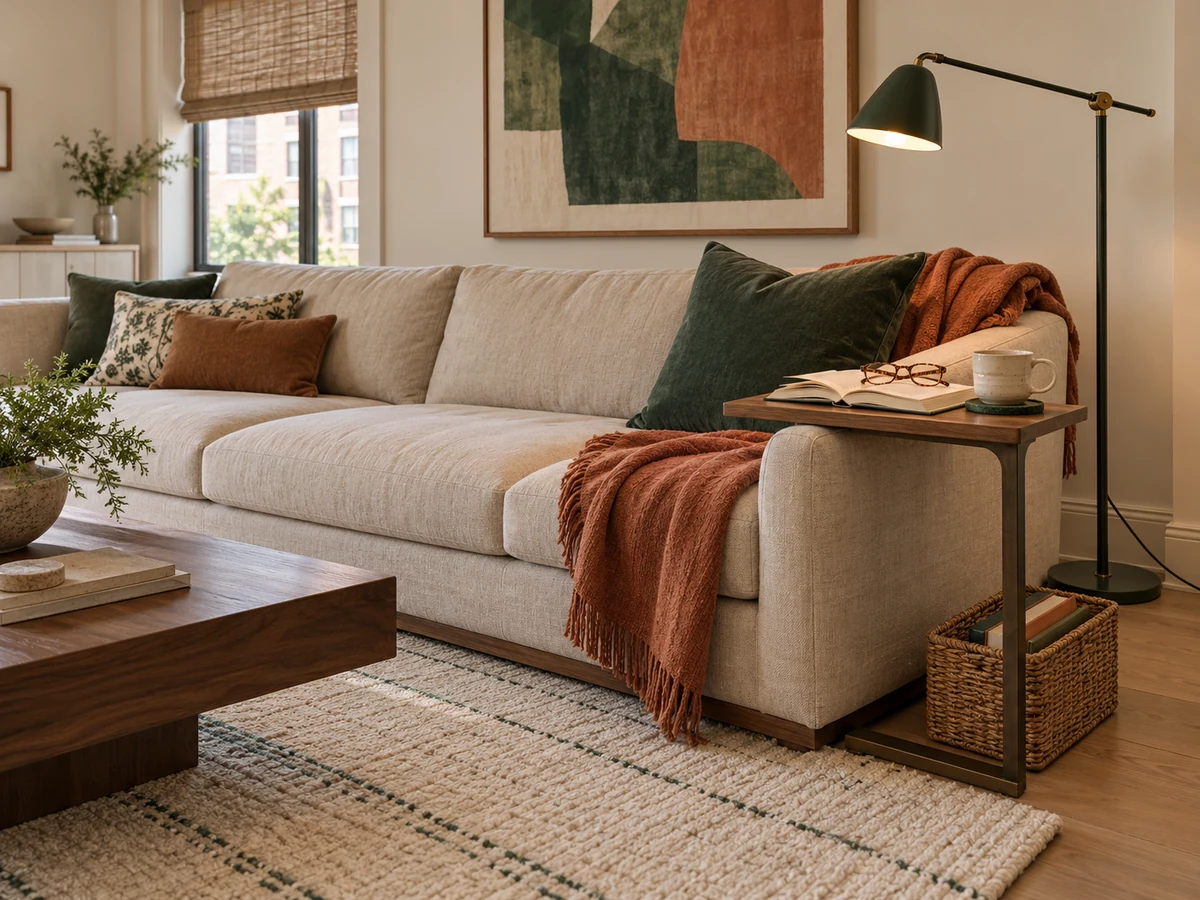
Choose the sofa seat you already find comfortable. Add an adjustable light, a reachable side table, and a basket that can hold a book and throw.
This arrangement can be especially useful in an apartment where the same room supports several activities. Keep the pieces movable so the reading setup can adapt when you have company.
Build the Nook in a Useful Order
When making a reading nook, start with the pieces you already have and use the corner for a few evenings before adding more.
- Place the seat. Test your reading position and the space around it.
- Set up the light. Open a book after sunset and adjust the lamp.
- Add a surface. Check your reach with the objects you normally use.
- Choose book storage. Give current reads a convenient spot.
- Finish with textiles and one personal detail. Add the layers that make the corner feel like yours.
If you plan to buy something, let those trial sessions guide the choice. You may find that the priority is a better light, a more useful table, or a cushion for the chair you already enjoy.
The Final Seated Check
Before you consider the nook finished, spend a few minutes there with a book and a drink. Check the setup from the position in which you will use it:
- The chair feels comfortable with the book open.
- Light reaches both pages, and the shade is easy to adjust.
- The switch, book, glasses, and drink are within a comfortable reach.
- There is space to sit down, stand up, and pass the nook.
- Curtains, doors, and nearby storage operate normally.
- Books and the throw have a simple place to go afterward.
Make the small adjustments you notice: shift the table, rotate the chair, redirect the shade, or move a cushion. Those details help the nook feel comfortable in everyday use.
Frequently Asked Questions
How much space do you need for a reading nook?
You need enough room for your chosen seat, useful lighting, a reachable surface, and comfortable access. Measure the full furniture footprints and test them with painter’s tape. The 64-by-72-inch example above is one possible arrangement; the right fit depends on your pieces and the surrounding room.
Can you create a reading nook without buying a chair?
Yes. An existing armchair, comfortable sofa end, or suitable window bench can become a reading spot. Add a light that reaches the book, a surface within reach, and somewhere to keep current reads.
Does a reading nook need to be next to a window?
A window is optional. A corner farther into the room can work well with a dedicated reading light and surrounding room light. Choose the spot according to your reading routine, furniture fit, and comfort.
How do you make a small reading nook feel cozy?
Use a seat you like, focused reading light, a soft throw, and a cushion that feels comfortable. Repeat a few room colors and leave the side table useful. Texture and thoughtful placement can give even a compact nook a welcoming feel.
What should you put on a reading-nook side table?
Start with space for a book, a drink, and your glasses if you use them. Add a small lamp only if its base leaves enough usable surface. A dish or coaster can be the only extra detail you need.
Make Room for the Next Chapter
Begin with the chair, light, and side surface, then let a few real reading sessions shape the finishing touches. When the pages are comfortably lit, your essentials are close, and the seat feels inviting, the nook is ready for its first book.