Bedroom Decor Ideas for a Stylish, Welcoming Space
Bedroom decor starts with a simple idea: a bedroom should help you rest. That sounds obvious, but many bedrooms are decorated like living rooms — bright lights, busy walls, and surfaces crowded with objects — and then they wonder why the room does not feel relaxing. The answer to the reader’s question, how do I decorate my bedroom, is to start with the bed, the light, and a calm palette, and then add only the furniture and decoration that support rest, storage, and a quiet start to the day.

A stylish bedroom does not need to be large, expensive, or perfectly matched. It needs a comfortable bed with fresh bedding, a lamp you can read by, somewhere to put a book and a glass of water, and enough storage that clothes and clutter do not end up on the floor. When those basics are right, the decoration — the art, the textiles, the dresser — has a calm base to sit on, and the room feels welcoming without trying too hard.
Start With the Bed, the Palette, and the Light
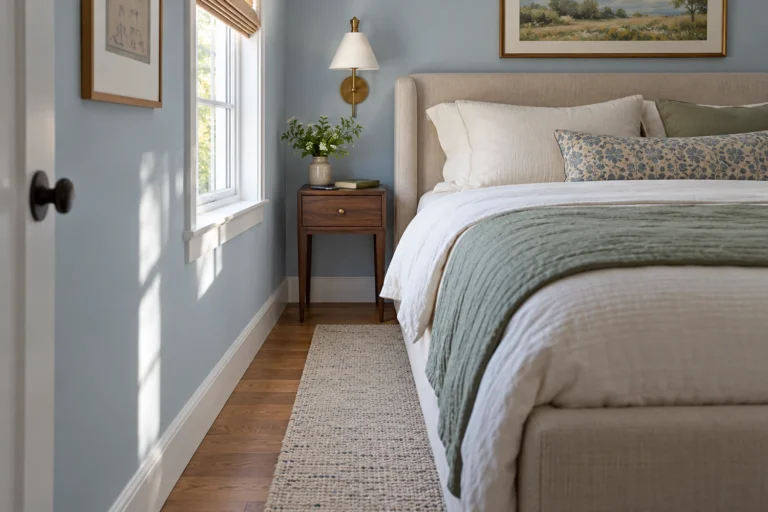
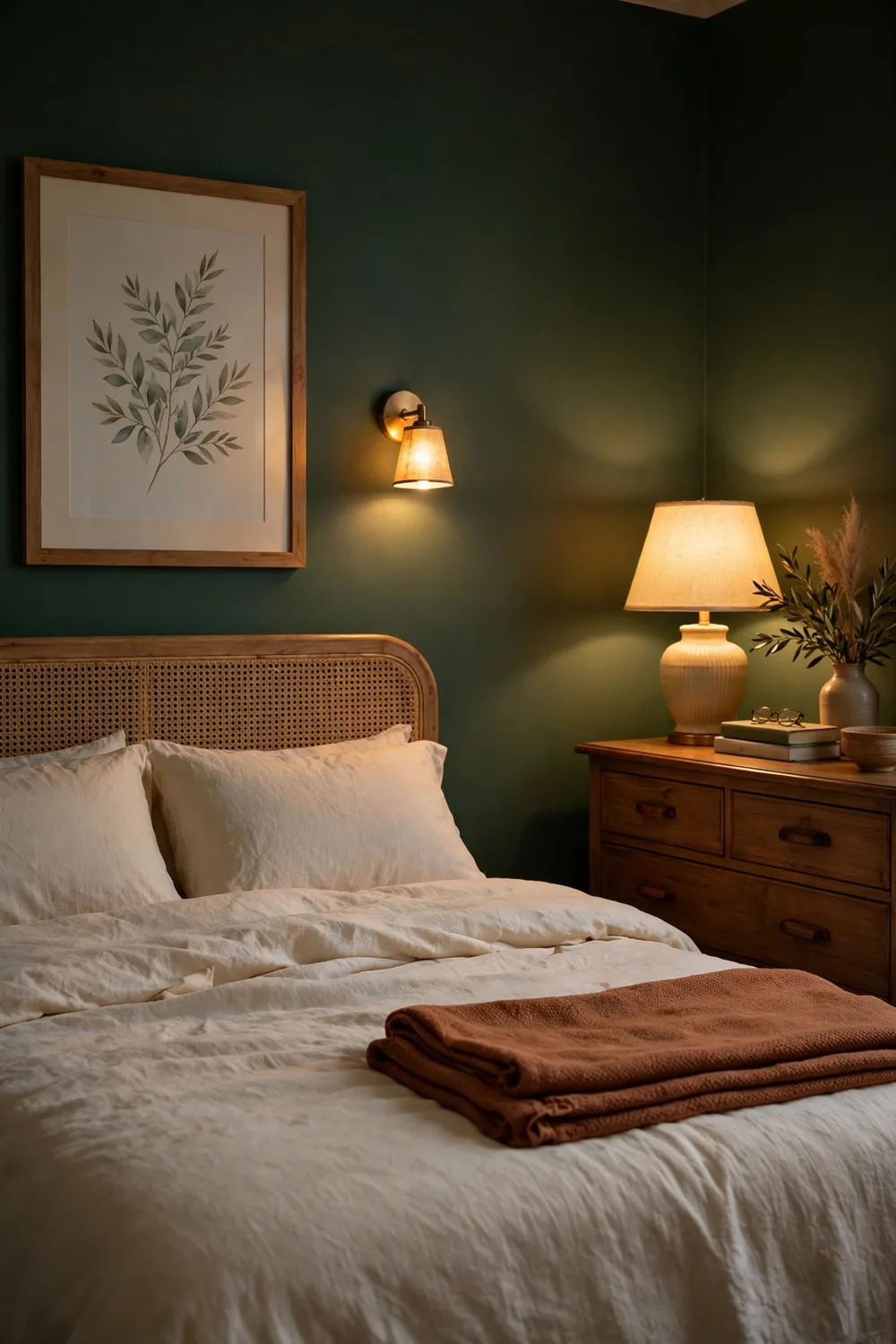
The bed is the anchor of the room, and everything else should relate to it. Choose bedding in a calm palette — soft white, warm cream, muted blue, sage green, or a gentle gray — and let the accent color appear in a throw, a cushion, or a piece of art rather than in the whole bed. Fresh, clean bedding in a color you love does more for a bedroom than any decoration, because you see it and touch it every day.
A calm palette does not mean a boring one. Mix textures instead of colors: linen sheets, a cotton duvet, a knit throw, and a velvet cushion in the same palette will feel rich without being busy. Avoid a matching set of everything — the same pattern on the duvet, the cushions, and the curtains makes the room feel like a showroom rather than a place where someone sleeps.
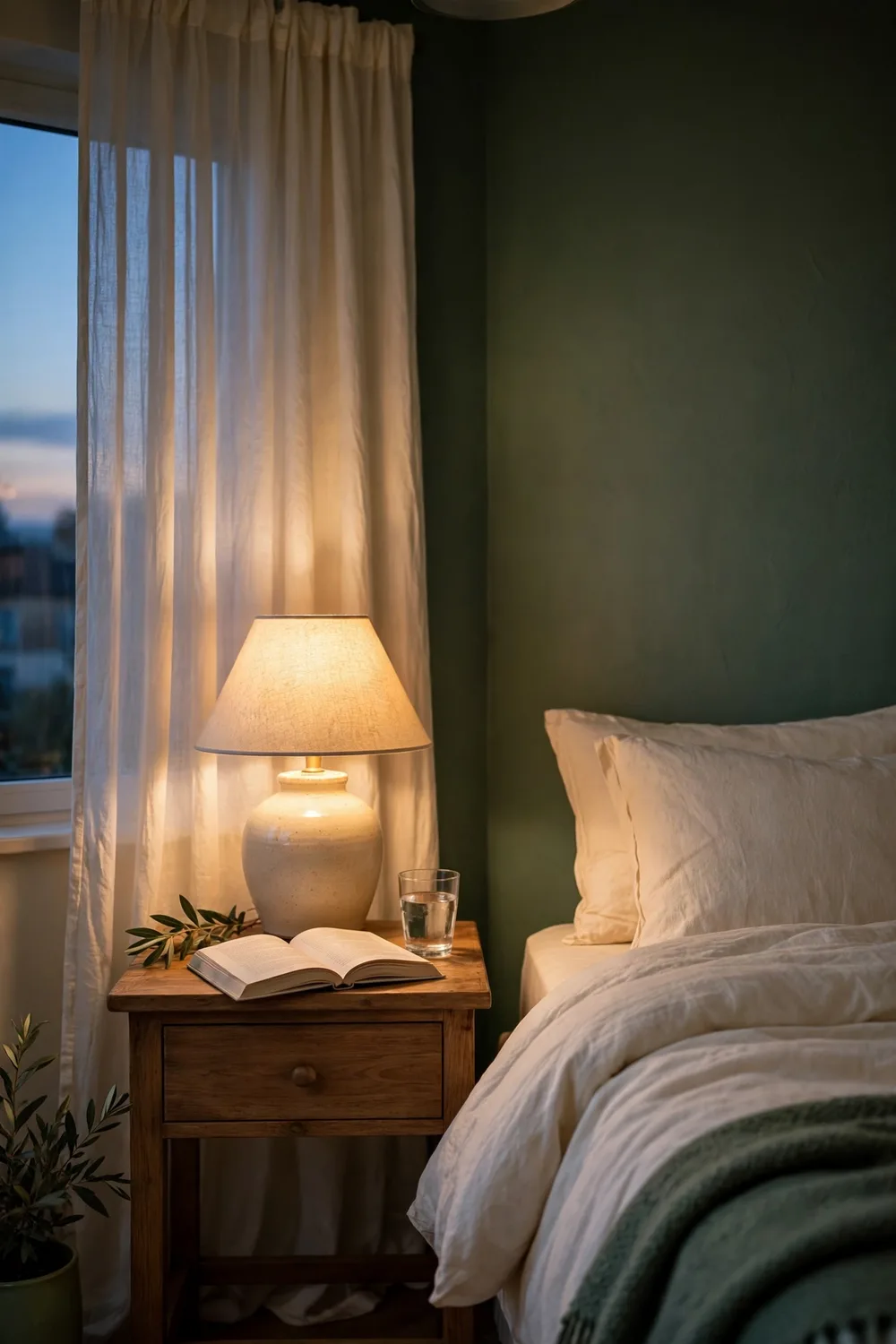
Light matters more in a bedroom than in any other room, because it affects how you fall asleep and how you wake up. Use a bedside lamp with a warm bulb for reading, and keep the overhead light for cleaning and getting dressed. Curtains that block early morning light help you sleep, while sheer curtains or blinds that let in daylight make the room feel fresh during the day. If you read in bed, a lamp on each side of the bed, or a wall light that frees the nightstand surface, is worth more than a decorative object.

Dress the Bed: Bedding, Throws, and Cushions
Bedding is the largest textile in the room, so it sets the tone. Start with sheets and a duvet or cover you find comfortable, in a light neutral or a soft color from your palette. Add a throw folded across the foot of the bed — it adds warmth, color, and a layer you can pull up on a cold night — and one or two cushions against the pillows. Two cushions are usually enough; more than that means moving cushions every night before you can sleep, which is a sign the bed is over-decorated.
Keep the bed made, even loosely. A bed that is made in the morning makes the whole room look tidy, and it takes less than a minute. Store extra blankets in a basket or at the foot of the bed, not in a pile on a chair. Our guide to organizing a linen closet shows how to store sheet sets together, keep guest linens in labeled baskets, and use deep shelves without losing track of what is at the back — a tidy linen closet makes fresh bedding easy to find and easy to change.
How to Choose Bedding That Lasts
Choose bedding you can wash easily and that feels good against your skin. Natural fibers such as cotton and linen breathe well and soften with washing, while a duvet that is easy to remove and wash will stay fresh longer. Have at least two sets of sheets so one can be in the wash while the other is on the bed, and store each set together — fitted sheet, flat sheet, and pillowcases in one stack — so changing the bed takes minutes rather than a search through the closet.


Style the Dresser, Nightstands, and Storage
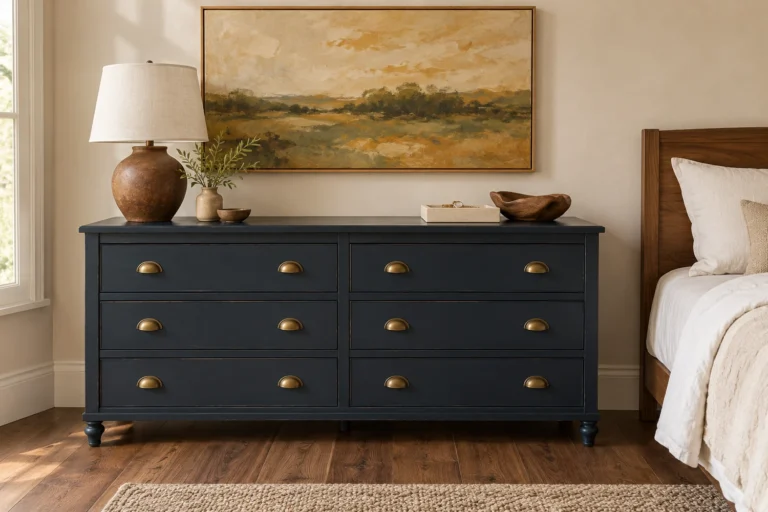
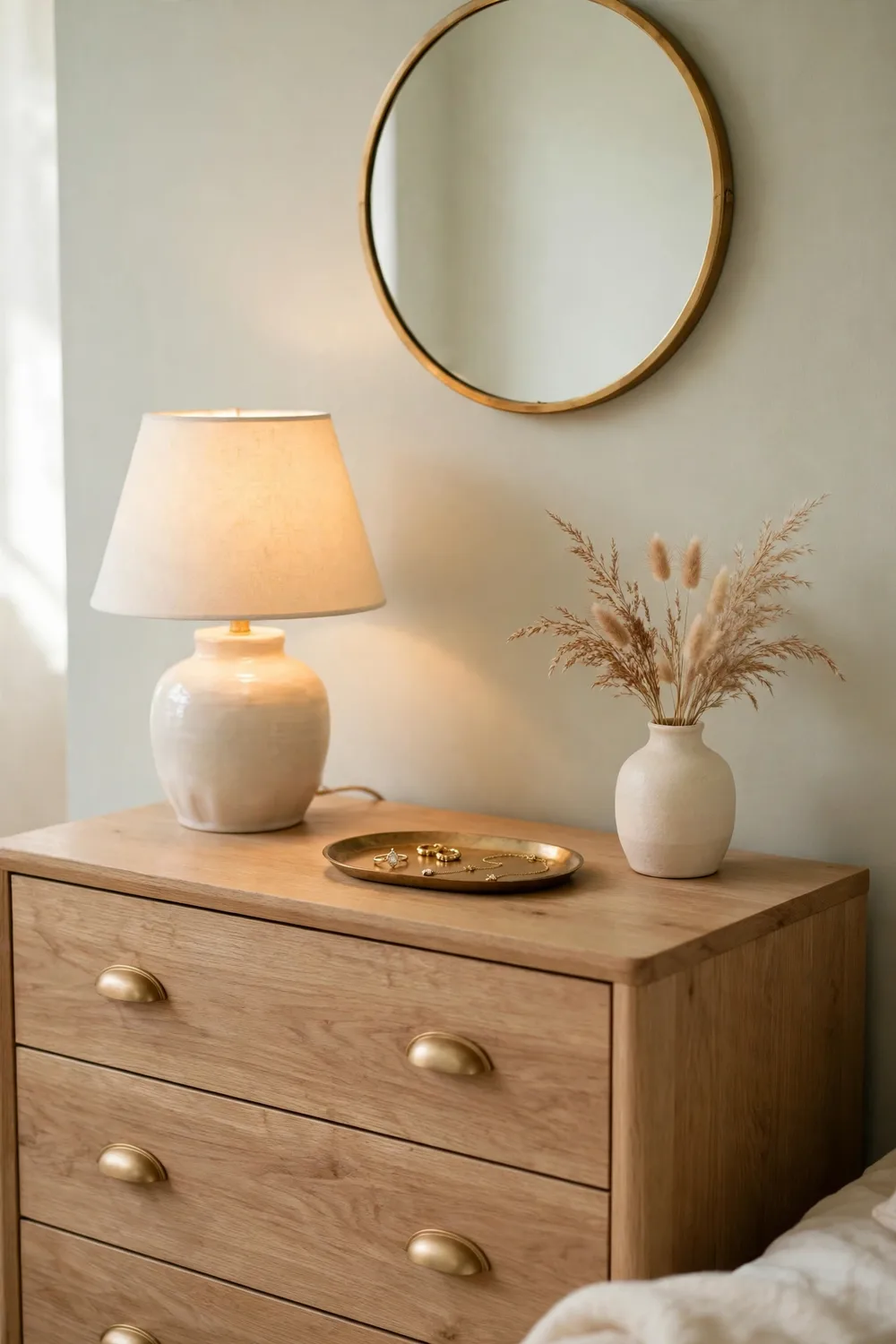
The dresser is the bedroom’s main storage and its main display surface, and it works best when it does both without crowding. Our guide to dresser decorating ideas shows how to create zones on a dresser top — a tray for jewelry, a lamp for evening light, and art or a mirror above — while leaving room for everyday essentials. Keep the dresser top mostly clear: a lamp, a small tray, and one decorative piece are enough. A dresser that is covered in objects becomes a dumping ground, not a display.


Nightstands need to be useful first and decorative second. A small nightstand should hold a lamp, a book, and a glass of water, and little else. Our guide to small nightstand ideas covers narrow nightstands, floating shelves, wall-mounted boxes, and compact tables for tight layouts, including how to test the top with the real essentials you use at night. If the two sides of the bed are different widths, use different nightstands — matching pieces are not required, and a narrower piece on the tight side will make the room feel better than two pieces that do not fit.
Clothing storage is the other half of a calm bedroom. Our guide to clothing storage ideas for small bedrooms explains how to sort by how each garment needs to be stored, use slim wardrobes and shelf dividers, and keep daily and occasional clothes in separate zones. Anchor tall dressers and wardrobes per CPSC Anchor It! guidance (https://www.anchorit.gov), and follow the manufacturer’s mounting and load instructions for any wall-mounted storage.
Use the Walls: Art Above the Bed and Awkward Corners
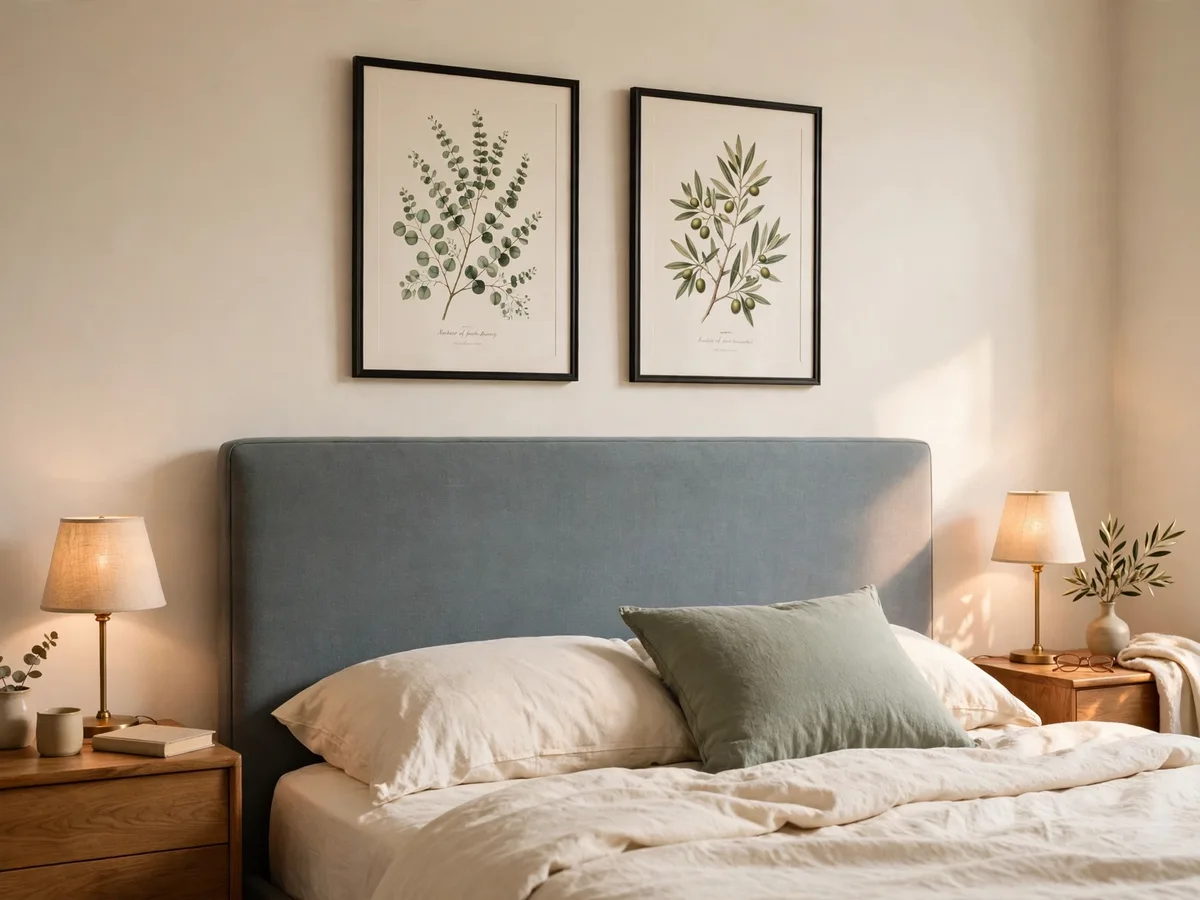
The wall above the bed is the bedroom’s natural focal point, and it deserves one clear idea rather than a scatter of small frames. Our guide to above-bed decor ideas covers single large art, frame pairs and triptychs, textile hangings, and how to judge scale and spacing around the headboard, including small rooms, wide headboards, and sloped walls. Choose one approach — a single large print, a pair of frames, or a textile hanging — and keep it centered over the bed, at a height that relates to the headboard rather than floating near the ceiling.
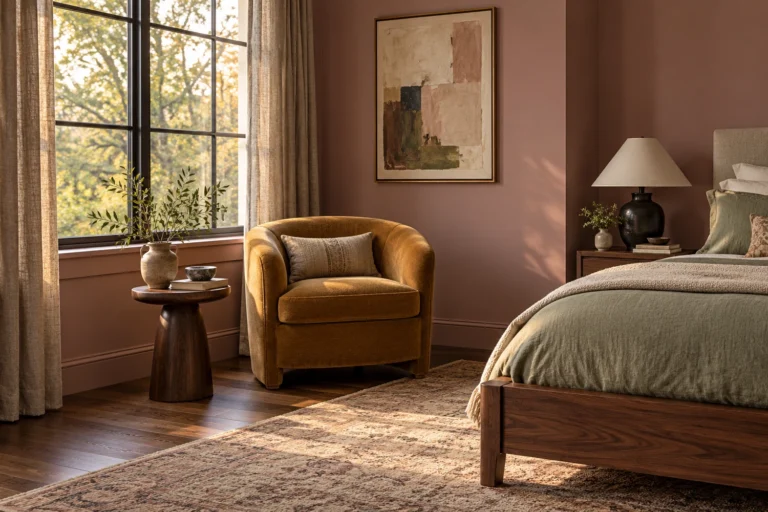
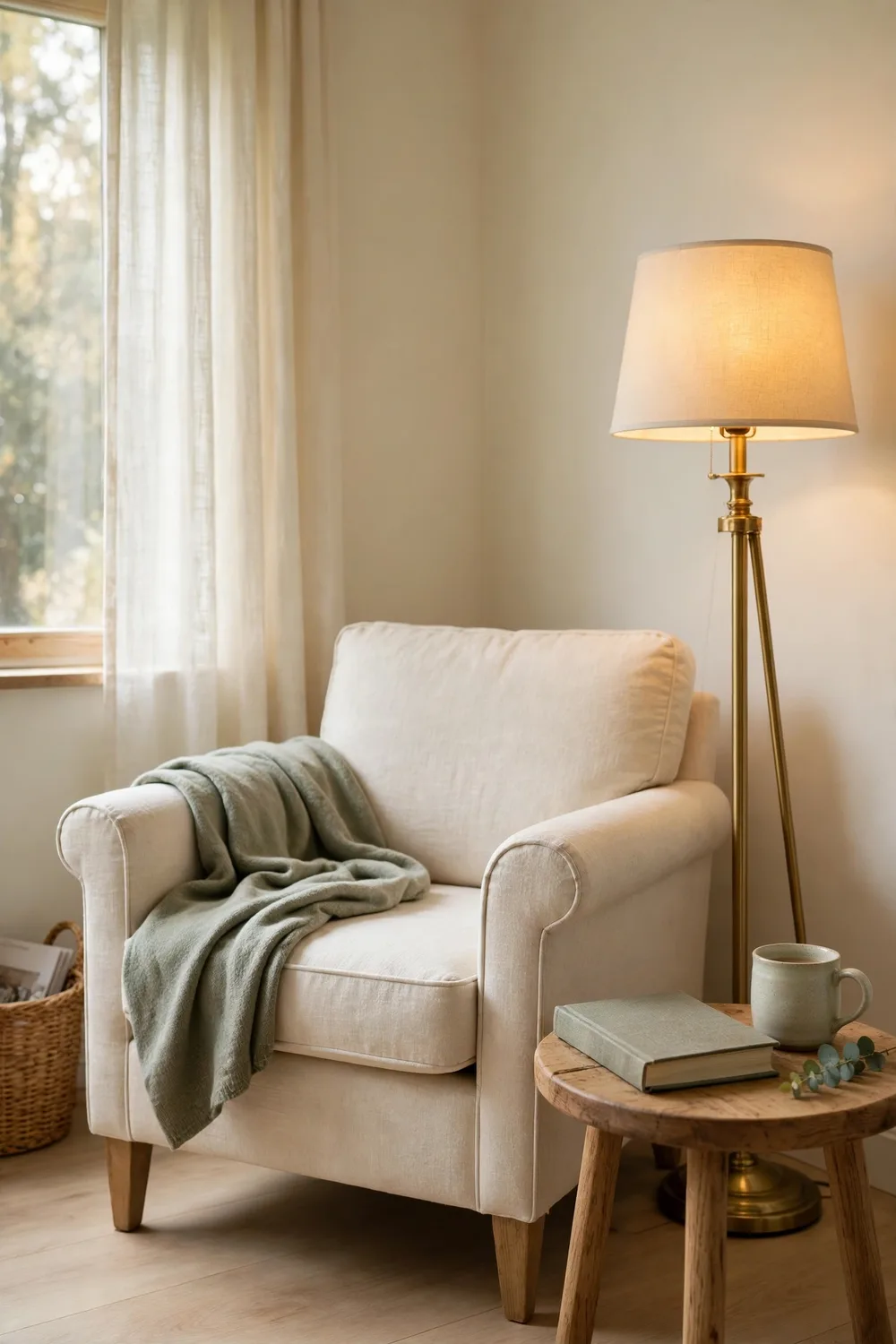
Awkward corners are the other wall opportunity in a bedroom. Our guide to bedroom corner decorating ideas shows how to give an unused corner one useful purpose: a reading chair, a compact vanity, a floor plant, a sculptural lamp, or a small accent chair. Choose one purpose per corner, and keep the doors, curtains, and bed clear. A corner with a chair and a lamp becomes a quiet place to read in the morning; a corner with a plant and a small table becomes a calm spot that softens the room without needing more furniture.
Mirrors, Art, and Evening Light
A mirror in a bedroom should reflect something pleasant — a window, a piece of art, or a calm wall — not clutter or a bright light. A standing mirror in a corner can make a small bedroom feel larger, while a round mirror above the dresser adds light and balance. Keep mirrors away from direct sunlight that will glare into the bed in the morning, and check the reflection from the bed before you hang one.
Evening light is the final wall layer. A lamp on the dresser, a wall light above the bed, or a small lamp in the corner gives the room a warm glow that helps you wind down. Use warm bulbs in the bedroom, and turn off the overhead light in the evening. The room will immediately feel calmer, and the art and textiles will look softer in the warm light.
Textiles, Color, and the Finishing Layers
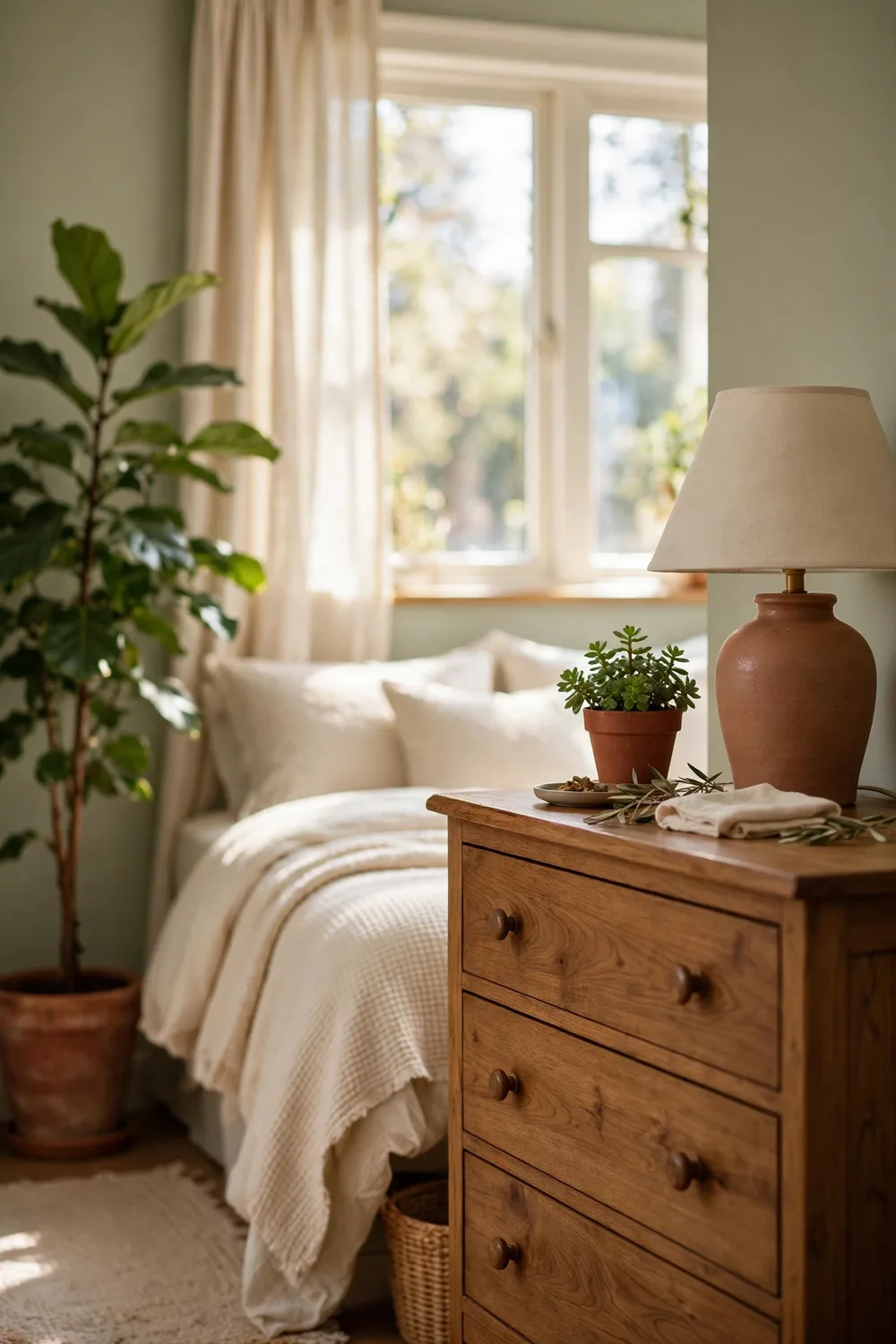
Textiles make a bedroom feel welcoming: a rug beside the bed so your feet do not hit a cold floor in the morning, curtains that frame the window and block early light, and a throw that invites you to sit on the bed with a book. Choose a rug large enough to step onto from the bed, and use a non-slip pad so it stays flat. Choose curtains with some weight in a color from your palette, and hang them so they frame the window rather than covering it during the day.
Color in a bedroom should be calm at night and fresh in the morning. A soft blue, a muted green, or a warm neutral does both. If you love a bold color, use it in a small dose — a cushion, a vase, or a piece of art — and keep the bedding and the walls calm. Bedroom design that relies on a bold color everywhere can feel exciting for a week and tiring for a year, while a calm base with a repeated accent stays pleasant.
Plants can work in a bedroom if they suit the light and you can care for them, but keep them simple: one floor plant in a corner or a small plant on the dresser is enough. Avoid filling the windowsill with plants that block light and make the room hard to clean. If you have allergies or you sleep with the window closed, choose a plant that does not drop leaves or produce a strong scent.

Budget Swaps and Small-Bedroom Ideas
You do not need a new bed to refresh a bedroom. Start with fresh bedding, a clean and clear dresser top, and a lamp that gives warm light. Swap the cushions, move the art, and rearrange the nightstands. Those changes cost little and affect the whole room, because the bed and the light are what you notice first.
For a small bedroom, choose fewer, larger pieces: one rug, one large piece of art above the bed, and one lamp on each side if space allows — or a single wall light if it does not. Use the walls for storage and art, keep the floor clear, and choose furniture that fits the room rather than the room you wish you had. A narrow dresser, a floating nightstand, and a basket for extra blankets will make a small bedroom feel larger than a room crowded with furniture that does not fit.
For renters, focus on bedding, textiles, lamps, and art with removable hooks. Follow the manufacturer’s instructions for any removable mounting, test it on a hidden spot first, and check the weight limit. A fresh duvet cover, a rug beside the bed, and a lamp on the nightstand can make a rental bedroom feel like home without changing a single wall. For a full step-by-step refresh on any budget, see our bedroom makeover guide, which covers the budget, the order of work, and the before-and-after structure in detail.

| Area | One strong idea | Keep it usable by |
|---|---|---|
| Bed | Fresh bedding, a throw, two cushions | Keeping cushions to a number you can move at night |
| Dresser | A lamp, a tray, and one decorative piece | Leaving room for everyday essentials |
| Nightstand | A lamp, a book, and a glass of water | Choosing a size that fits the bedside space |
| Wall above the bed | One large print, a pair, or a textile | Centering it over the bed, not the wall |
| Corner | One purpose: a chair, a plant, or a vanity | Keeping doors, curtains, and the bed clear |
| Floor | A rug beside the bed | Using a non-slip pad so it lies flat |
Frequently Asked Questions
How do I decorate my bedroom?
Start with the bed, the light, and a calm palette. Add fresh bedding, a bedside lamp, and storage that keeps clothes off the floor, then finish with one piece of art above the bed and a rug beside it.
What color should I choose for a bedroom?
A calm palette — soft white, warm cream, muted blue, sage green, or gentle gray — with one deeper accent in cushions, a throw, or art. Bold color works best in small doses in a bedroom.
How do I decorate a small bedroom?
Use fewer, larger pieces, keep the floor clear, and use the walls for art and storage. A narrow dresser, a floating nightstand, and a rug beside the bed will make the room feel larger.
How many cushions should a bed have?
One or two cushions against the pillows is usually enough. More than that means moving cushions every night, which is a sign the bed is over-decorated.