Living Room / Coffee Table Decor
Glass Coffee Table Decorating Ideas for a Light, Balanced Look
A glass coffee table shows more than the objects on top. The rug underneath, the table frame, a lower shelf, and reflected windows all become part of the arrangement. That is why a few accessories can feel like plenty on glass, even when the same group looks restrained on a solid tabletop.
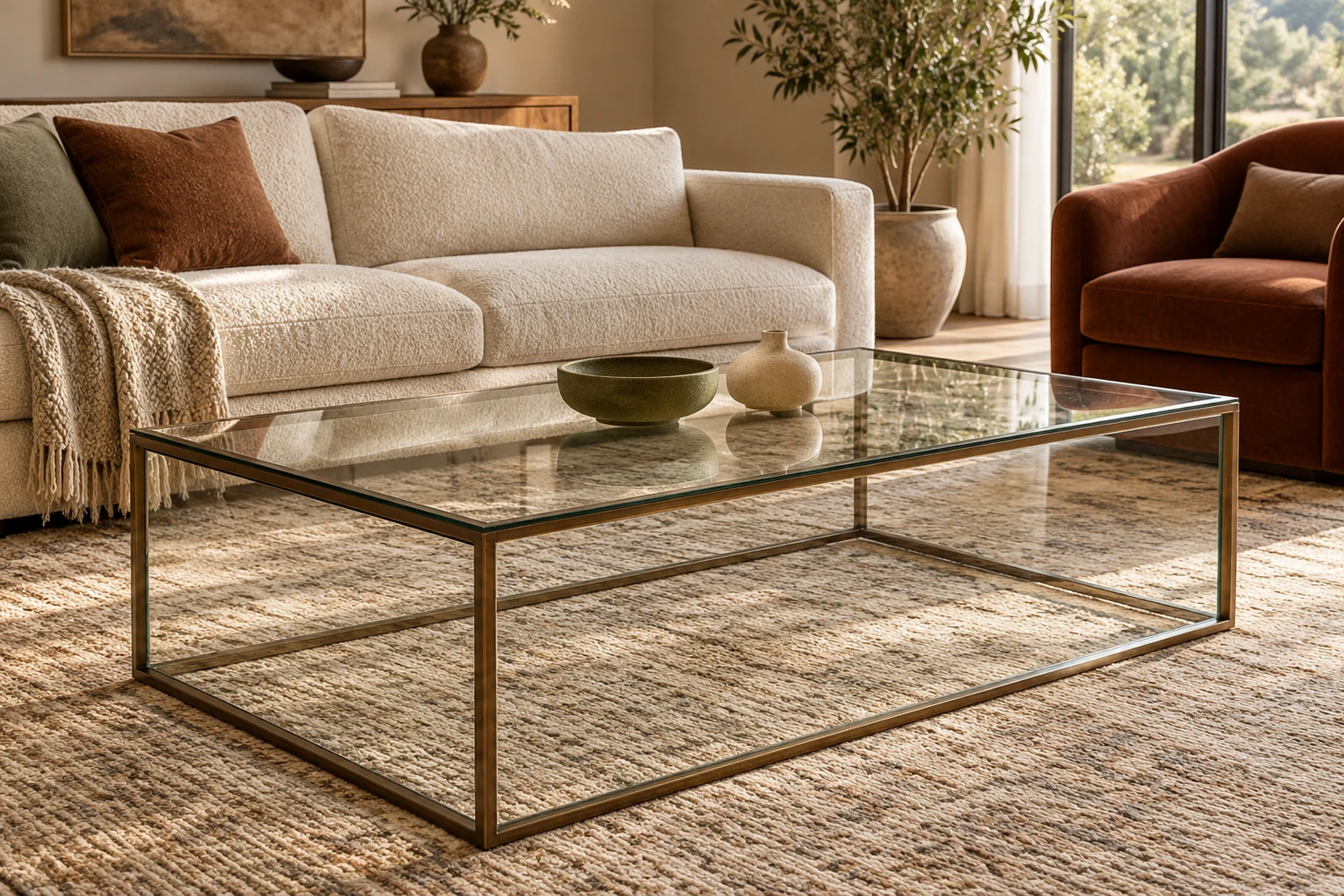
The most useful glass coffee table decorating ideas preserve that transparency. Start with a small, low group, choose finishes that do not compete with the reflections, and leave room for everyday drinks and reading. Then check the table from the sofa, where you will actually see and use it.
You do not need to hide the glass beneath a large display. Let the open surface do some of the decorating.
Look Through the Table Before Adding Anything
Begin with the tabletop empty. Sit down and notice what is already visible: the rug pattern, frame joints, nearby furniture legs, and any objects stored below.
These details create a background for everything you add. A patterned rug may need quieter accessories above it. A plain rug may allow a more textured bowl or a stronger color.
Place one broad, low object on the glass and step back. Add another only if it contributes something different, such as a useful landing place or a softer outline.
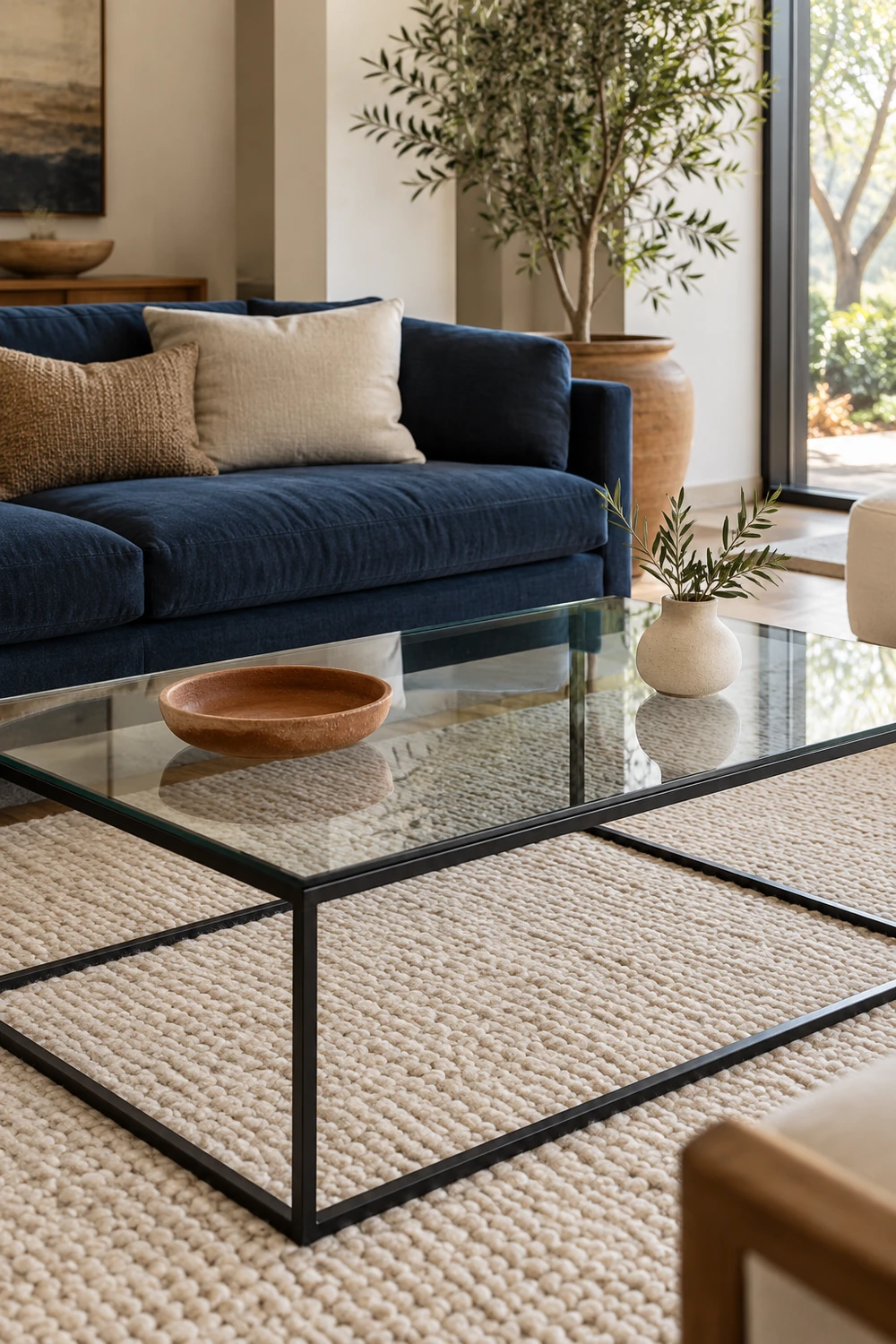
The sparse arrangement here leaves the surface visually open between the objects. Follow that relationship rather than copying the exact pieces. If you can still see the glass, frame, and rug as separate layers, the table has room to breathe.
Decide What Needs to Live on the Surface
Before choosing decorative pieces, place the things you use on a normal evening. That may be a mug, glasses, a book, or a remote. Keep the nearest comfortable landing place available for those items.
Ask whether each permanent accessory earns its footprint. A bowl can hold something useful; a small vase can add a personal detail. Several decorative containers with nothing to do can make the surface harder to use and clean.
Move the arrangement toward a position that suits your seating. You should not have to reach across glassware or flowers to put down a drink.
For the detailed task of grouping objects inside a tray, use our coffee table tray decor ideas. Here, the main decisions are about seeing through the tabletop and managing the layers around it.
Adjust Contrast for Clear or Smoked Glass
Clear glass lets the room beneath remain prominent. Smoked glass adds a darker visual plane, which changes how strongly accessories stand out.
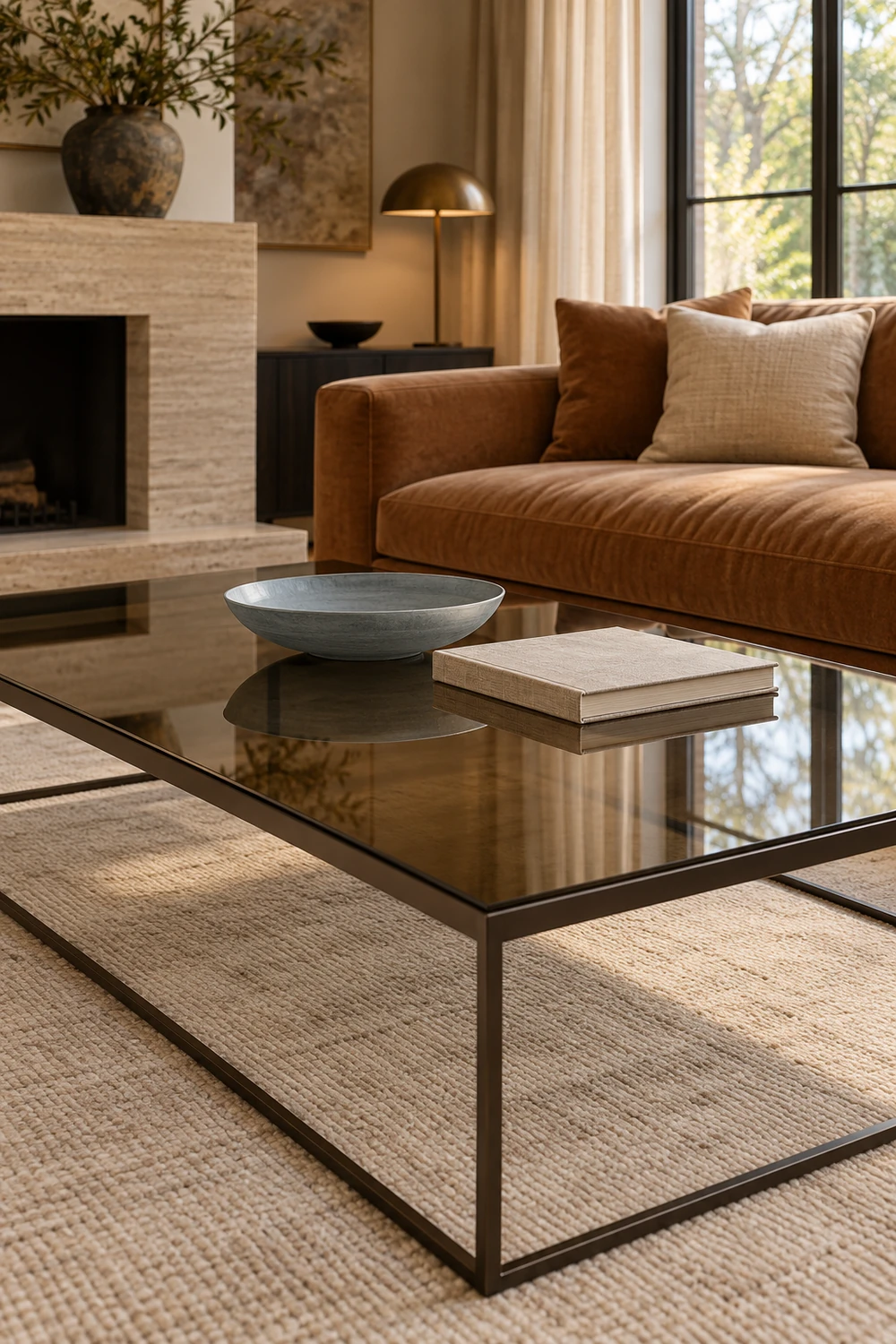
On the smoked table shown here, a pale bowl and a linen-covered book are easy to distinguish from the surface. Their quieter finishes avoid adding another strong reflection to an already reflective material.
Test the contrast with the table in its actual location. A dark object might be distinct against pale flooring but disappear when a dark rug is visible below. A clear vase may look light from one angle and almost vanish from another.
Choose the contrast you want deliberately. You do not need every object to stand out equally; one main shape and a quieter supporting piece often create a clearer arrangement.
Check Accessory Bases Before Setting Them Down
Turn each bowl, vase, and decorative container over. Inspect for rough edges, grit, or a base that does not sit flat. Keep the underside clean before placing it on the tabletop.
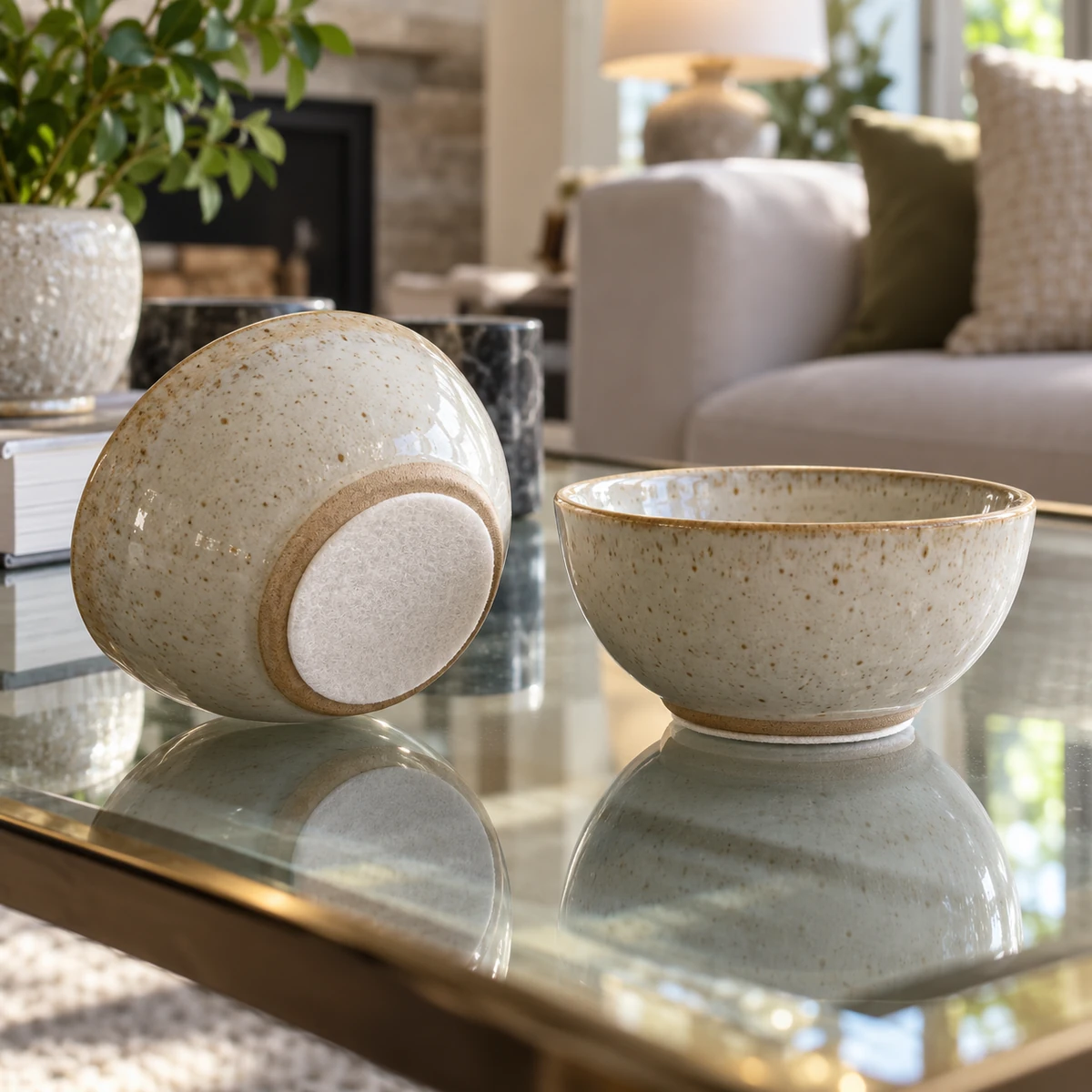
The close-up shows padded accessory bases as one practical approach. Use protection compatible with the table manufacturer’s care guidance, and check it regularly. Pads do not make a heavy or unstable object suitable for glass, and trapped grit can still be a problem.
Follow the table’s load and use instructions. Place objects gently, avoid dragging them, and do not treat a decorative glass table as a seat or step.
Use coasters appropriate to the surface for drinks. Keep them easy to reach so the protective habit fits naturally into the arrangement rather than becoming an afterthought.
Style a Lower Shelf as Part of the Same View
On a two-tier glass table, the lower shelf is visible through the top. Filling both levels can make one small area look crowded even when each shelf contains only a few things.
The small book stack below balances the bowl above without turning the lower level into overflow storage. Look at both levels together from a seated angle.
Try offsetting the lower group so it is not entirely hidden under the upper one. Then check whether it creates an awkward overlap with the frame or tabletop accessories.
Keep books reachable and within the shelf’s footprint. Avoid building a stack that presses against the top glass or prevents you from cleaning underneath it. If the lower shelf is already holding useful everyday items, reduce the decorative group above.

Notice Window Reflections During the Day
A glazed surface can carry a strong reflection even before you add glossy accessories. Visit the room at different times and notice where the window appears in the tabletop.

You do not need to eliminate every reflection. They are part of the material’s character. Instead, avoid placing several shiny pieces where their highlights compete with the window reflection.
Move one accessory at a time and check from the sofa. A small shift may separate its silhouette from a bright patch of reflected light.
When considering how to decorate a glass coffee table, judge it from your usual seats rather than only looking straight down. That is where reflected light, visible shelf contents, and the surrounding room come together.
Use Matte Ceramics for a Quieter Surface
Matte bowls and softly textured vessels create a useful contrast with polished glass. Their shapes remain visible without multiplying the same sharp highlights.
Try a low ceramic bowl with one smaller supporting piece. Leave space between them so their outlines do not merge into a single crowded group.
Texture can provide variety even when the colors are similar. A smooth cream bowl and a slightly rougher vessel may be enough against clear glass and a patterned rug.
Keep the objects suited to the table’s everyday use. A delicate ceramic piece does not become practical merely because its finish is matte. Consider stability, weight, and how easily the group can be moved for cleaning.
Connect the Frame to the Rest of the Room
The frame remains a visible part of glass coffee table decor ideas. Its finish can help connect a transparent table to surrounding furniture without adding more objects on top.

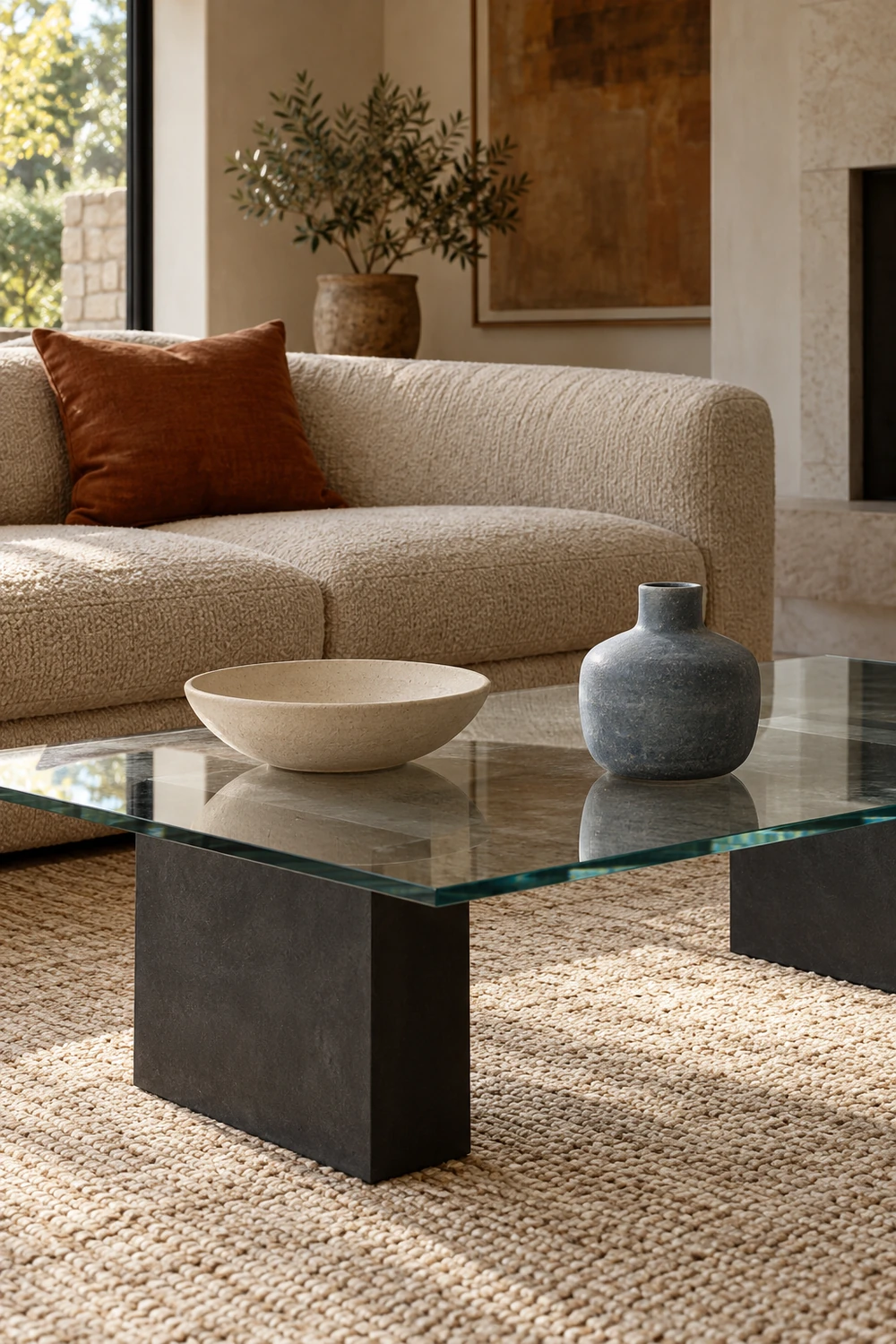
In this example, the dark metal frame relates to a floor lamp and picture frame. The repetition gives the table a place in the room while the tabletop stays relatively quiet.
You do not need every metal to match. Look for a repeated tone or similar visual weight in two or three existing details. Avoid buying a new set of accessories just to reproduce the frame finish everywhere.
If the frame already has a bold shape, let it remain visible. A dense arrangement above can obscure the feature that made the table appealing in the first place.
Bring Warmth Through Wood and Textiles
A glass table does not have to create a cool-looking room. Wood framing, upholstery, and the rug can supply warmth around the transparent surface.
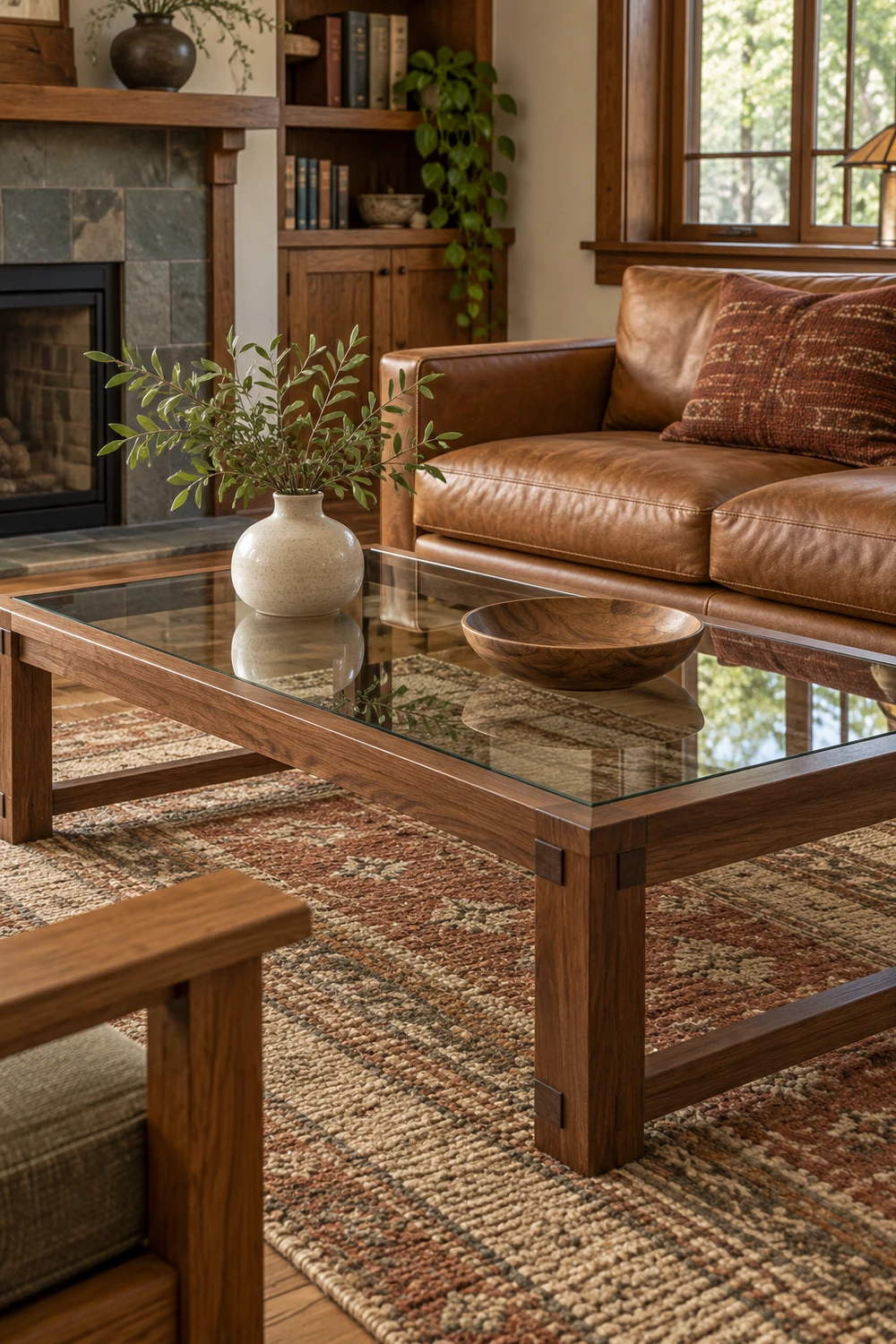
The walnut-framed example uses that surrounding texture rather than covering the glass. The wood provides a substantial outline while the room’s soft materials keep the view comfortable.
Try repeating an existing wood tone through one small accessory or a nearby piece of furniture. If the table already has a strong timber frame, a simple ceramic object may be all the top needs.
Let the room provide the larger changes in texture. The coffee table does not need to hold every material you want to include.
Keep Visible Space Between Everyday Objects
A transparent surface looks lighter when you can see through it between the useful things. Leave a clear gap beside a book and room around a mug rather than gathering everything tightly together.
Use that gap as a functional check. Can you pick up the book without moving the drink? Is there room to set down glasses? Does the closest seat have a clear landing place?
If the answer is no, remove a decorative piece before shifting everyday objects farther away. The open area is not wasted space; it is what makes the table useful.

Keep a Round Glass Example Equally Restrained
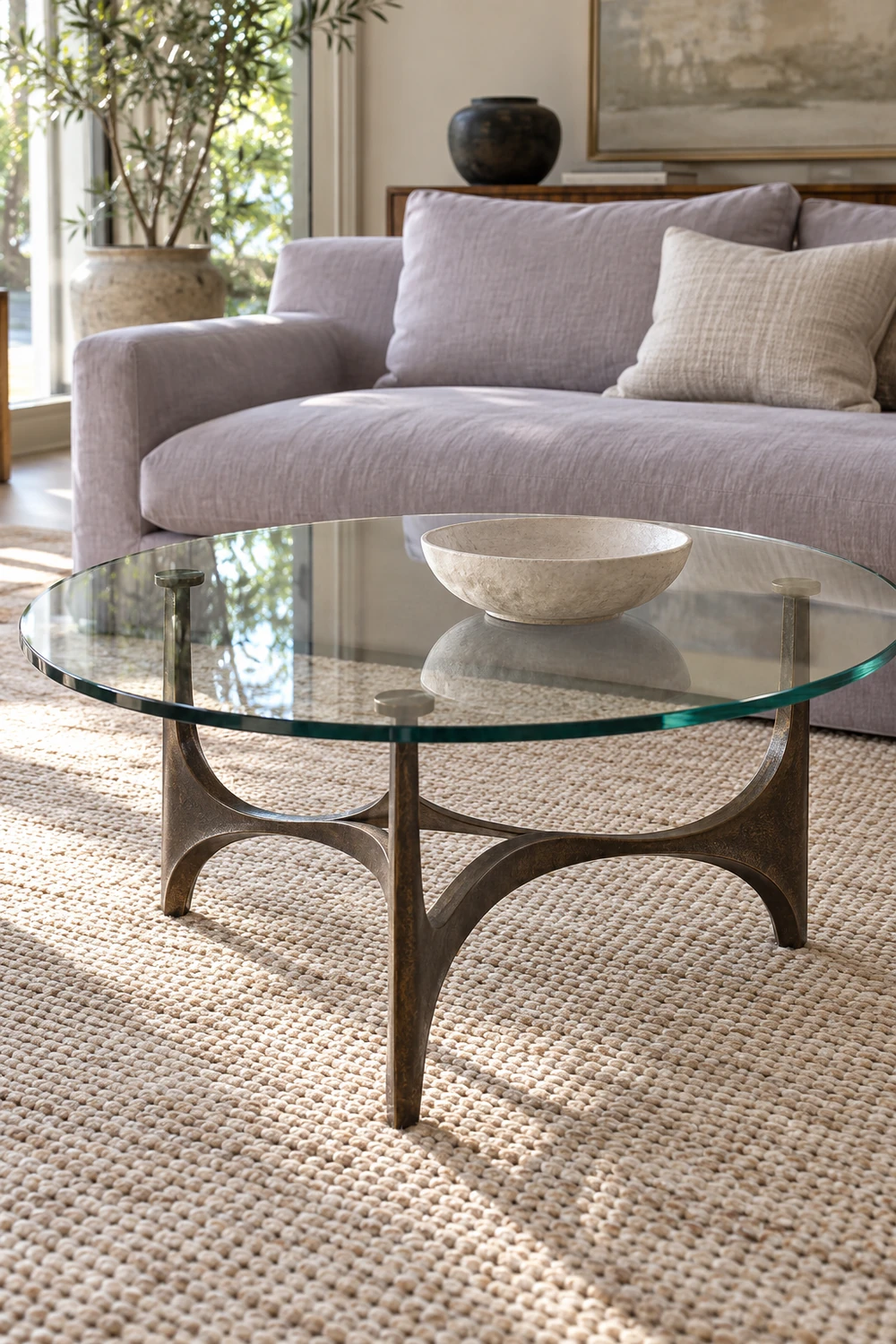
On a round glass table, a low bowl can provide a focal point while leaving the transparent material visible around it.
Keep the bowl fully inside the curved edge and check the view through the glass. This example applies the same material principles without needing a more complicated display.
If the circular shape itself is the challenge, our round coffee table decor ideas explain arranging groups and preserving a useful open sector across the whole surface.
Check the Reflections After Sunset
Switch on the lamps you normally use and sit in each regular seat. The glass may reflect a shade, an exposed bulb, or a bright ceiling fixture differently from the way it reflects daylight.
Try adjusting the nearby lamp or the accessory position if a reflection becomes distracting. Avoid adding a glossy centerpiece simply to fill an area that already contains a strong highlight.
Then use the table: set down a drink, open a book, and return the remote. A successful arrangement should still work when the room is being lived in.

Frequently Asked Questions
What looks good on a glass coffee table?
Low bowls, matte ceramics, a small vase, and a restrained book group can work well. Choose pieces that contrast with the visible background and leave useful glass surface between them.
Should you decorate the lower shelf too?
Only if it has a useful role in the overall view. One small book group may be enough. Balance the upper and lower levels together instead of styling each as a separate display.
How do you keep glass coffee table decor from looking busy?
Reduce competing glossy finishes, consider the rug visible underneath, and keep fewer objects on both levels. Check the arrangement from the sofa in daylight and evening light.
Let the Glass Remain Part of the Arrangement
Decorating a glass coffee table works best when the surface stays visible and usable. Choose a small group, inspect the bases, and balance what sits above and below. The result should connect to the room while preserving the lightness that makes a glass table distinctive.