Living Room / Coffee Table Decor
Coffee Table Tray Decor Ideas That Leave Room to Use the Table
A tray can bring order to the coffee table, but filling it with accessories can leave the room’s most useful surface with nowhere to set a mug. The arrangement should make everyday living easier as well as give the table a focal point.

The best coffee table tray decor ideas start with a tray that fits, one useful object, and a small supporting group. Keep the pieces low enough for conversation and leave open table space where you naturally reach from the sofa.
You can build the arrangement with things you already own: a dish, a small vase, a favorite book, or the remote you use every evening. Choose the combination that suits your routine rather than trying to include every decorative possibility.
Choose the Tray Footprint Before the Accessories
Start with an empty table and place your usual drinks, book, or notebook where you use them. Notice which area needs to remain clear. That practical footprint helps determine how much space the tray can occupy.
Cut a paper template to the tray’s outside dimensions, including handles. Move it around until you can reach the essentials without stretching over the display.
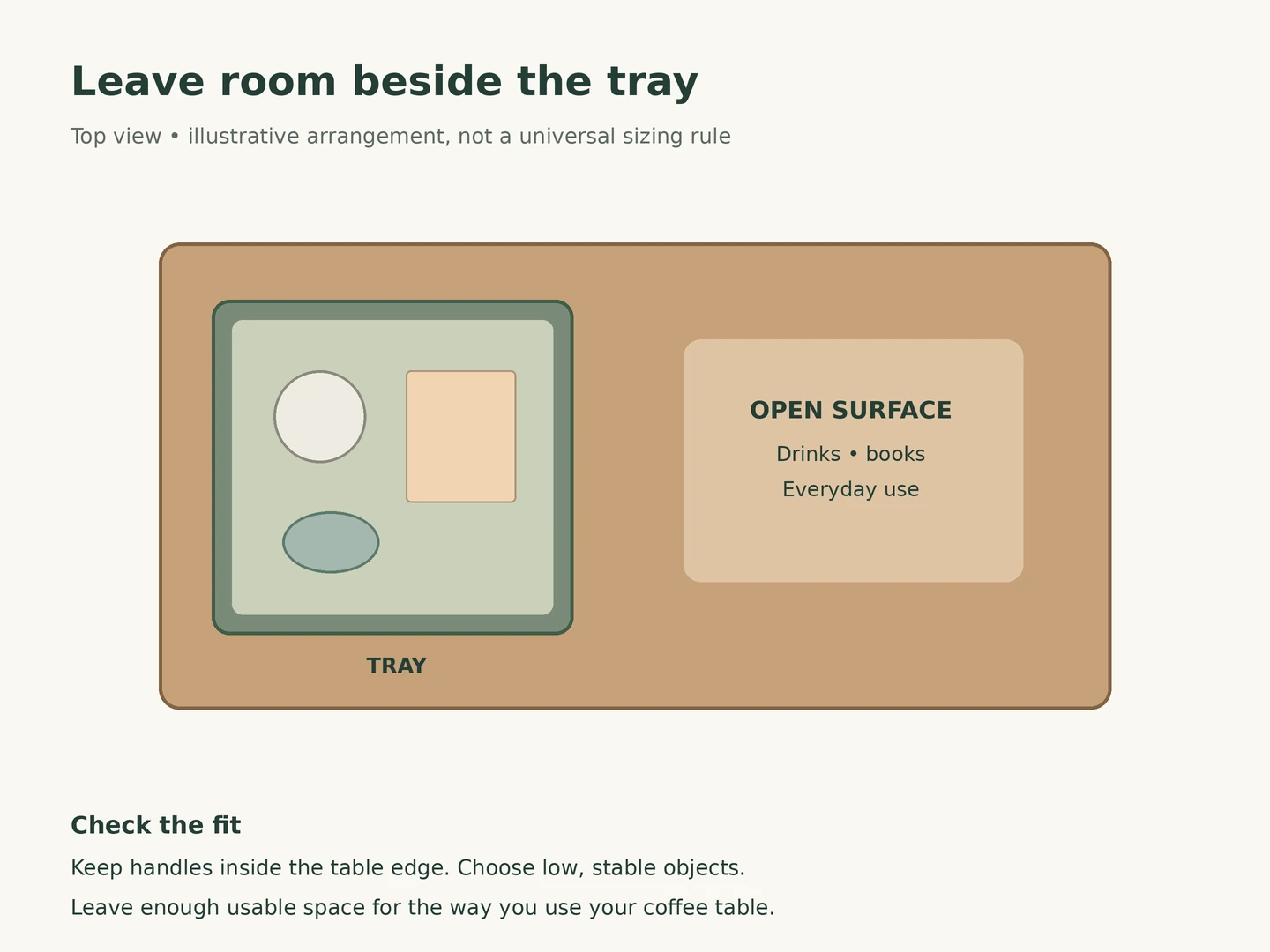
Reserve the everyday landing space before deciding how much room the tray can take.
There is no single tray-to-table ratio that works for every household. A table used for board games may need a small tray that lifts away easily. A larger table with several seating positions might support a broader group while leaving useful space on more than one side.
Check what happens when someone sits down, gets up, or reaches for a drink. If the tray makes those movements awkward, reduce its size before reducing the space people need.
Check the Handles, Base, and Edges
A tray’s outside footprint matters more than the flat area inside it. Handles that extend beyond the rim can make a tray overhang even when the base appears to fit.
Keep the whole tray inside the table’s perimeter. Set it down and check for rocking, rough contact points, or anything beneath the base that could mark the furniture. Follow the table’s care guidance for suitable protective materials.
Try lifting the tray with its intended contents. A display that is easy to move empty may feel unexpectedly heavy with books and ceramics inside. Remove drinks before moving a decorative arrangement, and do not assume the tray is designed for carrying simply because it has handles.
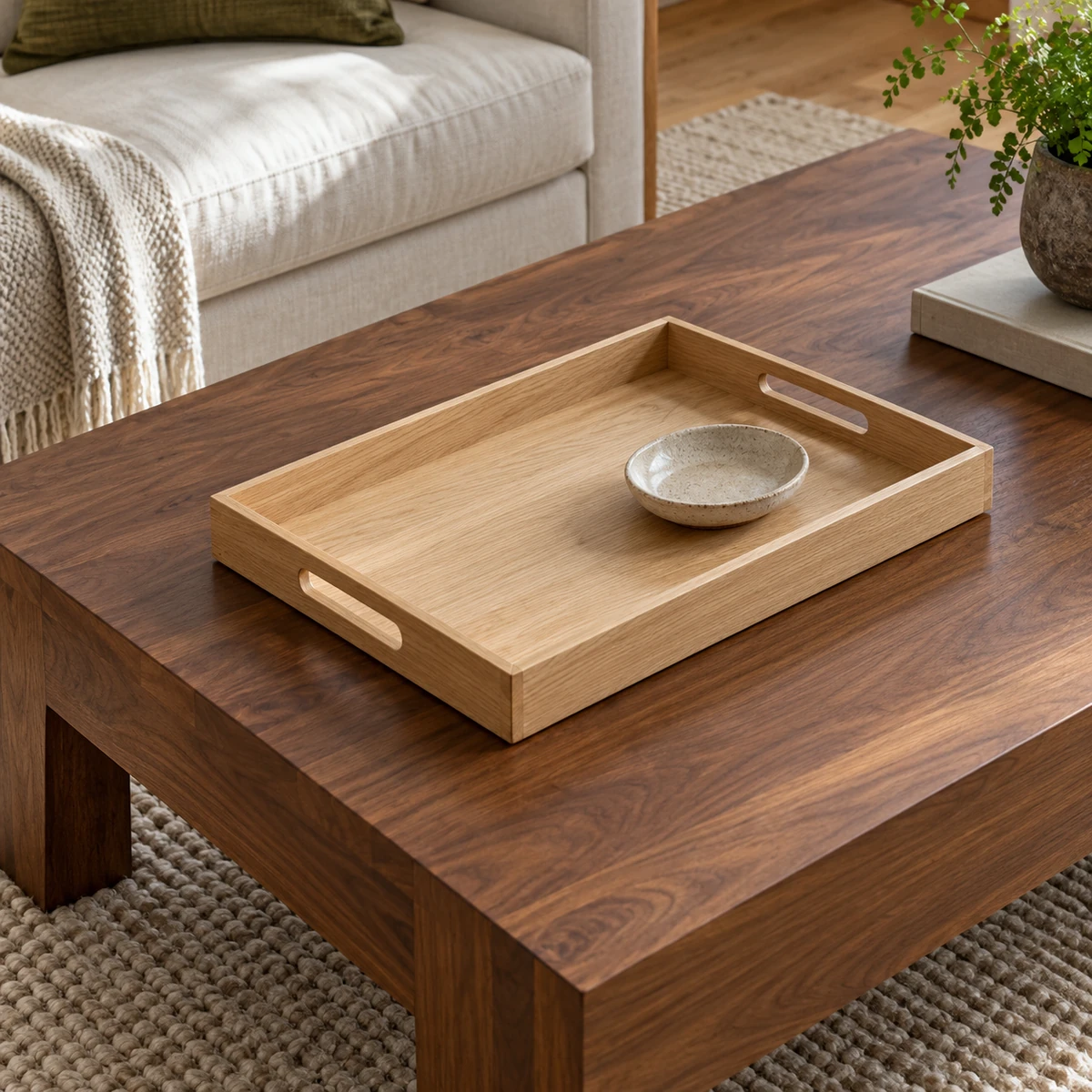
Three Coffee Table Tray Arrangements to Try
Choose one arrangement as a starting point. Each uses a different tray and material mix, but the underlying task stays the same: contain a small group while preserving room beside it.
A Rectangular Tray With Three Useful Pieces
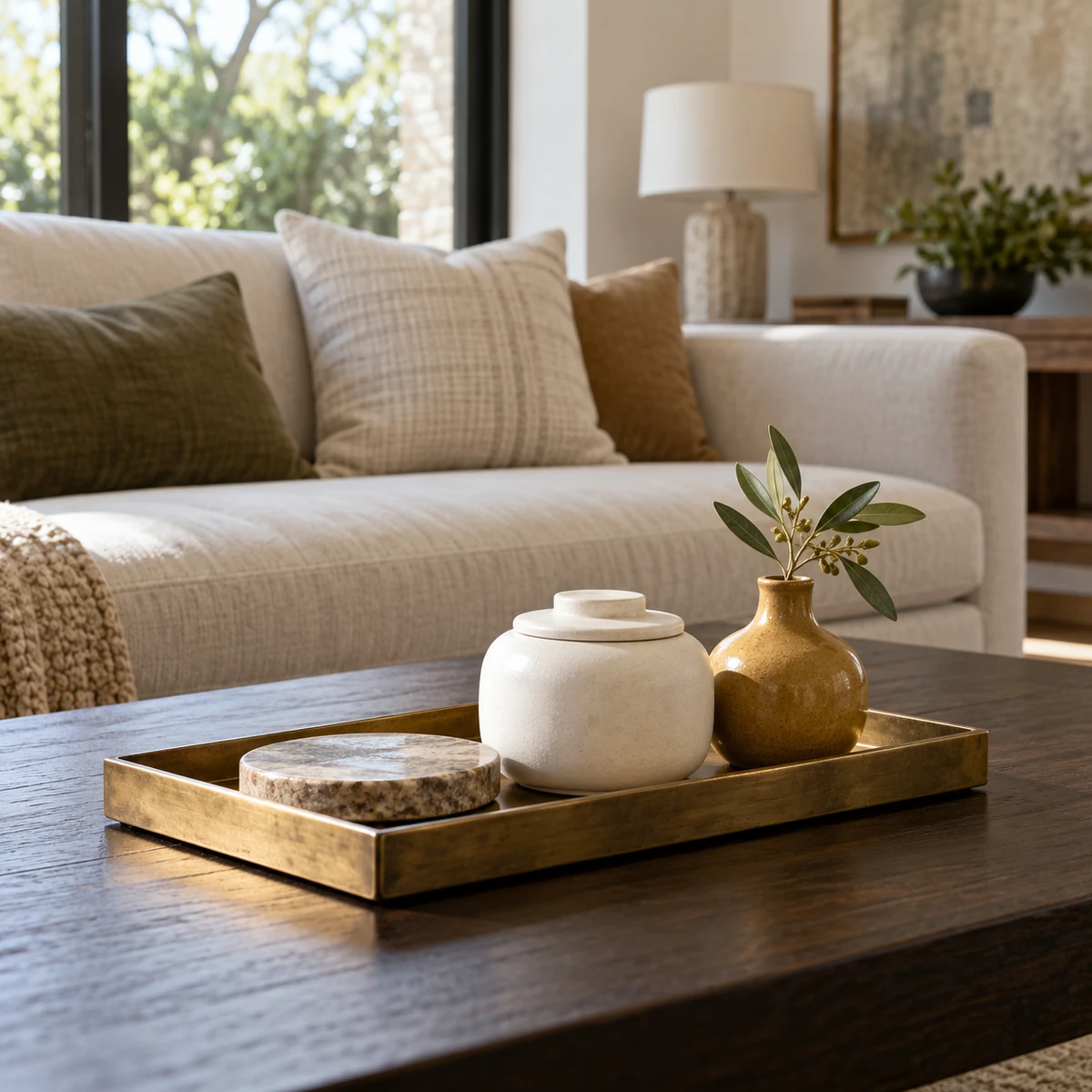
A rectangular tray gives each object a clear place. In this example, a small vase, shallow dish, and closed book sit within a dark tray rather than spreading across the table.

Begin with the broadest piece, then add the smaller ones around it. Keep the objects easy to lift without catching a sleeve on another accessory. The tray’s outline should still be visible between the contents.
Use the dish for something you actually handle, such as glasses or a small everyday item. A decorative tray works harder when it helps you find things again.
A Round Tray With Low Ceramics
A round tray can soften a table arrangement without needing tall branches or a large floral display. The low ceramic vessel and shallow bowl shown here create interest through shape and texture.

Place the broader piece first, slightly away from the tray’s center. Add the smaller item where you can reach it comfortably, leaving a visible gap between them.
This is about arranging objects inside the tray. If your main challenge is distributing decor across the whole circular table, our round coffee table decor ideas cover that separate layout task.
A Woven Tray With Books and a Low Vase
A woven tray introduces texture, especially beside smooth upholstery or a plain tabletop. A short book stack provides a flat shape, while a low vase adds a softer outline.

Check that the woven base supports the objects steadily. A separate rigid base may be needed for an item that rocks on an uneven weave; if it cannot sit securely, choose a different piece.
Keep the books easy to remove and protect them from moisture. Use a watertight vase, avoid overfilling it, and check underneath when changing flowers. The stack should remain something you enjoy browsing rather than a platform you never touch.
Give Remotes a Place Within the Arrangement
If remotes always end up on the coffee table, include them from the beginning. A small basket or low compartment inside the tray can hold them without turning the whole display into equipment storage.
Measure the longest remote before choosing the container. Test whether it is easy to pick up and return while seated. A beautiful box is less useful if you need to remove the vase every time you open its lid.
Keep only the controls you use in that room. Spare cables, batteries, and instruction booklets can live elsewhere. The tray should simplify the surface rather than become another drawer that happens to be visible.

Balance Height From the Sofa
When deciding how to decorate a coffee table tray, judge height while seated. A vase that looks modest when you stand over the table can interrupt conversation from the sofa.
Try a low object, a medium rounded piece, and one slightly taller accent. In this example, the broad book, pale ceramic container, and small warm-colored vase make separate shapes without building a high centerpiece.
The three-height idea is a starting point, not a requirement to buy three accessories. Two well-chosen pieces can be enough. Check the view toward other seats and toward the television, including any stems added to a vase.
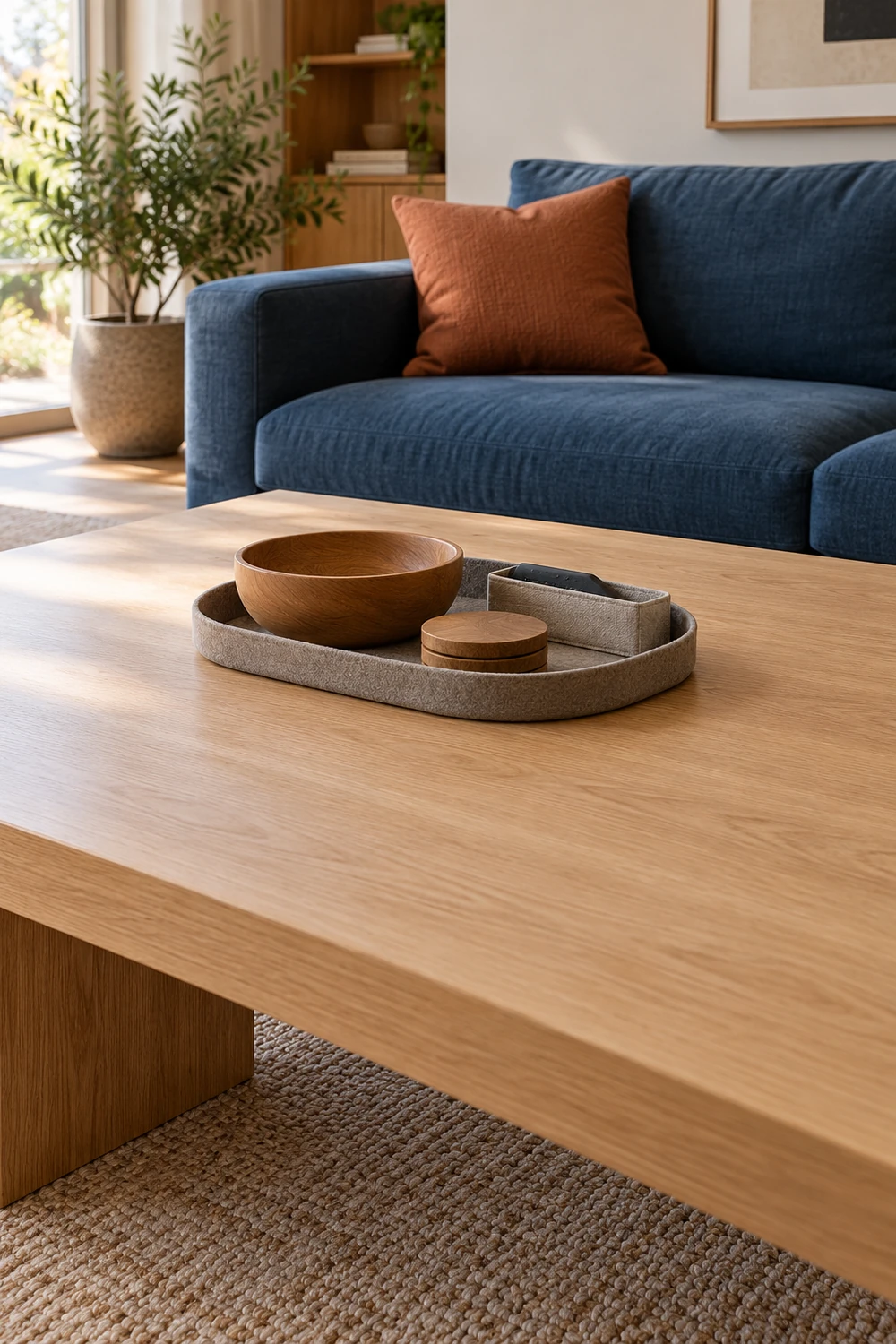
Make the Tray Suit a Busy Household
For a frequently used living room, start with a soft-edged tray, stable objects, and a small number of pieces. Avoid a fragile arrangement that everyone has to work around.
Keep the heaviest objects low and choose contents suited to the people who use the room. Soft edges alone do not make a tray or its contents child-safe; consider breakable pieces, small removable objects, and how easily the whole group can be pulled over.
Test whether you can clear the arrangement quickly for a shared activity. If lifting it requires several trips or careful rearranging, simplify it. The display should be easy to reset after the room has been used.
Leave Real Space for Drinks and Reading
Before adding another accessory, place two mugs and an open book beside the tray. Check whether the setup works from the seats you use most often.
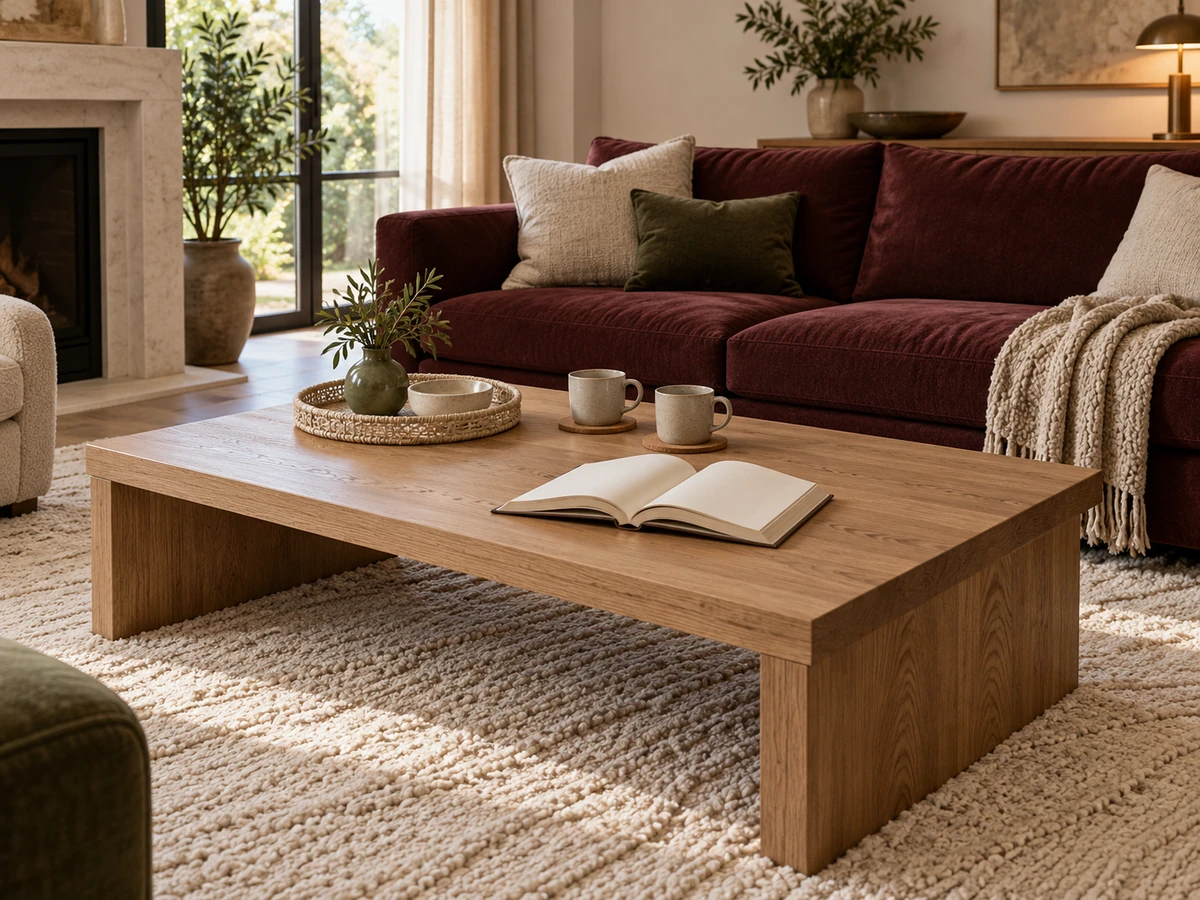
Use coasters or other protection appropriate to the tabletop and keep drinks away from books. A clear area should be large enough for the things you bring into the room, not just a narrow border around the tray.
If you need a bigger floral arrangement or a tall lamp, another surface may suit it better. Our console table decor ideas explore styling a surface with different height and access requirements.
On a transparent tabletop, the lower shelf and reflections affect the overall view too. See our glass coffee table decorating ideas for those material-specific decisions.
Create Contrast With a Restrained Palette
Coffee table decor ideas with a tray feel connected when one color or material already appears elsewhere in the room. Repeat a wood tone, upholstery color, or ceramic finish rather than introducing a separate palette for the table.

The dark tray shown here frames pale accessories against the warm tabletop. Contrast makes the group easy to read, so it does not need many pieces.
If the fireplace is another focal point in the same room, repeat a small material or color without copying its whole arrangement. Our guide to fireplace mantel decorating ideas with a TV addresses the different screen-clearance problem on that shelf.
Refresh One Accent Instead of Rebuilding Everything
Once the arrangement works, a small seasonal change may be enough. In this same-layout example, a warm terracotta vase replaces the pale vessel while the dark tray, book, and dish remain in place.

Keep the replacement similar enough in footprint that it does not take over the useful space. You might change a vase, swap a book jacket, or use a different small bowl. Choose one change, live with it, and add nothing else unless the arrangement needs it.
This approach keeps the table familiar and easy to maintain. The useful parts of the layout do not need to change just because the season does.
Fix the Part That Is Not Working
| Problem | Adjustment to try |
|---|---|
| The tray feels crowded | Remove one accessory and separate the remaining shapes |
| There is nowhere to set a drink | Reduce the tray footprint or move it away from the main reach area |
| Small objects look scattered | Give them one shallow dish inside the tray |
| The arrangement blocks the view | Lower the tallest piece and check again while seated |
| Moving the tray is awkward | Reduce its weight and keep fewer pieces inside |
Make one change at a time. Often the answer is a smaller group rather than a different tray.
Frequently Asked Questions
What should you put in a coffee table tray?
Start with one useful item, such as a remote holder or dish, then add a small vase or a book if space allows. Keep the contents manageable and leave part of the tray visible.
Does every coffee table need a tray?
No. A tray is useful when it groups small objects or makes the arrangement easier to move. If it takes away the space you use most, a simpler arrangement without one may work better.
How many objects should go in the tray?
Use as few as you need to make the group useful and balanced. Two or three pieces can be a practical starting point, but their size and stability matter more than the count.
Keep the Everyday Test Simple
When working out how to decorate a coffee table with a tray, finish by sitting down and using it. Set down a drink, reach for the remote, and open a book. If those actions still feel comfortable, the tray is doing its job: bringing the small things together while leaving the table ready for everyday life.