Living Room / Coffee Table Decor
Round Coffee Table Decor Ideas with Simple Layouts
A round coffee table has no corners to anchor a display. That can make it tempting to place everything in the center, where the arrangement quickly becomes something you have to reach around.
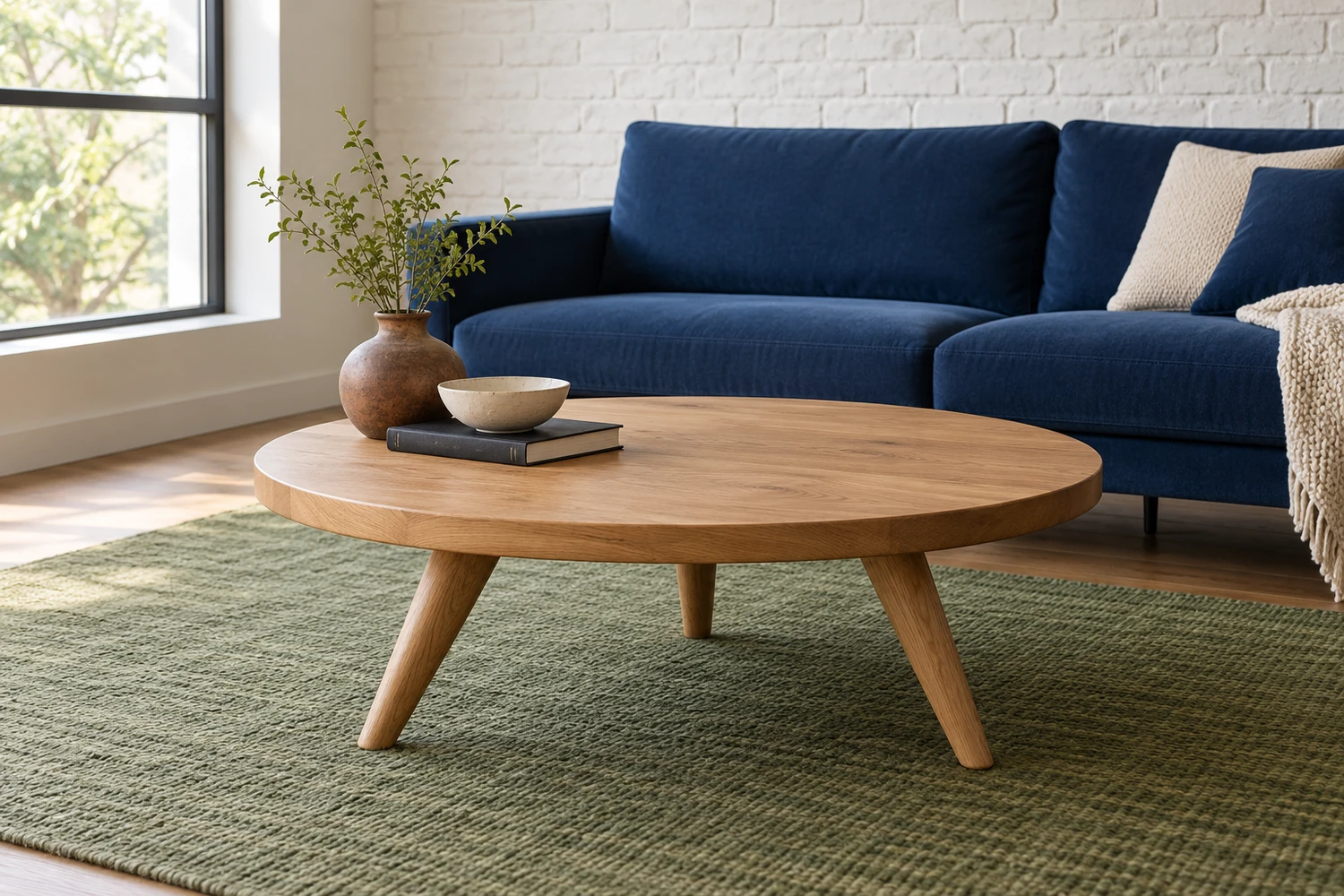
Useful round coffee table decor ideas work with the circular footprint. Choose one main group, keep every piece inside the curved edge, and leave an open area near the seats that use the table. Height and spacing give the arrangement shape; a large number of objects is optional.
Start by deciding where drinks, books, and everyday items need to land. Then build a decorative group around the space that remains.
Plan an Open Sector Before Placing Decor
Look at the tabletop from above and imagine the area divided into broad sectors. Reserve the portion nearest your usual seat for everyday use rather than treating the whole circle as display space.
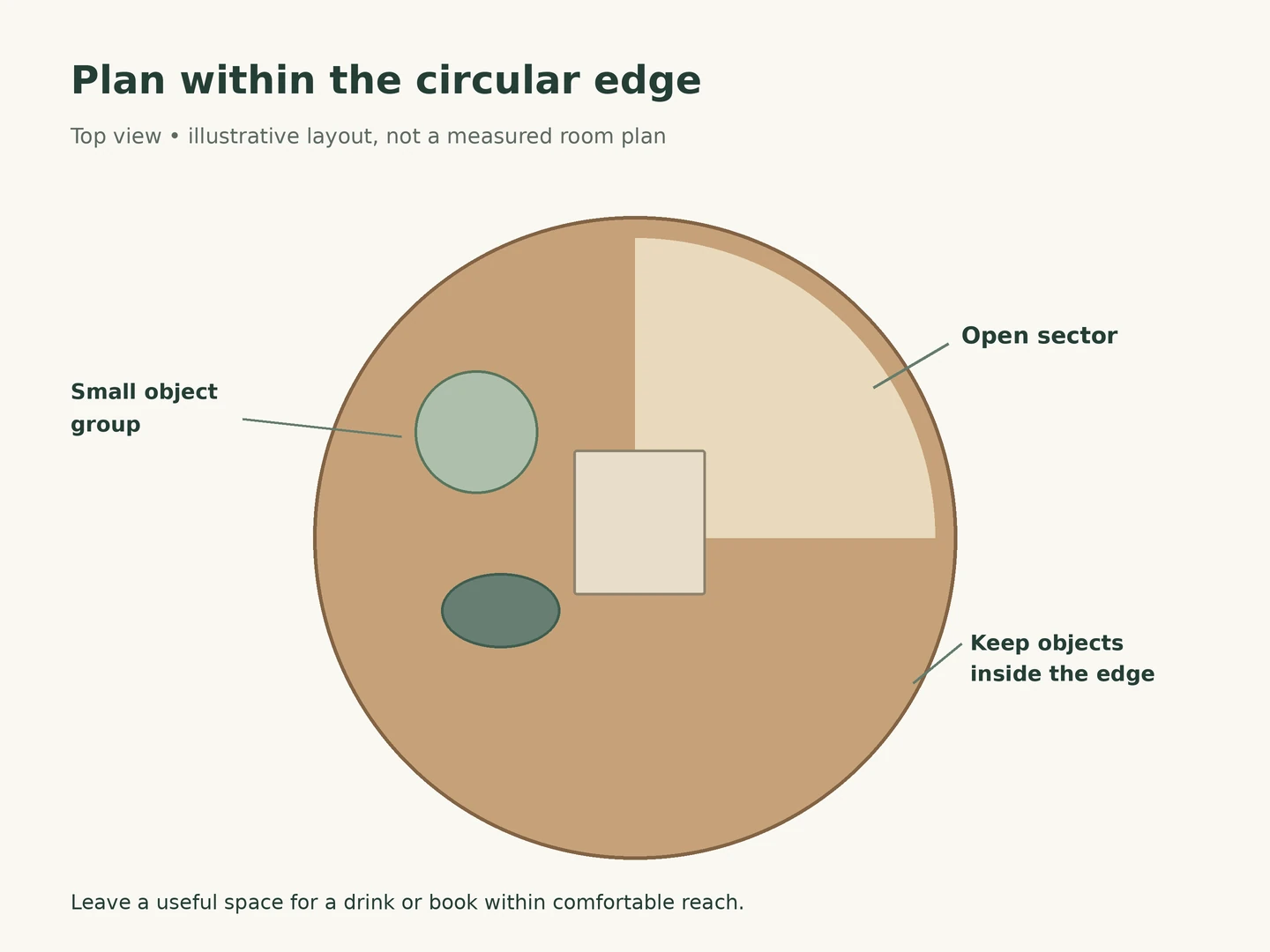
Keep one usable sector open instead of spreading accessories around the entire circle.
The diagram is an illustrative layout, not a set of compulsory proportions. Your available area depends on the table’s diameter, surrounding seats, and the objects you use.
Test the layout with a mug and an open book. If people sit on two sides, preserve a landing place for both. A decorative group can sit slightly away from the busiest reach area while still feeling visually connected to the middle.
This approach also makes a small table easier to style. You are choosing what the surface can support rather than shrinking a large arrangement until it barely fits.
Try a Three-Piece Group Slightly Off Center
An offset group gives the circle a focal point without occupying its exact center. Begin with one broad piece, then add two smaller objects with different outlines.
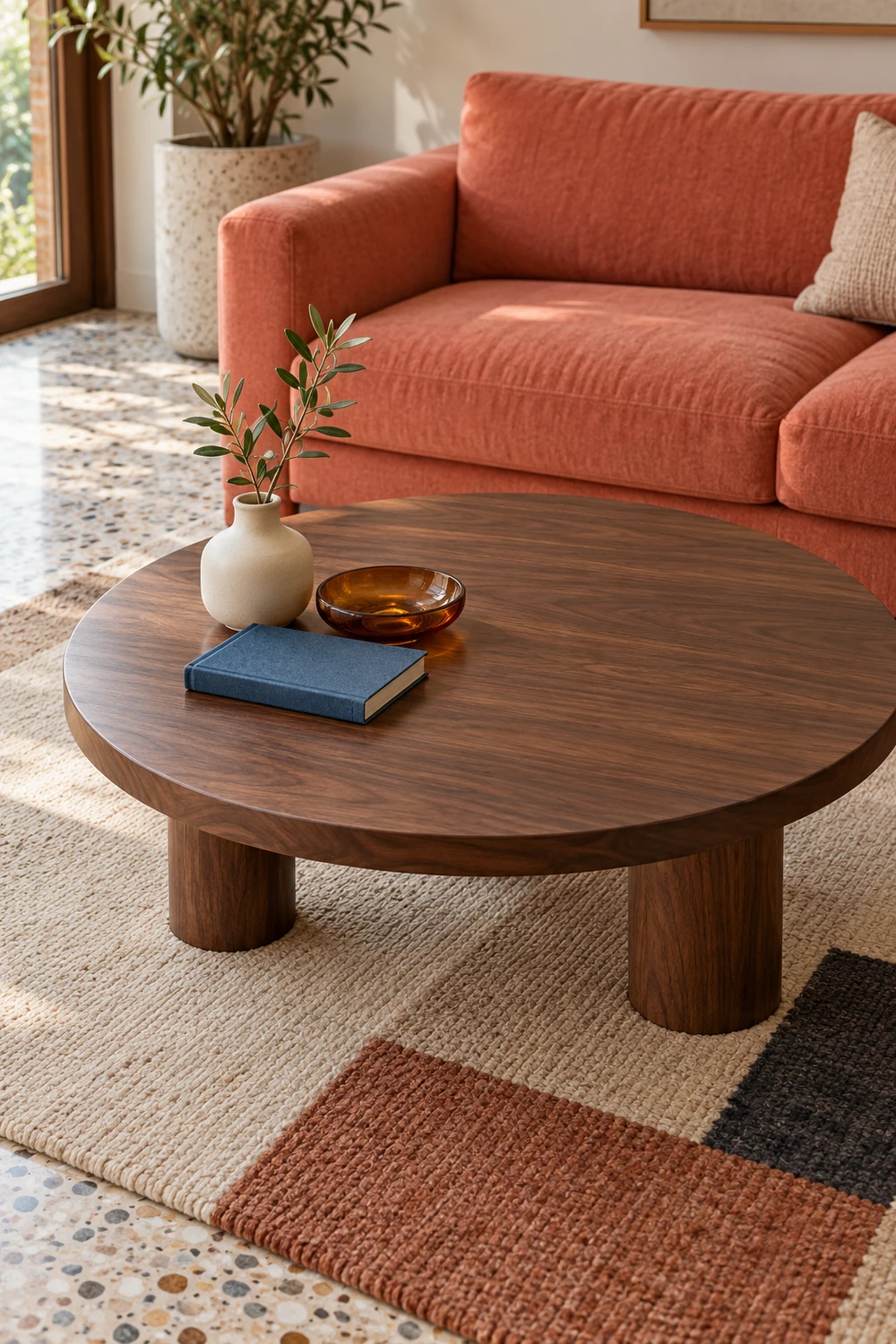
Keep enough space between the objects to identify each shape. A book, bowl, and small vessel can become a clear group when they sit near one another without being pressed together.
View the arrangement from the doorway and sofa. A group that looks balanced from above may seem like a straight row from the side. Turn a book slightly or move one object forward to create a more relaxed relationship.
Three pieces are a useful starting point, not a decorating rule. If two already give the table a clear focus, leave the third out.
Use One Low Bowl as the Whole Arrangement
A single bowl can suit a table with an attractive material or substantial shape. It provides a focal point while leaving most of the circle available.
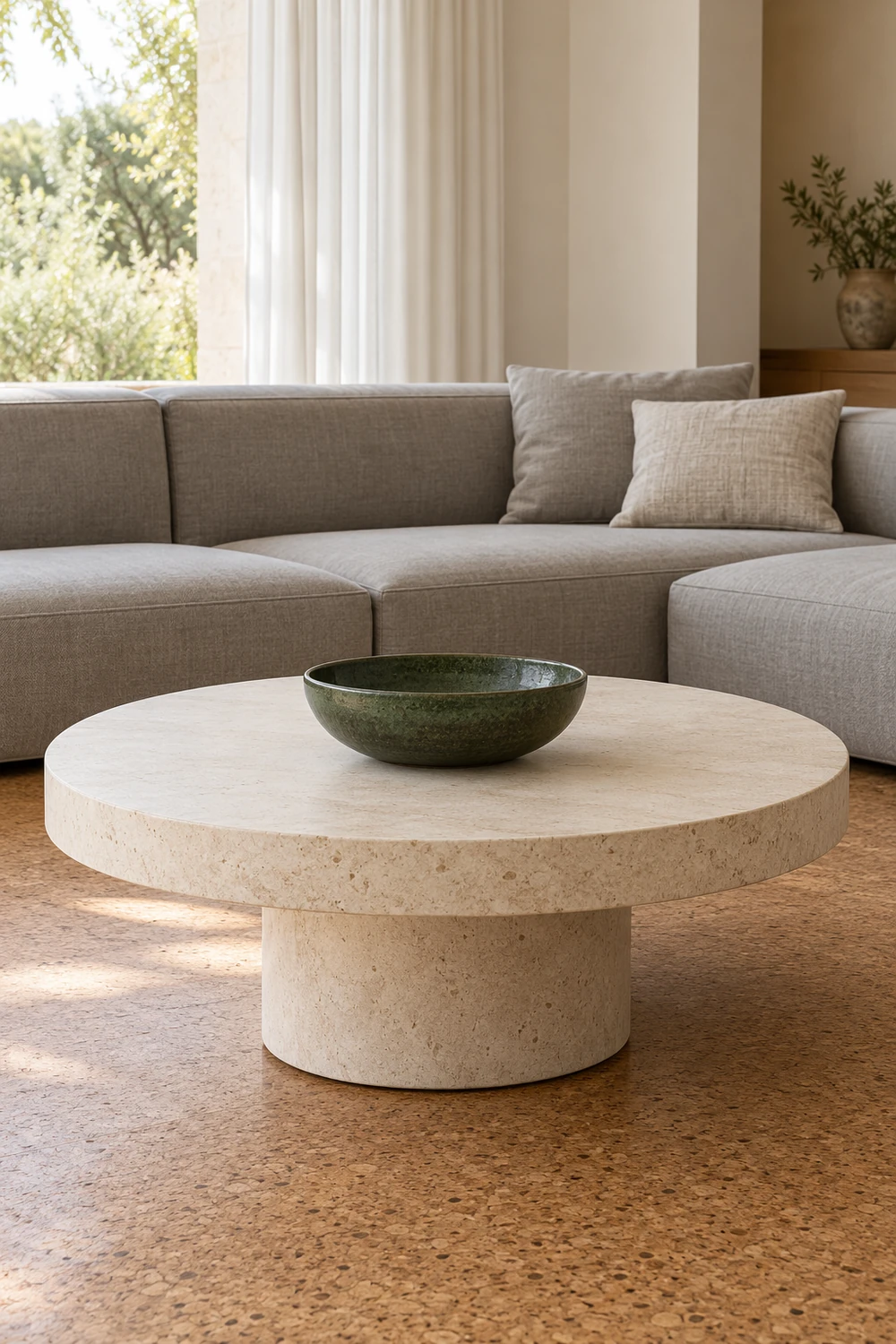
On the limestone example, the low bowl allows the tabletop’s surface and rounded outline to remain prominent. There is no need for a second group simply because the remaining area is empty.
Choose a bowl with a stable base and a scale that feels intentional from across the room. Test whether it is comfortable to reach around from every regular seat.
Decide whether the bowl is decorative or useful. If it holds everyday items, keep the contents edited so it does not become a collection of unrelated small things. One broad object is easiest to enjoy when its role stays clear.
Place a Book Stack Inside the Curve
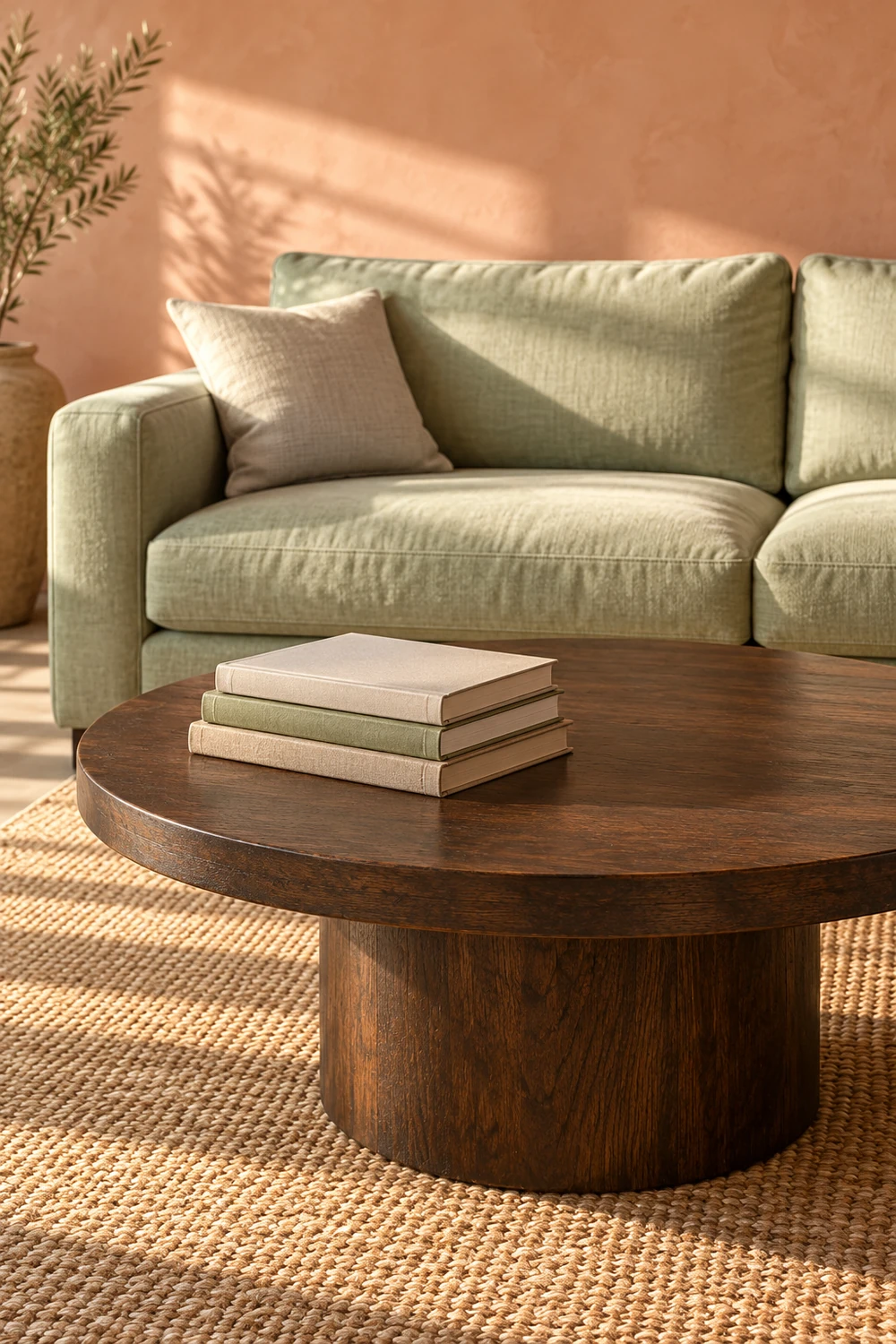
Books introduce straight lines on a circular surface. That contrast can look considered when the stack sits fully inside the table’s edge.
Offset the stack toward one side, keeping its corners comfortably within the circle. Test the position from the nearest seat: you should be able to pick up a book without catching another accessory.
Keep the stack short enough to browse easily and stable enough for normal table use. Avoid balancing a heavy vessel on a small pile of slippery covers.
Choose books you want to open. Their colors can connect to the room, but they do not need to become permanent platforms. Leave room beside them for a drink so reading remains part of the table’s actual use.
Vary Height Without Making a Centerpiece Wall
Round coffee table decorating ideas benefit from a little height variation, especially when a group contains several similar-sized pieces. The difference can be subtle.
Try a low book or dish, a medium bowl, and one slightly taller object. Check the entire arrangement while seated, including any branches or flowers.
The tallest piece should not make people lean around it to talk or watch television. If the table sits between facing seats, check from both directions rather than assuming one view is enough.
Vary width as well as height. A broader low bowl may balance a narrow vase better than another upright object. Similar colors can keep the group connected while the shapes provide the contrast.
Keep a Small Round Table to Two Purposeful Objects
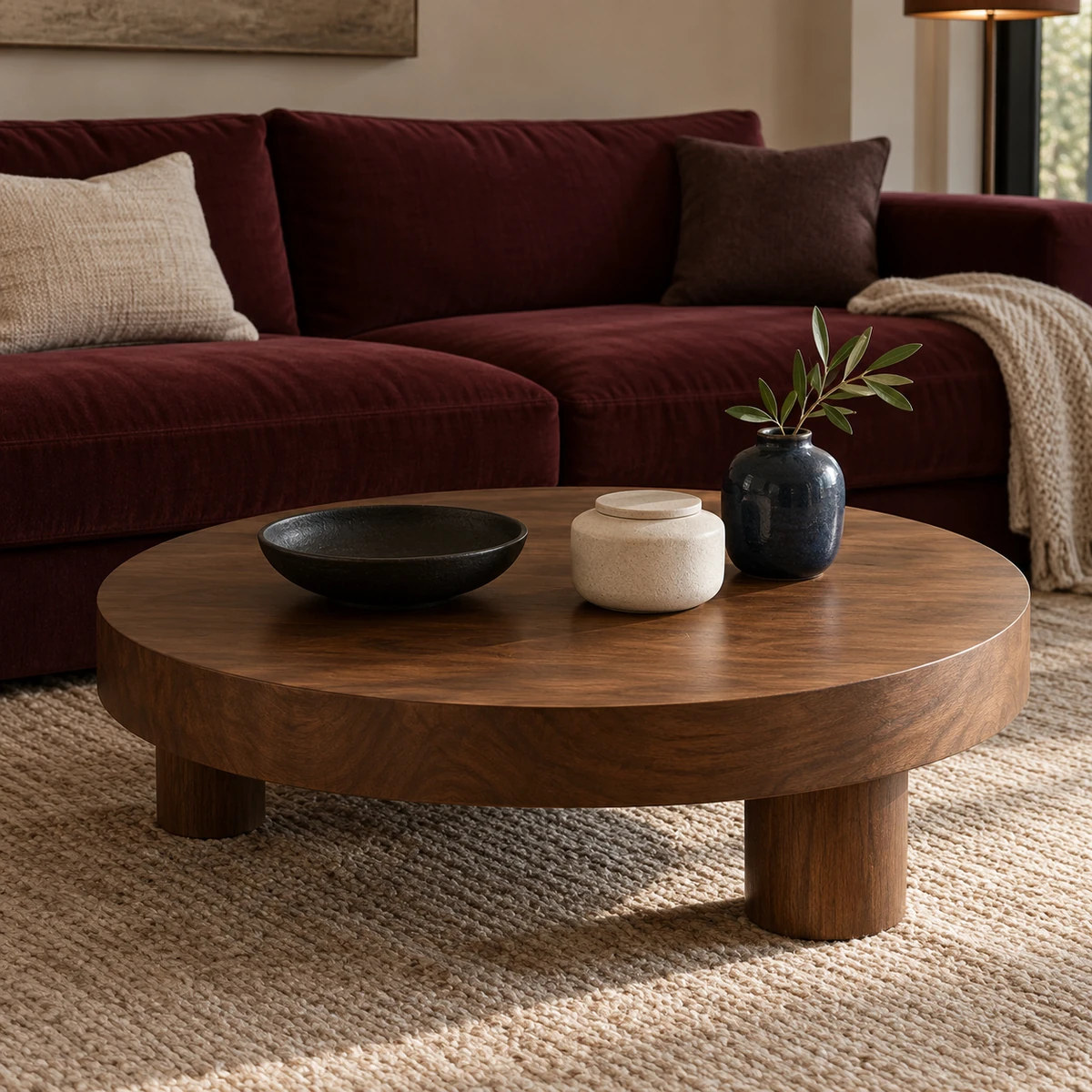
A compact table does not need a miniature version of every accessory in a larger display. Choose what matters most and preserve usable surface around it.
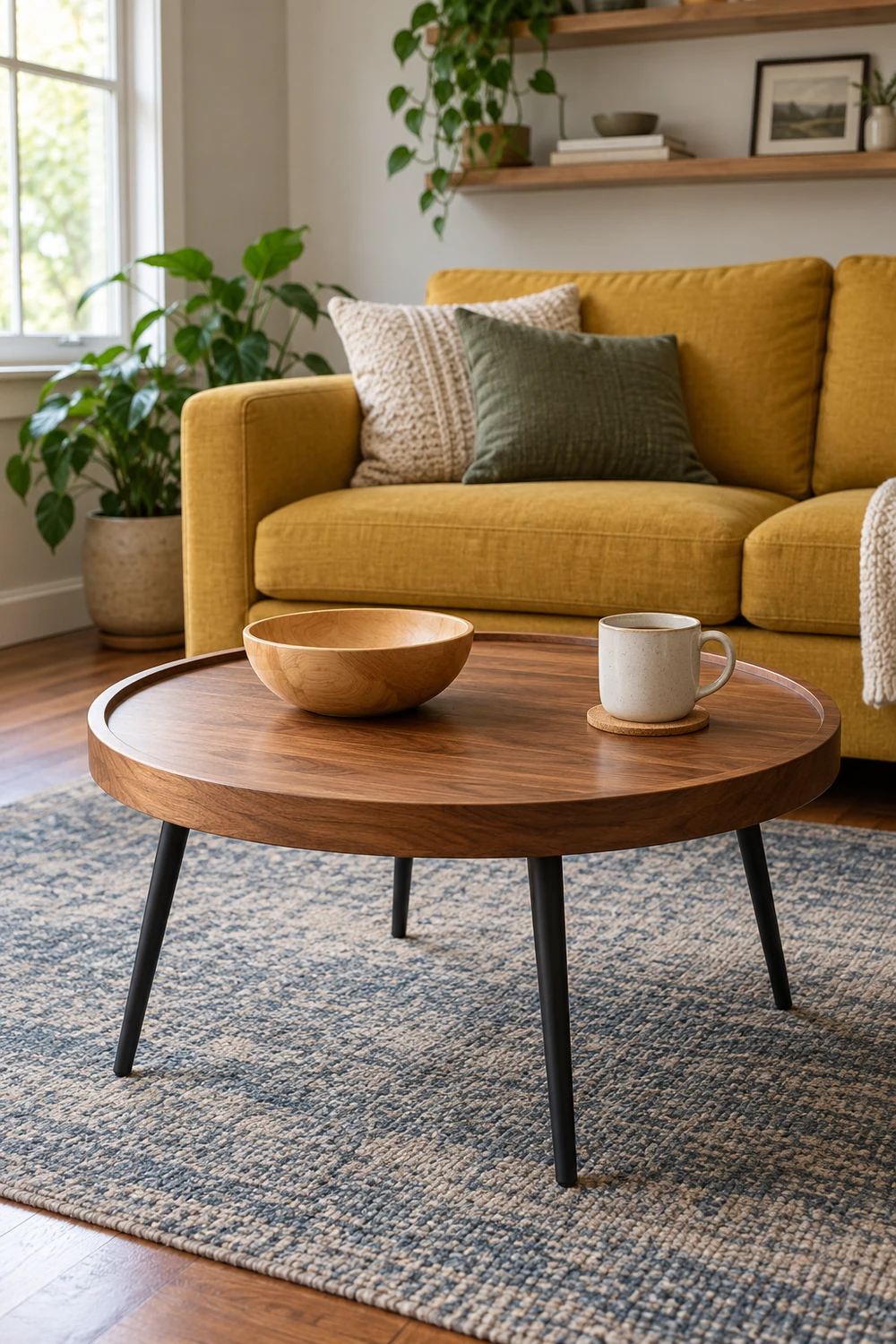
The two-object example keeps the arrangement simple enough to move when the table is needed. One piece can hold something useful while the other provides a decorative detail.
Avoid selecting a large tray before checking the table’s working space. The tray may consume the area you need for a mug even if its contents are restrained.
If you want help composing a group inside a container, our coffee table tray decor ideas explain that task. On a compact circle, decide whether the tray earns its footprint before making it part of the arrangement.
Give a Larger Table Related, Separated Groups
A larger round table can support more than one cluster, but the groups should still have a visual relationship. Repeat a material, a color, or a similar level of restraint.
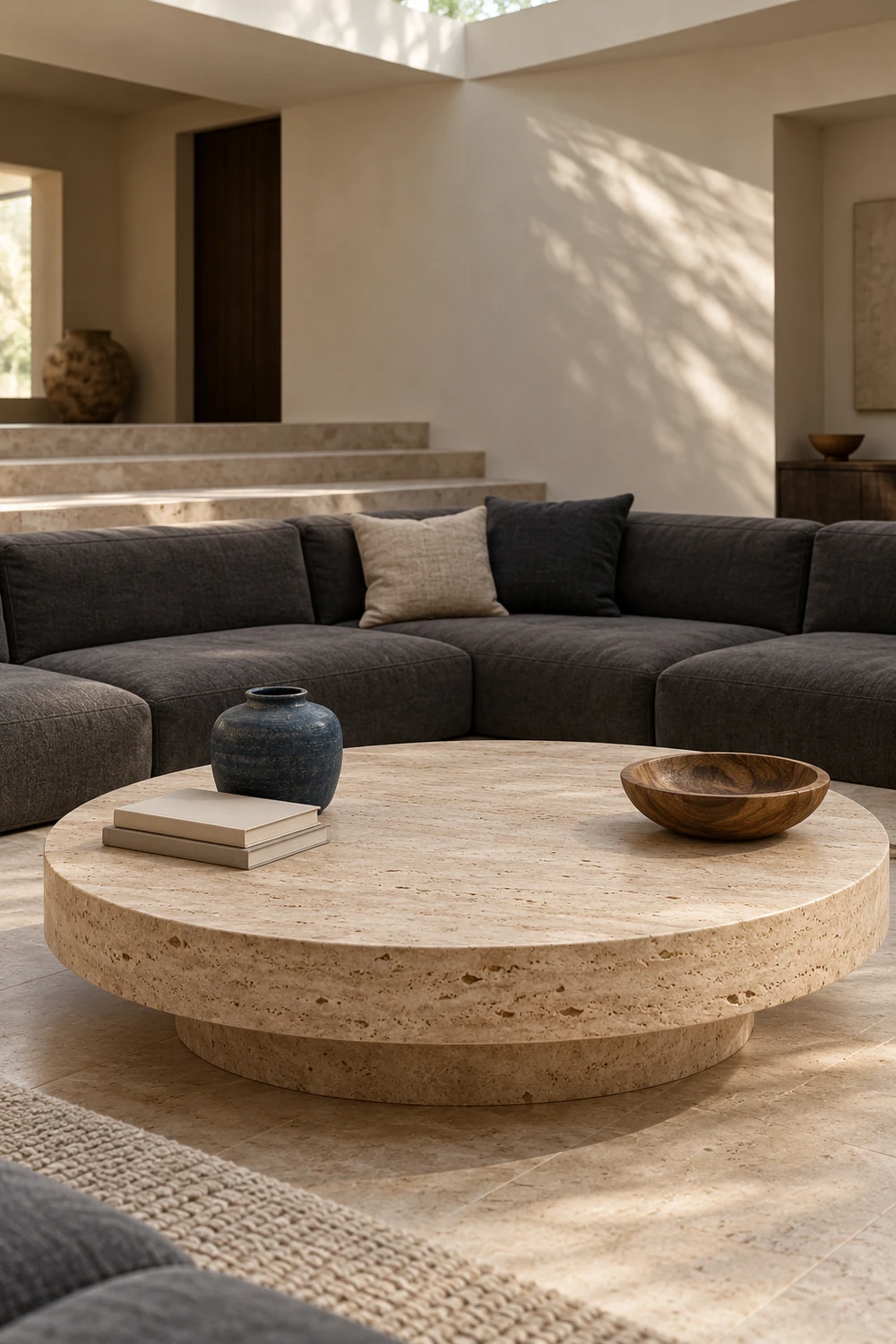
Leave visible table surface between the clusters. If accessories form a continuous ring, the table can start to look occupied from every seat.
Choose one group to be more prominent and let the other remain quieter. For example, a book-and-vessel group can have more height while a separate shallow bowl stays low.
Check the spaces from each seating position. A useful gap on the far side is not much help to the person sitting closest to the larger display. Shift the clusters so the open areas serve the room rather than only the photograph.
Check Reach From the Sofa
Before finalizing the decor, sit down and test the table in relation to the sofa. You should have a comfortable route to your seat and a natural place to set things down.
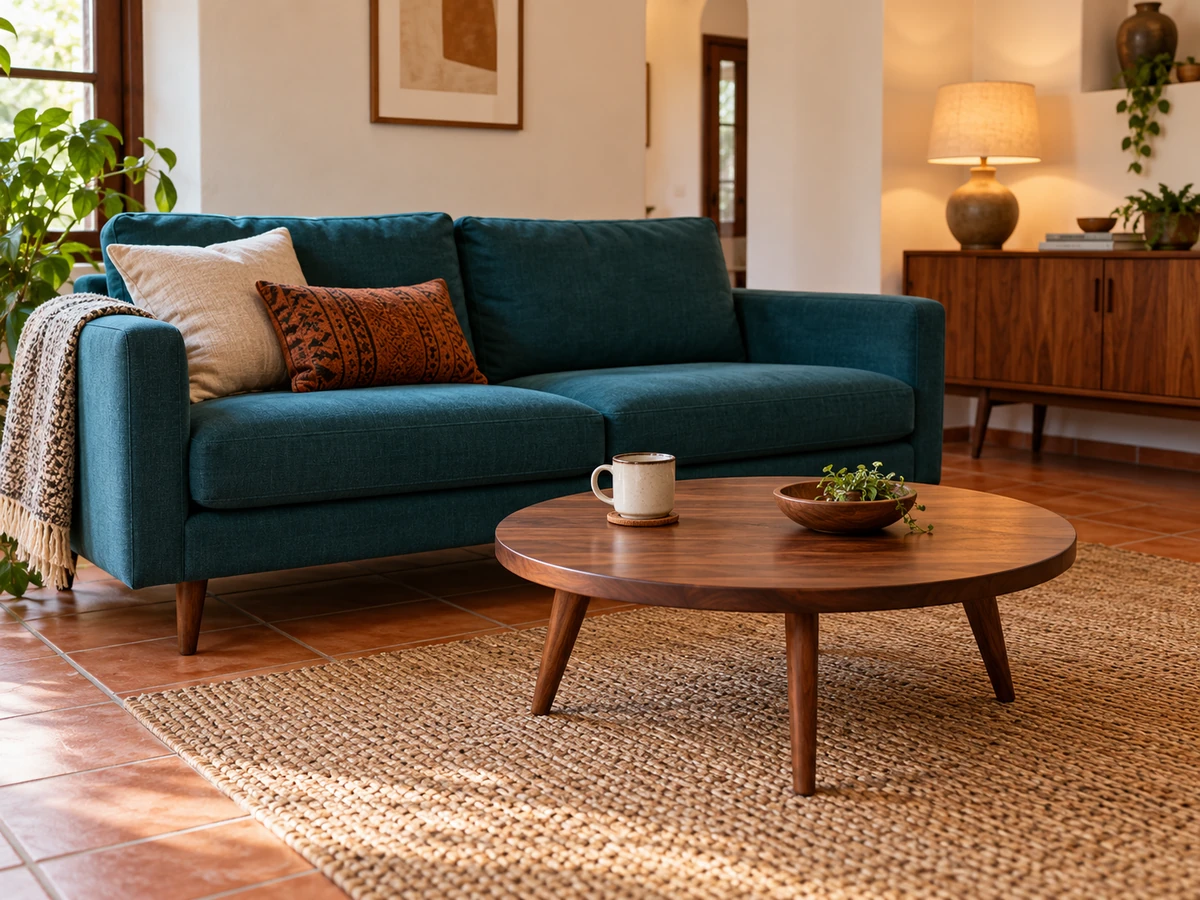
There is no single placement measurement that suits every table, sofa, and household. Test the arrangement with the actual seat depth and the way you use the room.
Notice whether the main group occupies the easiest reach area. If it does, move the decor instead of asking everyday objects to fit into a less convenient space.
Also check nearby seating. An armchair may need its own clear landing area on the circle. Keep the decorative layout flexible enough to support the people using the room.
Let a Drum Base Supply Some of the Visual Weight
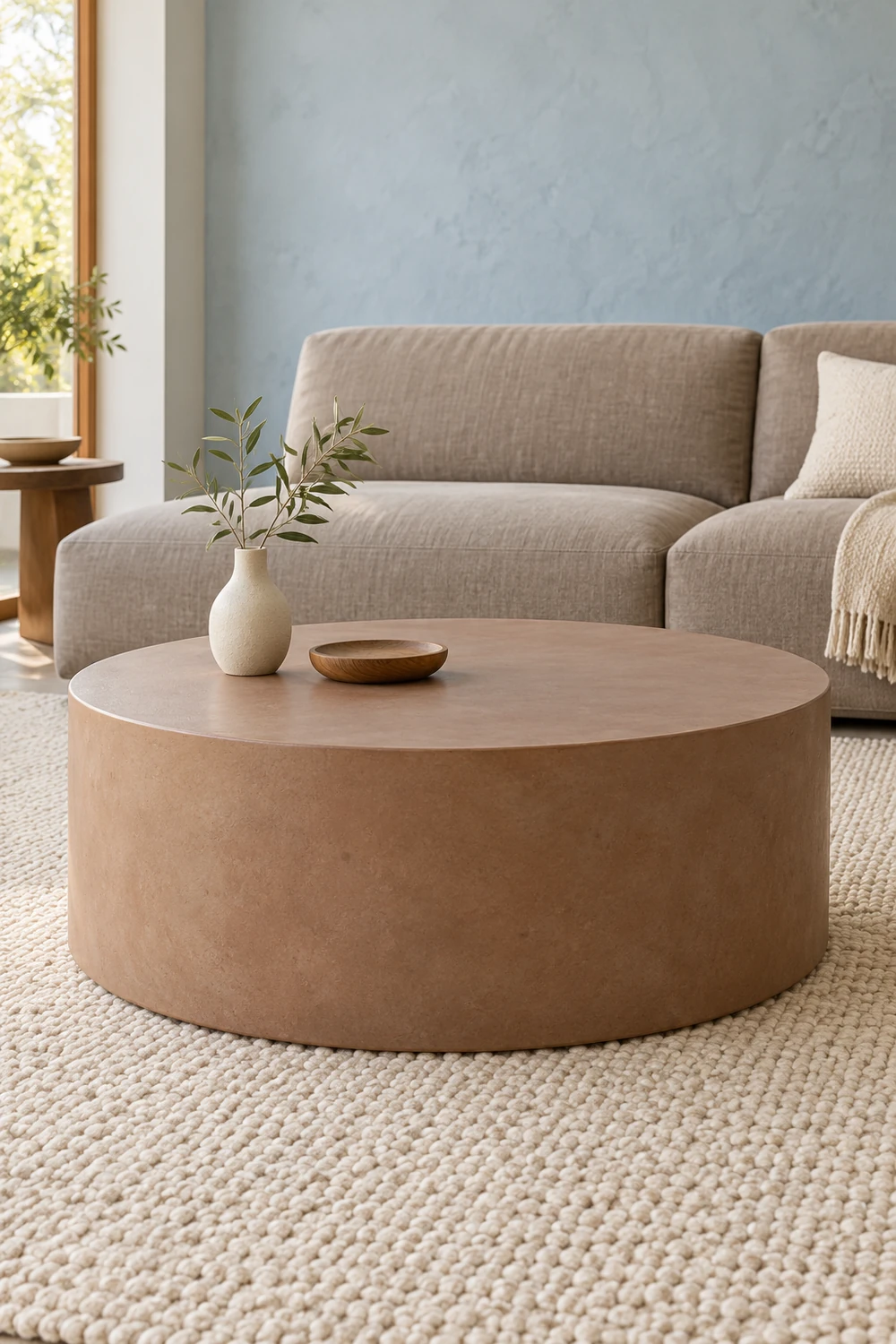
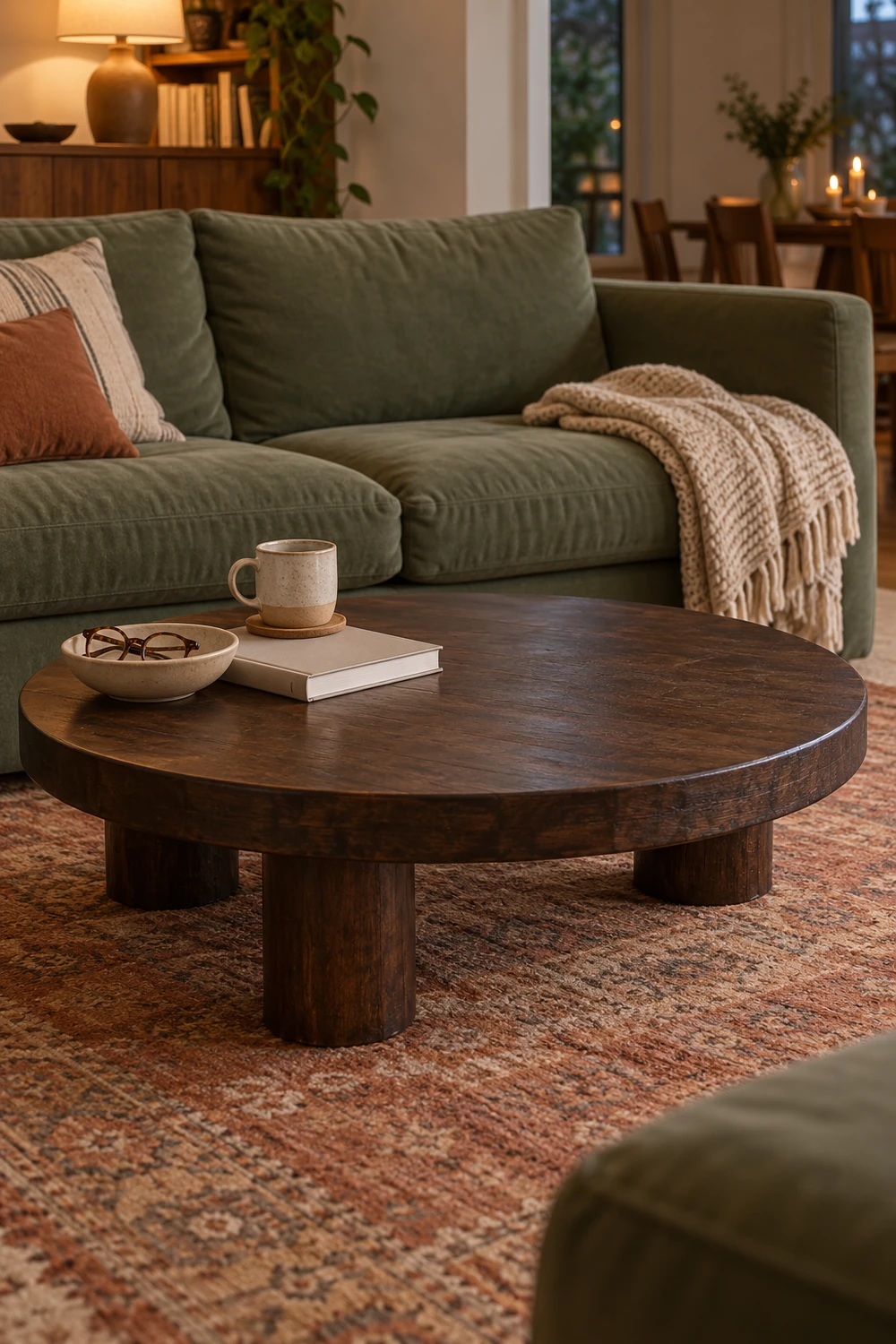
A solid drum table already has a substantial shape. A heavy-looking cluster on top can make the whole arrangement feel dense.
Try a light group with visible space around it. A small vessel, a slim book, or one low bowl may be enough when the table itself is the room’s main sculptural piece.
Consider the side view as well as the top. The base and accessories form one silhouette from the sofa. Keep that silhouette varied rather than repeating the same broad cylinder in every object.
Use the finish as another guide. Strong grain, veining, or texture can provide interest that does not need to be duplicated in the accessories.
Keep Every Corner and Handle Inside the Edge
The curved perimeter deserves a close practical check. Book corners, tray handles, and the wide rim of a bowl can extend farther than their bases suggest.
Look down from above, then walk around the table. Keep the complete footprint inside the edge, especially near the route to the sofa.
Use surface protection suitable to the table’s material and follow its care guidance. Decorative pieces should sit flat and remain stable during ordinary use.
For a glass-topped circle, transparency and reflections need their own consideration. Our glass coffee table decorating ideas cover those material-specific details without changing the circular layout principles here.
Make the Daily Reset Easy
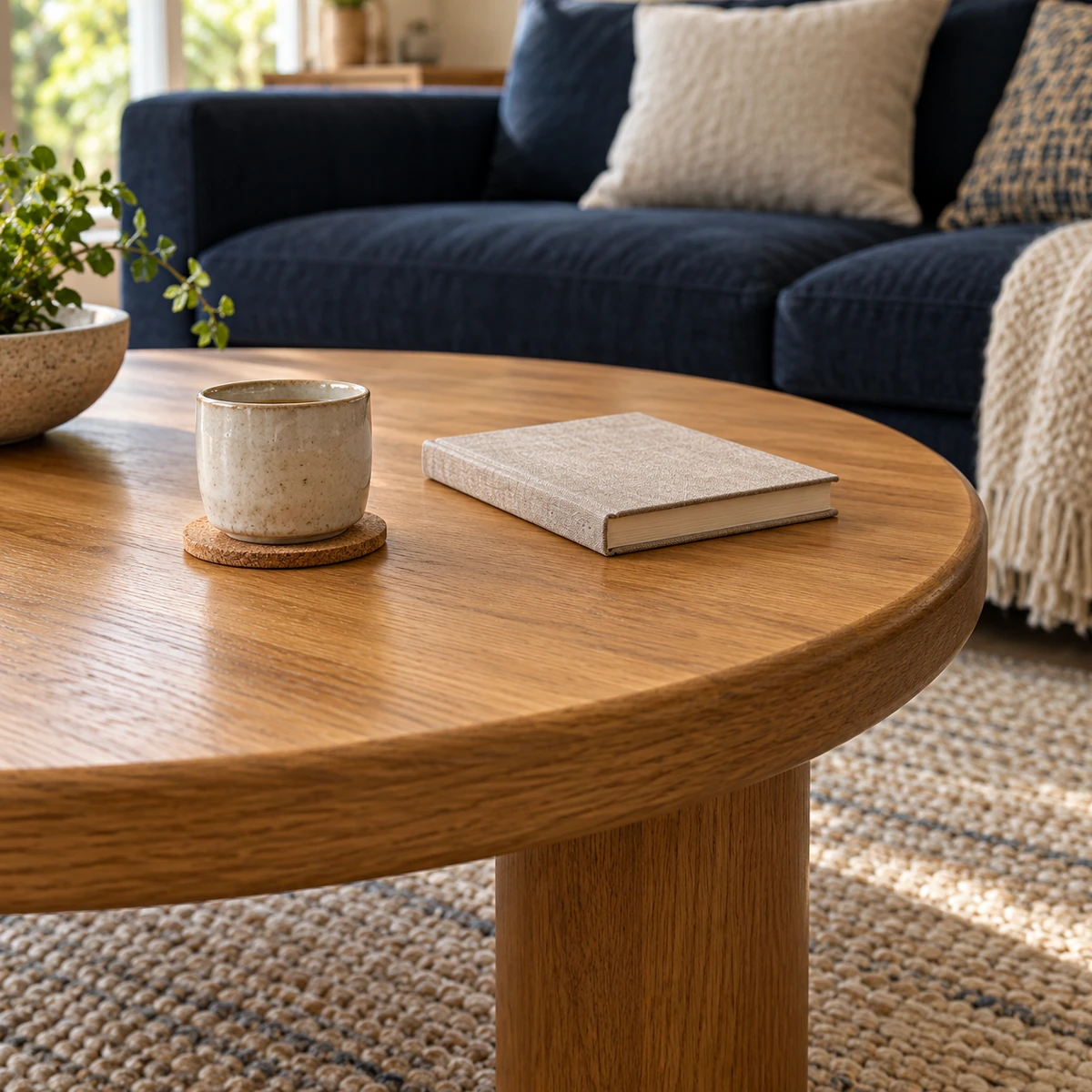
A lived-in coffee table will change during the day. Drinks arrive, books open, and remotes leave their usual spot. The layout should be simple enough to return to without a styling session.
Give each regular object a clear home and limit pieces that must be moved before the table can be used. If the same accessory is always pushed aside, reconsider whether it belongs there.
When you clean the surface, return the main group first. Add the everyday items next, then stop. This helps prevent small extras from gradually filling every open sector.
Choose a Layout by the Way You Use the Table
| Everyday need | Layout to test |
|---|---|
| One main sofa seat uses the table | Offset the group away from that seat’s landing area |
| Several seats need access | Keep a low central piece or a compact group with multiple open areas |
| Books are used regularly | Keep a short stack fully inside the curved edge |
| The table often needs clearing | Use fewer pieces that lift away in a manageable group |
| The table itself has a strong sculptural shape | Let one restrained accessory provide the finishing detail |
Use these as starting points. The best arrangement is the one that remains comfortable during a normal evening.
Frequently Asked Questions
How do you decorate a round coffee table without crowding it?
Reserve usable space first, then choose one main group or one low bowl. Keep the pieces within the curved edge and test reach from your regular seats.
Does the decor have to sit in the center?
No. An offset group can leave a more convenient landing area near the sofa. A central bowl can also work when it stays low and leaves enough room around it.
Can you put rectangular books on a round table?
Yes. The straight lines can contrast with the circular shape. Keep every book corner inside the table’s footprint and make the stack easy to pick up.
Work With the Circle
When deciding how to decorate a round coffee table, let the curve guide the arrangement without filling the whole surface. Choose a clear focal group, preserve the spaces people use, and check the layout from every regular seat. A little deliberate empty space makes the finished table easier to enjoy.