Living Room / Fireplace Mantel Decor
Mantel Decor with a Mirror: Balanced Arrangements to Try
A mirror above a fireplace brings two views into one arrangement: the mantel itself and the part of the room reflected behind it. A frame can look beautifully proportioned on the wall yet still reflect an awkward doorway or a bright lamp from the main sofa.
Thoughtful mantel decor with a mirror begins with scale, placement, and that reflected view. Choose the mirror before gathering accessories, then use a small group of objects to support its shape rather than hide its lower edge.
The arrangement should feel considered when you enter the room and when you sit down. Start with the mirror, look at the whole fireplace wall, and add less than you think you need.
Compare the Mirror, Shelf, and Surround Together
Measure the mantel shelf, fireplace surround, and usable wall above. Include projecting trim, wall lights, and the ceiling line.

The diagram illustrates how mirror width relates to the shelf and surround. It does not prescribe a universal width ratio, mounting height, or appliance clearance.
Use a paper template matching the mirror’s outside dimensions, including the frame. View it from the doorway and main seats before choosing the final position.
Check the reflection at the same time. A mirror’s outline and its reflected image both affect the composition, so treat them as one decision. If the proposed position reflects something distracting, try a different size or shape rather than assuming accessories will solve it.
Confirm Support and Fireplace Requirements First
Use mounting suitable to the mirror’s weight, its own hardware, and the wall construction. Follow the product instructions and get qualified help when the support is uncertain.
A mirror shown near the shelf should not be assumed to be safely held by leaning alone. Secure it as required by its manufacturer.
For an active fireplace, follow the exact appliance and surround instructions for heat and clearance conditions. Keep vents, controls, and required clearances unobstructed. The Chimney Safety Institute of America’s factory-built fireplace inspection guidance identifies manufacturer installation instructions as the reference for fireplace clearance information.
These photographs demonstrate styling relationships, not permission to reproduce an installation without checking its requirements.
Use an Arch to Soften a Rectangular Fireplace
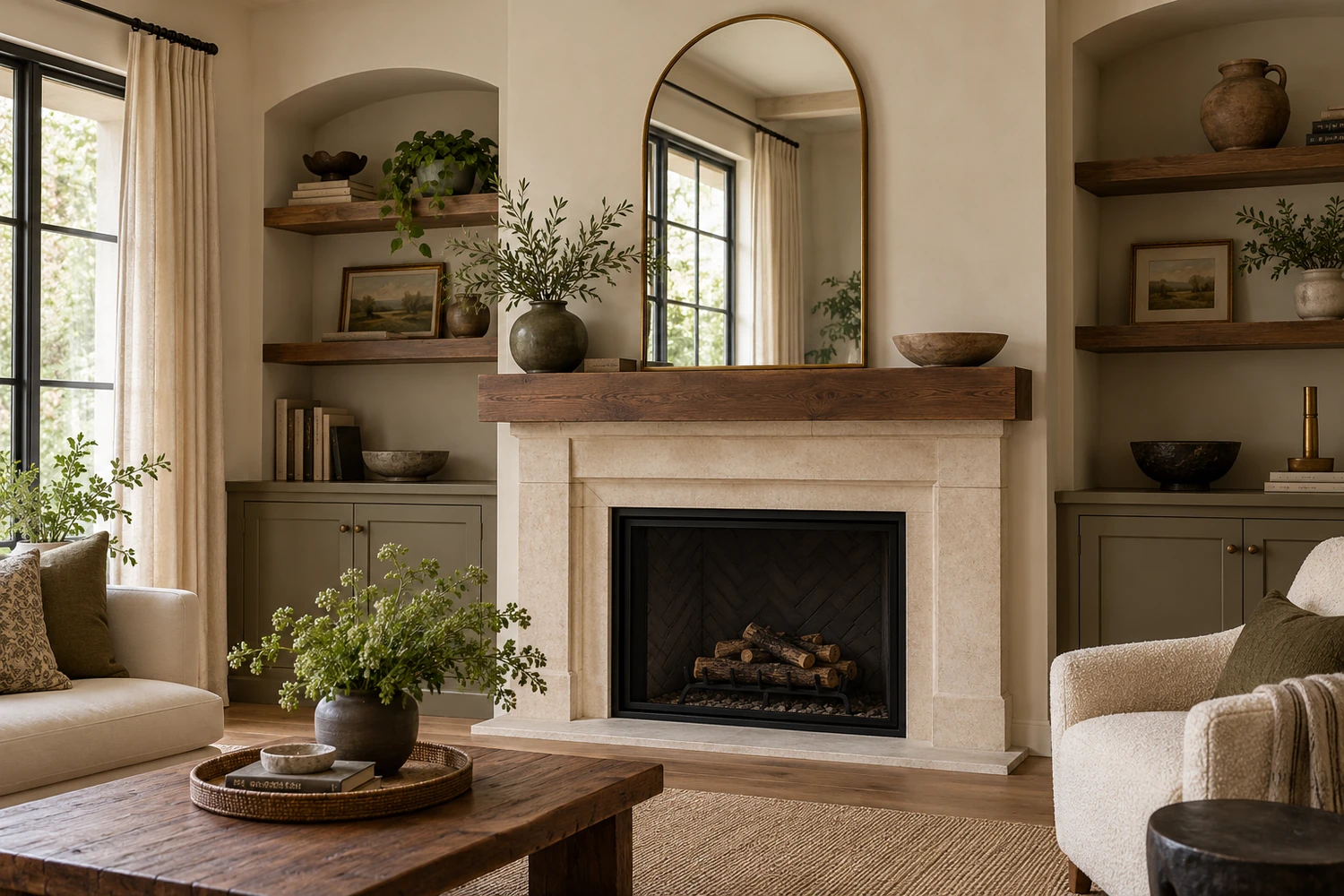
An arched mirror creates a curved upper outline above the straight lines of the mantel and firebox. It can give a plain wall a clear focal point without several separate frames.

The tall arch in this example works with low accessories that leave its shape visible. The vase and bowl support the mirror rather than compete with its height.
Check the frame against the ceiling and nearby wall details. An arch needs room for its top to read clearly; pushing it tightly beneath a cornice can make the arrangement feel compressed.
Choose the mirror’s scale before deciding whether the sides need objects. A generous frame and attractive surround may already provide most of the interest.
Balance a Round Mirror Against the Fireplace Geometry
A round mirror introduces a strong simple shape. Its diameter should be judged against the entire fireplace composition, not only the firebox opening.
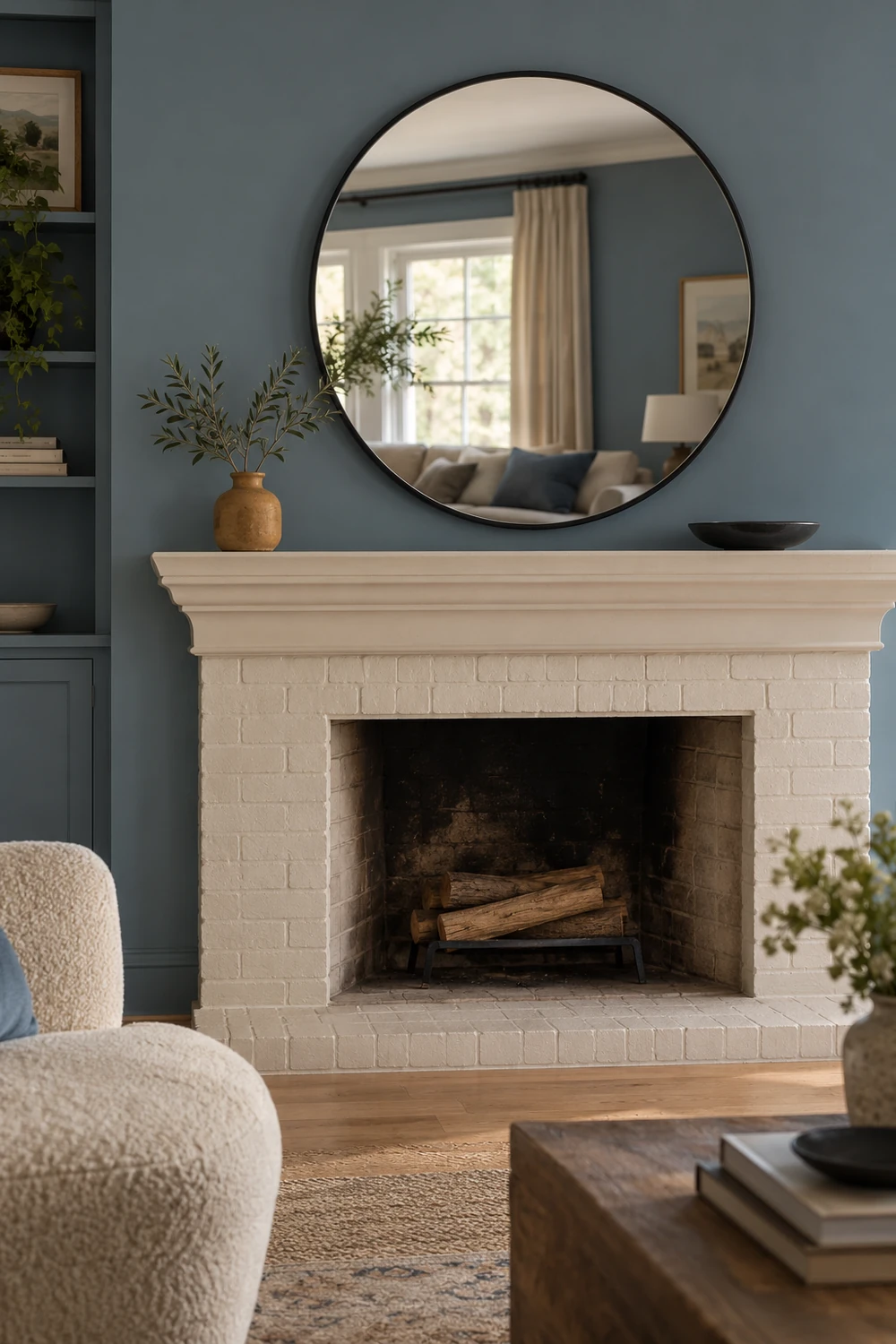
The black circle contrasts with the white brick surround. The restrained objects leave the curve readable and keep the frame from becoming visually crowded at the bottom.
Try the diameter with a circular paper template. Check whether it relates comfortably to the shelf width and the wall above it.
Avoid adding a cluster simply to fill the space beneath the curved lower edge. The wall visible around the circle is part of the arrangement, and the mantel does not need a decorative object at every point.
Choose a Rectangular Mirror for a Classic Outline
A rectangular frame can reinforce a traditional surround’s straight lines. Its finish and detail determine whether the result feels quiet or more formal.
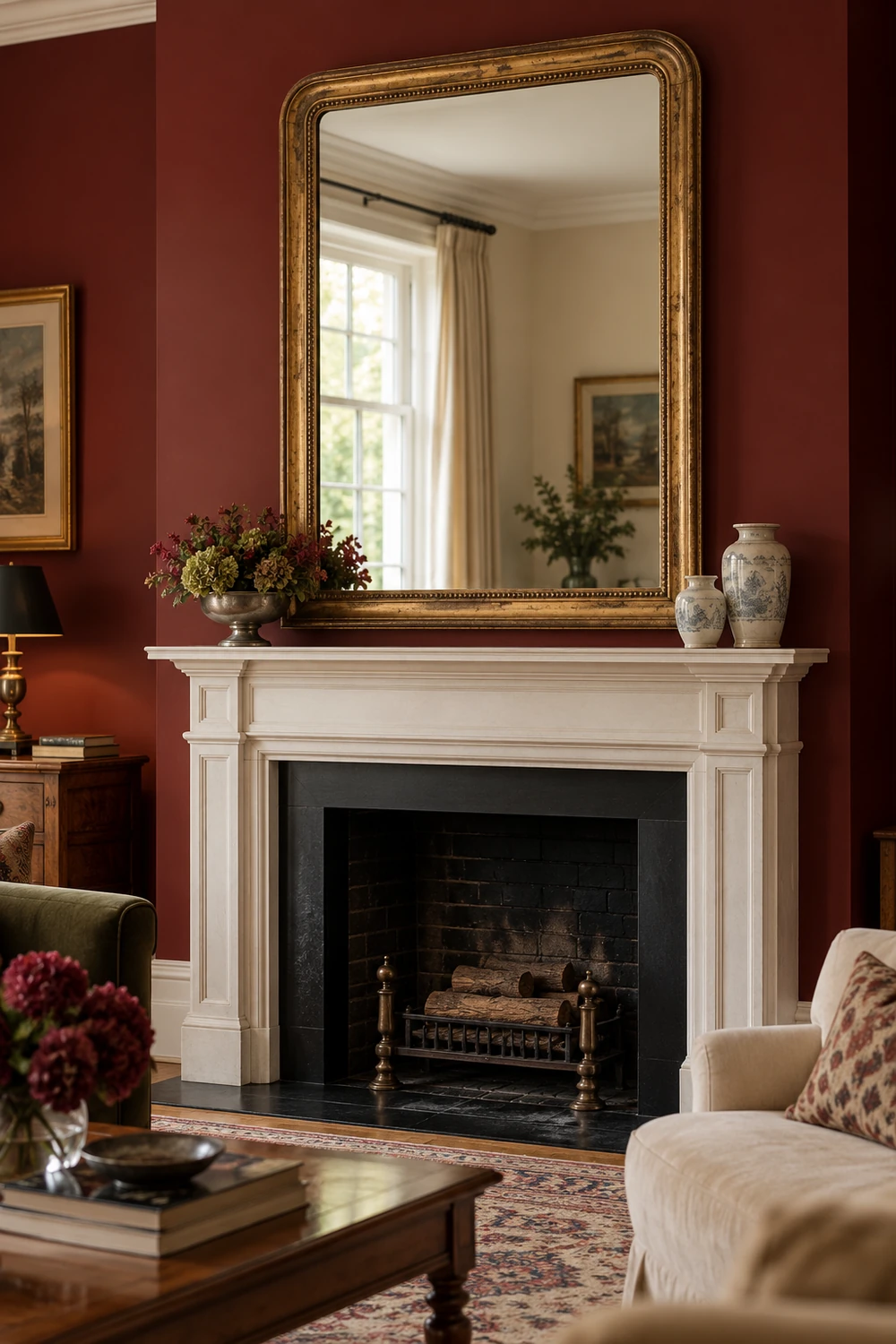
The gilt frame above the white mantel has enough character to act as the main decorative feature. The surrounding accessories can remain modest.
Check the thickness of the frame as well as the outer size. A narrow frame and a broad ornate one of the same dimensions can have very different visual weight.
Look at the wall from across the room. If the mirror feels heavy, simplify the accessories before adding another tall piece to balance it. The frame may be asking for more open space rather than more objects.
Try Matched Objects for a Symmetrical Arrangement
A matching pair gives the mantel a clear sense of order around the mirror. Choose objects that sit securely on the shelf and suit the fireplace’s operating conditions.

The navy vases provide related shapes on either side of an oval wood frame. Their repeated color establishes balance without requiring additional small pieces between them.
Begin with similar spacing, then adjust by eye from the main seating position. The architecture around the fireplace may not be perfectly symmetrical even when the shelf is.
Keep the pair low enough that the mirror remains the focal point. Decorative additions such as branches change both the silhouette and the total footprint, so include them in the fit check.
Balance a Small Group With One Contrasting Piece
For a more relaxed composition, try different objects with comparable visual presence. The two sides can have different counts without feeling unbalanced.

The cream vessels on one side are answered by a single bronze object on the other. Color, texture, and breadth create the balance rather than identical height.
Add one piece at a time and pause to look at the whole mirror. If the group starts to conceal too much of the frame, reduce it rather than extending the display farther across the shelf.
Decorating a mantel with a mirror becomes easier when the mirror’s outline remains obvious. The accessories should give it context, not turn the shelf into a separate competing display.
Keep a Compact Mantel Particularly Simple
A smaller shelf has less room for separate groups, especially when its depth is limited. Start with a proportionate mirror and one useful decorative accent.
The small round mirror and green dish leave much of the compact white mantel visible. The arrangement feels complete because each shape has room around it.
Measure the full width of the dish or vessel, not only its base. Keep every piece fully supported within the shelf and follow any applicable fireplace requirements.
If there is no comfortable position for accessories, leave the shelf clear. The mirror, frame, and surround can still form a finished composition.

Use Frame Contrast Deliberately
A dark frame against a light surround creates a clear outline. That contrast may provide enough strength that the accessories can be quieter.

The espresso frame stands out against ivory without requiring an equally dark object on every part of the shelf.
Repeat the frame tone subtly elsewhere in the room if it helps the composition connect to furniture or existing details. Exact matching is optional.
Check the reflection as part of the contrast. A dark frame surrounding a bright window reflection can draw more attention than expected, especially when viewed from a lower seat.
Connect a Wood Frame to Existing Texture
A wood mirror frame can relate to the mantel shelf, flooring, or nearby furniture. Let those existing materials help establish the palette.
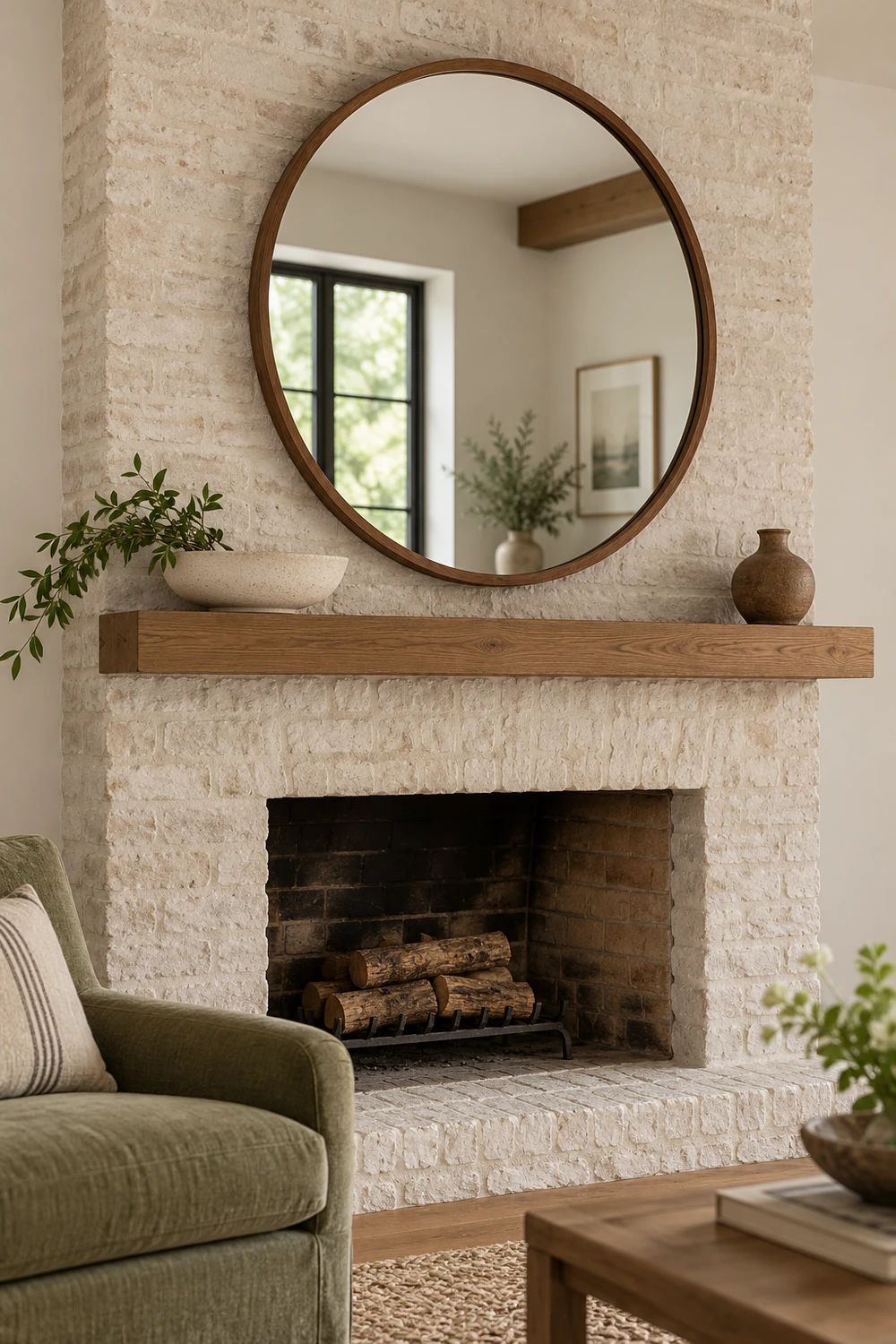
The walnut frame, oak shelf, and textured brick provide several natural surfaces without needing many additional accessories.
Choose a restrained object that contrasts enough to be seen. A plain ceramic bowl can give the eye a quieter shape against busy masonry or visible wood grain.
Avoid trying to reproduce every room texture on the shelf. The mirror arrangement can connect to the surroundings through one or two clear relationships.
Allow Only Restrained Overlap
A low object may slightly overlap the mirror’s lower edge and give the composition depth. The overlap should remain small enough that the mirror and frame still read clearly.
The sage bowl sits on a deep shelf with the mirror visible behind it. Check the full object footprint and keep the arrangement secure; the reflected view can make an overhanging piece appear better supported than it is.
Avoid stacking objects in front of the mirror simply to create more layers. One low overlap can be enough, and some mirrors look better with the entire frame unobstructed.

Choose the Reflected View as Carefully as the Frame
Sit on the main sofa and look at what the mirror brings into the fireplace wall. Repeat the check from other regular seats and the room entrance.
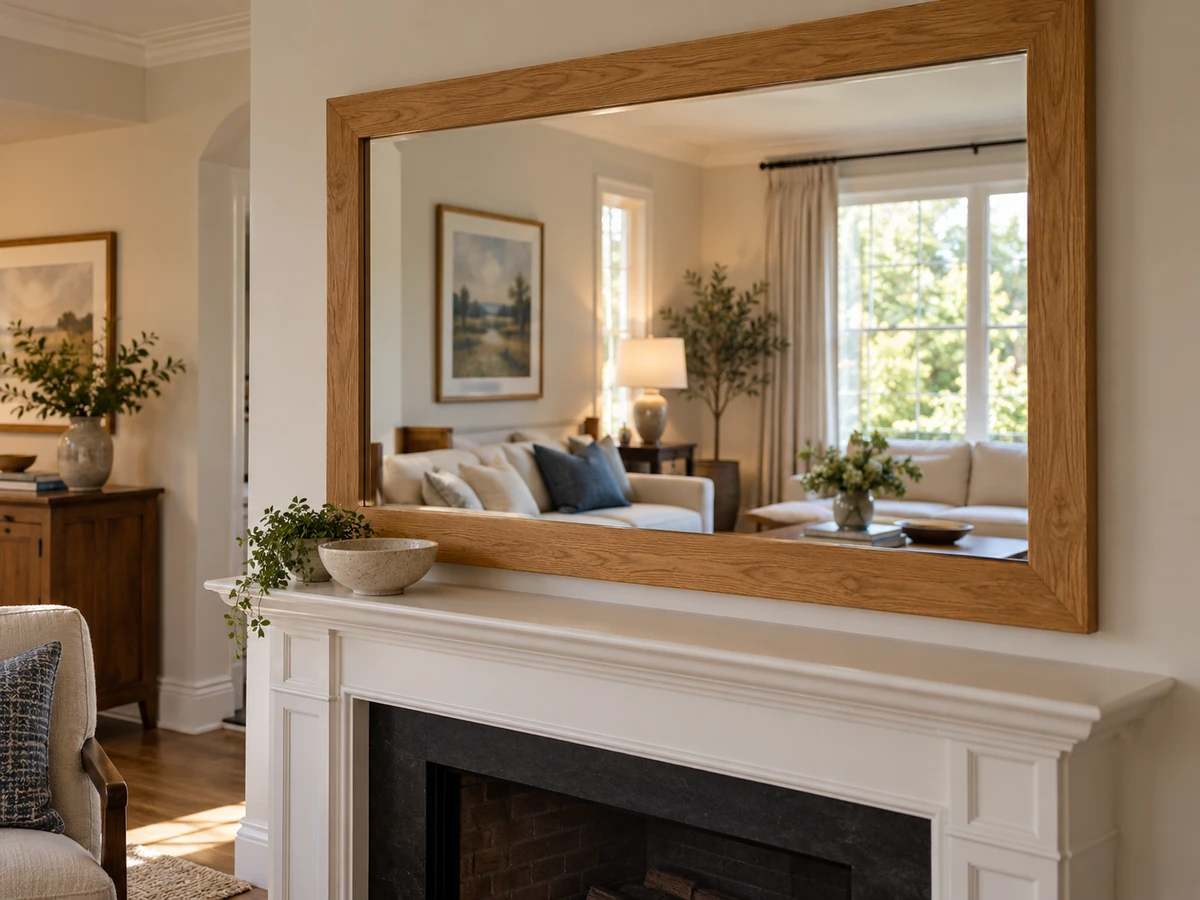
The reflected sofa, blue cushions, and window add a considered second view in this example. Your own mirror may show a doorway, ceiling fixture, or storage area instead.
Use a temporary template to settle the frame outline, then carefully check the actual reflection before final installation. Do not alter a mirror’s mounting angle in a way its hardware does not support.
If no suitable mirror position gives a view you enjoy, artwork may be a better focal point. A mirror is an option, not a requirement for a finished mantel.
Check Soft Evening Light
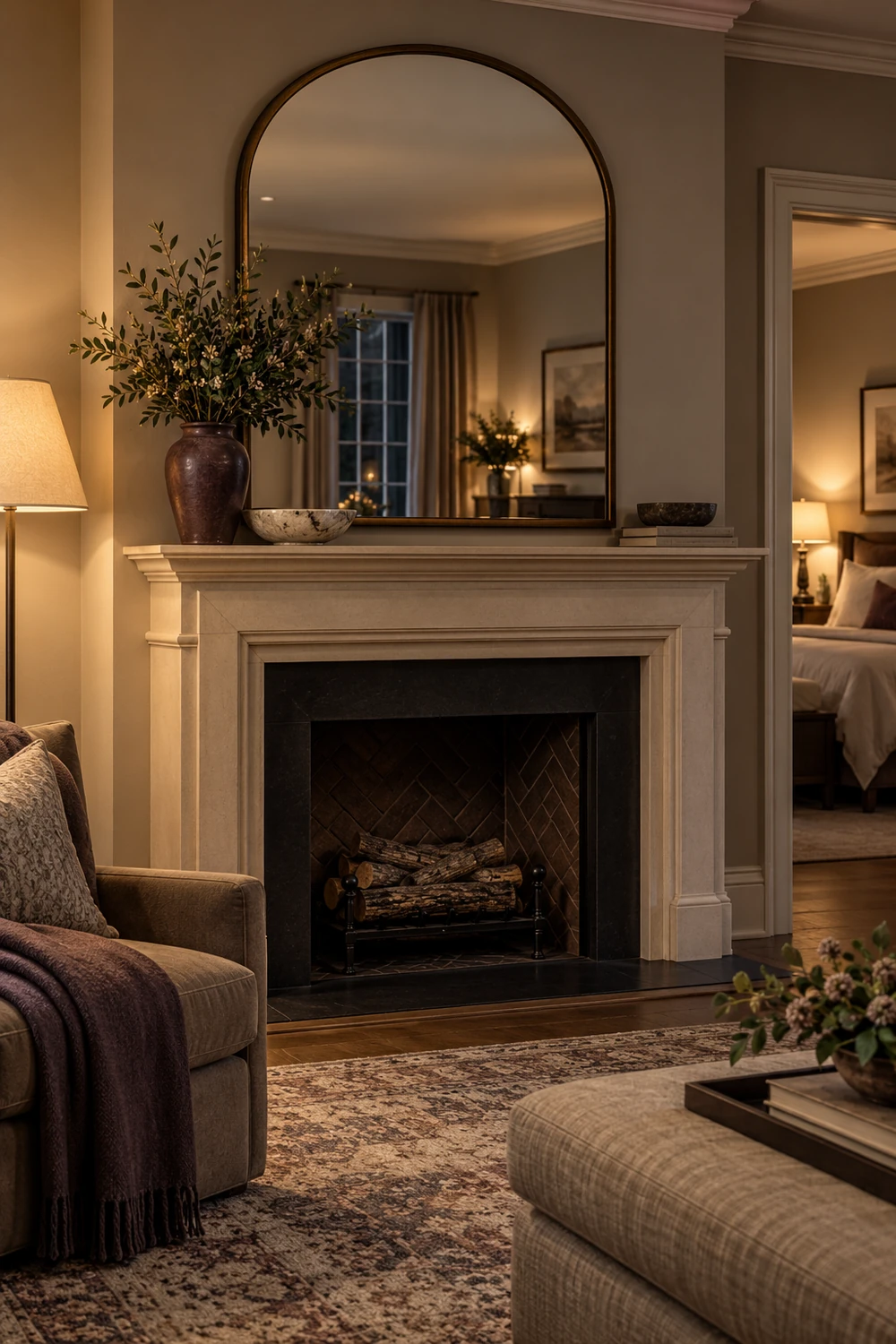
Turn on the lamps normally used after sunset. Notice whether the mirror reflects a bright source directly toward the main seats.
The evening example keeps the composition readable with low-glare surrounding light. Adjust nearby lamp positions where appropriate rather than filling the shelf with more shiny objects.
Keep this mirror-led task separate from a television wall. Our fireplace mantel decorating ideas with a TV cover screen sightlines and equipment space, which call for different decisions.
Make One Small Seasonal Change
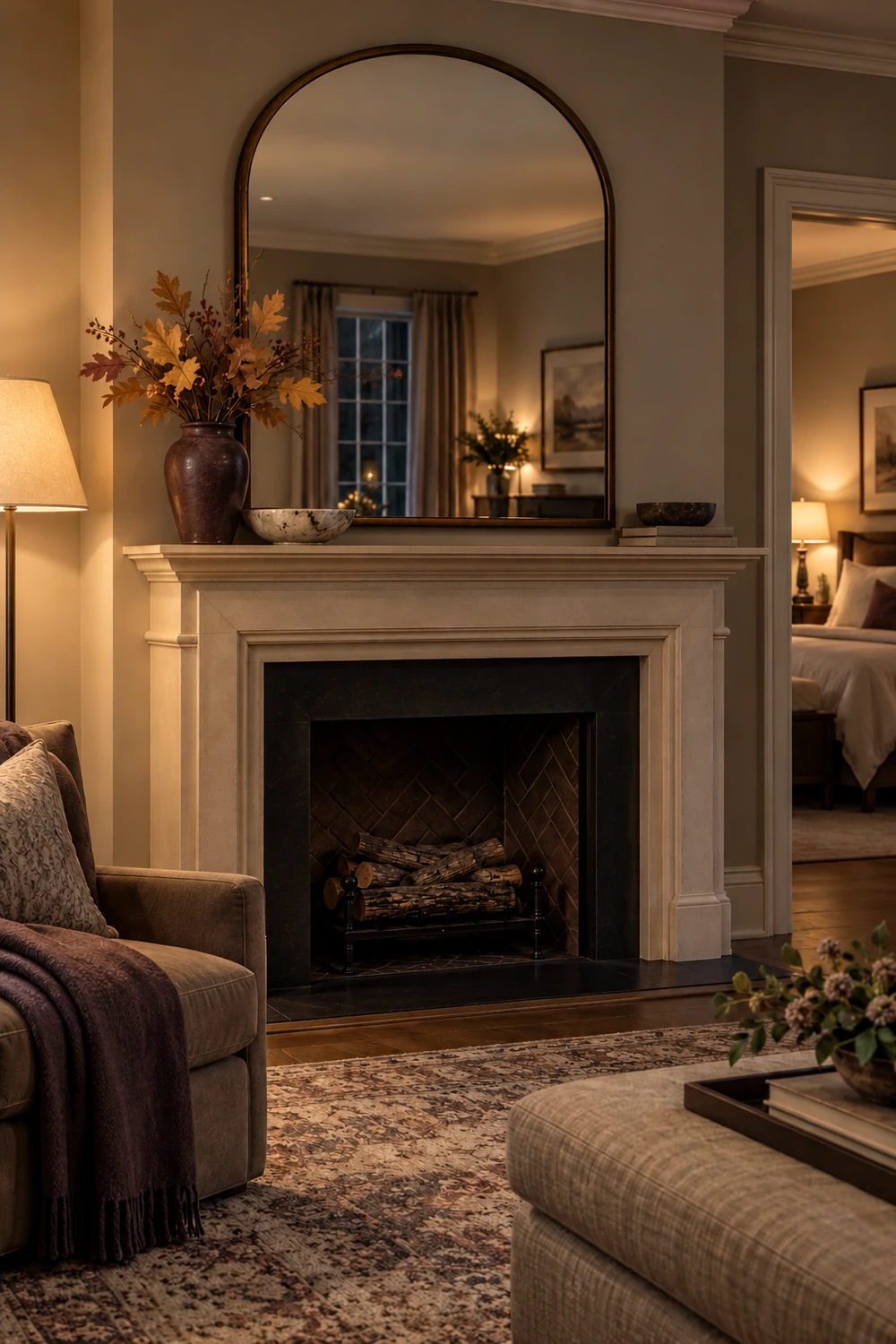
A working arrangement can stay in place while one accent changes. This same-layout seasonal concept adds ochre leaves to the existing vessel rather than rebuilding the whole mantel.
Check the complete added shape and the materials’ suitability around the fireplace. Keep required clearances and follow appliance instructions; seasonal styling does not override them.
Choose one small change and look again from the sofa. The mirror should remain the main focal point, with the seasonal detail acting as a supporting note.
Know When Another Surface Is the Better Place
If the mirror and fireplace surround already form a strong composition, a larger collection may belong elsewhere. A console can support a different relationship between art, lighting, and everyday storage.
Our console table decor ideas explore that surface without asking the mantel to hold every decorative piece in the room.
The connection can be a repeated material or color. The mantel and console do not need identical mirrors, matching arrangements, or the same number of objects to feel related.
Frequently Asked Questions
What works well for fireplace mantel decor with a mirror?
Start with a proportionate, properly supported mirror and a small group of suitable objects. Try one low accent, a matching pair, or an asymmetric group while keeping the frame visible.
Should a mantel mirror be round, arched, or rectangular?
Choose according to the surround, usable wall, and reflected view. Test the full outside outline with a template rather than selecting a shape without checking its scale.
Can a mantel mirror simply lean against the wall?
Do not assume leaning provides adequate support. Follow the exact mirror’s mounting and securing instructions and the requirements of the fireplace location.
Keep the Mirror at the Center of the Decision
When decorating a fireplace mantel with a mirror, resolve scale, secure support, and reflection before adding accessories. Let a small number of well-placed pieces support the frame and the room around it. A clear focal point and a considered reflected view can do more than a crowded shelf.