Seasonal Decor
Winter Decorating Ideas for a Warm, Cozy Home
How do you decorate for winter once Christmas comes down? Keep the warmth and the light, and remove the holiday-specific pieces. Winter decorating is about cozy textures, a calm palette, and seasonal touches that do not depend on Christmas — greenery, candles, warm textiles, and soft light. This guide covers winter decorating ideas for the home, including winter decor rustic touches and cozy winter home ideas, with winter home decor you can keep up from January through February.

The Winter Transition: What to Keep and What to Remove
The first step in winter decorating is a simple transition. Take down the tree, the ornaments, and any piece with a Christmas pattern or a holiday message. Keep the pieces that work for winter on their own: greenery, candles, throws, pillows in plain colors, and warm lighting. A wreath without ornaments, a garland without red ribbon, and a candle group without a holiday figure all work for winter.
Work room by room, and do not rush. Take down Christmas decor in one room, clean the surfaces, and then add winter touches to that room before you move on. This way, no room feels empty for long. Store Christmas pieces in labeled bins as you go, and keep a note of what you own so next December is easier. If a piece is broken or you did not use it, donate or recycle it rather than storing it again.

Cozy Textures: The Heart of Winter Decor
Texture is the most important part of winter decorating. When the weather is cold outside, a home that feels warm to the touch feels warm to live in. Layer textures rather than adding more objects: a knit throw over a chair, a faux-fur pillow on the sofa, a woven basket by the fireplace, and a wool rug underfoot.
Layering Textiles
Start with the sofa. Add a throw in a plain color — cream, soft grey, warm brown, or deep green — and drape it over one arm or across the back. Add one or two pillows in a different texture: velvet, knit, or linen. The mix of textures is what makes the sofa feel cozy, not the number of pillows. Avoid too many pillows; two or three on a standard sofa is enough, and you should still be able to sit comfortably without moving them.
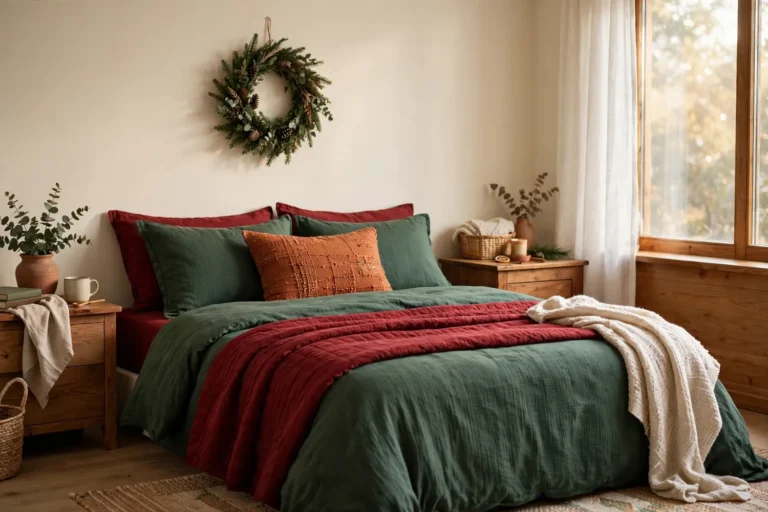
In the bedroom, add a throw at the foot of the bed and a warm blanket you can reach for at night. In a reading corner, add a throw and a small pillow to the chair, so the corner feels inviting in the evening. Our guide to how to create a reading nook shows how a chair, a lamp, and a small table can make a cozy corner in any room, and winter is the best season to use it. Keep textiles clean and washable, because winter textiles get daily use.

A Winter Palette That Feels Warm
A winter palette should feel calm and warm, not bright and holiday-specific. Choose one of these palettes and use it across the rooms you decorate.
Warm neutrals — cream, warm brown, soft grey, and natural wood — feel timeless and work in almost any home. Add greenery for contrast, and a touch of deep green or burgundy if you want a little color. Winter decor rustic touches fit this palette well: wood, linen, and natural greenery, with a plaid throw or a woven basket for texture.
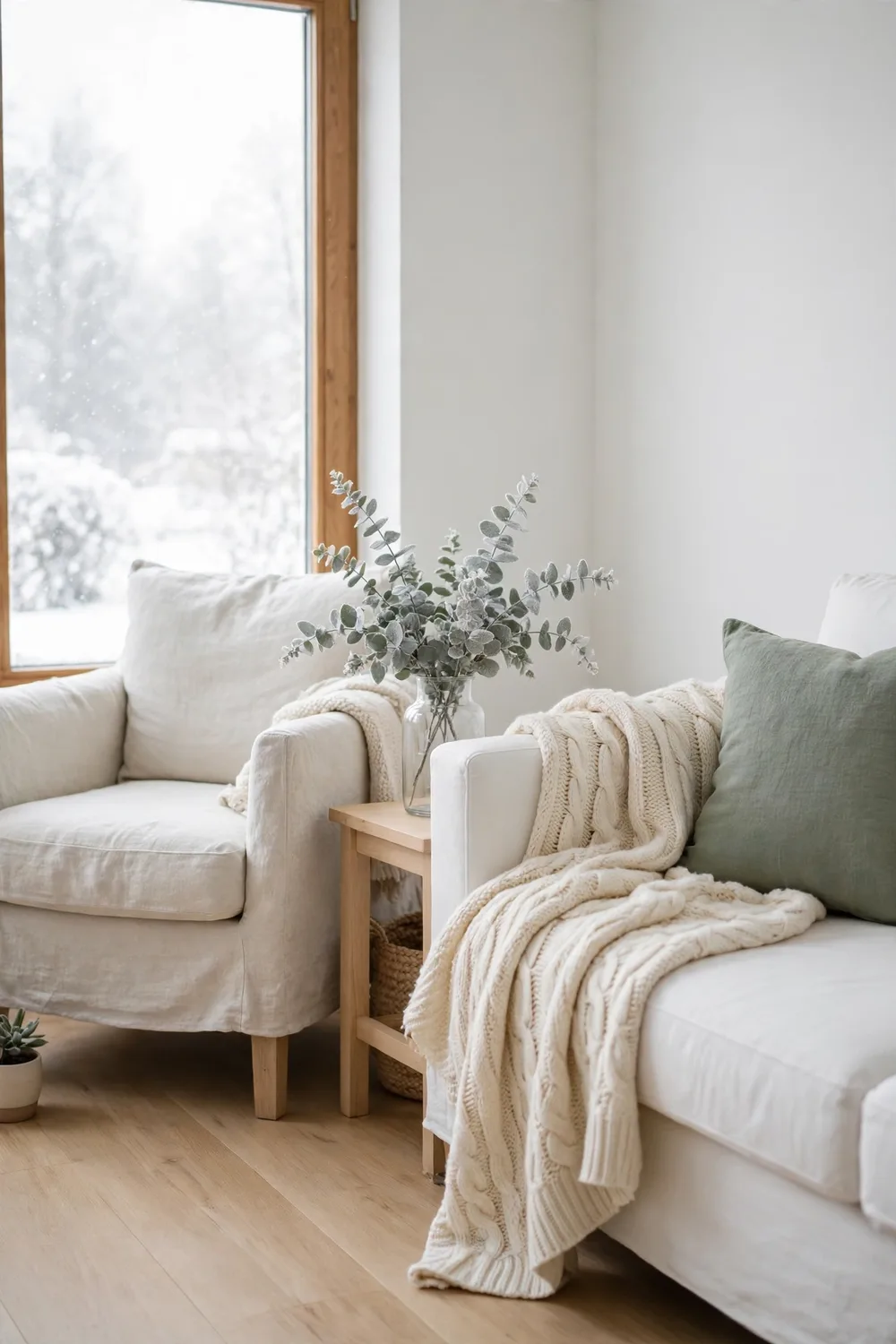
Soft whites and wood — white, cream, and light wood, with a little sage or eucalyptus green — feel light and bright, and they work well in a small or dark room. Add texture with knit throws, linen, and frosted greenery to keep the look from feeling cold. This palette suits a home that felt too dark in winter and needs more light.
Deep and cozy — deep green, charcoal, warm brown, and brass — feels rich and inviting in a larger room or a room with a fireplace. Use deep colors for textiles and small pieces, and keep the walls and large furniture light, so the room does not feel smaller. Add warm lighting to balance the deep colors.
Whichever palette you choose, repeat it in at least two rooms. A cream throw in the living room and a cream pillow in the bedroom, for example, tie the spaces together. Avoid a different palette in every room; one palette for the whole home keeps winter decor feeling coherent.


Non-Christmas Seasonal Touches
Winter decor does not need Christmas symbols to feel seasonal. Greenery, candles, and natural materials carry the season on their own.
Greenery is the simplest winter touch. Fresh pine, cedar, eucalyptus, or holly in a vase, along a mantel, or in a wreath adds color and life to a room. A simple wreath without ornaments, a garland along a shelf, or a few branches in a jar can all work. Choose greenery that suits your home: fresh greenery smells good but needs water and will dry out, while faux greenery lasts all winter and can be stored for next year. Keep greenery away from heat sources and candles, and replace fresh greenery when it dries out.
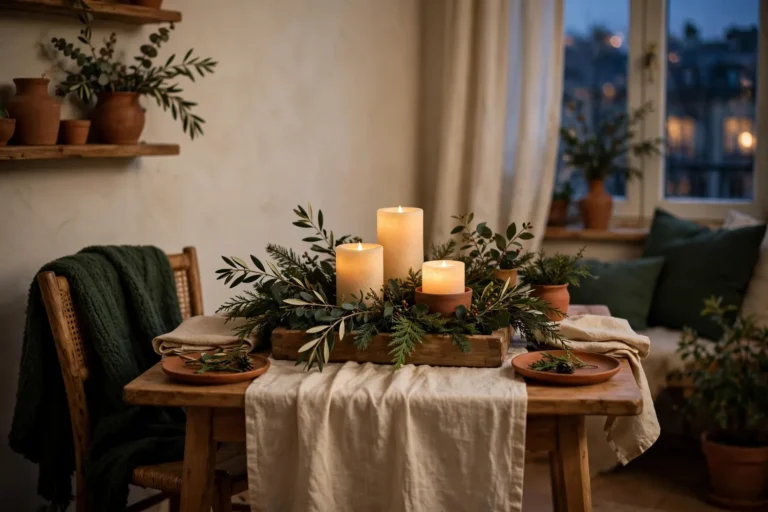
Candles add warmth and light in the evening. Group three candles of different heights on a tray, with a little greenery around the base, and place the group where you will see it — the coffee table, the mantel, or the dining table. Use battery-operated candles if you have children or pets, or if you want to leave them on in the evening. Keep real candles away from curtains, greenery, and anything flammable, and never leave them burning unattended.
Natural materials — wood, stone, linen, and wool — add texture without a holiday pattern. A wooden bowl, a stone vase, a linen runner, or a wool throw all fit winter decor. A bowl of pinecones, a basket of firewood by the fireplace, or a stack of books on a shelf can all feel seasonal without being Christmas-specific.


Room-by-Room Winter Swaps
You do not need to redecorate every room for winter. Give each room one or two swaps, and let the palette tie them together.
Living Room: Warmth and Light
In the living room, add a throw and a pillow in your winter palette, and a candle group or greenery on the coffee table. Style the mantel with greenery and candles, and see our guide to mantel decor with a mirror for balanced arrangements that work with a mirror above the fireplace. Style a bookshelf with a few winter touches — a small garland, a candle, or a group of books — without overfilling it, following our guide to how to decorate bookshelves. Leave open space on every surface, and keep the room easy to use in the evening.

Bedroom: Soft and Restful
In the bedroom, keep winter decor soft and simple. Swap the pillow shams for ones in your winter palette, add a throw at the foot of the bed, and add a small light or a candle group on the dresser. Avoid heavy decorations in a room meant for rest. A small vase of greenery on the nightstand or a single candle is enough. Keep the room cool and dark at night, and use blackout curtains if you need them.

Kitchen and Dining: Useful and Warm
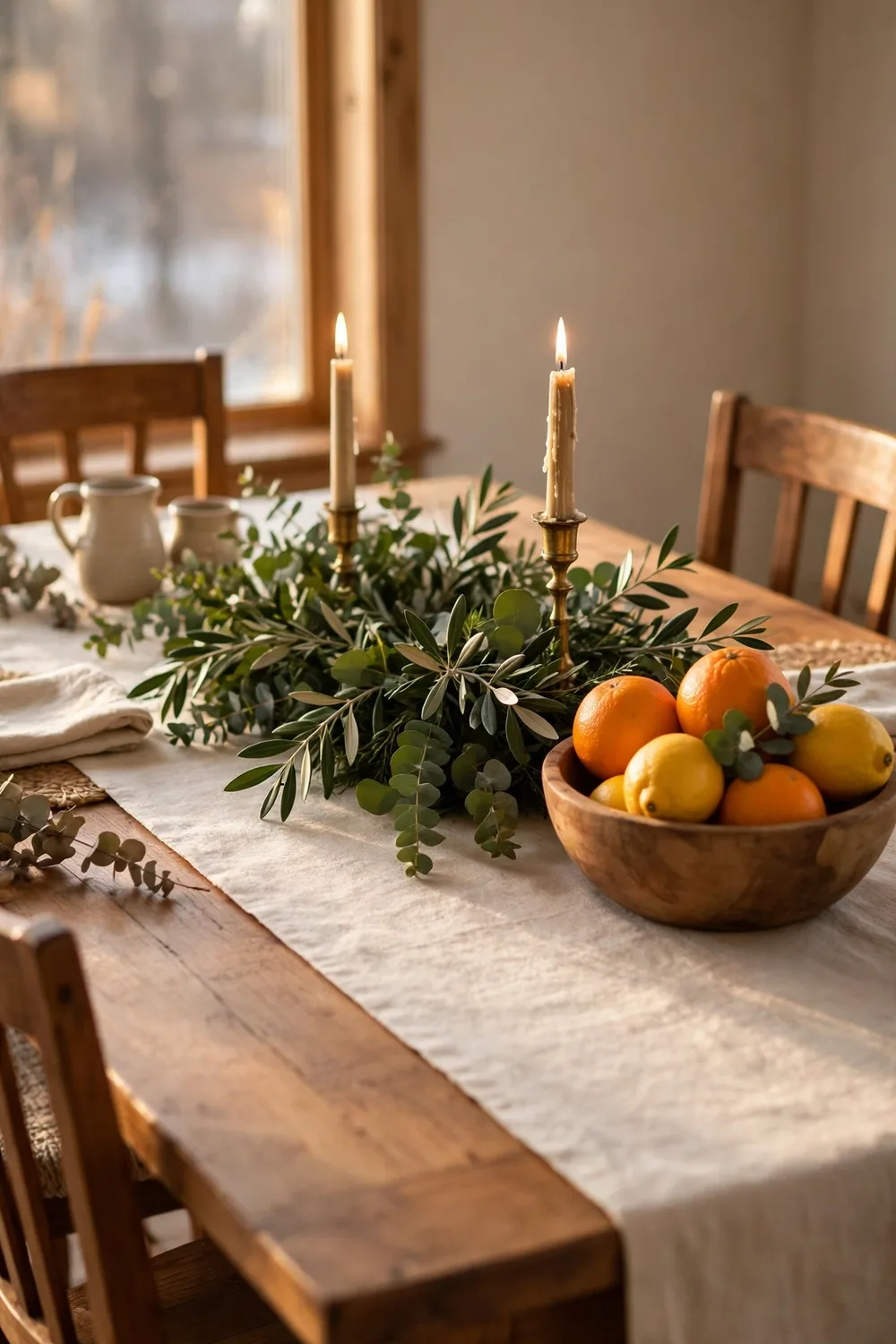
In the kitchen and dining room, choose decorations that are useful as well as warm. A table runner in a plain color, a centerpiece of greenery and candles, and a few warm dish towels are enough. Keep counters clear for cooking, and use a tray to group small items so they can be moved aside. A bowl of citrus fruit with greenery makes a simple centerpiece that also works after dinner.
Entryway: A Warm Welcome
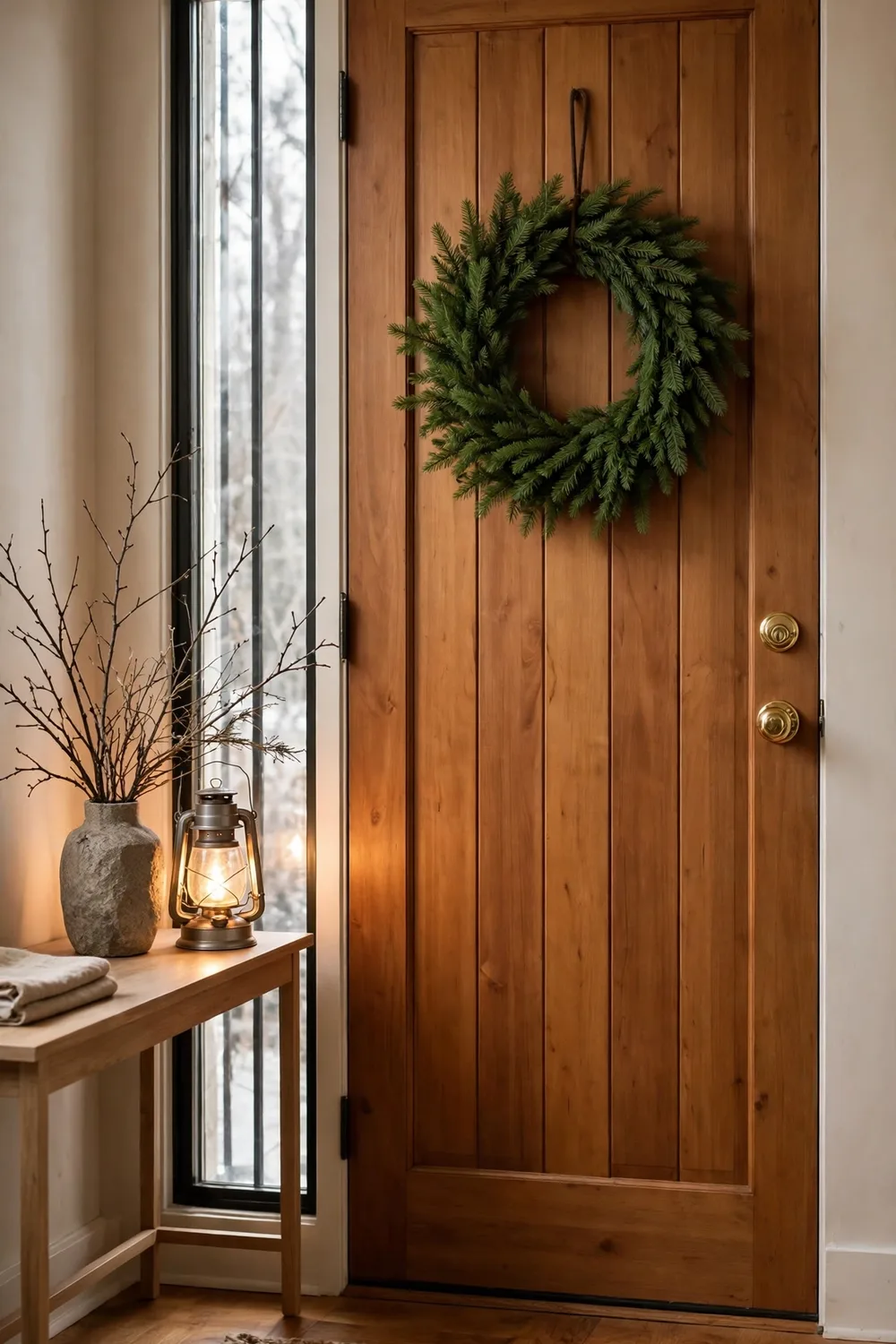
In the entryway, a wreath without holiday ornaments, a warm rug, and a small arrangement on the console set a welcoming tone. Keep the walkway clear and the floor dry, and secure loose rugs per CDC fall-prevention guidance so guests do not trip on entry. A lantern with a battery-operated candle by the door adds a warm glow without a flame.
Lighting for Dark Winter Evenings
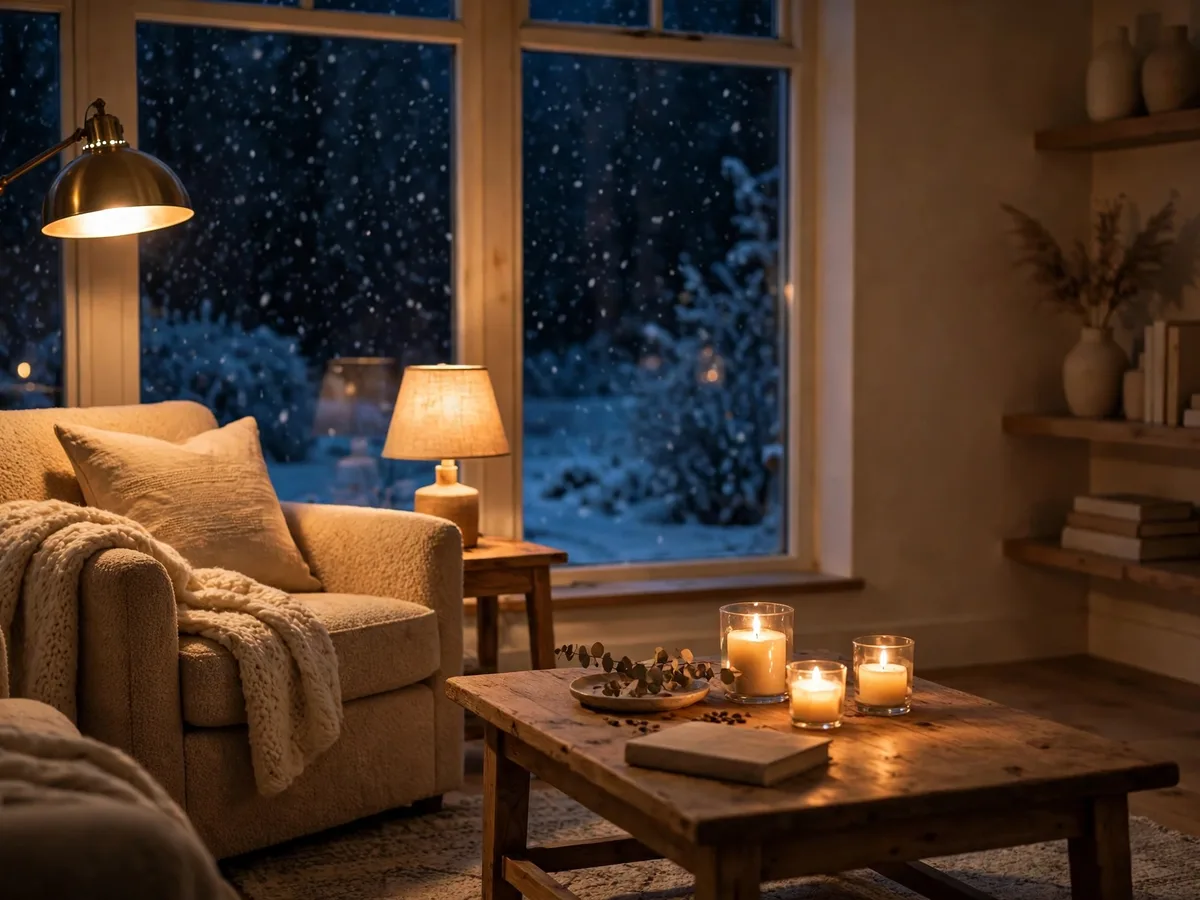
Winter evenings are long and dark, so lighting matters more in winter than in any other season. Layer your lighting: a floor lamp, a table lamp, and candles, rather than one bright overhead light. Use warm bulbs, not cool white, so the room feels warm. Add a lamp to a dark corner, and use a timer for any decorative lights so they come on in the evening and go off when you go to bed.
Check that tall furniture is stable, and anchor tall furniture per CPSC Anchor It! guidance (https://www.anchorit.gov) if you add a tall shelf or bookcase for winter decor. Follow the manufacturer’s mounting and load instructions for any wall-mounted piece. Keep cords out of walkways, and do not overload an outlet with heaters and lights on the same circuit.
What to Avoid in Winter Decor
The mistakes to avoid in winter decor are simple: too much, too dark, and too holiday-specific. Do not keep Christmas ornaments, holiday patterns, or red-and-green combinations after Christmas, because they will make the room feel like a holiday that has passed. Do not use too many dark colors in a small room, because they can make it feel smaller. Do not fill every surface; leave breathing room, and let the textures and light do the work.
If a room feels cold, add a textile or a light rather than another object. A throw, a lamp, or a candle will warm a room more than a new decoration. If a room feels cluttered, remove one item from each surface and see whether it still feels wintery. It usually does.

Frequently Asked Questions
How do I decorate for winter after Christmas?
Remove holiday-specific pieces, keep greenery, candles, and warm textiles, and choose a calm winter palette. Add one or two swaps per room, and use warm lighting in the evening.
What colors work for winter decor?
Warm neutrals, soft whites with wood, or deep green and brown all work. Pick one palette, repeat it in at least two rooms, and add greenery for contrast.
How do I make my home feel cozy in winter?
Layer textures — knit throws, velvet pillows, wool rugs — and layer lighting — lamps and candles rather than one overhead light. Keep the room easy to use, and leave open space on every surface.
Warmth, Light, and Texture
Winter decorating is about warmth, light, and texture, not about holiday symbols. Keep the greenery and candles, choose a calm palette, add a few warm textiles, and enjoy the season.
For the next step, read our Christmas decor crafts guide, our whimsy Christmas decor guide, and our New Year decor guide for a fresh start in January.