Christmas Decor Ideas: Practical Inspiration for Your Home
Christmas decor ideas work best when you treat decorating as a weekend project, not a shopping spree. Pick one color palette, start with the rooms you use most, and add a few thoughtful touches in each space. You do not need a new set of decorations every year, and you do not need to fill every surface to make your home feel festive. A clear plan, a consistent palette, and a handful of easy swaps will carry the whole house, from the entryway to the living room, without clutter or stress. This guide gives you that plan: a simple timeline, palette ideas, a room-by-room overview, rustic Christmas decorations, budget-friendly festive home decor, five easy weekend swaps, and the mistakes to avoid. Use it as your starting point, then follow the room guides linked at the end for more detail where you need it.
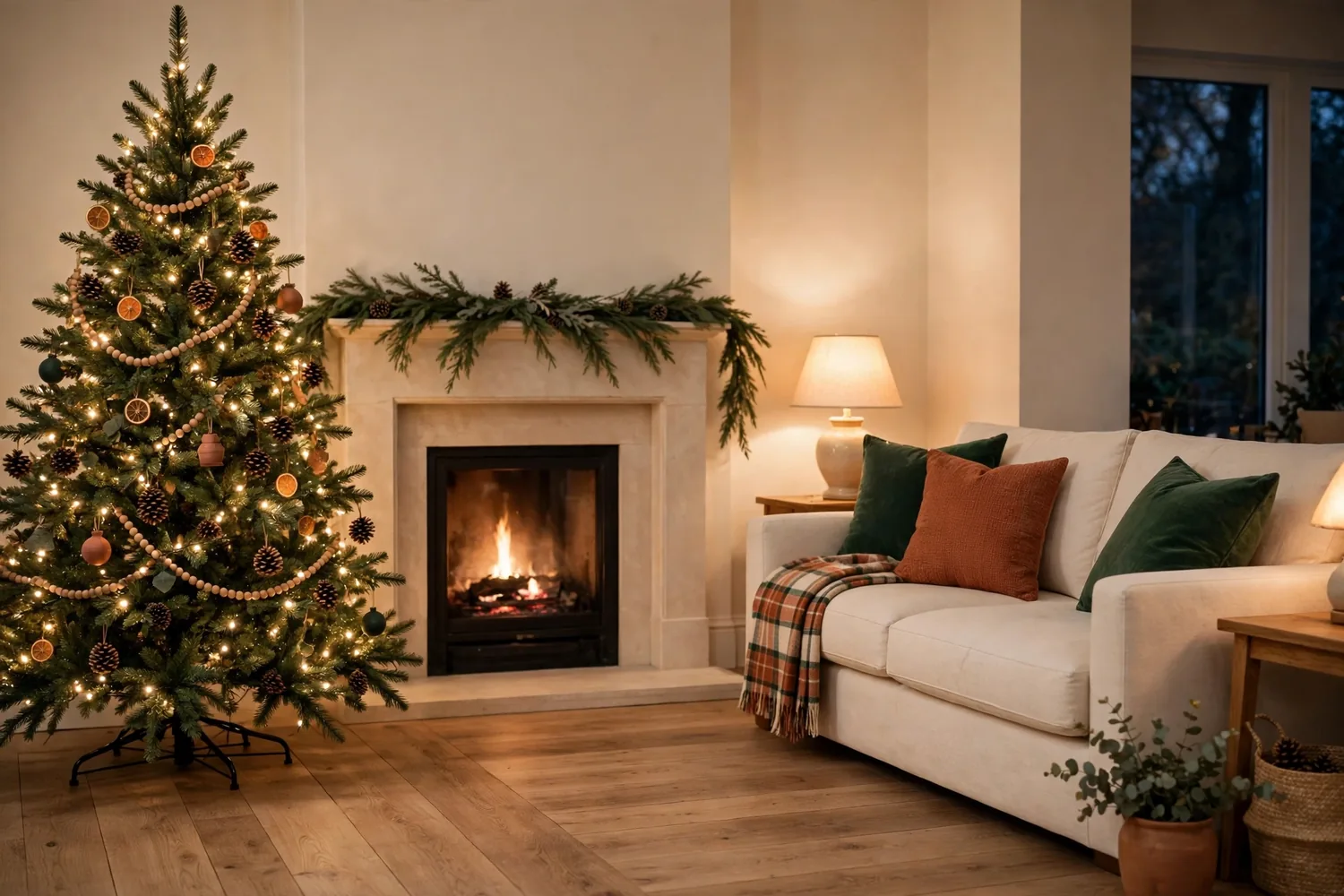
Start with a Simple Christmas Timeline
A timeline keeps Christmas decorating ideas calm instead of rushed. Spread the work across a few weekends, and each step feels manageable.
Early November: Choose Your Palette and Make a List
Start in early November by choosing your palette and making a list. Walk through your home and note what you already own: ornaments, garlands, wreaths, candle holders, throws, and pillow covers. Decide what still works with this year’s palette and what can be stored, donated, or repurposed in another room. Then write a short shopping list for the gaps only. A list stops impulse buying and keeps your decorating focused. This is also the right time to check lights, replace dead bulbs, and test timers before you hang anything. Store the list with your decorations so next year starts even faster.
Mid-November: Tree and Main Rooms
In mid-November, set up the tree and decorate the main rooms. Start with the living room, since it is where family and guests gather most, and add the entryway next so the first view into your home feels welcoming. Put the tree in its place first, then build the mantel and the main seating area around it. Work one room at a time and step back before moving on. If a room already feels finished, stop there. You can always add a small touch later, but removing clutter after the fact is harder. Keep everyday items accessible: remote controls, chargers, and reading glasses should still have a clear home.
Early December: Porch, Outdoor Touches, and Finishing Details
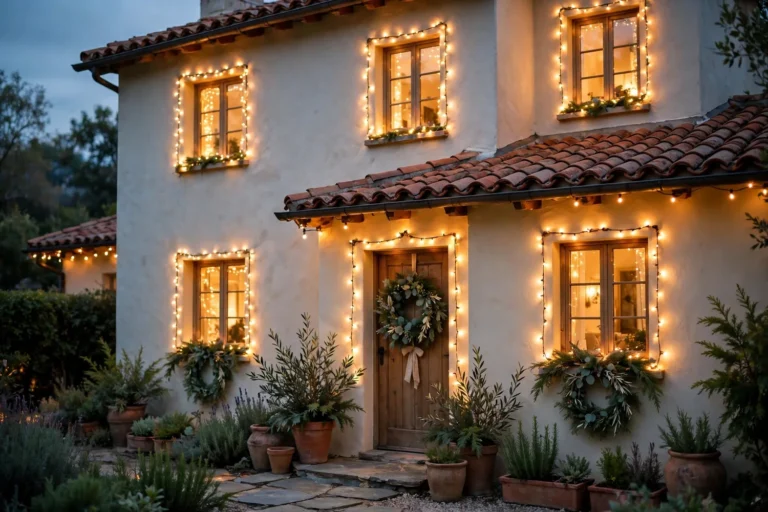
In early December, turn to the porch, outdoor touches, and finishing details. Add a wreath to the front door, simple greenery by the entrance, and outdoor lights if you use them. Inside, add the final layer: a bowl of ornaments on the dining table, fresh greenery on a shelf, or a candle group on the console. Taste a few cookies in the kitchen if you like, but keep counters clear for cooking. Finishing touches should be small and easy to remove, not another round of decorating. By the second weekend in December, your home should feel complete, and you should be able to enjoy it rather than keep adjusting it.

Choose a Color Palette First
One palette per home makes every room feel connected, even when each room has a different focal point. Choose your palette before you buy anything, and use it to guide every choice, from ribbon to throw pillows.
Classic Red and Green
Classic red and green is the most familiar Christmas palette, and it works in almost any home. Use deep red and forest green as your main colors, with warm wood tones and soft white as the balance. Add gold or brass accents for warmth, but keep metallics to one finish so the look stays calm. This palette suits traditional furniture, plaid textiles, and natural greenery. If red feels too strong in a small room, use it in smaller doses — a pillow, a runner, or a few ornaments — and let green and neutrals carry the rest.
Rustic Neutrals
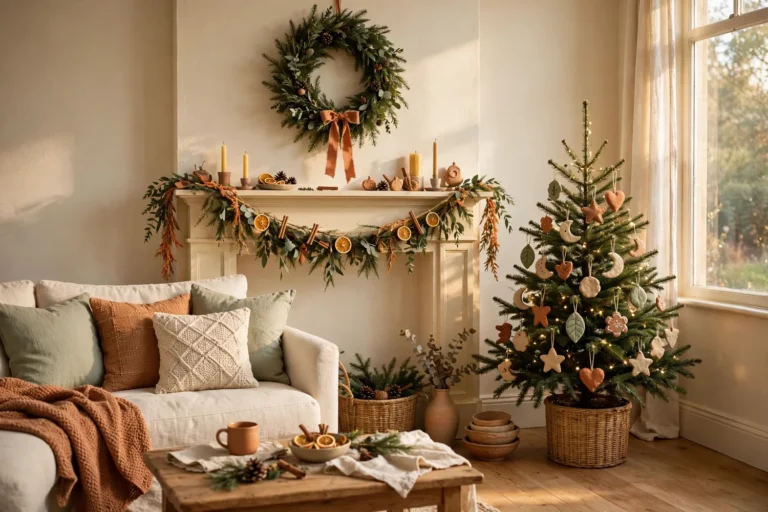
Rustic neutrals suit homes with wood furniture, linen textiles, and a relaxed feel. Think cream, warm brown, soft sage, and natural greenery, with touches of cranberry or muted red if you want a little color. This palette relies on texture rather than bright color: woven baskets, wood slices, burlap ribbon, and pinecones. It is a good choice if you want your Christmas decor to feel calm and timeless rather than bold. It also transitions well into winter after Christmas, since the neutrals and greenery do not depend on holiday-specific colors.
White and Gold
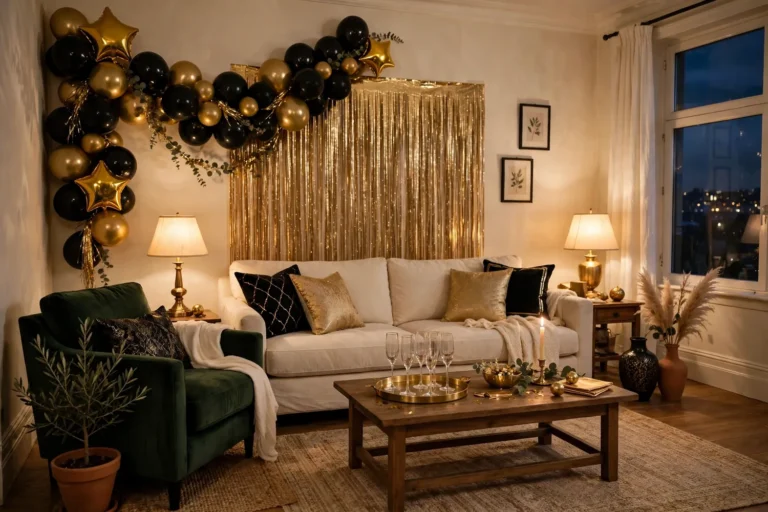
White and gold feels light, bright, and a little elegant. Use white, cream, and soft metallic gold, with greenery for contrast. This palette works well in small or dark rooms, because white reflects light and gold adds warmth without heaviness. Keep the gold restrained — a few ornaments, a candle holder, or a thin ribbon — so it reads as sparkle rather than shine everywhere. Add texture with knit throws, linen, and frosted greenery to keep the look from feeling cold. If you have young children or pets, choose sturdy ornaments in this palette and keep fragile pieces higher up.
Whichever palette you choose, repeat it in at least two rooms. That repetition is what makes separate rooms feel like one home. A red pillow in the living room and a red runner in the dining room, for example, tie the spaces together without matching everything exactly.


Christmas Decorations, Room by Room
You do not need to decorate every room the same way. Give each room one idea and one easy swap, and let the palette tie them together. The room guides listed at the end of this article go into detail; this section is the overview.
Living Room: One Focal Point
In the living room, choose one focal point — usually the tree or the mantel — and keep the rest simple. Add a throw and a pillow or two in your palette, and a small group of candles or greenery on the coffee table.

Leave open space on the table for drinks and books. For mantel ideas that work with a mirror above the fireplace, see our guide to mantel decor with a mirror. If you have a television above the mantel, keep decorations low and to the sides so they do not block the screen. Our Christmas living room guide covers tree placement, mantel styling, and small living rooms in more detail.
Bedroom: Soft and Simple
In the bedroom, keep Christmas decor soft and simple. Swap the pillow shams or add a folded throw at the foot of the bed in your palette, and add a small wreath or a string of warm lights on the dresser.

Avoid a large tree or heavy decorations in a room meant for rest. A small potted evergreen on the nightstand or a single candle group is enough. Our Christmas bedroom guide covers bedding swaps, bedside touches, and small-space ideas in detail.
Kitchen and Dining: Useful and Festive
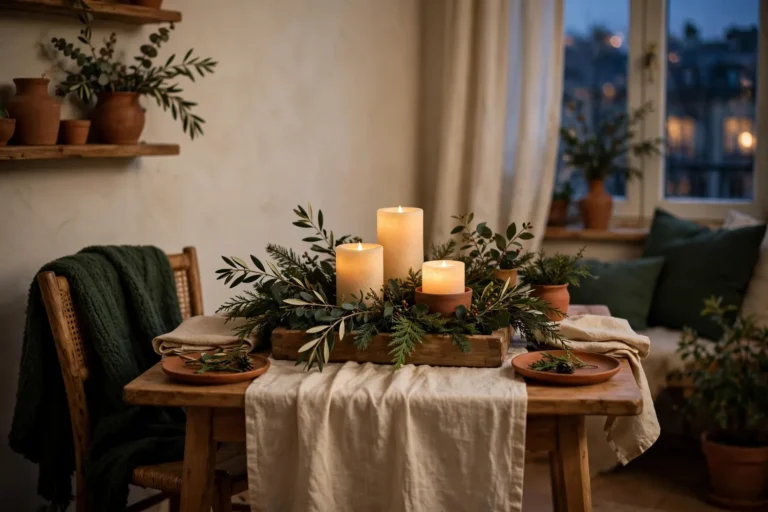
In the kitchen and dining room, choose decorations that are useful as well as festive. A table runner, a centerpiece of greenery and candles, and a few seasonal dish towels are enough.

Keep counters clear for cooking, and use a tray to group small items so they can be moved aside in one motion. A bowl of oranges with greenery makes a simple centerpiece that also works after dinner. Avoid hanging anything over the stove or near open flames, and keep candles away from curtains and paper.
Entryway: A Welcoming First View
In the entryway, the goal is a welcoming first view. A wreath on the door, a small console arrangement, and a rug in a seasonal color set the tone without crowding the space.

A console table is a natural place for a small arrangement: greenery, a candle, and a bowl for keys. See our console table decor ideas for balanced arrangements that still leave room for everyday use. For wall ideas that work in narrow entries, see our entryway wall decor ideas. Keep the walkway clear and the floor dry, and secure loose rugs per CDC fall-prevention guidance so guests do not trip on entry.
Rustic Christmas Decorations
Rustic Christmas decorations use natural materials and handmade touches to create a warm, relaxed holiday feel. Start with greenery: fresh pine, cedar, or eucalyptus in a vase, along a mantel, or in a simple wreath. Add wood in its natural form — a wooden bowl, a slice of log under a candle, or a simple wooden star. Plaid adds pattern without fuss: a plaid throw over a chair, plaid ribbon on a wreath, or plaid napkins at the table. Choose one plaid pattern and repeat it sparingly.
Handmade touches make rustic decor personal. Paper stars, dried orange slices, cinnamon sticks tied with twine, and simple salt-dough ornaments all fit the style, and they are good projects to make with children. Use natural twine, kraft paper, and linen instead of shiny ribbon and plastic. If you buy new pieces, choose ones that will work next year too — a plain wooden tray, a linen runner, or a set of simple candle holders. Rustic decor also suits a smaller budget, because greenery from the yard, pinecones, and branches cost little and look intentional when grouped simply. The mistake to avoid is mixing too many rustic materials at once. Pick two or three — greenery, wood, and plaid, for example — and repeat them.

Festive Home Decor on a Budget
Festive home decor does not have to mean a large budget. The reuse-and-swap strategy works better than buying a new set each year: change textiles, greenery, and lighting instead of replacing everything.
Start by shopping your own home. Move a throw from the bedroom to the living room, use a scarf as a table runner, or fill a vase you already own with greenery. Swap pillow covers instead of buying new pillows, and change a lampshade or a candle color instead of buying new lamps. Greenery is the most cost-effective swap: a few branches in a jar can change a whole shelf. Lighting is the second: warm string lights, a candle group, or a lamp moved to a dark corner can make a room feel festive without any new decorations.
When you do buy, buy pieces that work in more than one season. A plain white or cream throw, a wooden tray, a set of brass candle holders, or a neutral wreath base can be reused all year with small changes. Avoid single-use items that only work for one week. Buy after the season, if you can, when basics are on sale — but only if you have storage space and a clear plan for next year. Store decorations by room in labeled bins, and keep a note of what you own so you do not buy duplicates. A small budget spent on two or three good swaps beats a large budget spent on many small items that clutter a room.

Easy Weekend Swaps
These five swaps each take under an hour, and together they can change the feel of your home in a single weekend. Do one, or do all five.
- Swap throw pillows and a throw blanket. Change the pillow covers in the living room to your palette, and drape a throw over the arm of the sofa. This is the fastest way to signal the season.
- Add a table runner. Lay a runner on the dining table or the console, and add a simple centerpiece of greenery and candles. The runner defines the space and makes even a plain table feel dressed.
- Hang a wreath. Hang a wreath on the front door or above the mantel. A wreath is one strong focal point, and it works indoors and outdoors. Check that the hook or hanger suits the door or wall, and use a removable option if you rent.
- Group candles. Place three candles of different heights on a tray, with a little greenery around the base. Put the group where you will see it in the evening — the coffee table, the mantel, or the dining table. Keep candles away from curtains, greenery that could dry out, and anything flammable, and never leave them burning unattended.
- Refresh the entryway. Add a seasonal rug or doormat, a small wreath or wall piece, and a bowl for keys and mail. The entryway is the first and last space guests see, so a small change there has a large effect.
Do the swaps in this order — living room, dining, front door, candles, entryway — and step back after each one. If a room already feels finished, leave it alone.

What Not to Overdo
The most common Christmas decorating mistake is doing too much in one room. Keep walkways clear, keep one focal point per room, and leave breathing room on every surface. If you cannot set down a cup of tea, the table is too full. If you have to move decorations to sit down, the sofa has too many pillows. Edit by removing one item from each surface and seeing whether the room still feels festive. It usually does.
Do not overdo the tree, the mantel, or the porch by covering every branch, edge, and step with decorations. Each of those areas deserves its own focus, and our guides on Christmas tree ideas for small spaces, Christmas mantel decorating ideas, and Christmas front porch decor ideas cover them in detail. For now, remember the simple rule: one strong focal point, a few supporting pieces, and open space around them. Check that tall furniture is anchored according to the manufacturer’s instructions, and anchor tall furniture per CPSC Anchor It! guidance (https://www.anchorit.gov) where a heavy or climbable piece could tip. Keep cords out of walkways, use lights rated for the place you use them, and follow the manufacturer’s mounting and load instructions for any hanging piece. A calm, safe home is more welcoming than a crowded one.

Frequently Asked Questions
When should I start decorating for Christmas?
Start in early November by choosing your palette and making a list of what you already own. Set up the tree and decorate the main rooms in mid-November, then add the porch, outdoor touches, and finishing details in early December. By the second weekend in December, your home should feel complete.
How do I choose a Christmas color palette?
Choose one palette per home before you buy anything, and repeat it in at least two rooms so separate spaces feel connected. Classic red and green suits traditional furniture and plaid textiles, rustic neutrals suit wood furniture and linen, and white and gold works well in small or dark rooms because white reflects light and gold adds warmth without heaviness.
How can I decorate for Christmas on a budget?
Shop your own home first: move a throw from the bedroom to the living room, swap pillow covers instead of buying new pillows, and use greenery, which is the most cost-effective swap. When you do buy, choose pieces that work in more than one season, such as a plain cream throw, a wooden tray, or a set of brass candle holders, and store decorations by room in labeled bins so you do not buy duplicates.
Stop, Light a Candle, and Enjoy the Season
Christmas decor ideas are at their best when they are simple, consistent, and easy to live with. Choose a palette, follow a short timeline, give each room one clear idea, and finish with a few weekend swaps. Then stop, light a candle, and enjoy the season. For room-by-room detail, read our Christmas living room guide, our Christmas bedroom guide, and our outdoor Christmas decorations guide next.