Living Room
Small Apartment Curtain Ideas That Make Rooms Look Bigger
The right curtains make a small apartment feel taller, wider, and brighter; the wrong ones make the same room feel cramped and dark.
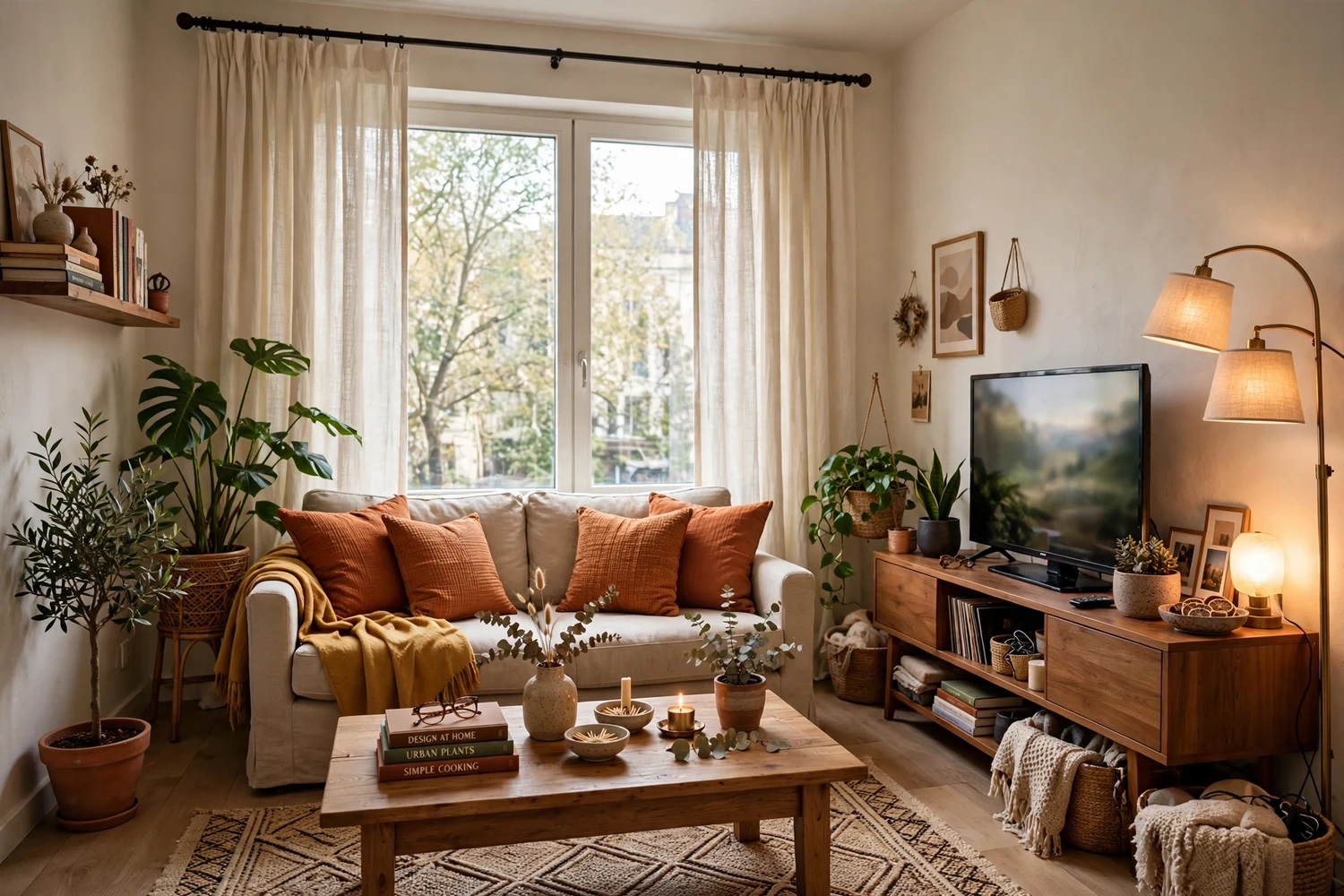
These small apartment curtain ideas use placement, length, and fabric to change how the eye reads a room — all renter-friendly, with no drilling, no permanent changes, and nothing that puts your deposit at risk.
Small Apartment Curtain Ideas Start High and Wide
The single most effective trick is also the simplest: hang the rod high and wide. Mount the rod 4 to 6 inches above the frame and 4 to 8 inches past it on each side, so the window looks taller and wider, and open curtains stack on the wall, not the glass.
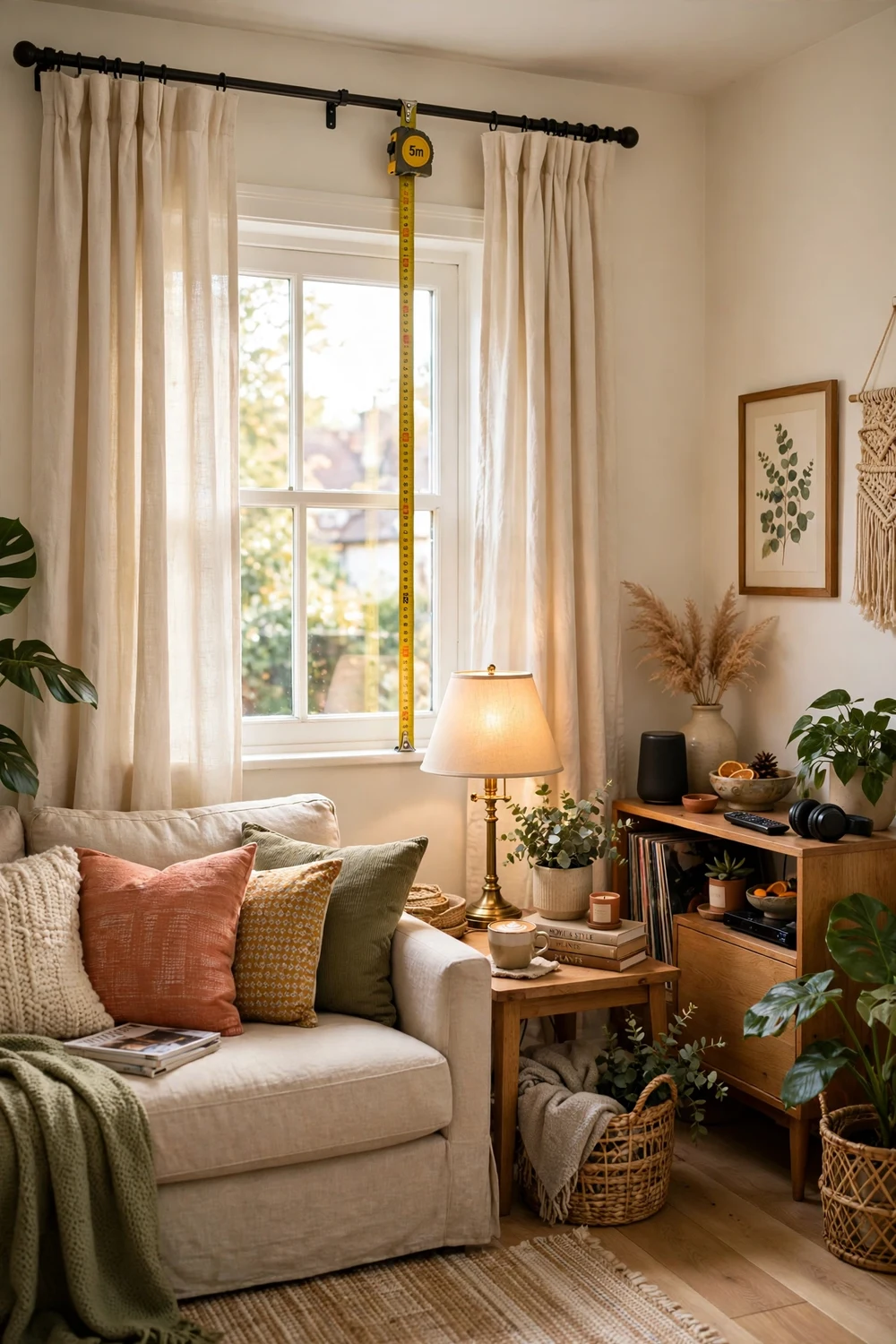
Use a level, because a rod that slopes even a little is easy to spot from across the room.
What you need: a tape measure, a level, and a no-drill rod or brackets.
Cost note: this idea uses placement, not new curtains — try it with the curtains you already own first.
Choose Floor-Length Curtains That Just Kiss the Floor
Short curtains chop a wall in half and make a small room feel shorter. Floor-length curtains do the opposite: one long line from rod to floor draws the eye up and makes the ceiling feel higher. The hem should just kiss the floor or hover about half an inch above it, so the curtains do not drag or collect dust.
Measure from the rod to the floor first — hanging the rod above the frame adds length — and hem a long panel with iron-on hemming tape if needed.
What you need: a tape measure and iron-on hemming tape if the panels need shortening.
Try a No-Drill Curtain Rod That Actually Holds
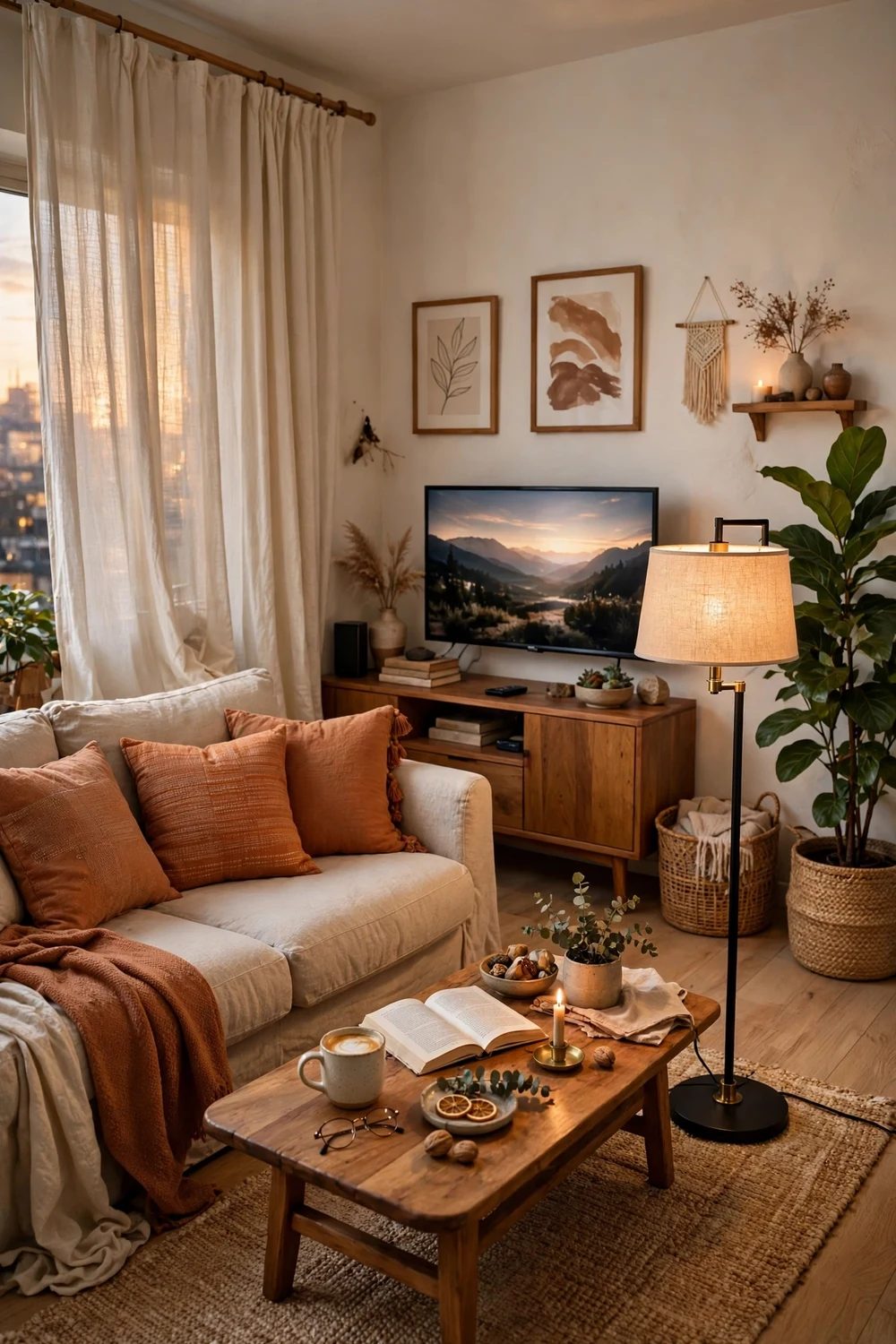
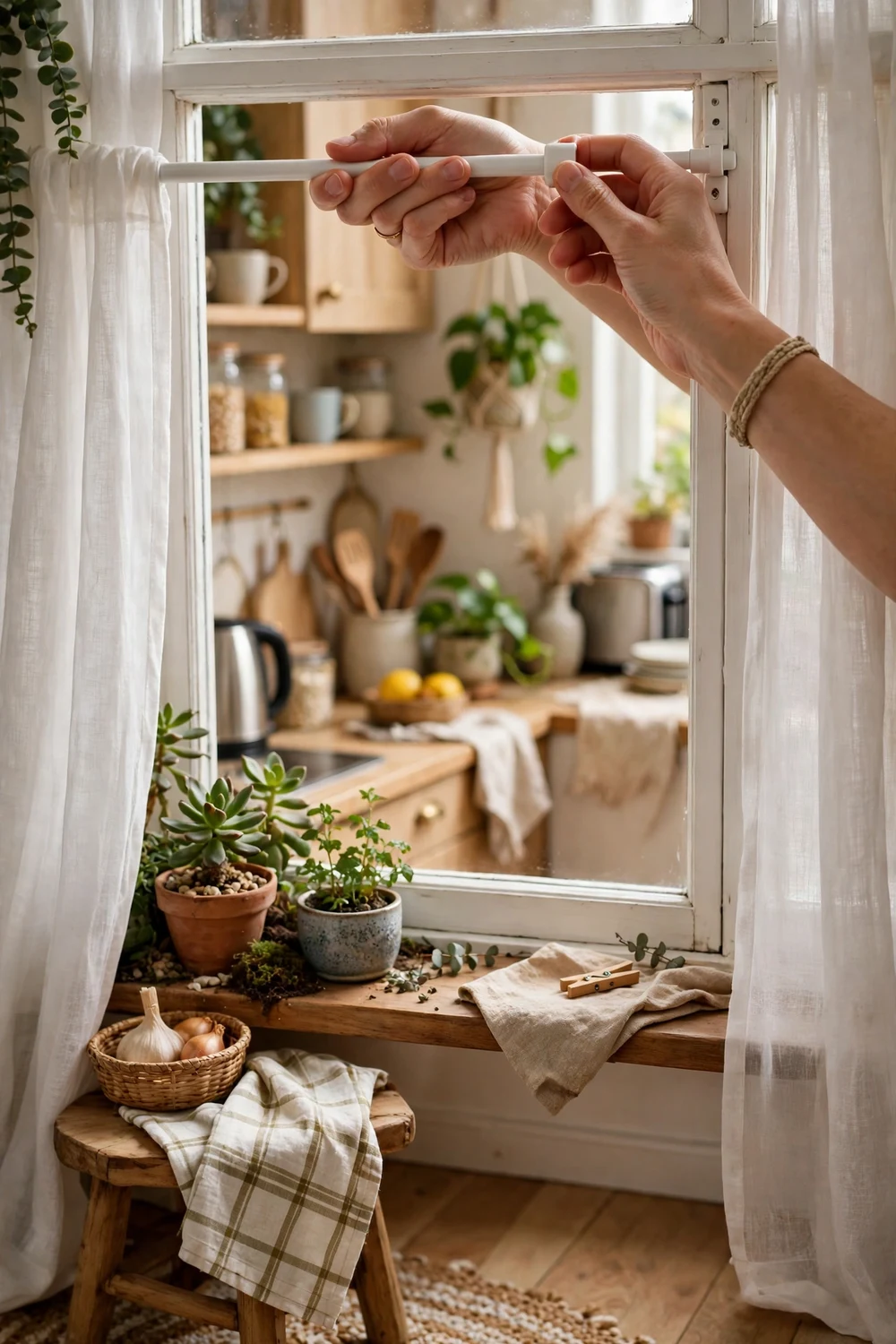
A no-drill curtain rod apartment setup is the renter's starting point, because it leaves the walls exactly as you found them. Tension rods wedge inside the frame and suit light sheers, while full-length panels need a rod with adhesive or clamp-style mounts that grip the trim.
Check the weight rating on the pack and weigh your curtains on a kitchen scale if you are not sure. Press the mounts on firmly, wait the full time stated on the pack, and test the rod with a gentle pull first.
What you need: a no-drill tension rod or a rod with adhesive or clamp mounts.
Cost note: check the weight rating before you hang the curtains so you get the right mount the first time.
Use No-Drill Brackets for Heavier Curtains
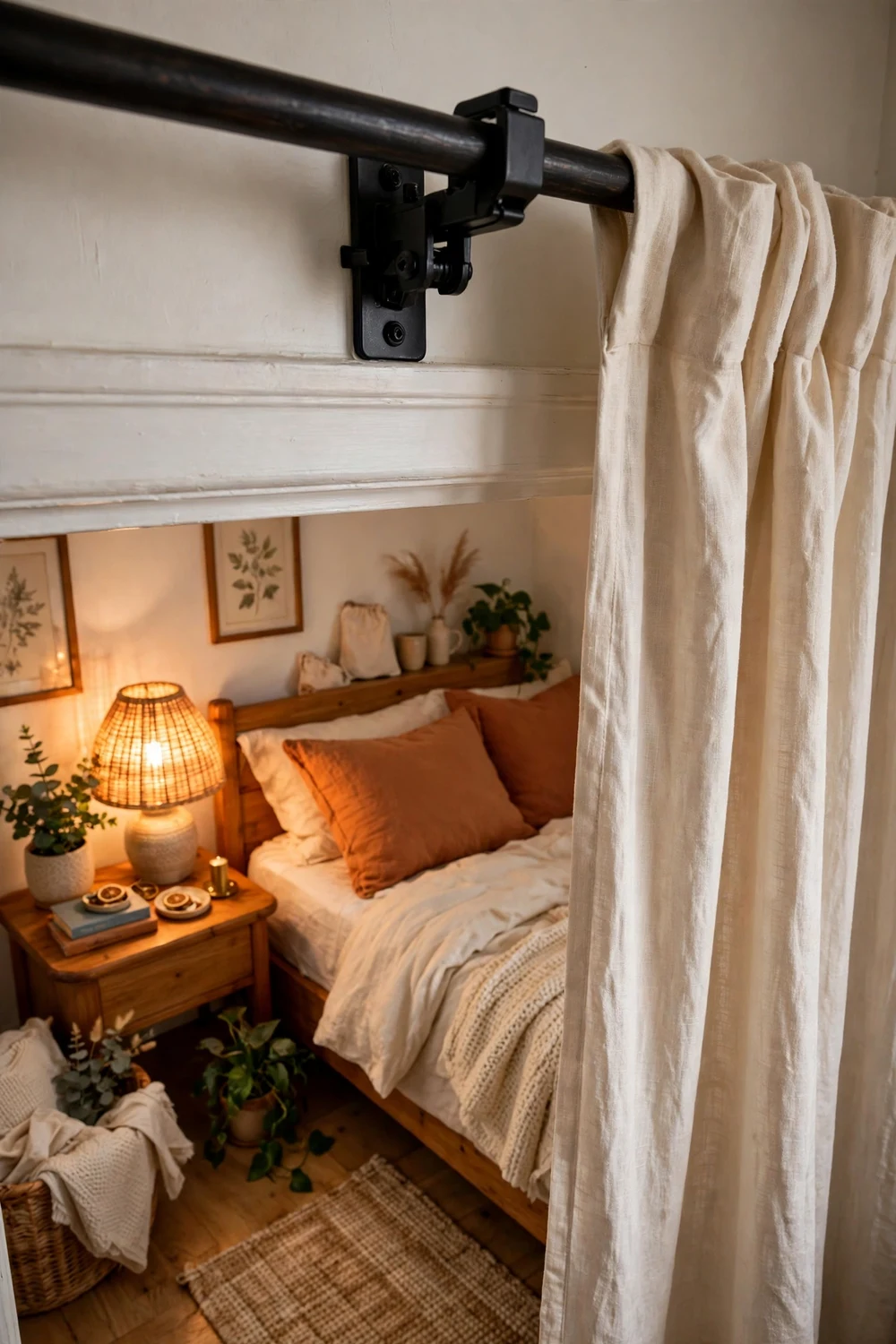
When curtains are too heavy for a tension rod, no-drill brackets are the next step up. They tap onto the top of the window trim or clamp onto the frame and hold a standard rod without a single screw hole. KwikHang-style brackets are the best-known example and fit most wood trim.
Fit matters more than strength, so measure the depth and shape of your trim first. Hang one panel and check the rod stays level before you add the second. If the trim is metal or very shallow, use a tension rod inside the frame instead.
What you need: no-drill brackets that fit your window trim, a curtain rod, and a tape measure.
Cost note: measure the trim first — a bracket that fits is worth more than a stronger one that does not.
Hang Sheer Curtains That Let the Light In
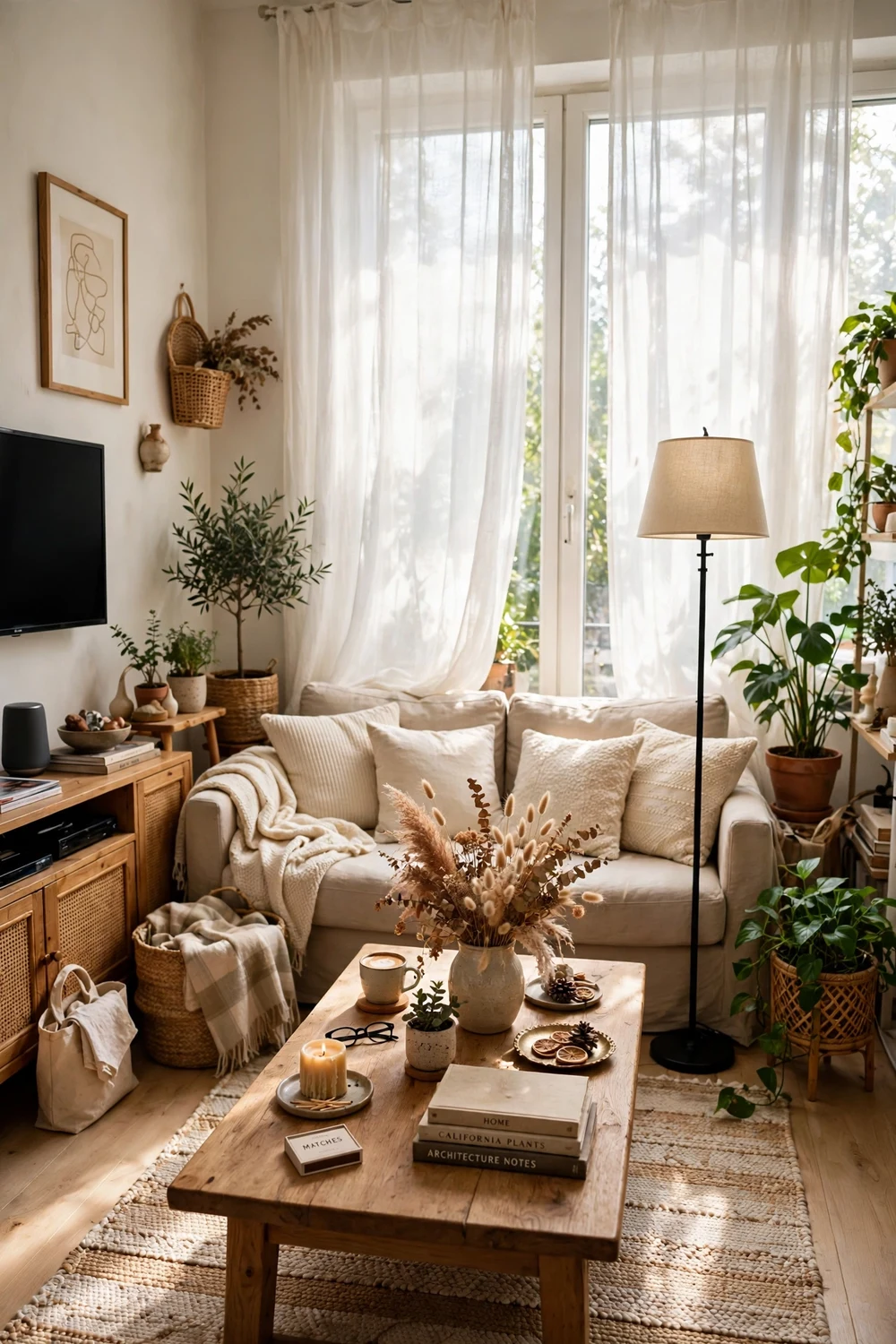
Sheer curtains are the easiest way to make a small room feel bigger, because they soften the window without blocking daylight. Light passes through, so the room stays bright and the window still reads as a large, open surface. Sheers also give daytime privacy when a neighbor's window faces yours.
Hang sheers high, wide, and floor length like any other curtain — a panel that stops at the sill looks unfinished.
What you need: sheer curtain panels and a rod or brackets that fit your window.
Pick Light-Filtering Curtains for the Living Room
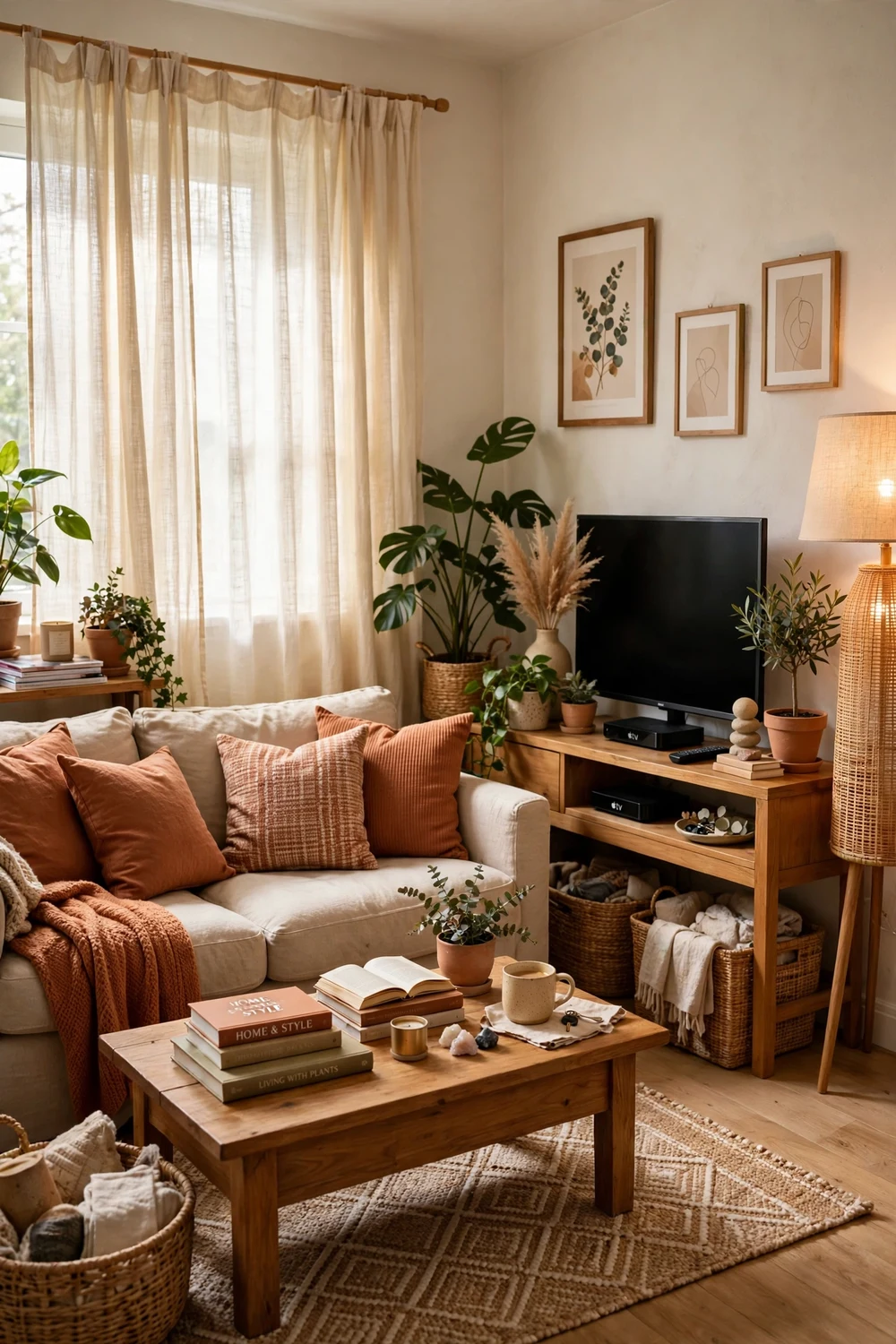
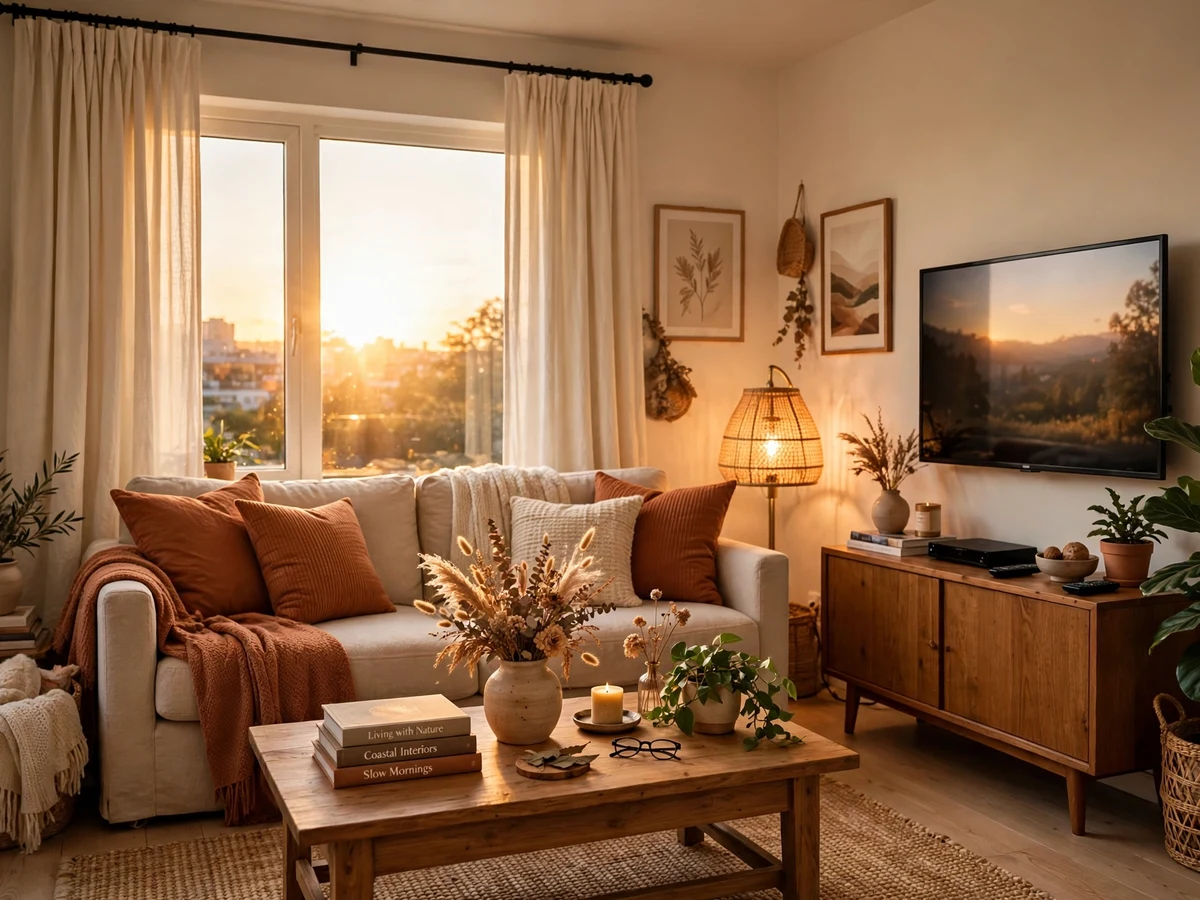
Light-filtering curtains sit between sheers and blackout: they soften strong sunlight and cut glare without turning the room dark. That makes them the best default for curtains for small apartment living room spaces — bright by day, with a softer glow in the evening. A linen-look or cotton-blend fabric in a light, warm color bounces daylight around the room instead of absorbing it.
Avoid dark, heavy fabrics here. A dark curtain absorbs light and makes the wall feel closer, which shrinks the room — use a deeper color on cushions instead.
What you need: light-filtering curtain panels in a light, warm color and a rod or no-drill brackets.
Choose Blackout Curtains for Better Sleep in the Bedroom
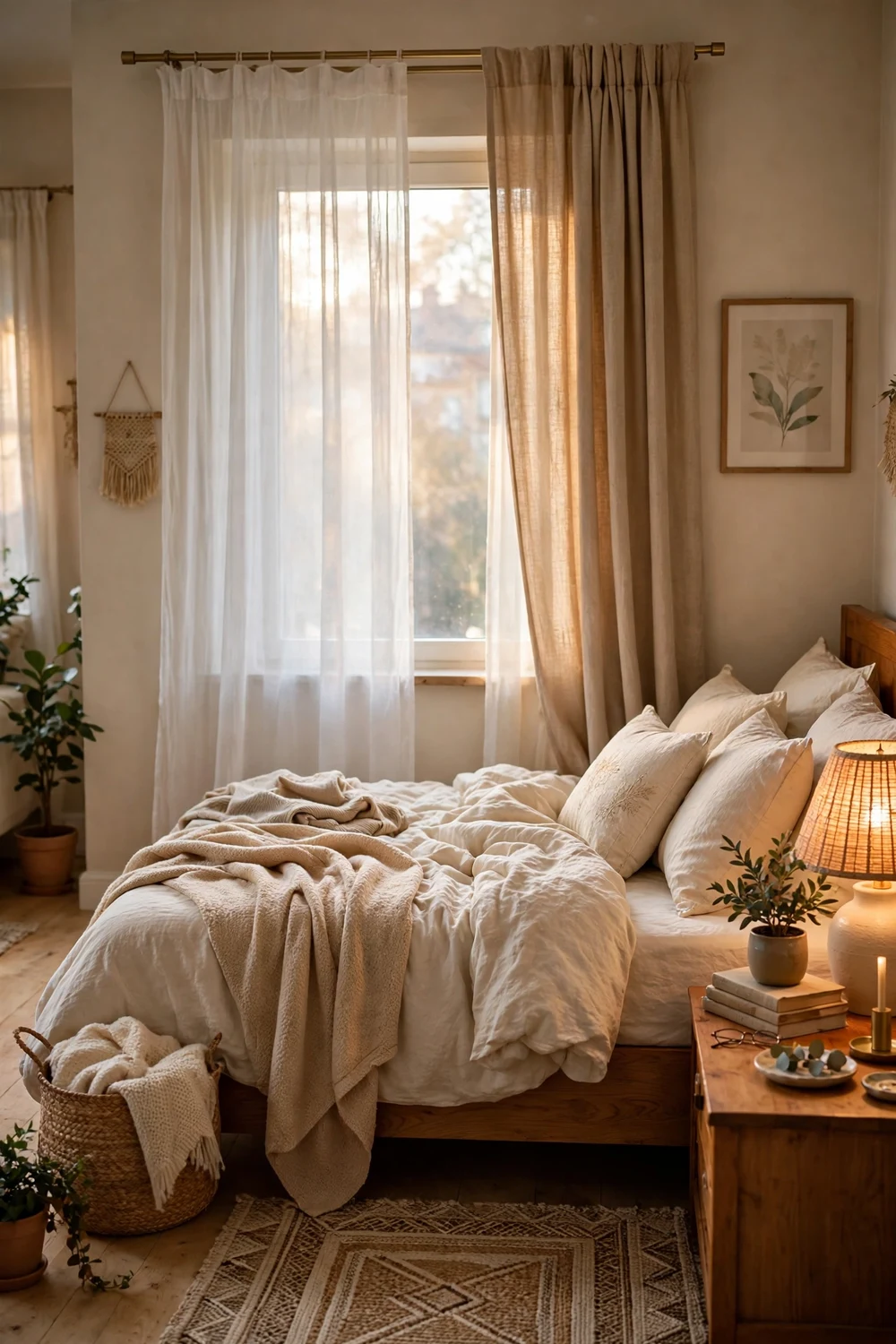
The bedroom is the one room where blackout curtains earn their place. They block streetlights and early morning sun, keep the room cooler in summer, and give you real privacy at night — which matters even more when the bed sits close to the window.
Hang blackout curtains high and wide like any other panel, floor length so light does not leak in underneath. Look for lined panels rather than stiff coated backs, because lined panels drape better. If the fabric feels too heavy, layer a sheer in front: sheer by day, blackout by night.
What you need: lined blackout panels, a rod or brackets rated for their weight, and a sheer panel to layer.
Cost note: one pair of blackout panels covers the bedroom window, so start there before choosing panels for other rooms.
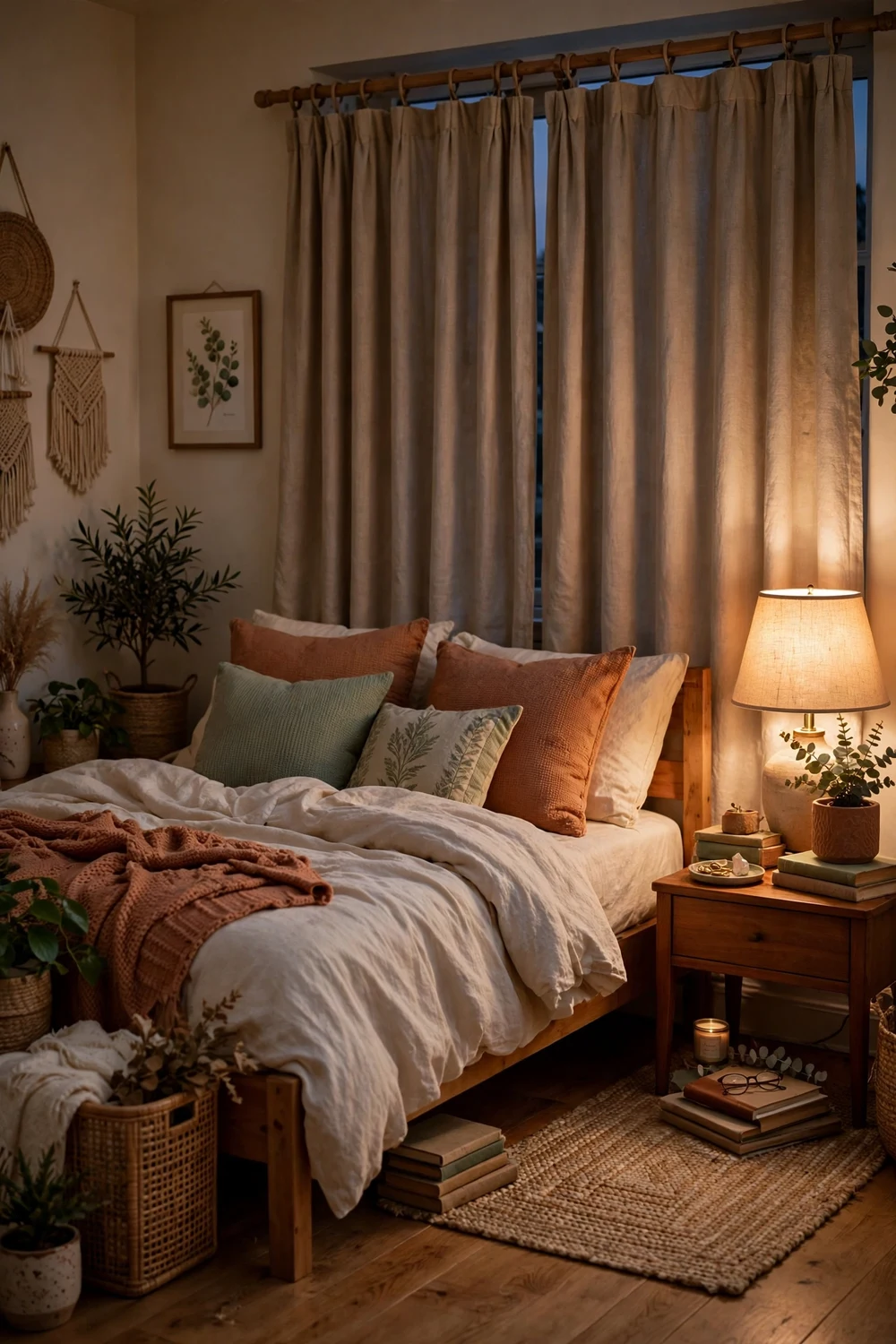
Try These Apartment Curtain Ideas for Small Windows
Small windows are common in apartments, and they are the easiest to make look bigger. Hang the rod high above the frame and wide past it, and use full-length panels even though the window is short — the eye reads the whole panel as the window, so a small window looks tall.
For a very small window, such as a kitchen or bathroom window, a tension rod inside the frame with a short cafe curtain works well. It gives privacy at eye level while leaving the top open for light. Keep the fabric light and the pattern simple.
What you need: a no-drill rod or tension rod, full-length panels, or a cafe curtain for a very small window.
Cost note: this idea is mostly placement, so try it with panels you already own first.
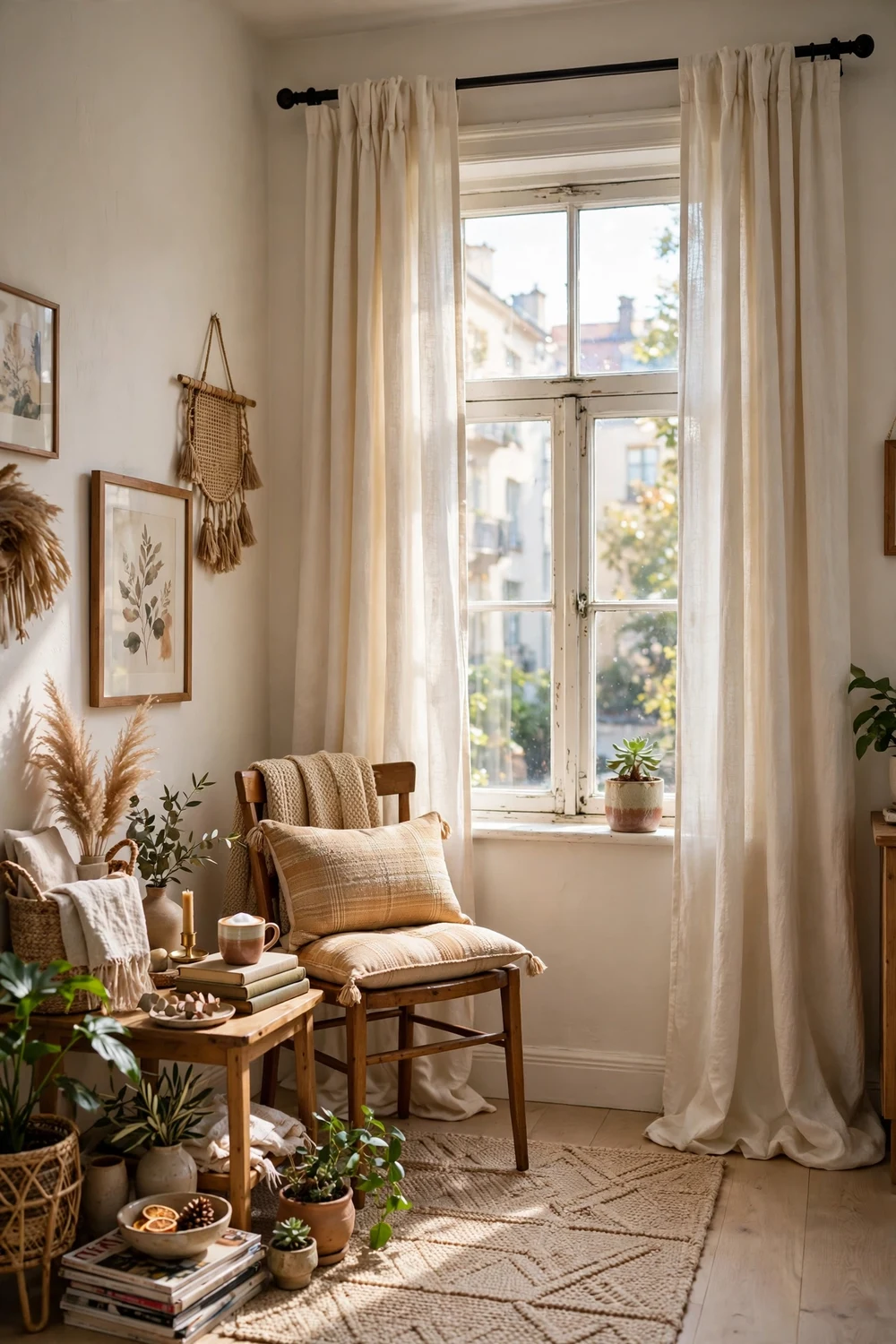
Frame the Sofa Wall With Curtains for a Small Apartment Living Room
In most small apartments the sofa sits on or near the same wall as the window, so the curtains become part of the living room's main view. Match the curtain color to the sofa or the rug, and keep the panels pulled to the sides so light falls on the seating area.
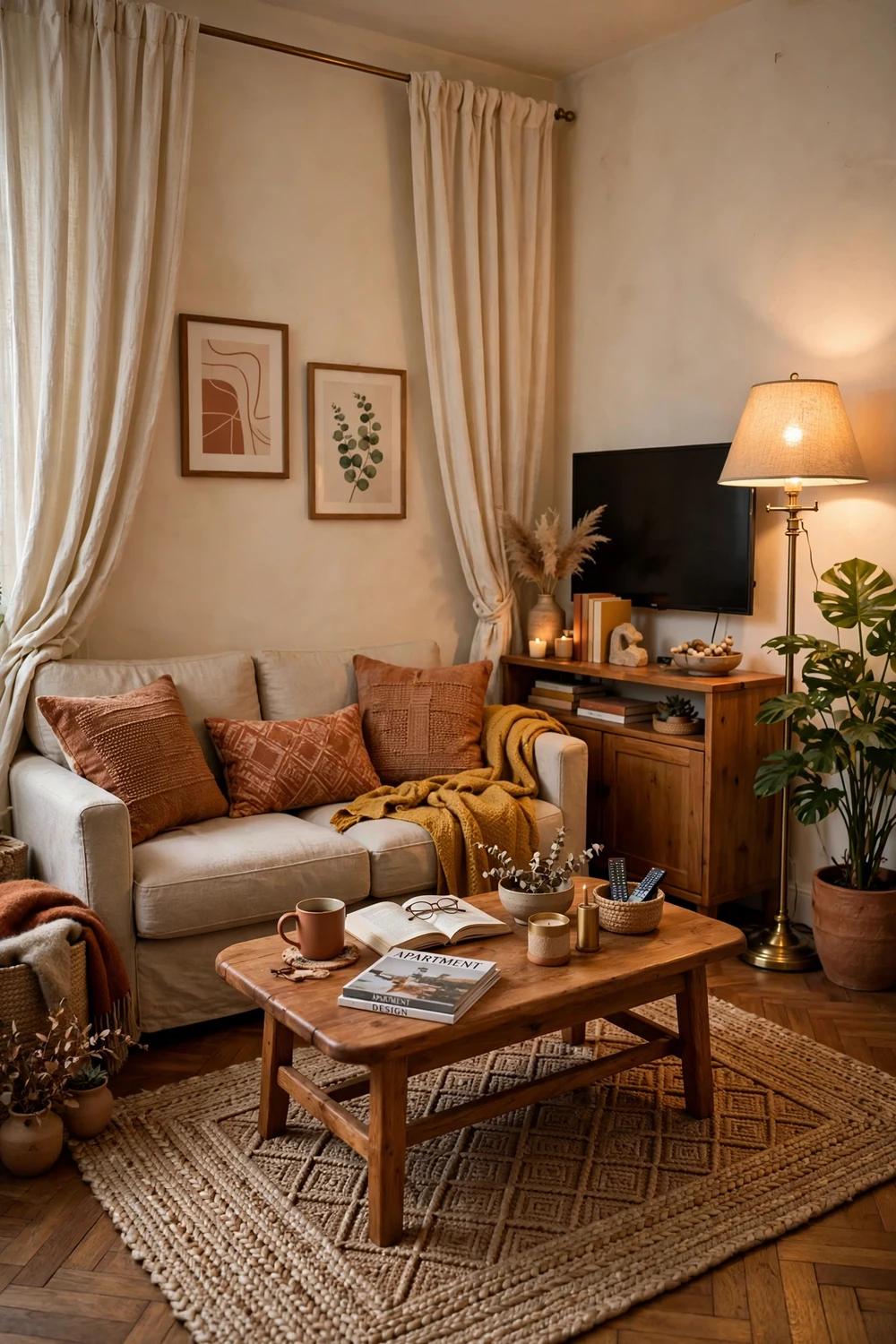
A simple, solid color works best here — in a small living room a large print competes with the sofa, the rug, and the television. If you want pattern, keep it small and quiet, and repeat the color in one cushion or throw.
What you need: solid-color curtain panels that match the sofa or rug, and a rod hung high and wide.
Keep One Color and One Fabric in a Small Room
A small room looks calmer when the curtains, the walls, and the largest piece of furniture share one color family. Curtains in a warm cream, soft white, or pale sage close to the wall color blend in instead of cutting the room in half. The same goes for fabric: one weight across all the windows keeps the room from looking pieced together.
This does not mean everything has to match exactly — a linen curtain and a cotton cushion in the same warm cream still read as one calm palette. What breaks the effect is mixing a heavy velvet panel with a thin sheer, or a dark panel on one window and a light one on the next.
What you need: curtain panels in one color family and one fabric weight for the whole room.
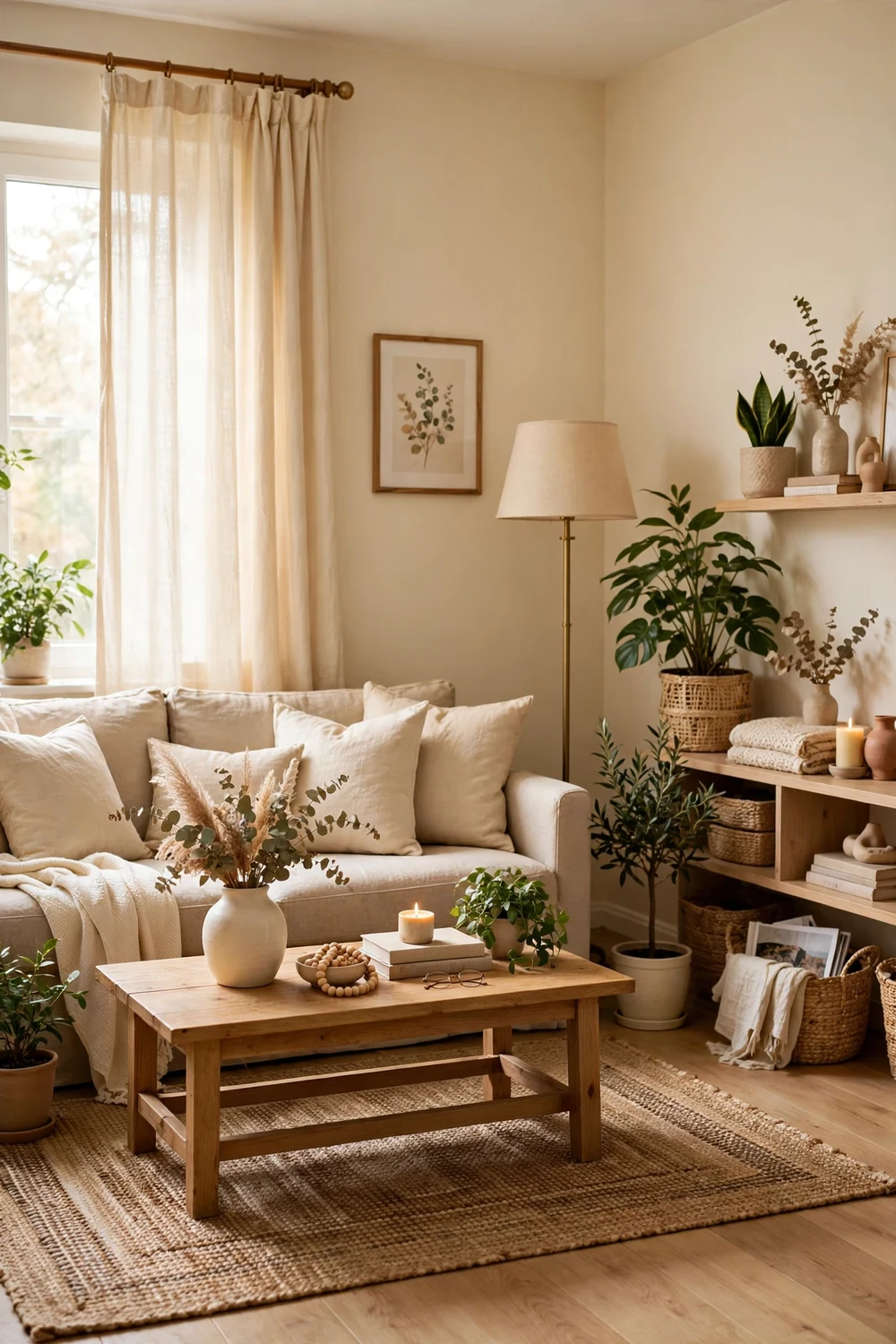
Layer Sheers Over Blackout on a Double Rod
Layering is how you get privacy, light control, and softness from one window. A double rod holds a sheer panel on the back rod and a heavier panel on the front, so you can close the sheer during the day for light and privacy, then draw the heavier panel at night.
No-drill double rods exist, and a tension rod inside the frame can hold the sheer while a bracket rod holds the outer panel. Keep both layers in the same color family. In the bedroom, pair sheers with blackout; in the living room, pair sheers with light-filtering panels.
What you need: a double rod or two separate no-drill rods, sheer panels, and light-filtering or blackout panels.
How to Choose Curtains by Room
Not every fabric belongs in every room — match the curtain to the room:
| Room | Best fabric | Why it works |
|---|---|---|
| Living room | Light-filtering linen or cotton | Bright by day, soft glow in the evening |
| Bedroom | Lined blackout + sheer | Blocks streetlight and morning sun |
| Kitchen or bathroom | Sheer or cafe curtain | Privacy at eye level, light from the top |
| Small window anywhere | Full-length sheer or light-filtering panel | Hung high and wide, it makes a small window look tall |
If a room has two windows, treat them the same way.
Frequently Asked Questions
How high should I hang curtains in a small apartment?
Hang the rod 4 to 6 inches above the frame and 4 to 8 inches past it on each side, so the window looks taller and wider and open curtains stack on the wall, not the glass.
Can I hang curtains in a rental without drilling?
Yes. A no-drill curtain rod apartment setup uses a tension rod inside the frame for light sheers, or adhesive or clamp-style mounts that grip the trim. For heavier curtains, no-drill brackets that tap onto the trim hold a standard rod without screw holes.
Should curtains touch the floor in a small apartment?
Yes — floor-length curtains that just kiss the floor make a small room feel taller. Short curtains that stop at the sill chop the wall in half, so measure from the rod to the floor first.
What to Do Next
Pick one window, measure from the rod to the floor, and hang the rod 4 to 6 inches above the frame and wide past it. Start with light-filtering panels in the living room and blackout panels in the bedroom, use no-drill rods or brackets so the walls stay untouched, and keep the fabric light and the color calm. Once one window looks right, the rest of the apartment follows.