Entryway / Entryway Lighting
Entryway Lighting Ideas for Small and Spacious Entrances
The entryway has several jobs in a very small part of the house. You need to see the route inside, find a place for keys, and move past doors and storage without an awkward dark patch. A decorative fixture can help define the entrance, but its shape is only one part of a useful lighting plan.

The best entryway lighting ideas begin with the space itself: ceiling height, door movement, daylight, and the surfaces you use when arriving home. Choose an ambient light that suits the room, then add a wall light or lamp where another layer has a clear purpose.
You do not need every kind of fixture in every entrance. Build the smallest combination that makes the room comfortable to use.
Identify What Needs Light First
Walk through the entrance as if you have just arrived carrying a bag. Notice where you stop, which surfaces you reach for, and where shadows make those actions harder.
The main walking route needs useful general illumination. A key tray, shoe-storage area, or mirror may benefit from another light source, depending on the layout.
Check the entry after dark before buying a fixture. Daylight can disguise an uneven arrangement that becomes obvious in the evening.
Keep a short list of tasks rather than a list of products. “See the floor and find keys” gives you a clearer starting point than deciding that the room must have a chandelier and two sconces.
Use a Flush Mount Where Ceiling Space Is Limited
Small entryway lighting ideas often work best when the fixture stays close to the ceiling. A flush mount can provide a clear overhead layer without introducing a hanging element into a compact entrance.

Look at the fixture’s full dimensions and projection, not just the diameter of its shade. Check the position relative to the door, surrounding trim, and the route people use.
A simple diffuser can create a quieter appearance than an exposed bulb, but judge the actual light output and distribution from the product information. A large-looking shade does not automatically mean the fixture will light the whole room well.
Choose a scale that belongs with the entrance. The fixture should be visible as a considered detail without making the ceiling feel occupied by one oversized object.
Try a Semi-Flush Fixture in a Compact Foyer
A semi-flush light introduces a little separation from the ceiling. That can give a modest foyer more definition when there is suitable room for the fixture’s drop.

Check the entire door swing, including any closer, decorative trim, or tall object normally carried through the entrance. Do not rely on a photo to establish clearance in your home.
Measure the available space and compare it with the manufacturer’s dimensions. A shallow fixture can still interfere if it sits in the wrong position.
Keep nearby wall decor restrained if the light has a strong shape. In a small entrance, one clear overhead feature may provide enough visual interest without another large statement immediately beside it.
Scale a Pendant to a Taller Entrance
A taller entry can give a pendant room to define the space. Look at the whole entrance volume rather than selecting the fixture only from a close-up product image.
The woven pendant example provides a distinct texture while remaining part of the larger room. Its position needs to work with the walking route and views into adjoining spaces.
Before choosing the drop, measure the actual ceiling and discuss the proposed installation with an appropriately qualified professional. Ceiling structure, fixture weight, required support, and local requirements affect what is suitable.
Also consider cleaning and maintenance. A pendant that looks appealing above the foyer still needs a practical way to change compatible lamps or care for its shade.

Treat a Double-Height Foyer as a Full Volume
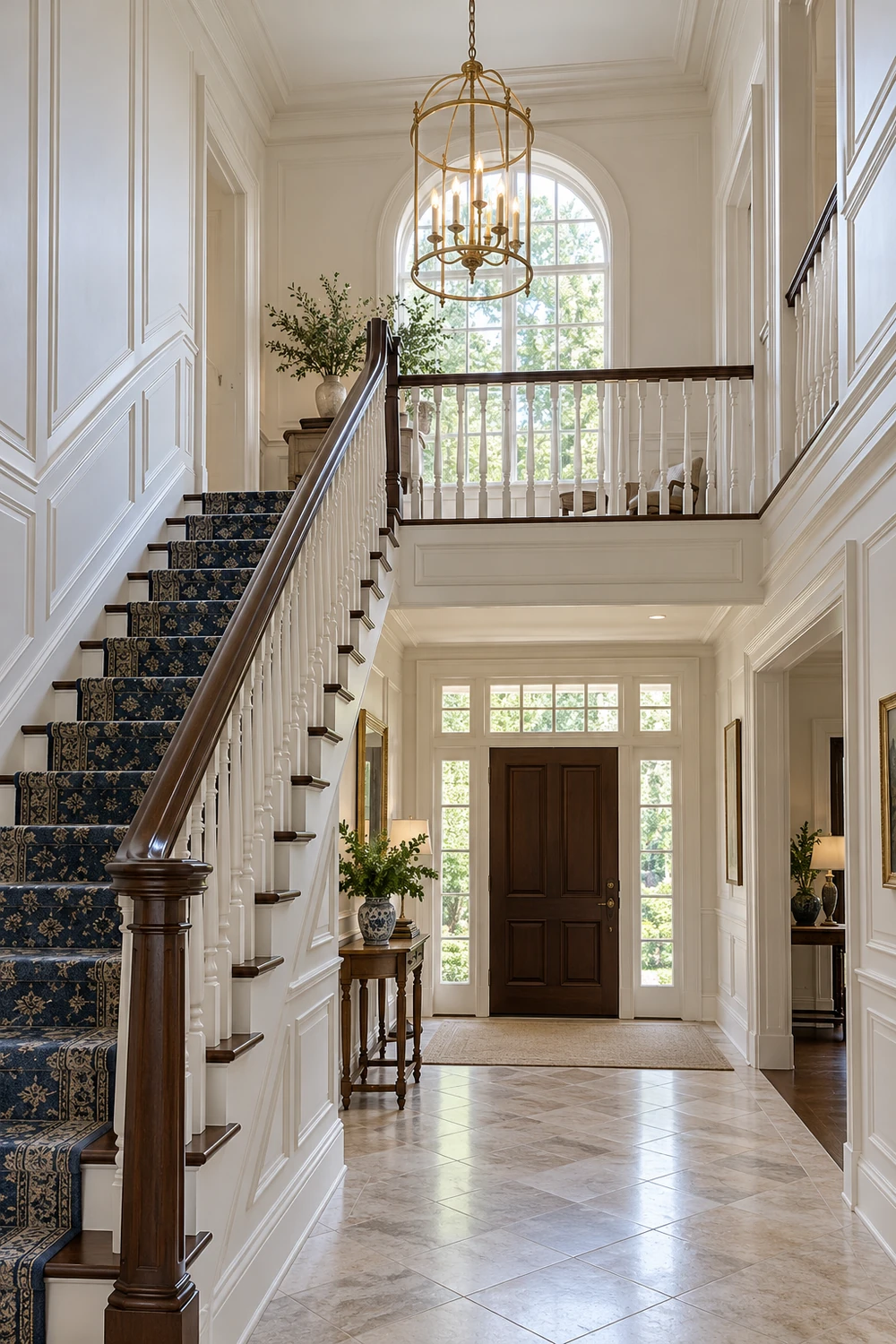
A double-height entrance can make a small fixture disappear. A chandelier may suit the scale, but the relationship between fixture, upper openings, and lower floor matters more than a simple size formula.
View the proposed position from the front door, adjoining rooms, and any upper landing. The fixture should belong to the space from more than one viewpoint.
Use product dimensions and a measured room plan when discussing the choice. Avoid assuming that a large chandelier can be supported by an existing ceiling fitting.
Installation and future access need professional planning. This is a fixture-selection guide rather than an electrical or structural installation tutorial.
Use Wall Lighting to Preserve Floor Space
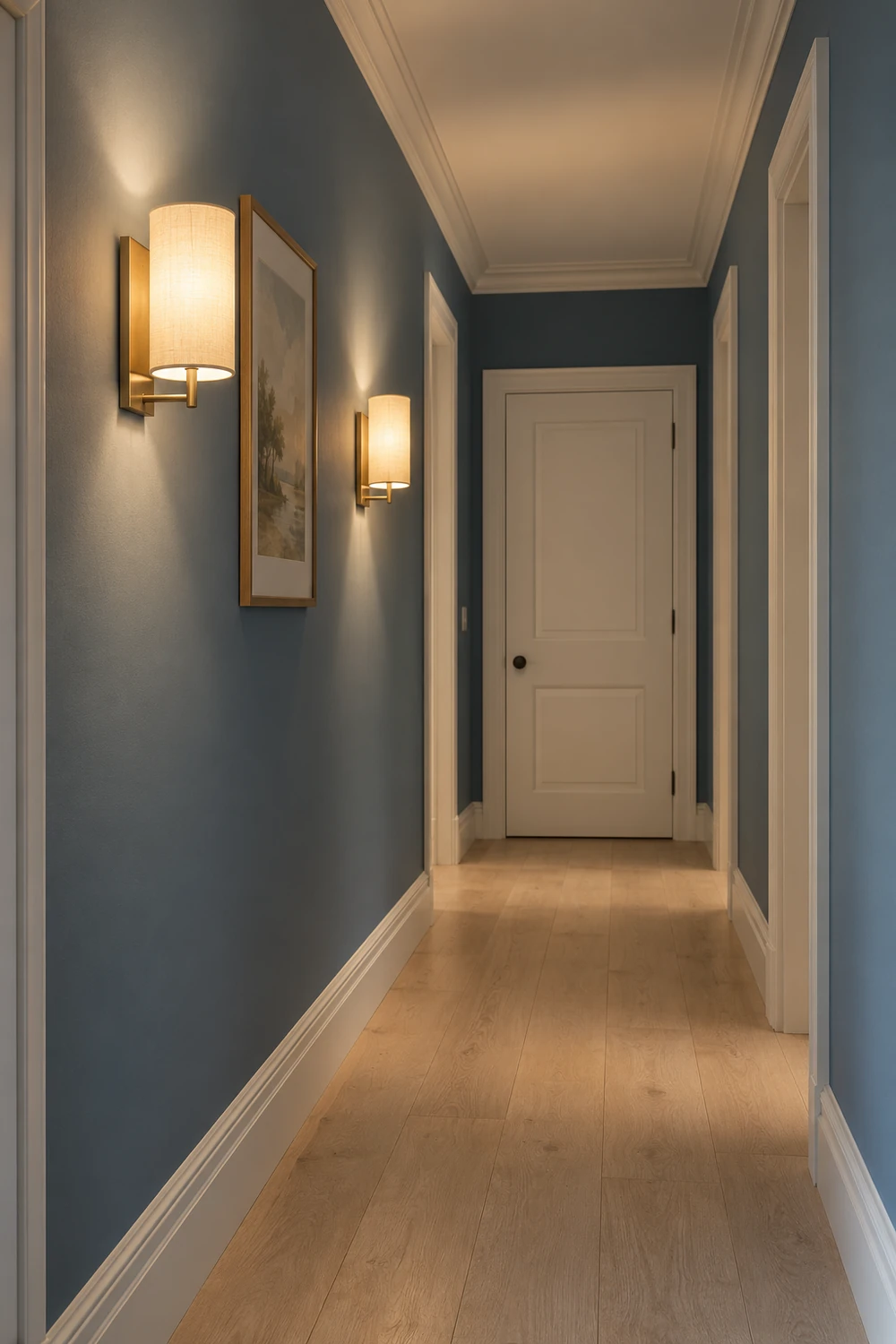
In a narrow entry, a floor lamp can occupy space needed for circulation. Wall lighting can add another layer while keeping the floor available.
Choose the projection as carefully as the front view. A sconce that looks slim in a product image may extend noticeably into the route.
Test the position against doors, shoulders, coat movement, and furniture. The light should not become an obstacle near a frequently used opening.
Where wiring or mounting changes are needed, use an appropriate professional. If permanent installation is unsuitable, consider whether the existing ceiling light and a carefully placed table lamp can provide the layers you need.
Add a Console Lamp for an Evening Layer
A lamp on an existing console can create a softer arrival view while providing light near keys or other daily essentials.
Check the complete footprint, including the shade. Keep the base secure on the surface and leave enough room to use the landing area normally.
Position the lamp where its switch is convenient and its cord can reach an outlet without crossing the walking route or being trapped by a door. Avoid adding a lamp simply because a console is present; the available space must support both.
A console lamp is a useful supporting layer, not an automatic replacement for general illumination. Check that the entrance route remains visible when that lamp is the only light you choose to leave on.

Balance Electric Light With Daylight
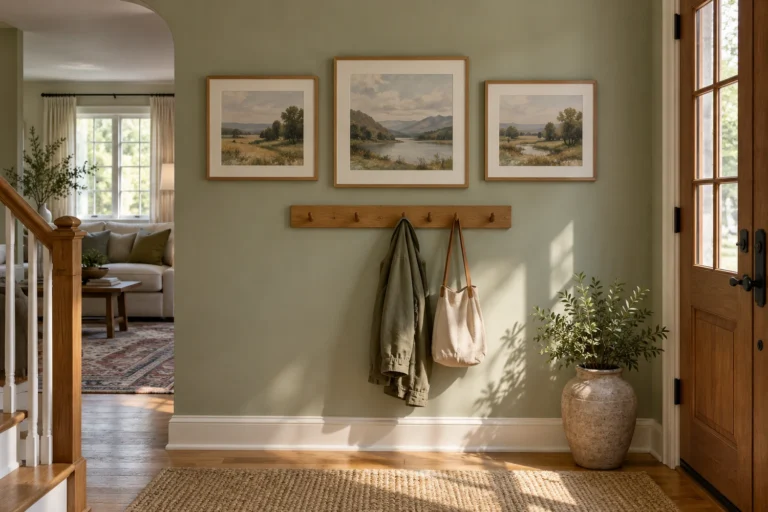
A glazed door or nearby window can make the entrance bright during the day while leaving the back wall comparatively dark. Assess the room as a whole rather than judging it beside the glass.
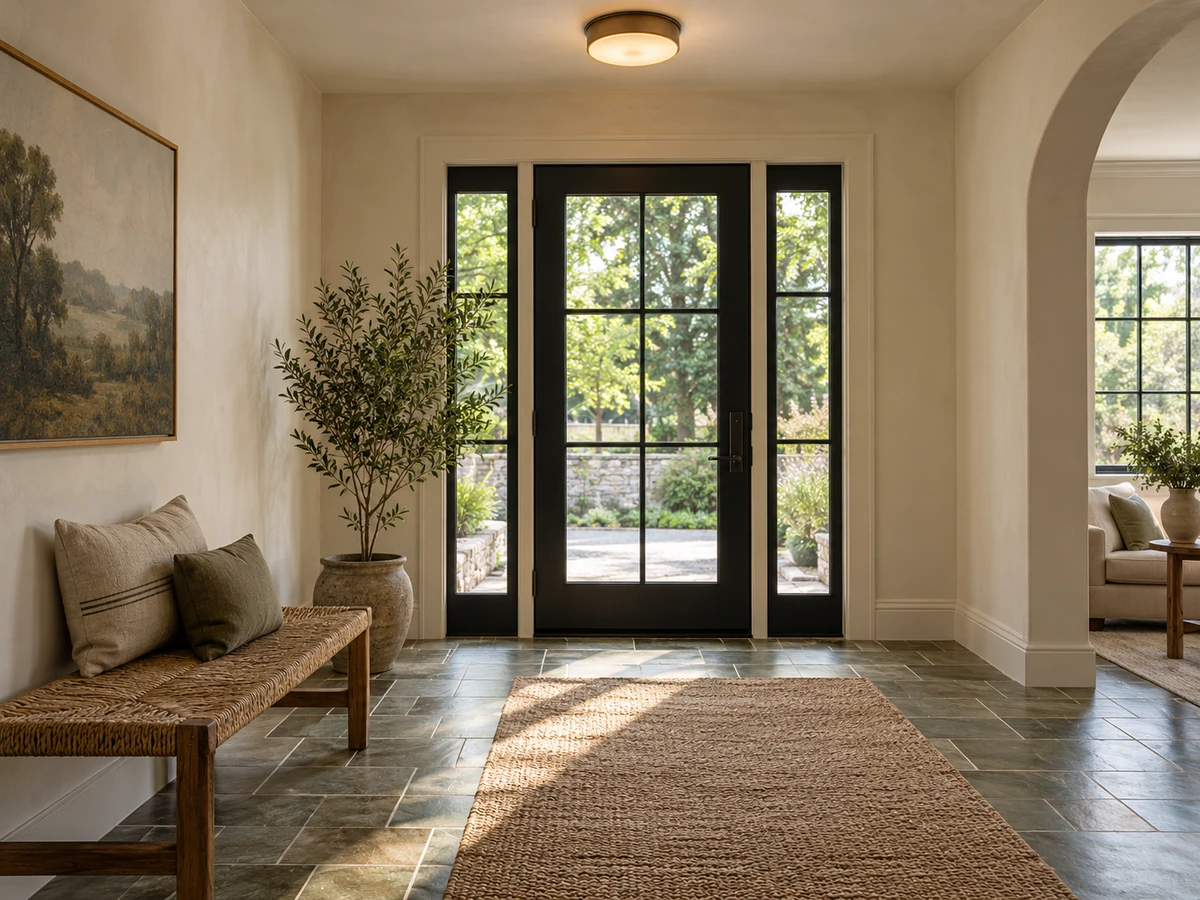
Try the existing ceiling light with the daylight present. Notice whether it helps the interior feel more even or simply adds a bright spot overhead.
Shade materials and light distribution affect the result. A fixture that directs most light downward may leave the upper walls quieter than one with a diffusing shade.
Check the entrance at the times you use it most. A design that looks balanced at noon may need a separate evening layer when the daylight disappears.
Give a Windowless Entry More Than One Direction of Light
A windowless entrance can feel flat when one ceiling source leaves every wall and corner in shadow. A second useful direction of light can make the space easier to read.
That might be a shaded lamp, a suitable wall fixture, or a better-distributed ambient fitting. Choose according to the room’s real layout rather than adding every option.
Look for visible changes in level and direction: the floor edge, door threshold, storage fronts, and the turn into the adjoining room. These are more useful priorities than making every surface equally bright.
Keep the color appearance of the different sources reasonably coherent if they are normally used together. Test the actual products in the room rather than relying on packaging photographs.

Connect Fixture Materials to the Entrance
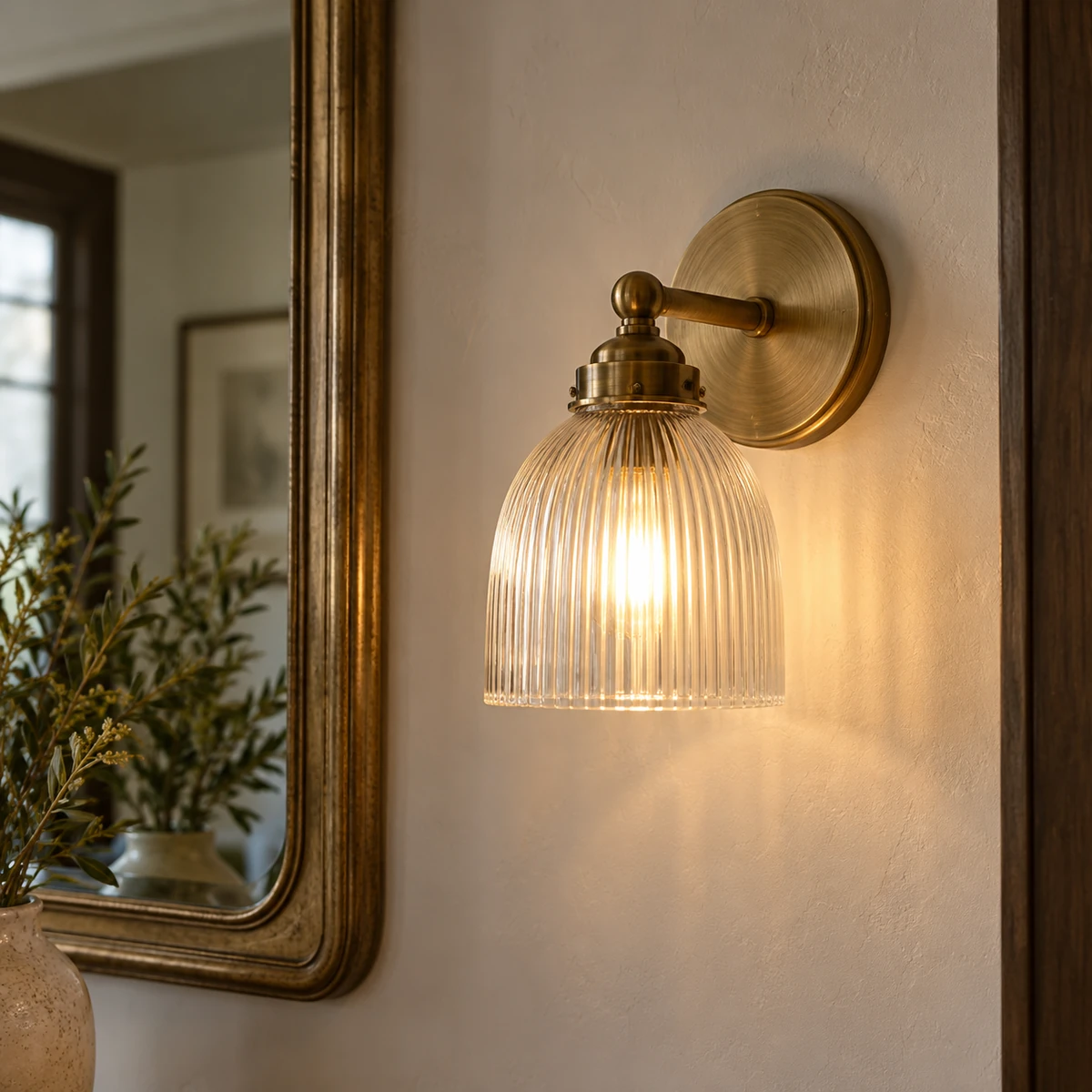
Entryway light fixture ideas feel more settled when their materials relate to details already present, such as door hardware, a mirror frame, or a console.
The brass and ribbed-glass detail shown here provides both a finish and a texture to connect with the room. One or two related details can be enough; every metal does not need to match exactly.
Check how the finish looks when illuminated. A reflective metal or clear shade can read differently after sunset than it does in daylight.
Let the fixture have one clear relationship to the room. Repeating its shape, finish, and texture everywhere can make a small entrance feel overly coordinated.
Match the Fixture’s Character to the Architecture
Opal Glass for a Clean-Lined Entrance
Modern entryway lighting ideas can be quiet rather than dramatic. An opal-glass fitting gives a simple entrance a defined shape without requiring ornate details.

Check where the light goes and how the shade looks from the doorway. A clean silhouette still needs to provide useful illumination for the space beneath it.
An Indoor Lantern for a Traditional Setting
An indoor lantern can connect to paneling, traditional trim, or a more formal foyer. Judge its outline alongside those architectural details.
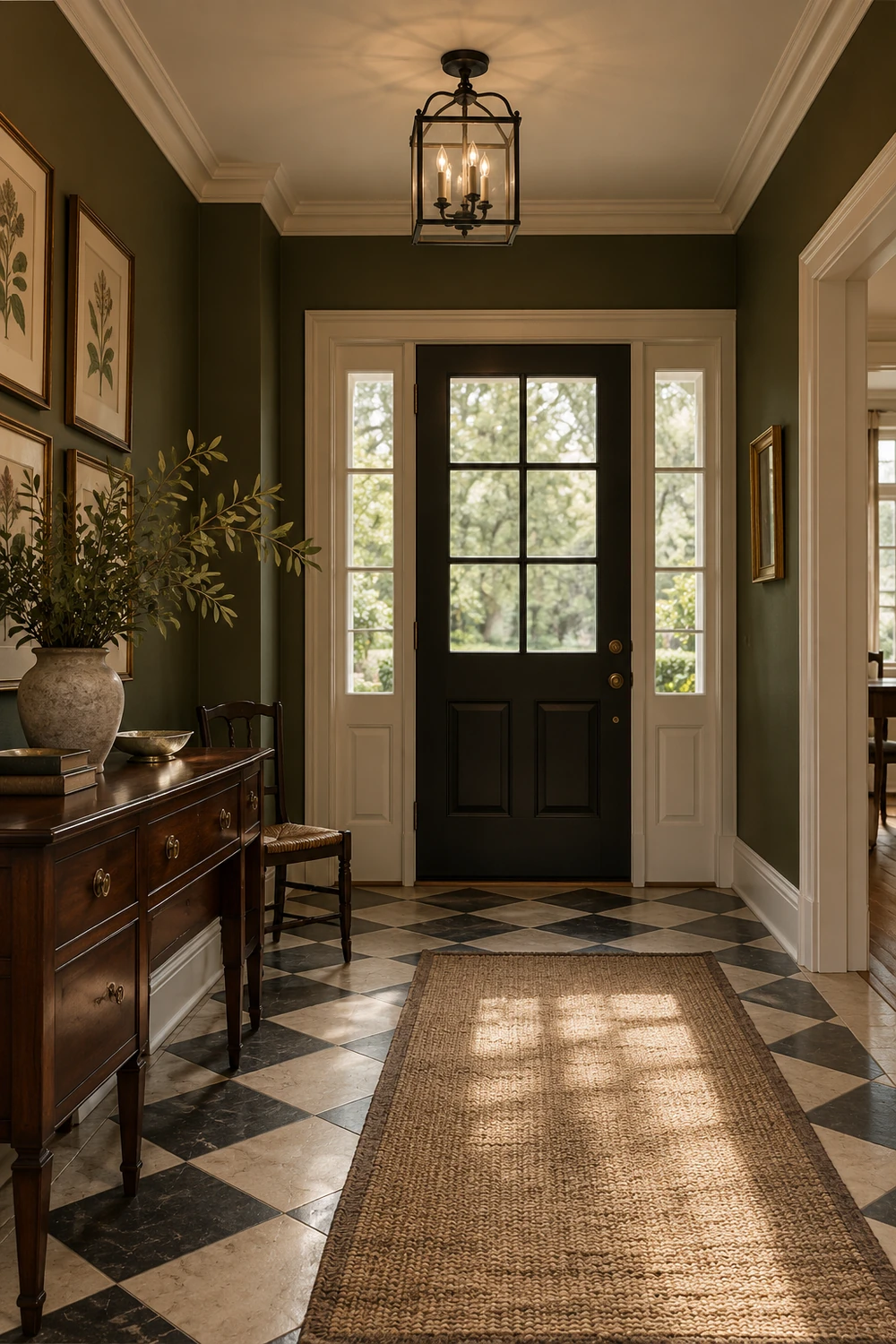
Keep this choice specific to an indoor entrance and use a fixture rated for its intended location. Outdoor porch lighting is a separate planning task.
Style alone does not determine fit. Both a modern globe and a traditional lantern need appropriate dimensions, support, and placement for the actual room.
Map Ambient, Wall, and Task Layers
A simple plan helps you compare entryway ceiling light ideas with the supporting sources. Mark the door swing, walking route, and any surface used for daily tasks.

| Layer | Main job | Question to ask |
|---|---|---|
| Ambient | Make the entrance readable as a whole | Can you see the route and changes in level? |
| Wall light | Add illumination from another direction | Does it improve a shadowed area without obstructing movement? |
| Task or landing-area lamp | Help with an everyday action | Can you use the tray, mirror, or storage comfortably? |
These are roles, not a requirement for three separate purchases. One fixture may contribute to more than one role in a compact room.
If shoe storage creates the busiest stopping point, coordinate the light with that location. Our entryway shoe storage ideas address the furniture choice rather than the lighting system.
Check a Mirror for Reflected Glare
A mirror can change the way you see a lamp or wall fixture. Stand where you normally check your appearance and look for a bright source reflected directly toward you.
Try adjusting the lamp or mirror relationship before adding another light. A shaded source can provide a more comfortable view than a harsh reflected hotspot.
Keep the lighting decision separate from a full wall arrangement. Our entryway wall decor ideas cover the placement of art, mirrors, and other wall elements.

Use a Movable Lamp Where Permanent Changes Are Unsuitable
A plug-in lamp can add a useful layer in a rental or an entrance where fixed lighting changes are not part of the project.
Choose a stable surface near a suitable outlet and keep the cord off the route. Follow the lamp’s instructions and avoid pinching its lead behind doors or moving furniture.
Check the arrangement during normal use, including carrying bags through the entrance. A movable solution should still have a consistent, unobstructed place.

Test the Arrival View After Dark
Approach from the front door and switch on the lights as you normally would. Check the first step inside, the place you set things down, and the route into the next room.
Notice whether the entrance feels evenly readable without an uncomfortable bright source dominating the view. Then check it from inside the house as well.
If a rug marks the arrival area, make sure its edges and relationship to the door are easy to see. Our entryway rug ideas cover fit and door clearance in more detail.

Frequently Asked Questions
What lighting works well in a small entryway?
A proportionate flush or shallow semi-flush fixture can provide general light without a large hanging element. Add a lamp or wall source only where it improves a real task and fits the available space.
Does every entryway need a chandelier?
No. Choose by ceiling height, room volume, door movement, and useful light distribution. A smaller fixture can be the better solution in a compact entrance.
How can you improve entry lighting without changing the ceiling fixture?
Assess the existing light first, then consider a compatible table lamp near a useful surface. Keep its base stable and cord clear of circulation, and check the combined result after dark.
Build the Light Around Everyday Arrival
Choose the ambient layer first, then add only the supporting sources the entrance needs. Check the doors, routes, reflections, and daily landing areas in actual use. The most welcoming result is one that looks considered while making it easy to come home.