
Kitchen Decor / Kitchen Counter Styling
Kitchen Counter Decor Ideas That Keep Prep Space Clear
A kitchen counter can look attractive and still be ready for dinner. The challenge is deciding which objects support the work and which simply occupy the place where a cutting board needs to go.

The most useful kitchen counter decor ideas begin with clear prep space, then give everyday supplies a considered home. A coffee group beside the machine, a tidy sink tray, and a small collection of utensils can provide color and texture without turning the whole worktop into a display.
Start with what you do in the kitchen. Let the styling make those actions easier, then add a decorative detail only where the space can genuinely support it.
Protect the Prep Area Before Styling Anything
Clear the counter and place your usual cutting board where you prepare ingredients. Add the bowl, plate, or other items you normally need beside it.
This shows the working area that should remain available. Do the same for appliance use and for the place where groceries or washed dishes temporarily land.
Avoid reserving only a narrow gap between decorative objects. A useful prep area needs to support the task without requiring you to clear a display first.
Notice what repeatedly moves during cooking. If an accessory is always relocated to the dining table, it may belong somewhere else permanently. Good styling should reduce that daily negotiation.
Give a Small Counter One Compact Group
Small kitchen counter decor ideas work best when the display has a clear limit. Choose one useful group rather than a series of small objects spread along the backsplash.
The compact example keeps the useful pieces together while preserving the surrounding surface. It feels intentional because the group has an identifiable footprint.
Choose the category that matters most in that spot: daily utensils, a beverage setup, or sink essentials. Other supplies can stay in cabinets or drawers until needed.
Make the choice from your routine rather than from a list of things a kitchen is supposed to display. A small counter does not need a vase, cookbook stand, canister set, and tray at the same time.

Contain Coffee Supplies Beside the Machine
Coffee equipment creates a natural working zone when the supplies are near the appliance. Keep the pieces you use daily together and let spare mugs or unopened supplies live elsewhere.

Check the machine’s full operating movement: filling the water tank, opening compartments, placing a cup, and cleaning removable parts. Follow its instructions for ventilation and clearance.
Set the surrounding accessories where they do not obstruct those actions. A small tray can group suitable supplies, but it should not make the appliance unstable or interfere with its base.
Keep the group easy to clean. If grounds or drips collect behind several decorative pieces, reduce the number of objects rather than adding another container to hide the mess.
Make the Sink-Side Group Easy to Reset
Soap and a dishbrush can look considered when they share a small, practical landing place. Choose a tray that fits the available area without taking over the sink surround.

Leave room to use the faucet and handles, lift a dish, and wipe the counter. Check the tray’s base and the surface beneath it regularly for trapped moisture.
Use containers appropriate to the products they hold and keep identification clear. Do not combine decorative bottles with household members’ need to recognize what is inside.
Limit the group to what gets used at the sink. Refill bottles and spare brushes can stay in suitable storage nearby. The counter becomes easier to maintain when it only holds the active supplies.
Store Boards Without Losing Their Working Space
Wooden boards can add warmth while earning their place as useful kitchen equipment. The arrangement works when the boards are stable, accessible, and easy to remove.
Keep a clear space in front for the board in use. Decorative layering should not make you dismantle a stack whenever you prepare food.
Follow the boards’ care instructions and allow cleaned pieces to dry appropriately before storing them. Avoid trapping damp boards behind other objects.
Choose only the pieces you use or genuinely enjoy seeing. A broad collection of boards can become a wall of objects that consumes the preparation area it is meant to support.

Choose a Proportionate Crock for Daily Utensils
A ceramic crock provides both a useful category and a visible material accent. It works best with a selected group of tools rather than every utensil in the kitchen.
Test whether you can remove one tool without pulling out several others. Keep the crock stable and leave space above it to lift the longest utensil comfortably.
Position it according to the appliance and surface instructions, away from heat or movement that makes the location unsuitable. Being convenient for cooking does not mean it should sit against a hot appliance.
Move occasional tools into appropriate drawer storage. Our deep kitchen drawer organization ideas cover fitted compartments and usable closing clearance for those items.

Keep Counter Corners Low and Reachable
A corner can collect small objects because it seems separate from the main work area. Before decorating it, check whether the space is needed for appliance movement, cleaning, or access to outlets.
Try a low useful group that is easy to lift or bring forward. Avoid filling the back with unrelated pieces that cannot be reached without moving everything in front.
Check the upper cabinets too. Doors and handles may move through the space above the counter even when the surface itself appears free.
The best corner arrangement remains easy to clean. If the group needs frequent rearranging to reach the backsplash, simplify its footprint or move the least useful object into storage.
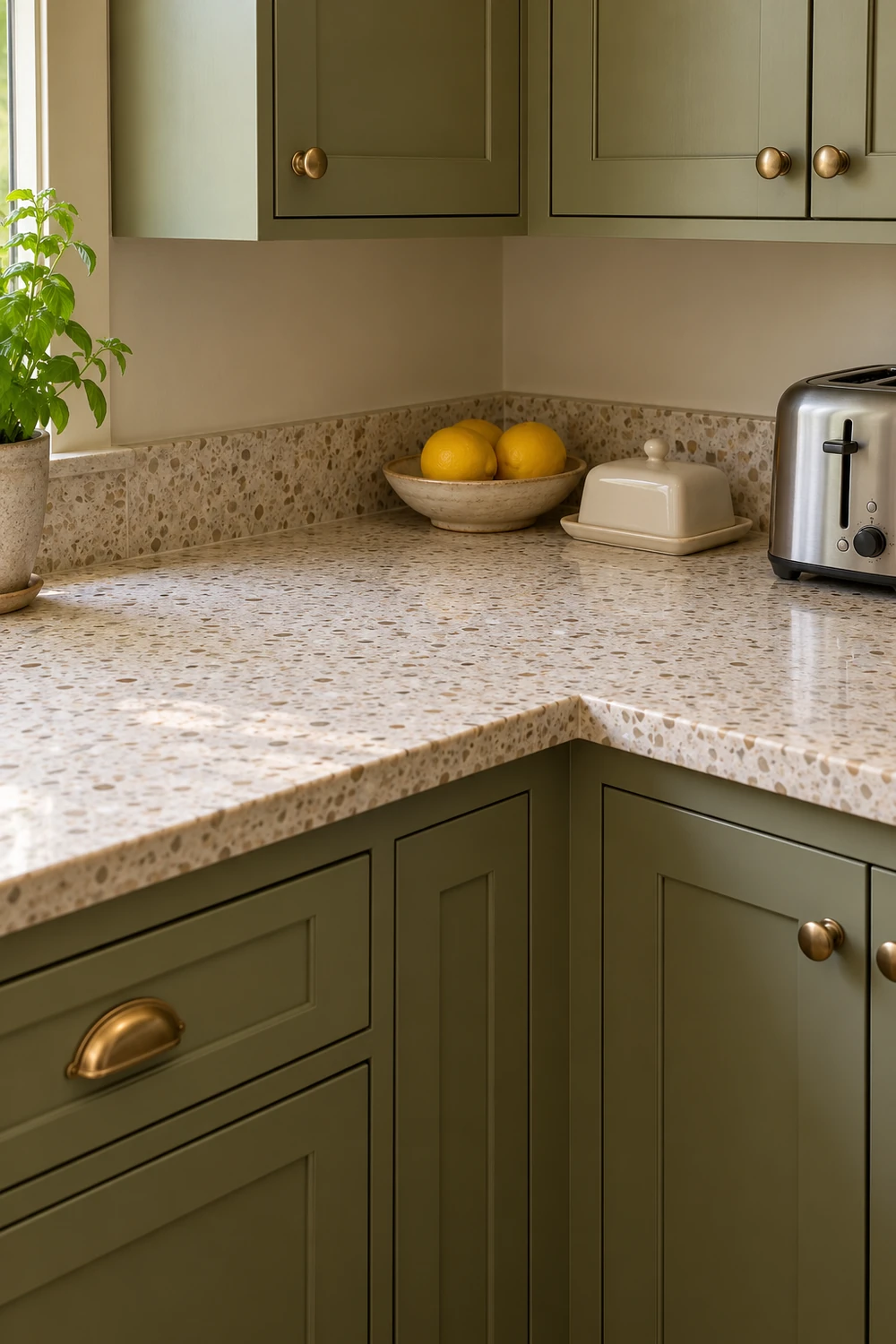
Use Two Materials for a Minimal Arrangement
Minimalist kitchen counter decor can feel warm when the materials provide enough contrast. A restrained combination, such as wood and pale ceramics, gives the eye something to notice without requiring many objects.

Choose the useful pieces first, then edit the finishes. A wood board and ceramic utensil holder may already establish the combination.
Keep the open surface visible between working zones. The gaps are part of what makes the materials read clearly rather than merge into one crowded band along the wall.
Minimal does not mean removing things you need every day. It means selecting the few items that serve the space and giving each one a deliberate position.
Add Warmth Through Useful Wood Details
A kitchen with smooth surfaces can benefit from the texture of wood. Let that warmth come through objects with a practical role rather than adding a decorative collection.
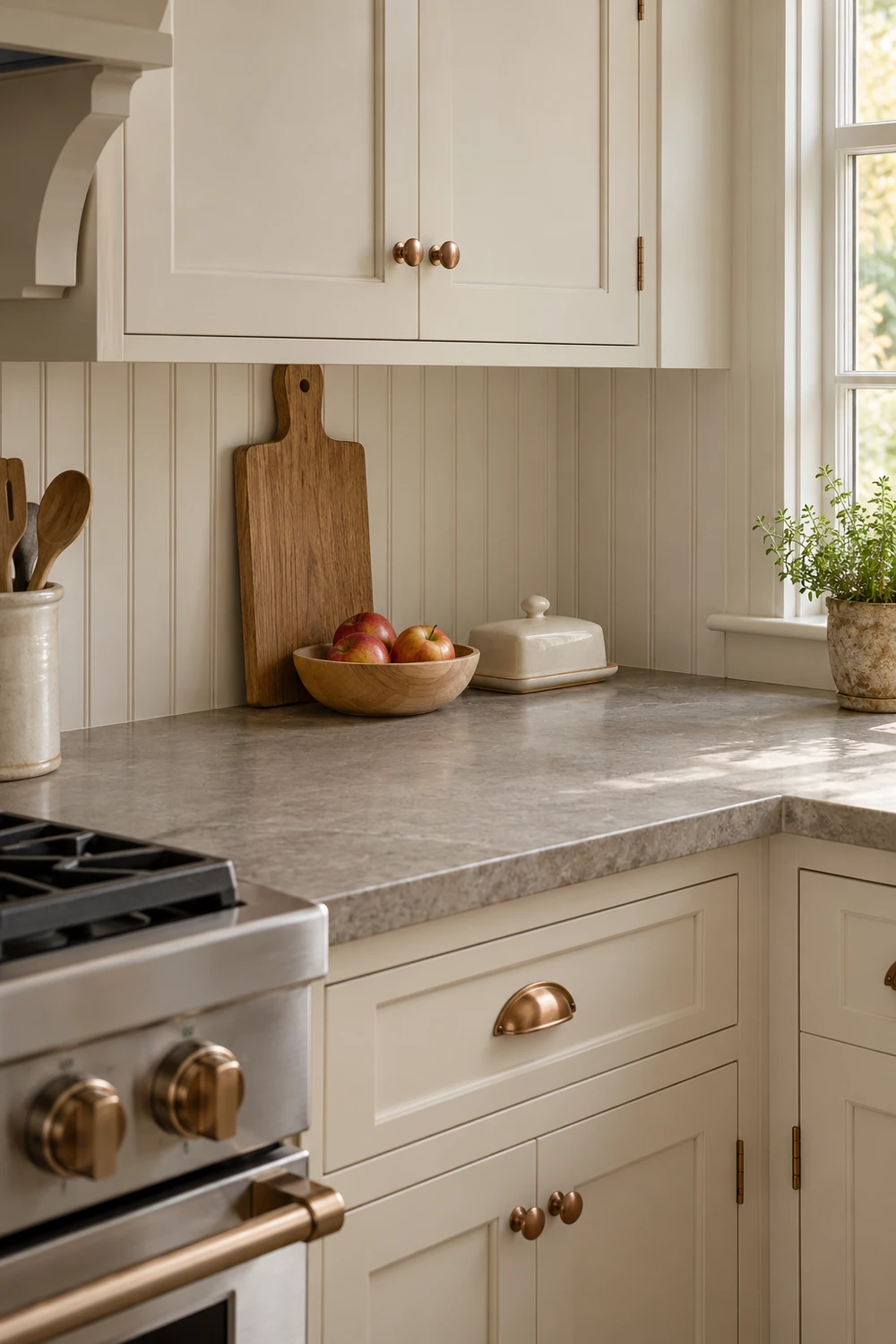
A board, suitable tray, or small everyday accessory can relate to wood elsewhere in the room. You do not need identical finishes; a shared warm tone may be enough.
Consider care before placement. Wood pieces near the sink or another wet area may need a different position from objects kept on a dry stretch of counter.
Keep the purpose visible. If a board is used for food preparation, make it easy to reach and return. If a wood tray groups supplies, ensure it can be lifted comfortably when you wipe the surface.
Repeat One Color Already in the Kitchen
Colorful kitchen counter decor feels connected when the accents respond to the room rather than introduce a completely separate palette.
The coral accents in this blue kitchen create a controlled contrast. Repeating the accent in a small number of useful pieces gives it a clear role.
Look at cabinet color, tile, textiles, and any visible adjoining room before choosing accessories. One existing color can guide a utensil crock, a small bowl, or another functional piece.
Avoid buying several new items merely to repeat the color everywhere. Start with one and check whether the room already contains enough related detail. A strong cabinet or backsplash color may need very little support.

Place a Small Plant Where the Light Suits It
A compact herb pot can soften the kitchen when the location provides suitable light and the plant fits the available space.
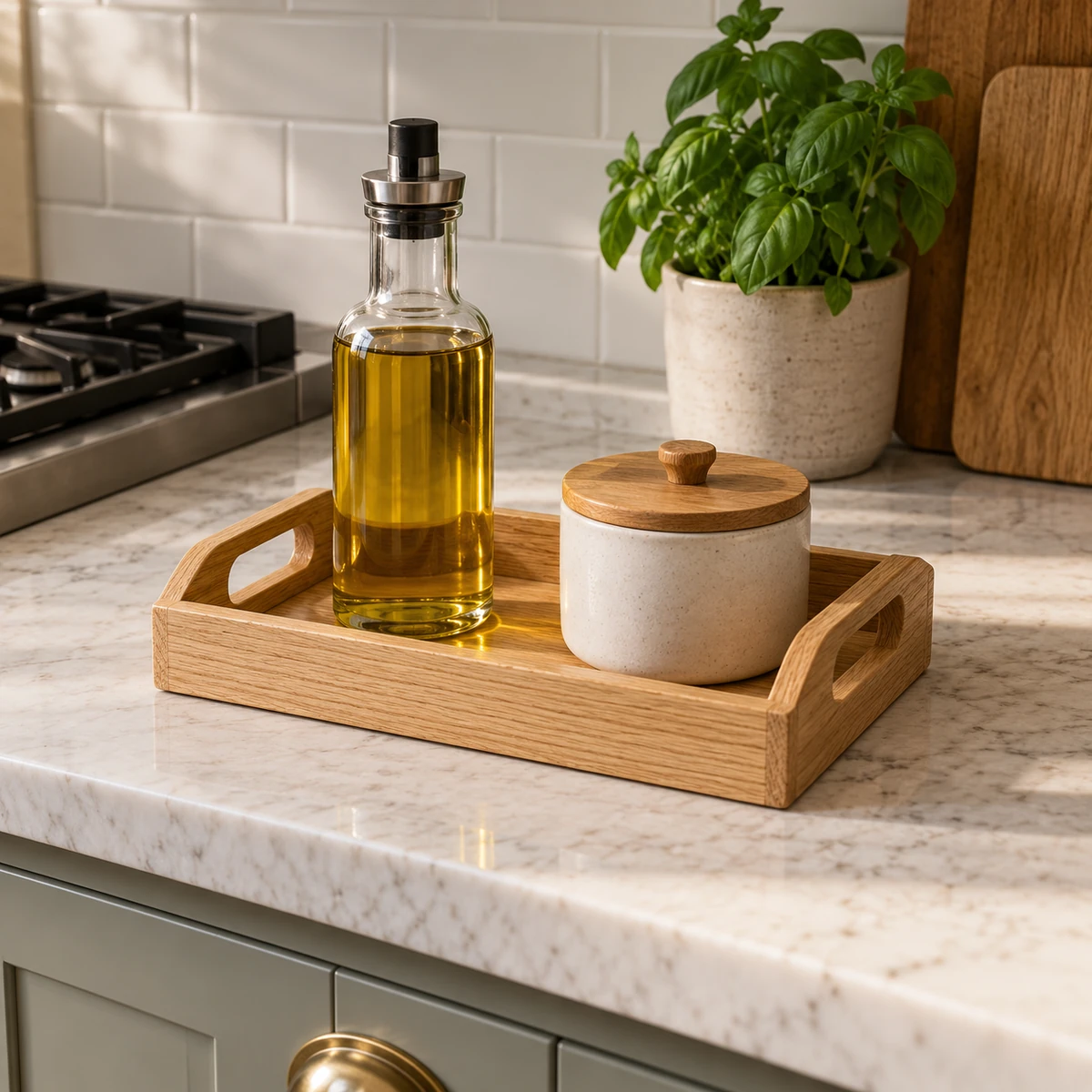
The basil example belongs by the window rather than in a dark corner chosen only for appearance. Match the plant to the actual conditions and follow its care needs.
Use a container arrangement that keeps water off the counter and check beneath it regularly. Keep leaves and pots clear of the sink’s working area, appliance openings, and food preparation space.
One healthy, appropriately placed plant can be enough. If the window area is too narrow or the light unsuitable, let the counter’s useful materials provide the decorative detail instead.
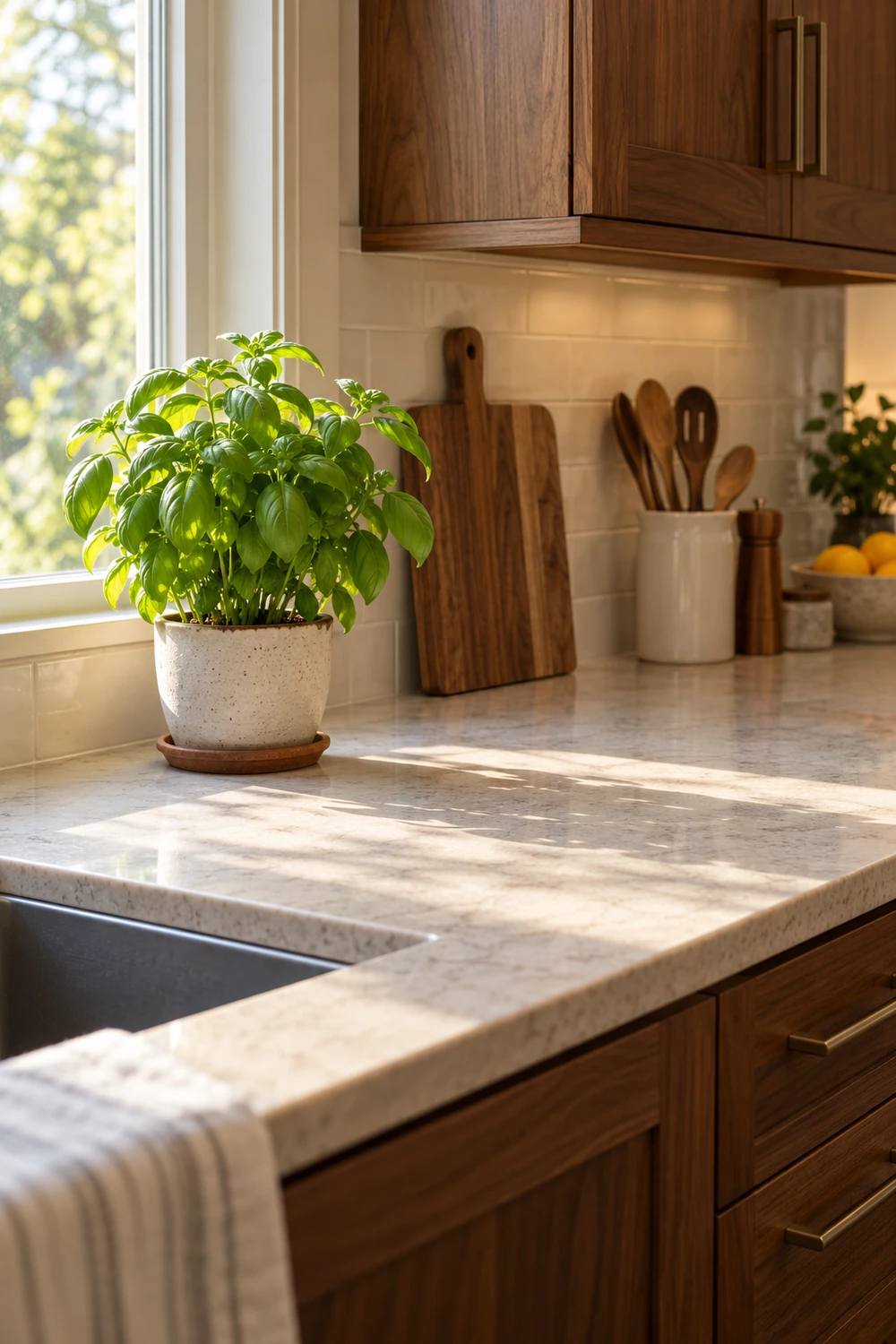
Group Small Supplies for Easier Cleaning
A small liftable tray can make a counter group easier to manage than several loose objects. Keep its contents limited to a category you use in that location.
The oil-and-salt example illustrates a compact group, but storage instructions still determine where each product belongs. Keep supplies away from unsuitable heat or light and make sure containers remain securely closed when not in use.
Test the loaded tray. You should be able to lift it comfortably, wipe beneath it, and return it without a complicated rearrangement.
Do not let the tray become a reason to keep extra items on the counter. Its job is to contain a useful group, not to expand that group until the tray is full.
Leave Appliances Room to Operate
An appliance’s footprint is only its resting position. It may need space for a lid, door, handle, removable tank, or ventilation during use.
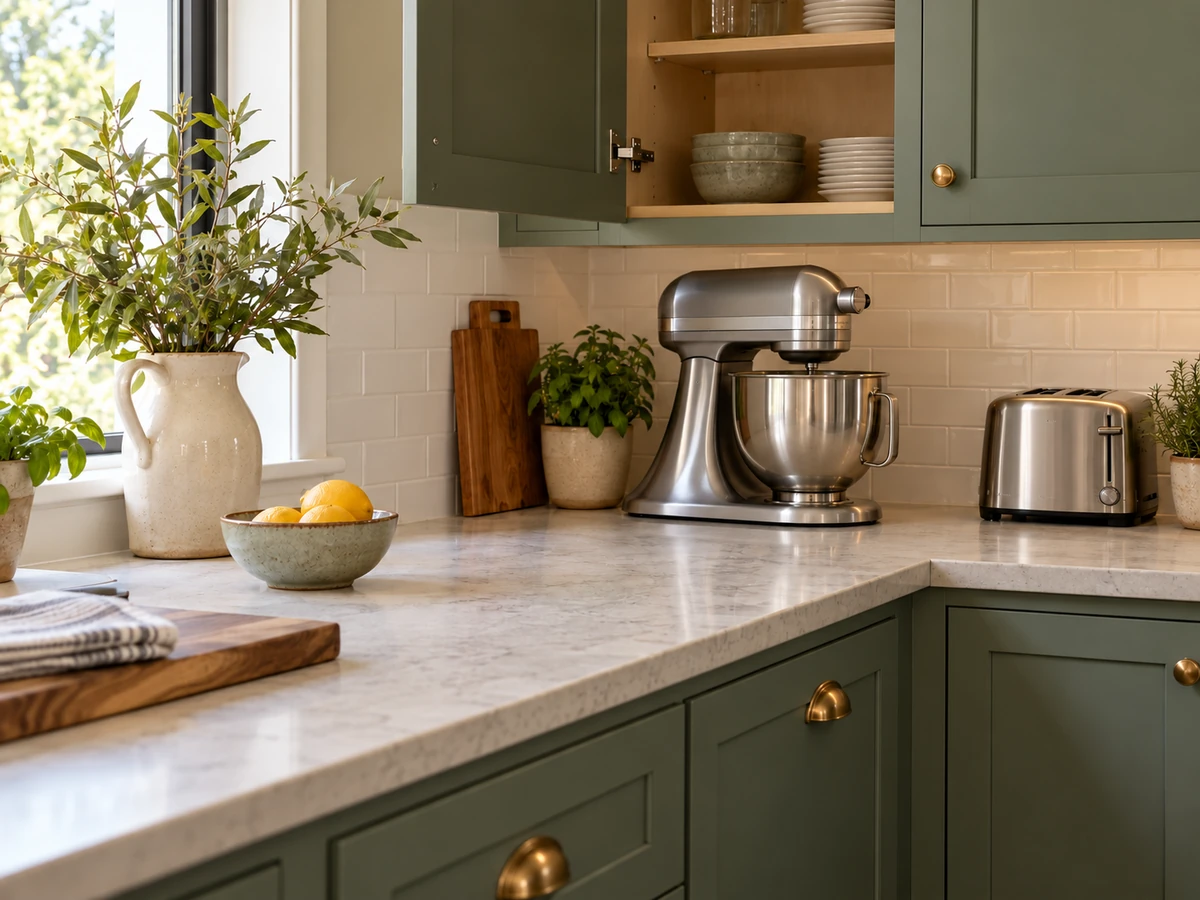
Read the instructions for the exact appliance before placing accessories nearby. Check the countertop and cabinet clearances it requires rather than copying a photographed distance.
Keep the cord arranged according to the product guidance and away from movement that could pull it or trap it. Avoid using decorative pieces to hide a poor equipment layout.
Make this a real-use test: open the appliance, remove the part you clean, and put the normal working items beside it. Preserve that space before deciding whether an additional accent belongs nearby.
Map Prep, Sink, and Beverage Zones
A simple counter plan helps the styling stay practical. Mark the fixed elements, then identify the surface needed for your main tasks.
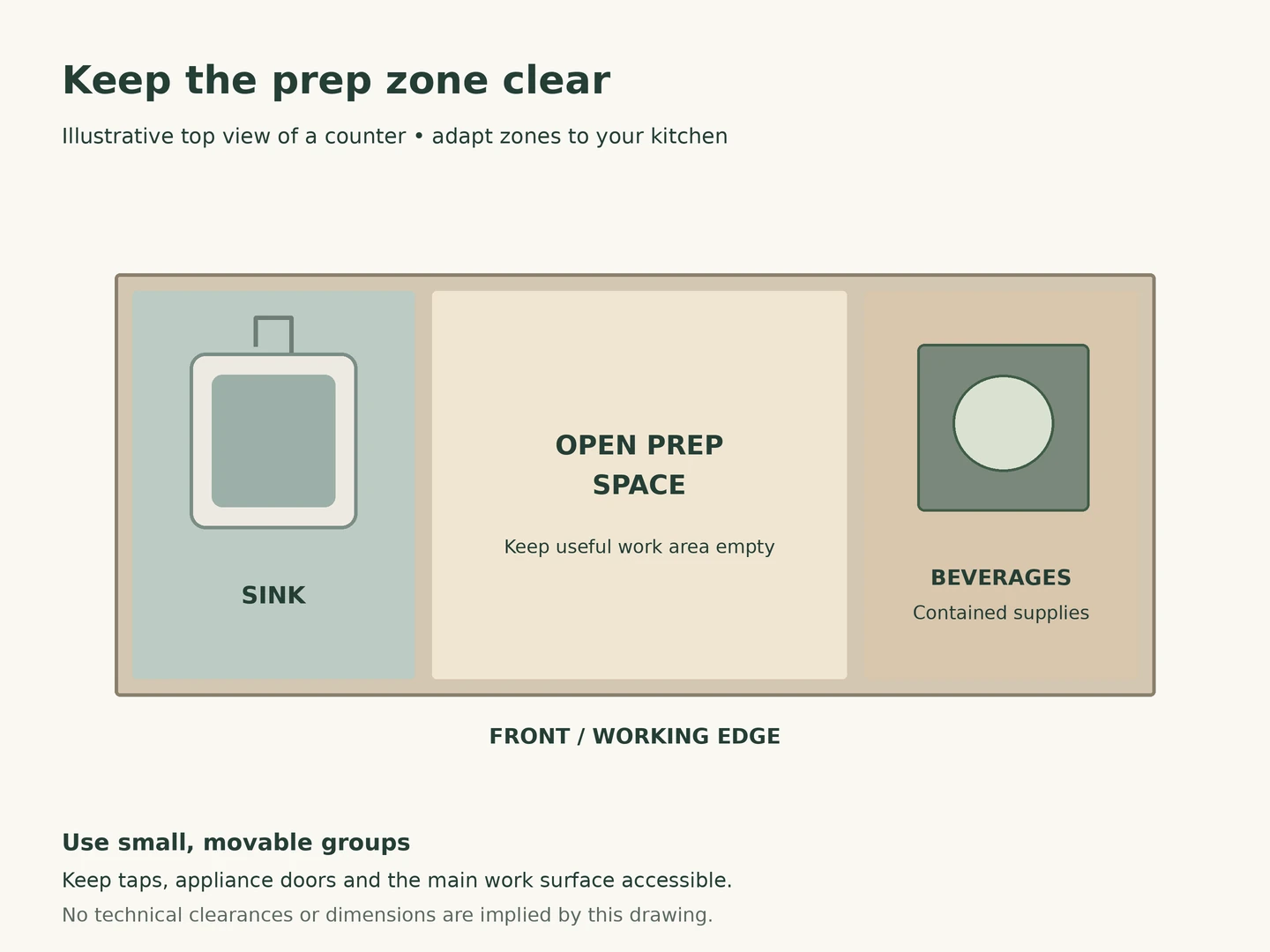
| Area | Useful items to keep nearby | Space to preserve |
|---|---|---|
| Prep | A suitable board and selected tools | Room for ingredients and working dishes |
| Sink | Active soap and brush | Faucet use, washing movement, and wiping access |
| Beverage | Daily supplies for the machine | Filling, opening, cup placement, and cleaning |
The map is illustrative. Your sink and appliances may be arranged differently, and a small kitchen may share one surface between tasks.
Keep backstock in storage rather than stretching a counter zone to hold every refill. Our guide to organizing a pantry cabinet addresses that separate food-storage task.
Keep Rental Styling Movable
A rental kitchen can gain a more considered appearance through removable, useful accessories without altering the backsplash or cabinetry.
Choose a small group that works with the existing finishes. A board, crock, or liftable tray can introduce a material or color while staying easy to remove.
Check the care guidance for the counter before adding protective pads or anything with an adhesive base. Movable styling should not depend on a surface treatment that could damage the finish.
Let the supplied cabinets and worktop remain the background. You do not need to disguise every existing feature to make the counter feel more coherent.
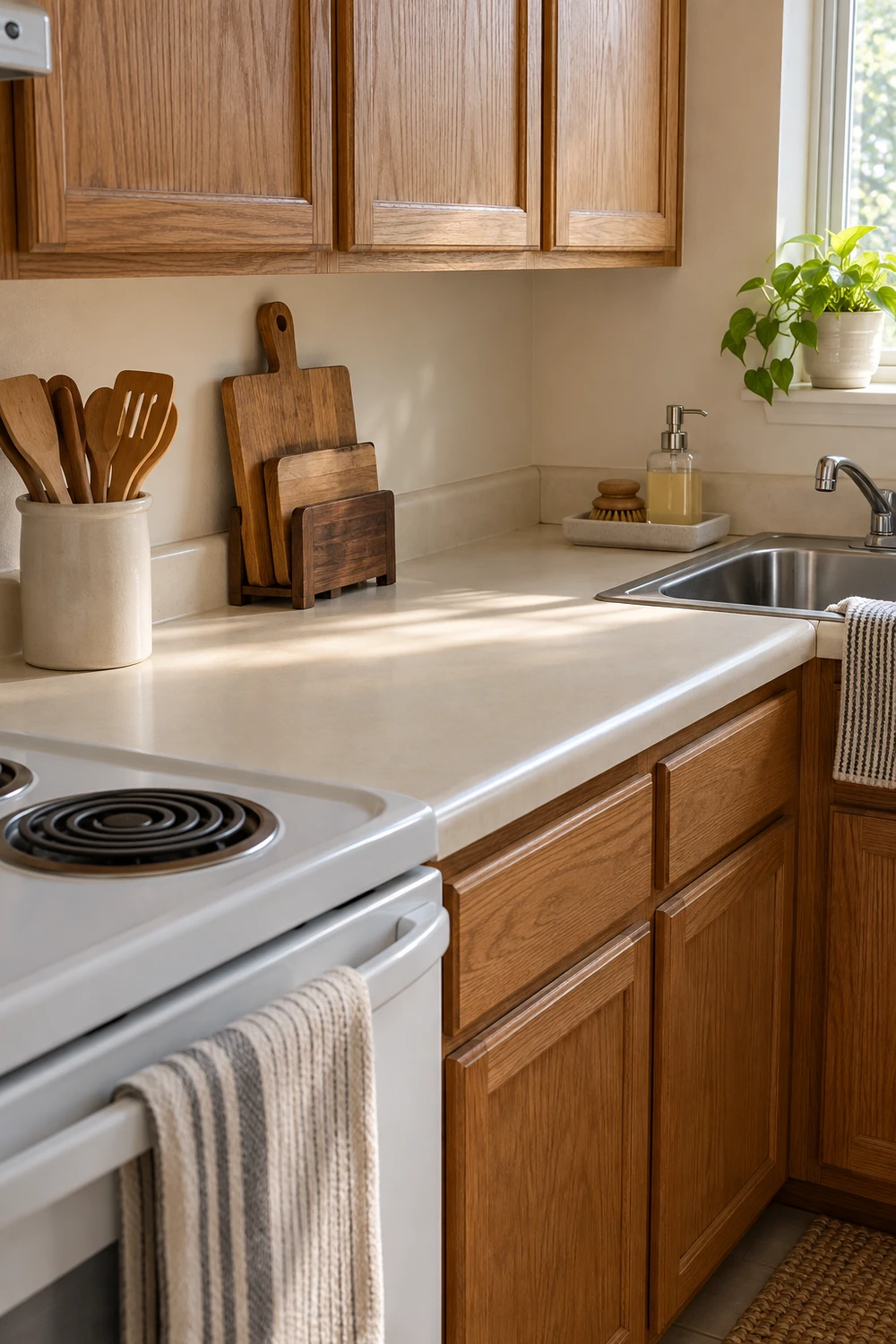
Check the Arrangement Under Evening Task Light
After daylight fades, switch on the lights you normally use for cooking. Look at the preparation surface rather than judging the room only from the doorway.
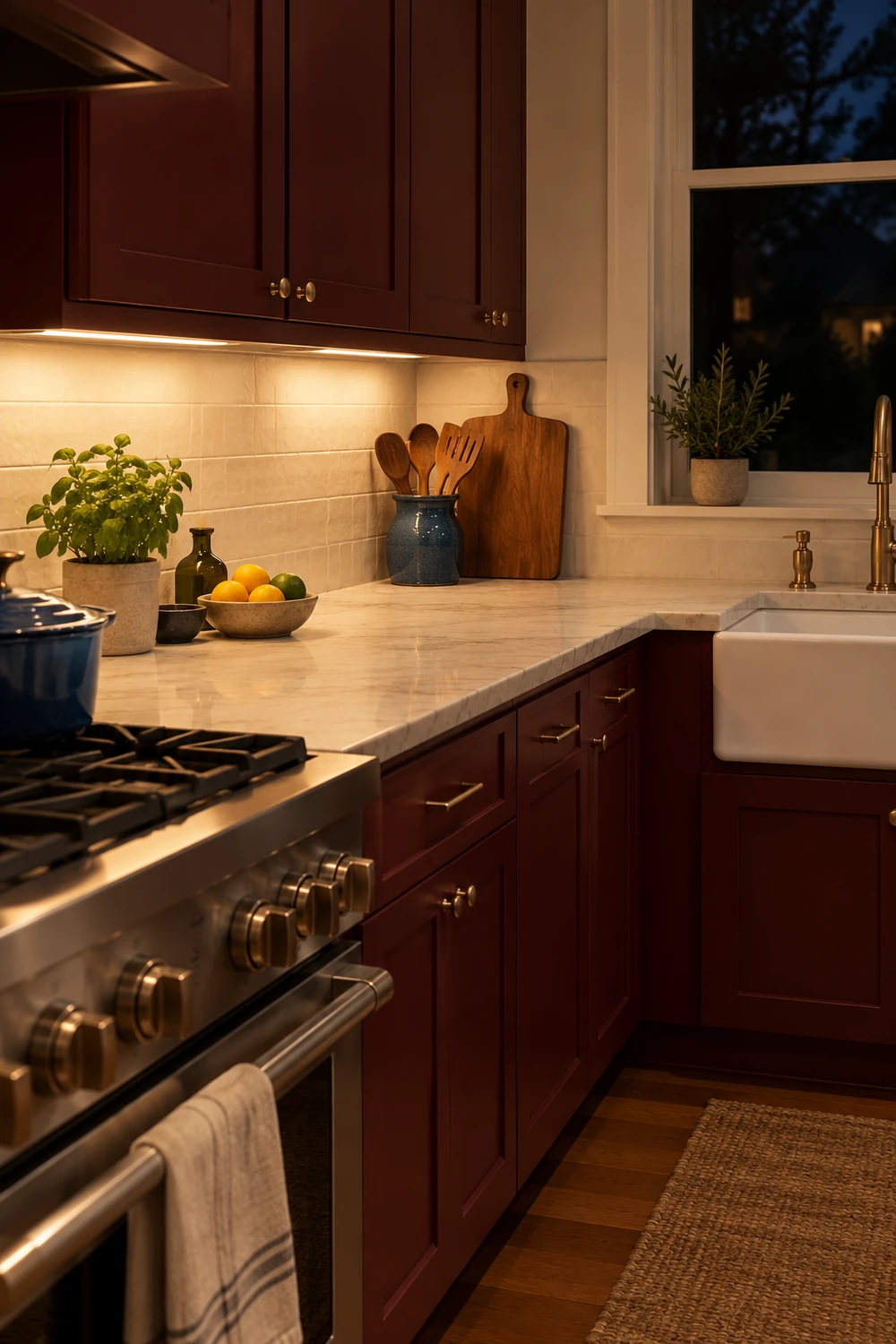
Check that accessories do not cast an awkward shadow over the working area or hide something you need to see. Move a group if it interferes with the task lighting.
Then prepare a simple meal or drink. Notice what you have to shift, which surface becomes crowded, and whether the everyday pieces are easy to return. Those observations are more useful than adding another decorative object.
Frequently Asked Questions
What should you keep on a kitchen counter?
Keep the items you use frequently in that location, such as a small sink group, selected utensils, or daily beverage supplies. Leave enough open surface for preparation and appliance use.
How do you decorate a kitchen counter without clutter?
Choose one useful group for each working zone and keep the rest in storage. Repeat a limited set of materials or colors, then test the arrangement during a normal meal preparation.
What works on a very small counter?
One compact functional group may be enough. Prioritize the board and dishes you need for prep, and avoid filling every gap beside the sink or appliances.
Let the Worktop Stay Ready for Work
Functional kitchen counter decor comes from useful pieces arranged with care. Keep the prep space open, give daily supplies a clear home, and choose materials that connect to the room. The finished counter should be easy to wipe, easy to use, and simple to return to order after cooking.