Christmas Window Lights Ideas for a Magical Glow
How do you hang Christmas window lights so they look good and stay up? Choose one light style, plan the placement before you hang anything, and use a fixing suited to your window and your home. This guide covers Christmas window lights ideas for houses and apartments, including Christmas window lights for small spaces, with Christmas window lights inspiration you can adapt to a single window, a whole front, or a small rental window.
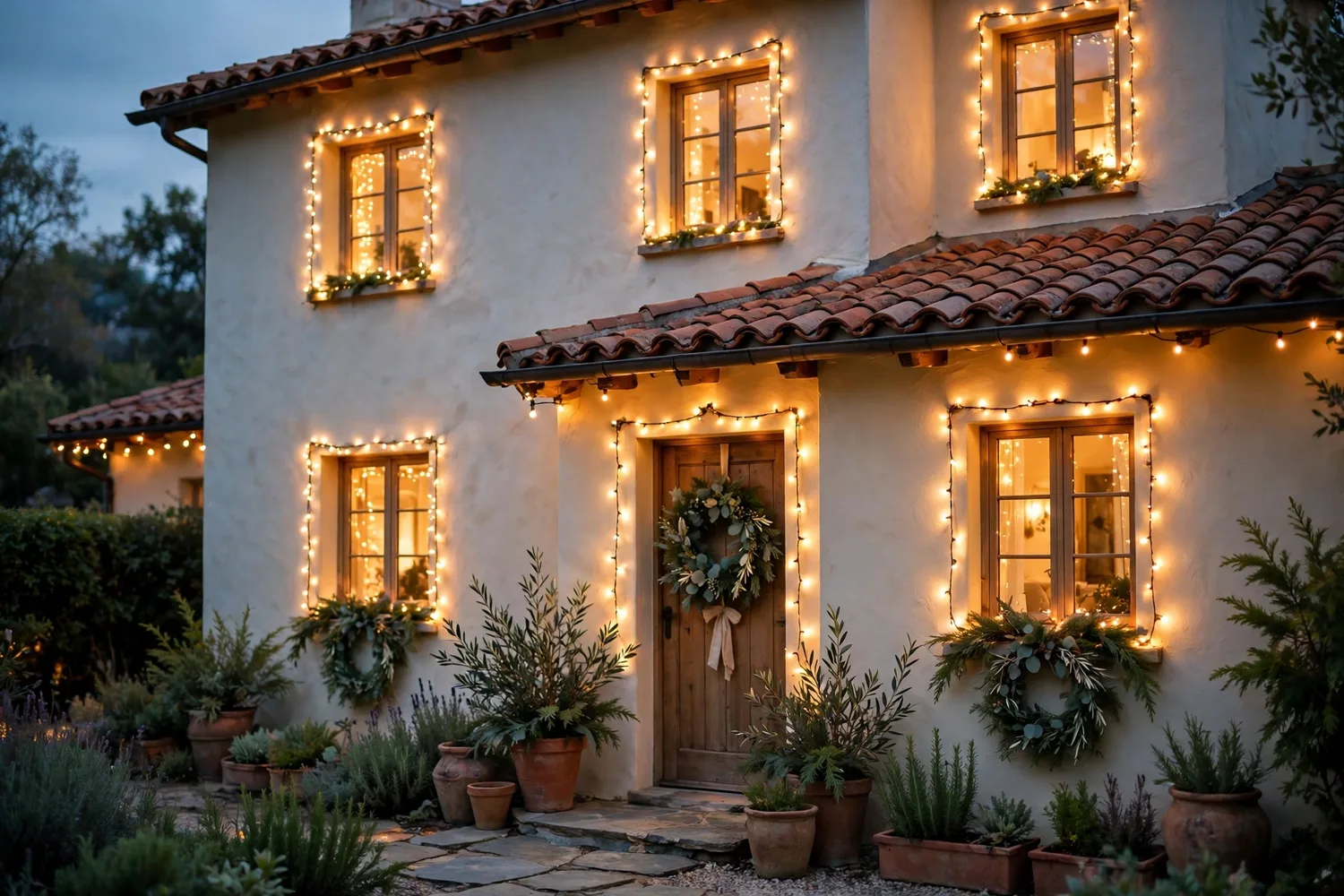
Choose a Light Style First
Window lights look best when they follow one style. Mixing flashing, color-changing, and steady lights in the same window can look busy, while one consistent style looks intentional and calm.
Warm white lights are the most versatile choice. They glow softly in the evening, suit almost any palette, and look good from inside and outside. Cool white lights feel brighter and a little crisper, and they suit a white-and-silver palette. Colored lights feel playful and traditional, and they work well in a family home or a whimsy scheme. Choose one color temperature or one color set, and repeat it on every window you light.
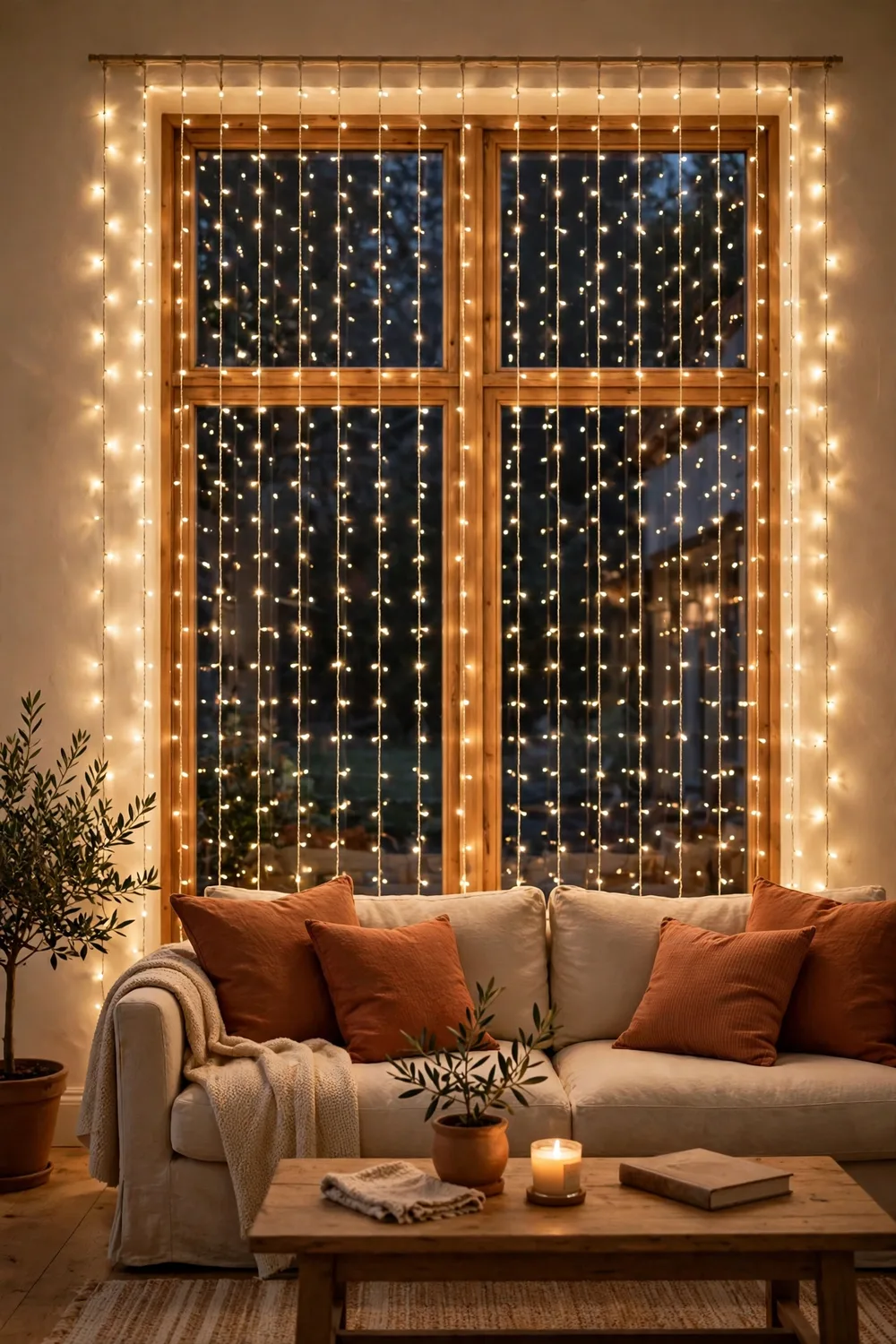
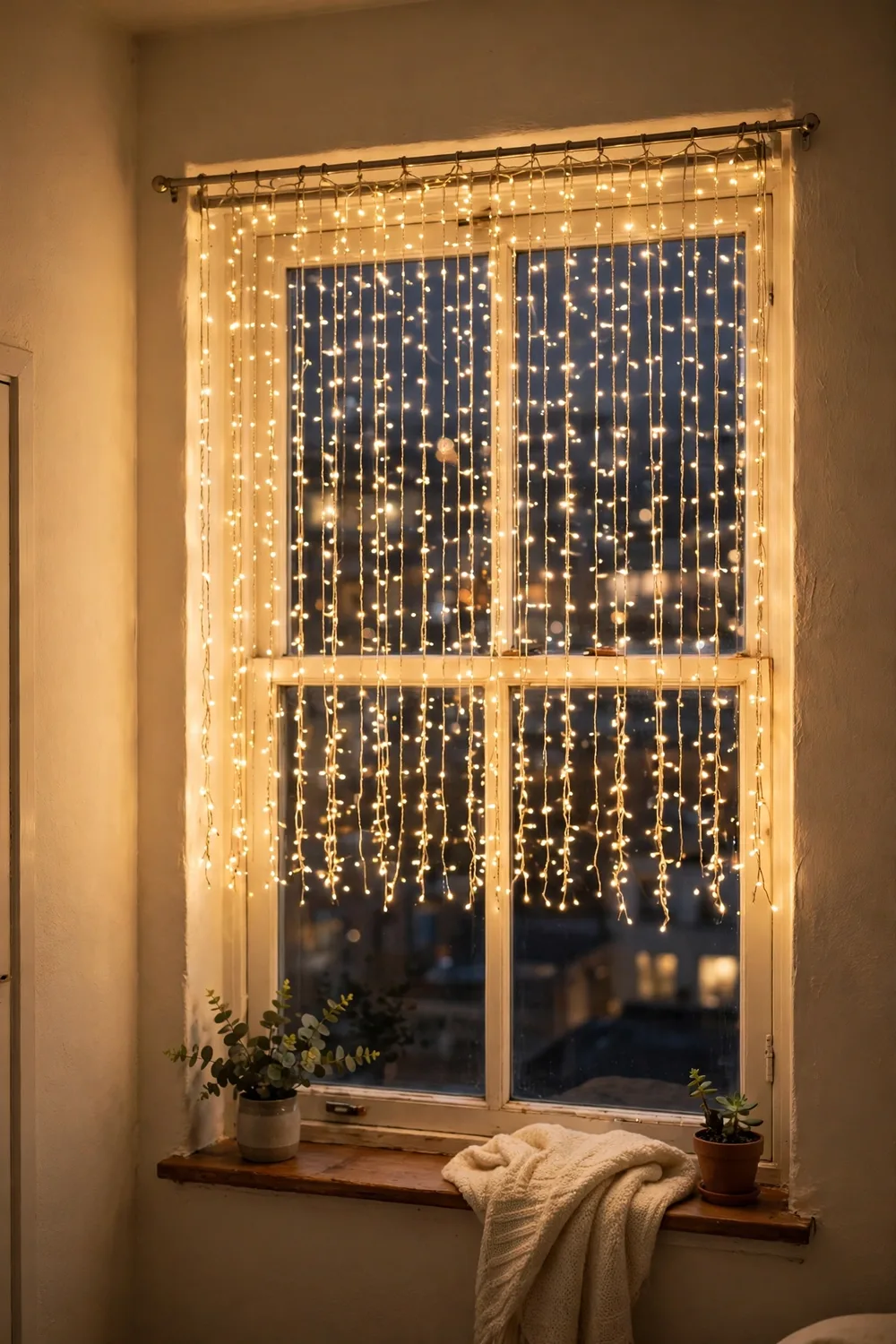
Light shapes matter too. Mini lights give a fine, even glow and suit an outline around a window frame. Larger bulbs give a bolder, more traditional look and suit a wide window or a porch. Icicle lights hang down from the top of a window and suit a tall window, but they can look uneven on a short window. A light curtain — vertical strands hanging down the glass — fills a large window with a soft glow and works well in a living room. Choose the shape that suits your window size, and use the same shape on every window for a consistent look.
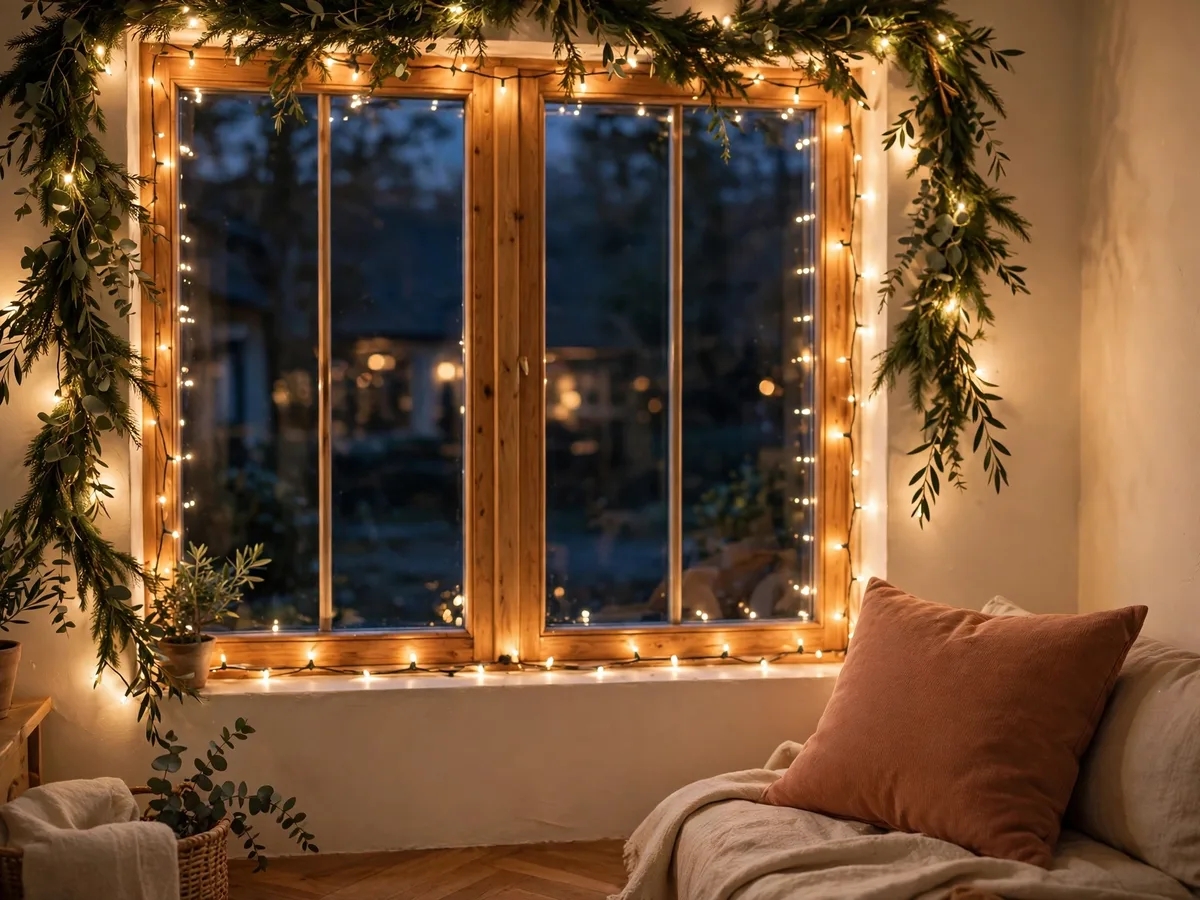
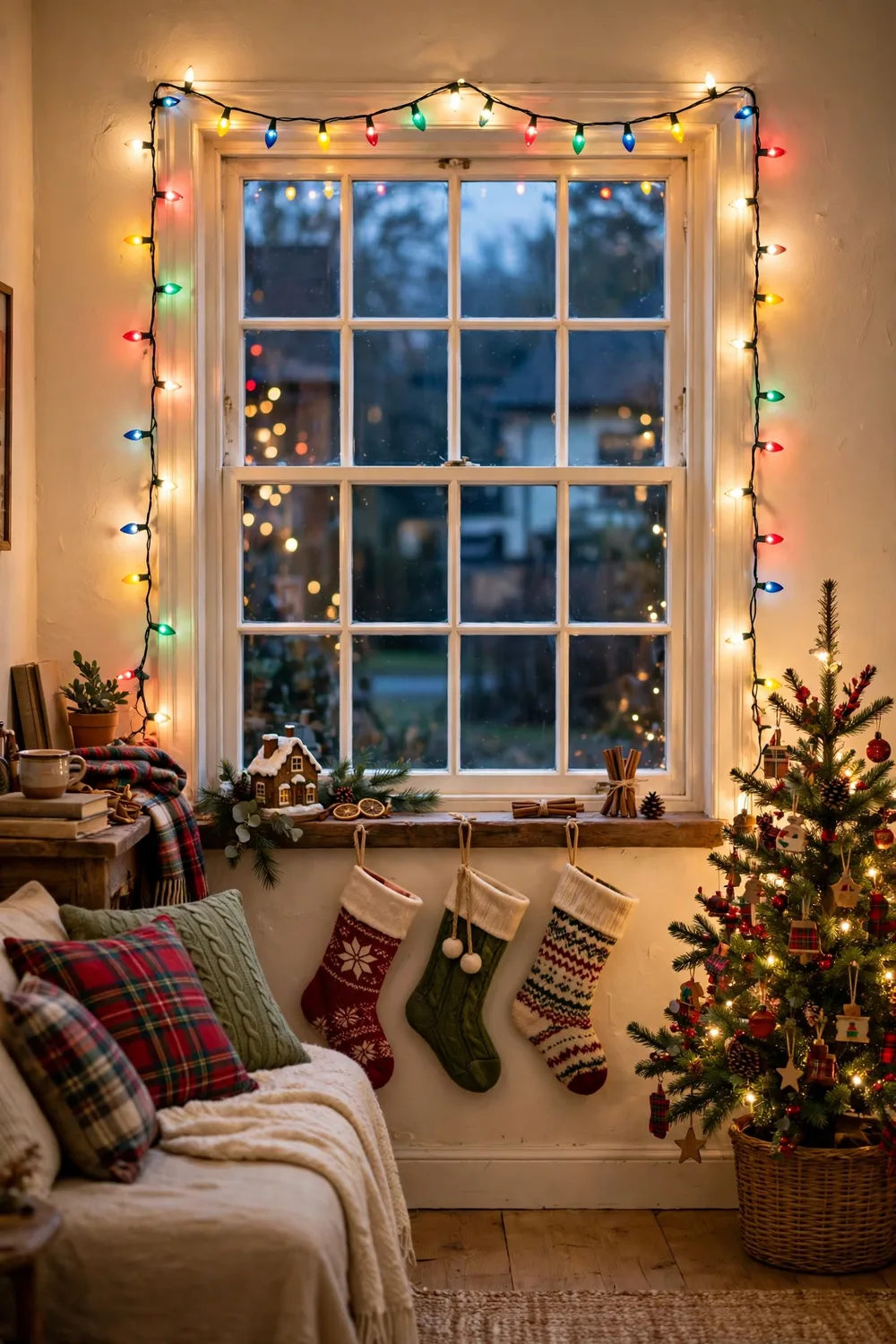
Window Placement: Where Lights Look Best
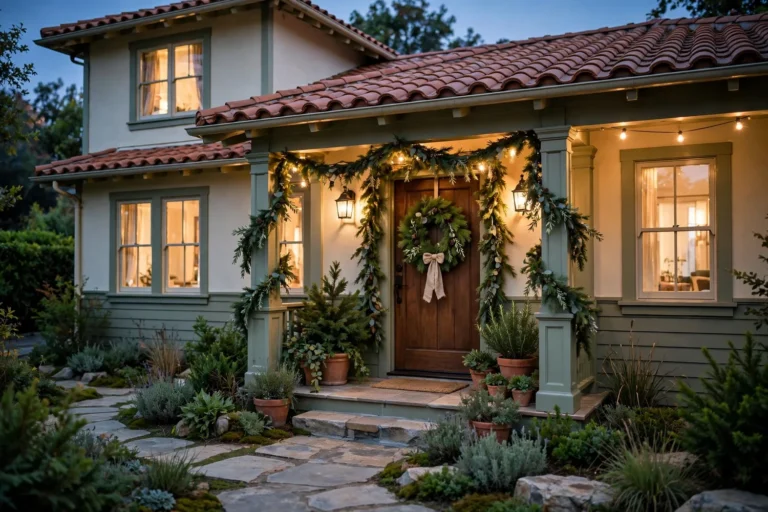
Placement decides whether window lights look elegant or cluttered. Start with the front windows, because they are the ones guests and neighbors see. Light one or two windows well rather than lighting every window in the house. A single lit window on a small home can be more striking than a whole house outlined in lights.
Outlining the Frame
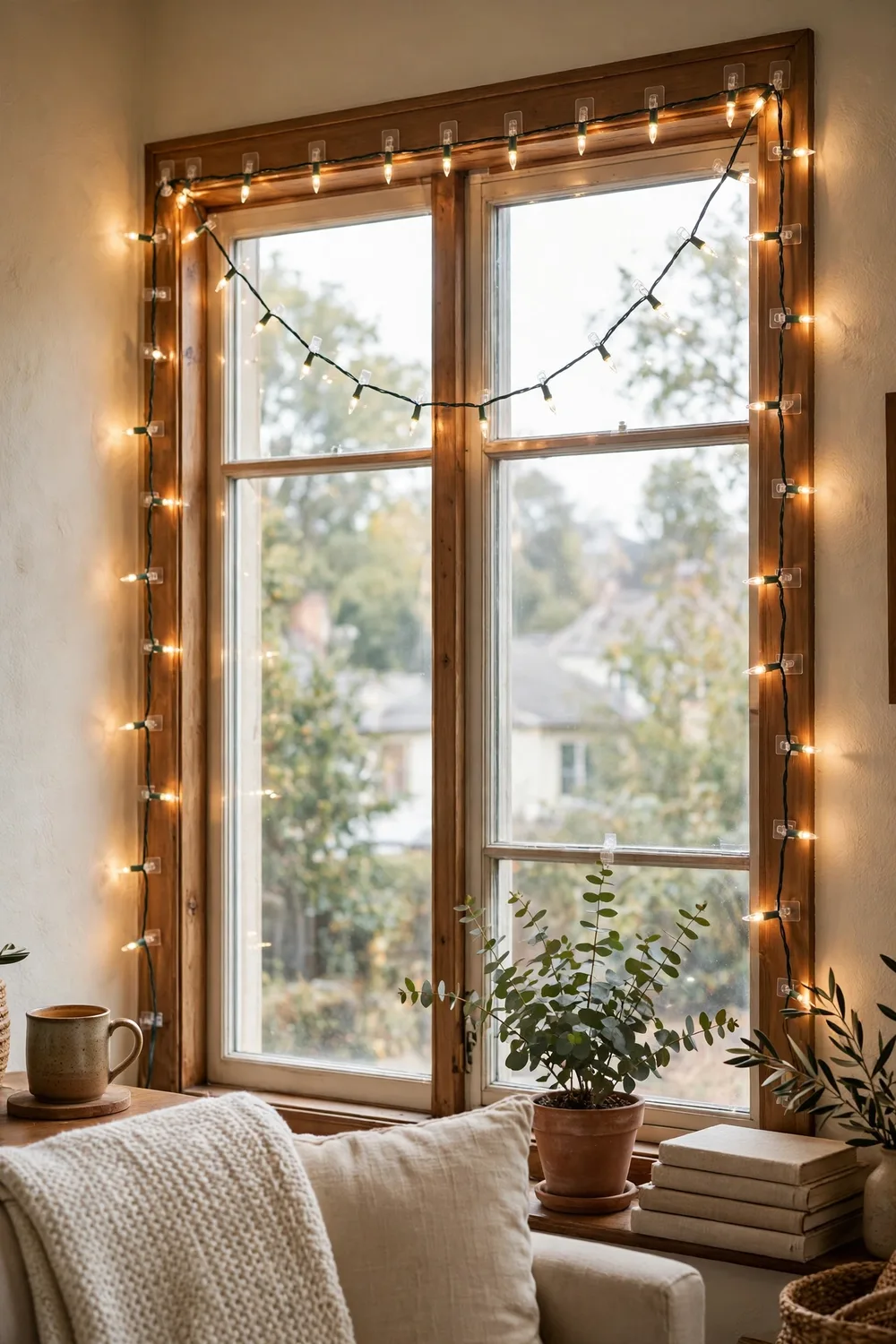
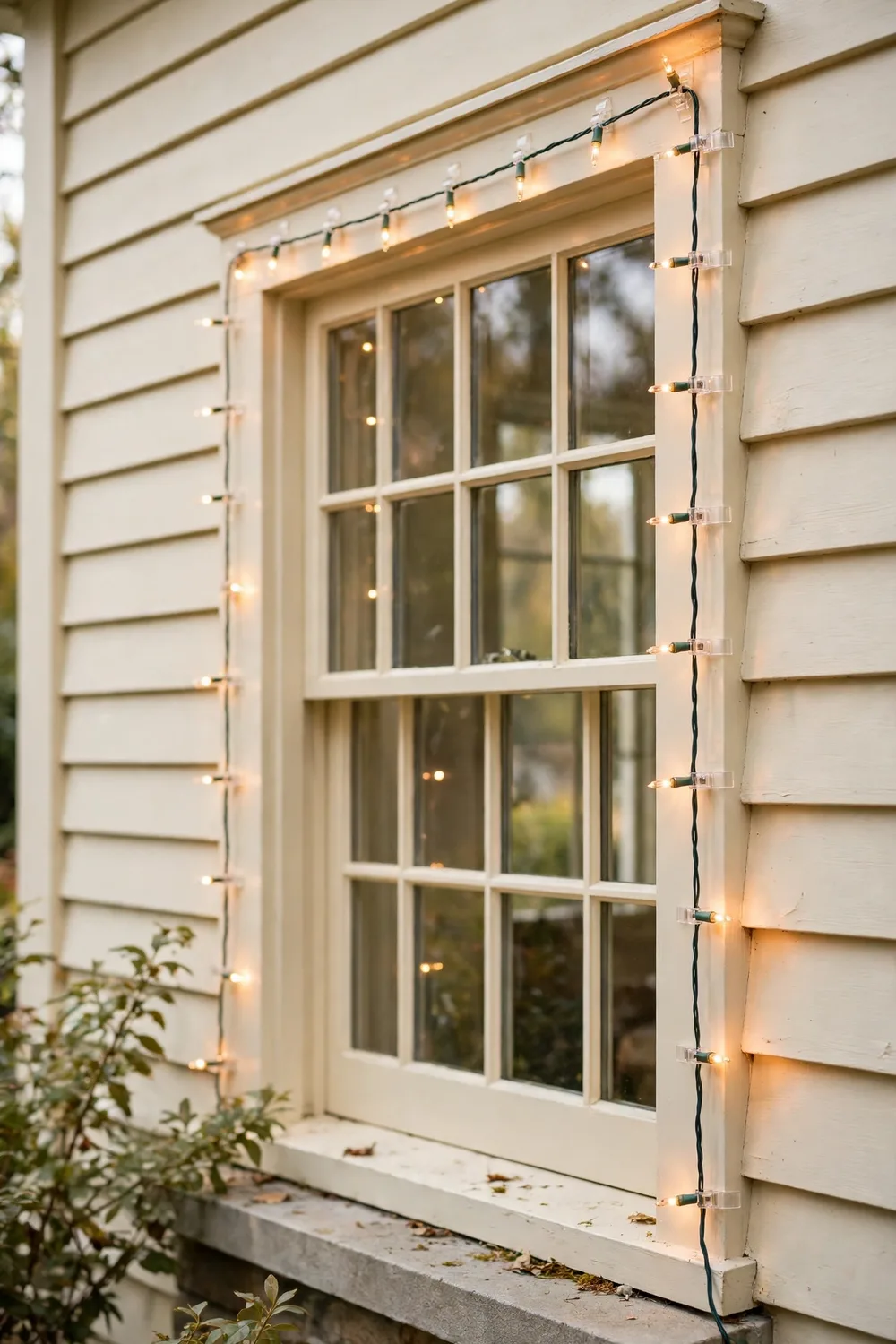
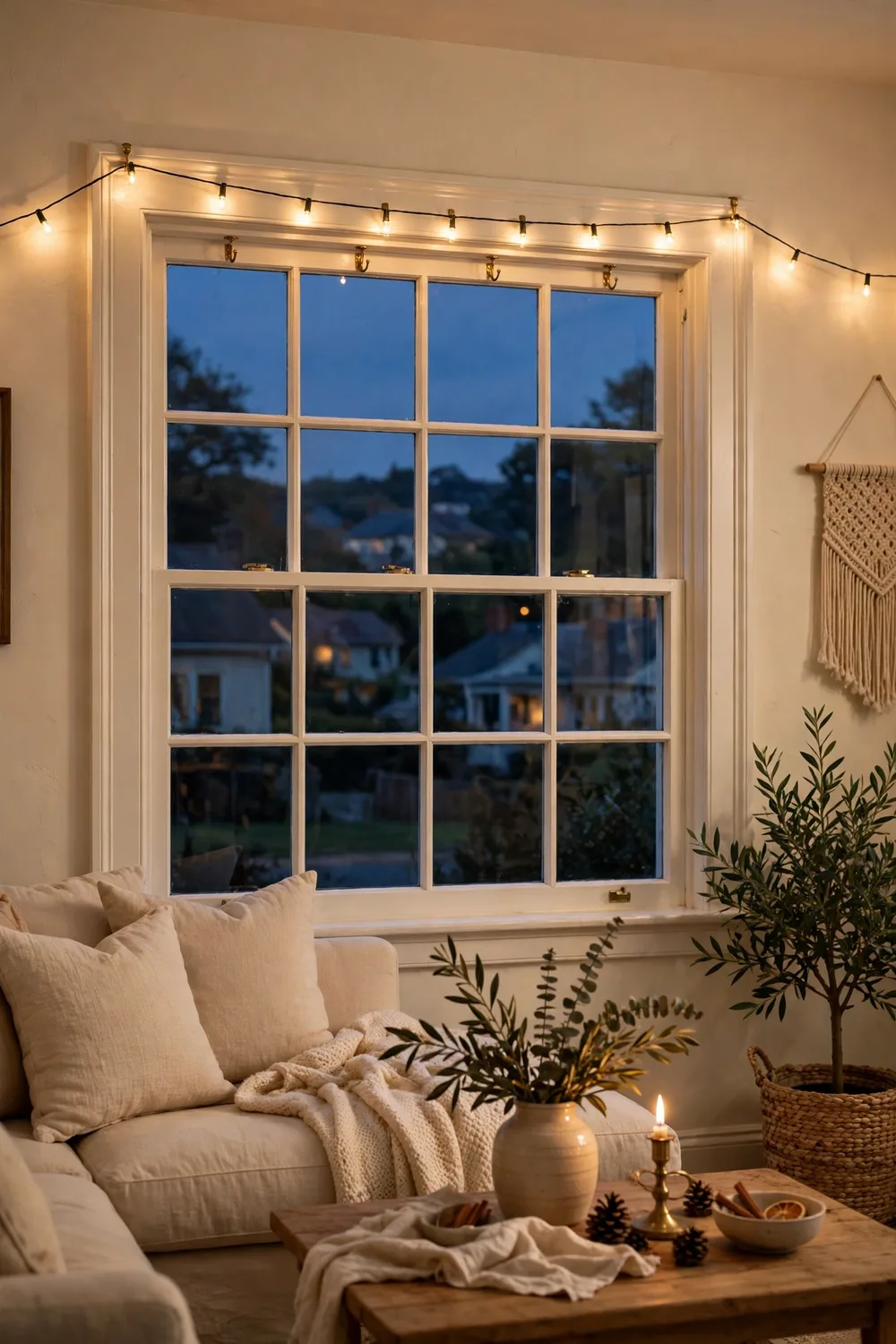
Outlining the frame is the simplest placement: lights follow the edge of the window, inside or outside the glass. It defines the window shape and looks neat from the street. Measure the frame before you buy lights, so you have enough length without a long loose end. Keep the outline even, with no sagging in the middle, and secure the lights at regular points so they stay in place in wind.
Filling the Glass
Filling the glass with a light curtain or a starburst pattern creates a glow that can be seen from inside and outside. Hang the strands from the top of the window, and let them hang straight down. This works well for a large living room window or a window you look at in the evening. Keep the lights away from curtains, and leave a gap so you can still open the window if you need to.
A Single Feature in the Window
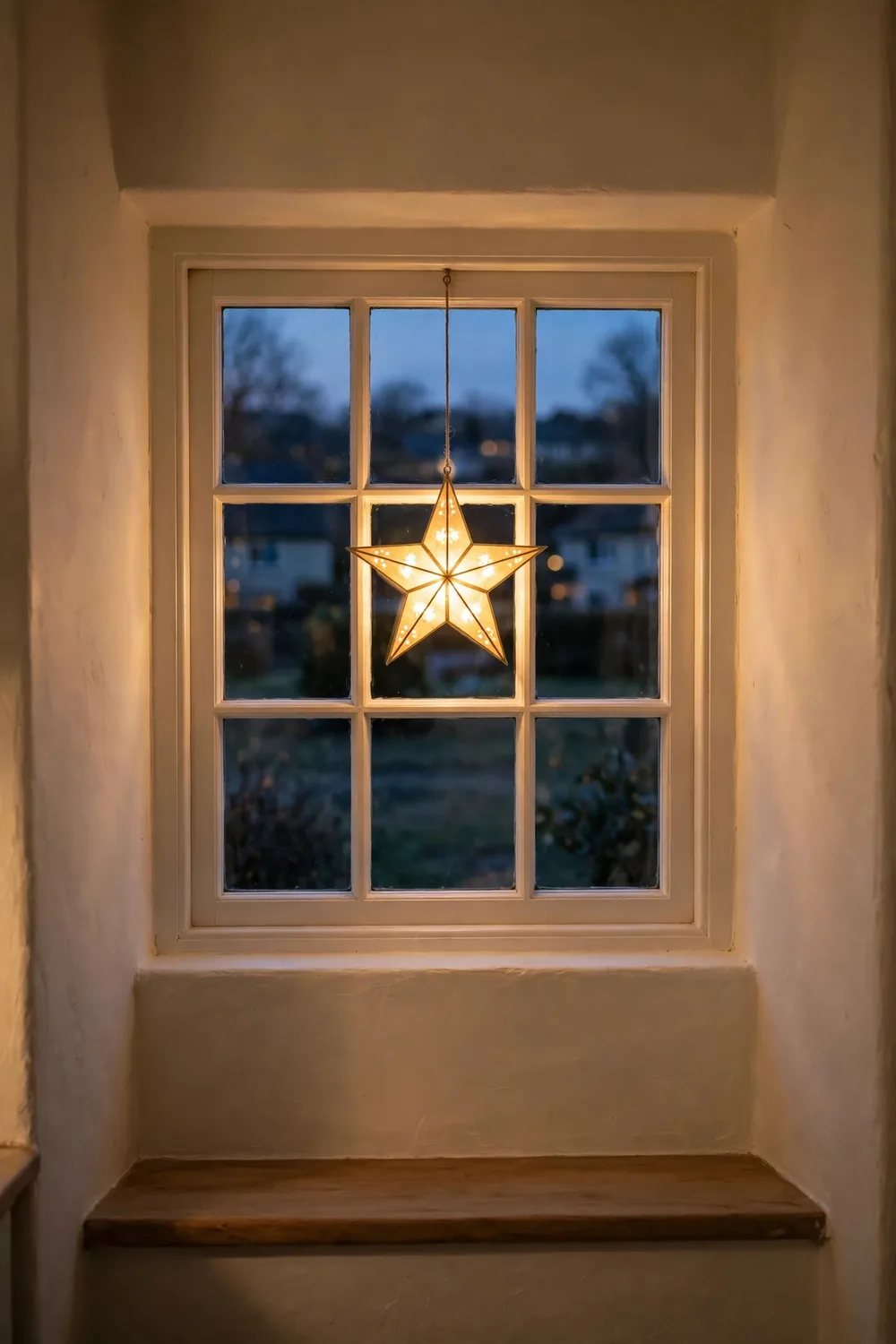
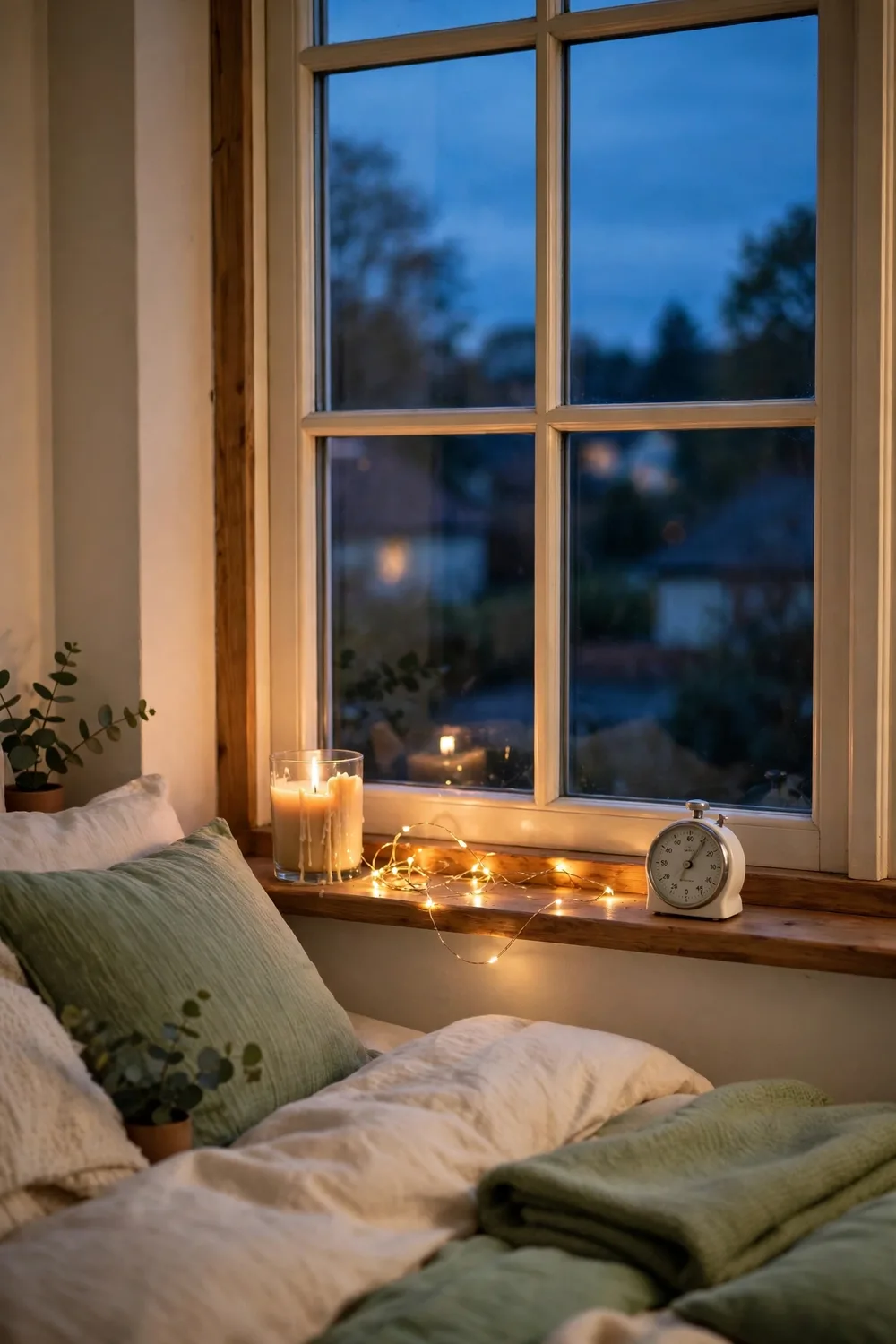
A single feature — a lit star, a small wreath with lights, or a candle in the window — can be enough for a small window or a bedroom. Place it in the center of the window, at eye level from outside, and keep the rest of the glass clear. This is a good choice for a small apartment, where a full outline might feel too much. For small spaces, choose one window to light and leave the others plain; the contrast makes the lit window stand out.
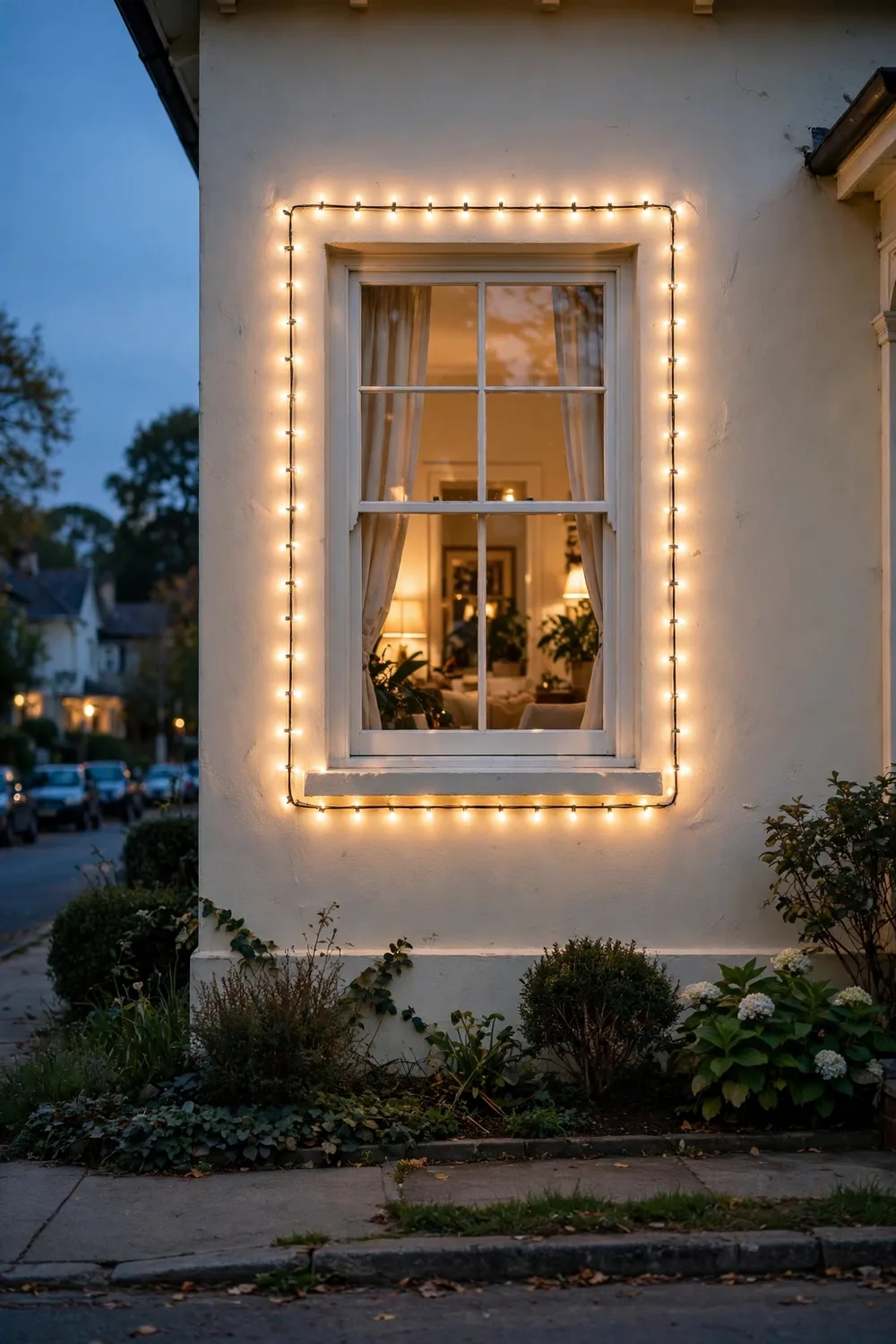
Hanging Methods That Stay Up
The most common problem with window lights is that they fall down. The fix is to choose a fixing suited to your window and to test it before the season starts.
Inside the Glass
Inside the glass, removable hooks and suction cups are the easiest options. Use small clear hooks on the frame, or suction cups on the glass itself, and check the weight rating before you hang a heavy string. Command-style removable hooks work well for light strings, as long as you follow the manufacturer’s instructions for cleaning the surface and for removal. Hang the lights in daylight, step back, and check that they are even before you plug them in.
Outside the Glass
Outside the glass, use clips made for outdoor lights, not nails or staples. Clips grip the frame or the gutter without damaging it, and they hold the lights in place in wind. Use outdoor-rated lights and cords outside, and keep connections off the ground and out of puddles. If you rent, check your building rules before you hang lights outside, and use a removable option that does not damage the frame.
Renter-Friendly Options
Renters can light a window without drilling or nailing. A tension rod inside the window frame can hold a light curtain, a string of lights can be draped over a curtain rod, or a suction-cup hook can hold a wreath with lights. A battery-operated string of lights needs no outlet and can be placed in a jar on the windowsill. Our guide to entryway wall decor ideas includes removable mounting ideas for lightweight pieces, which apply to window lights too. Always follow the manufacturer’s instructions for the hook or clip you use, and test it with the lights before you leave them overnight.
Safety and Outdoor Ratings
Safety matters more with window lights than with most Christmas decor, because lights involve electricity and, outside, weather. Use lights rated for the place you use them: indoor-rated lights inside, outdoor-rated lights outside. Do not use indoor lights outside, even for a short time, because moisture can damage them. Check every string for frayed cords, cracked bulbs, or loose connections before you hang it, and replace a damaged string rather than trying to repair it.
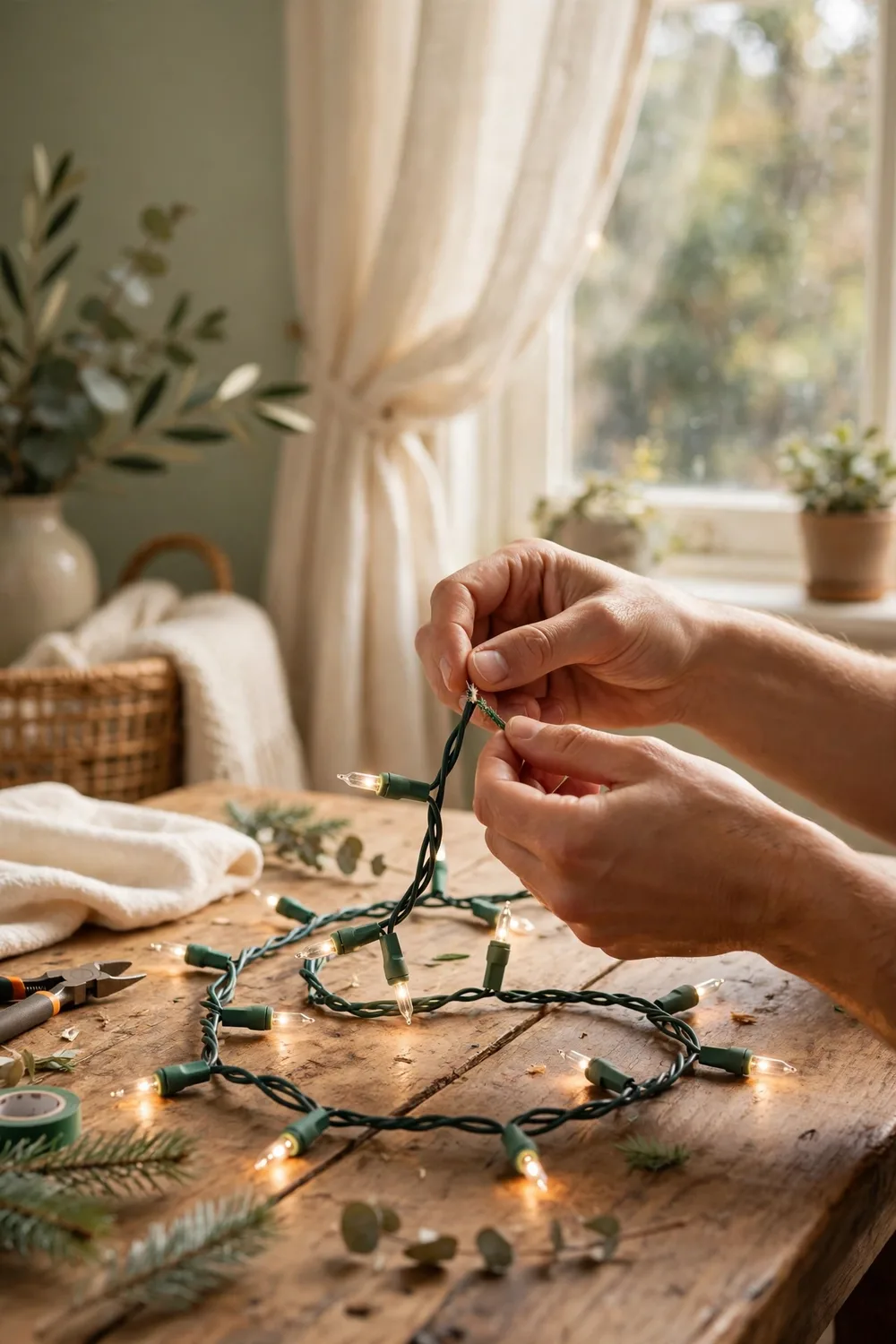
Follow the manufacturer’s instructions for how many strings you can connect together, and do not overload an outlet. Use a timer so lights turn on in the evening and off when you go to bed. Keep cords out of walkways, away from radiators and heaters, and away from curtains that could dry out or catch. Do not run a cord through a window that you need to close, because the window can pinch and damage the cord. If you need a ladder to reach an outside window, work in daylight, on dry ground, and with someone nearby if you can. If the window is high or hard to reach, keep your lights inside the glass or on a lower window instead.
Troubleshooting: Sagging, Gaps, and Timers
Sagging Lights
Sagging usually means the lights are not secured often enough. Add a hook or clip every few feet, so the weight is shared. If the string is too long for the window, do not let the extra length hang in a loop; coil it neatly behind a curtain or choose a shorter string. A taut, even line looks better than a long string with a dip in the middle.
Gaps and Dark Spots
Gaps usually mean a bulb has failed or a connection is loose. Check the string before you hang it, and replace any dead bulbs with bulbs of the same type. If a whole section is dark, check the connection between strings and make sure it is fully plugged in. Keep a few spare bulbs in the box with the lights, so you can fix a gap without taking the whole display down.
Timers That Do Not Work
Timers fail when they are not set correctly or when they are not rated for outdoor use. Read the timer instructions, set the on and off times in daylight, and test it for one evening before you rely on it. Use an outdoor-rated timer outside, and keep it off the ground and out of puddles. A simple mechanical timer is often more reliable than a complicated digital one, and it is easier to reset after a power cut.
Window Lights by Room
Different rooms suit different window lights. In the living room, a light curtain or an outline around the main window adds warmth to the evening. In the bedroom, a single candle or a short string of warm lights is enough, and a timer is important so the lights turn off when you sleep. In a child’s room, use battery-operated lights out of reach, and avoid any cord a child could pull. In the kitchen, a small lit wreath or a candle in the window adds a festive touch without taking counter space.
For entryway lighting ideas that work with window lights at the front door, see our guide to entryway lighting ideas. The entryway and the front windows should use the same light temperature, so the front of your home feels consistent from the street.
Budget and Storage
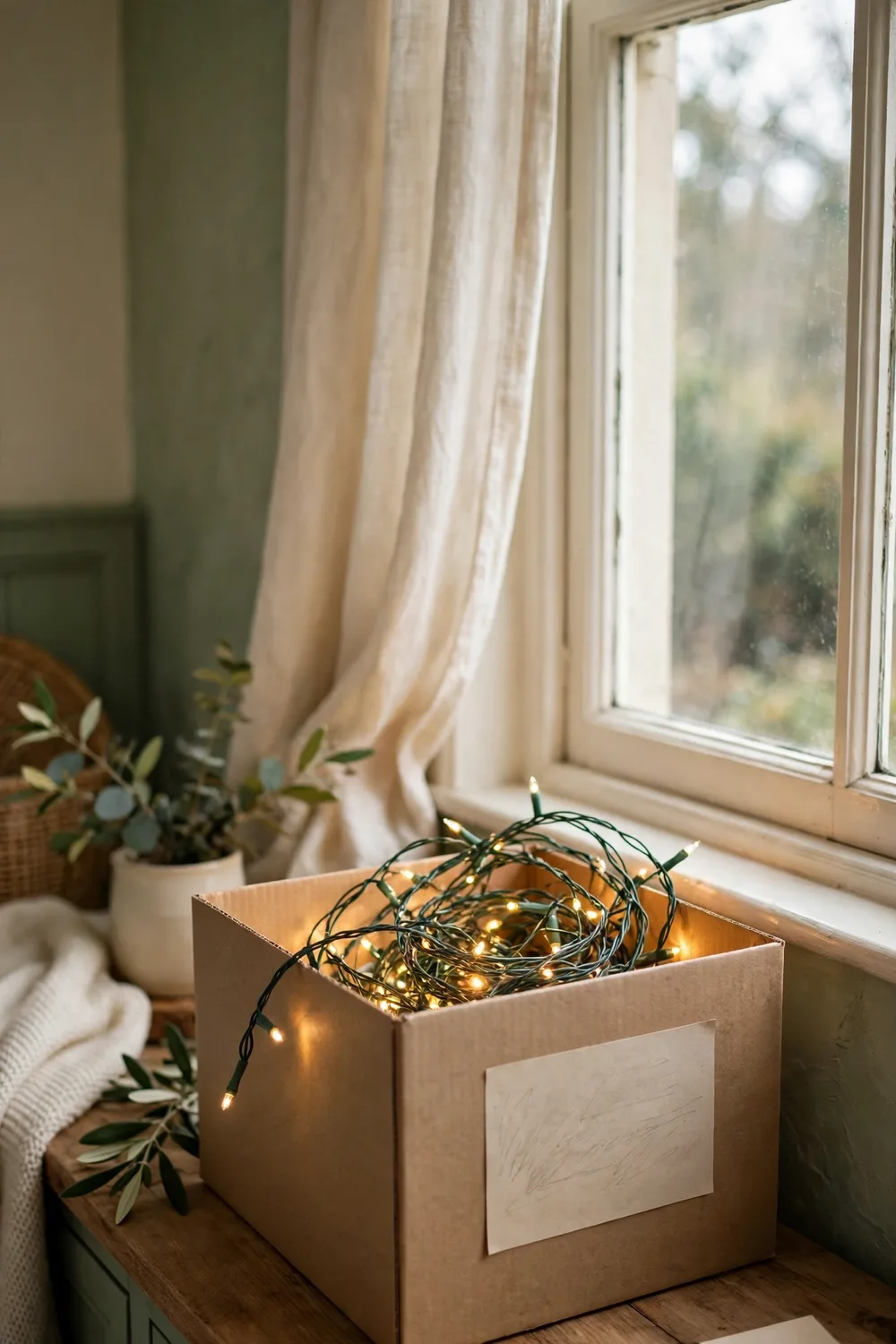
Window lights can cost very little if you buy one good set and reuse it. A set of warm white mini lights, a timer, and a pack of removable hooks will cover most windows. Avoid buying a different set for every window; one style, repeated, looks better and costs less. Store lights by window — label the box with the room and the window — and coil them loosely so they do not tangle. Check them before you store them, and replace any damaged string now, so you do not discover the problem next December.
Frequently Asked Questions
How do I hang Christmas window lights without nails?
Use removable hooks, suction cups, clips made for outdoor lights, or a tension rod inside the frame. Choose a fixing rated for the weight, follow the manufacturer’s instructions, and test it before you leave the lights overnight.
Should Christmas window lights go inside or outside the glass?
Either can work. Outside lights are more visible from the street but need outdoor-rated lights and clips. Inside lights are easier to hang, safer in bad weather, and visible from both inside and outside.
How do I stop Christmas window lights from sagging?
Secure the string at regular points with hooks or clips, so the weight is shared. Do not let extra length hang in a loop, and choose a string that fits the window without a long loose end.
Simple, Secure, and Consistent
Christmas window lights work best when they are simple, secure, and consistent. Choose one style, light one or two windows well, use a fixing suited to your home, and use a timer. For the rest of the house, read our outdoor Christmas decorations guide, our Christmas apartment decor guide, and our whimsy Christmas decor guide.