Laundry / Laundry Room Decor
Decorating the Laundry Room with Useful, Simple Details
Decorating the laundry room becomes easier when the useful parts lead the design. A clear folding surface, a convenient place for supplies and a small amount of wall or shelf decoration can make the room feel more settled without interfering with the work that happens there.
Start with the existing layout. You do not need new appliances, a different sink or a full cabinet makeover to improve the room’s character. Choose a few details that support your laundry routine, then leave enough space for baskets, open doors and ordinary movement.
Give a small room one clear decorative direction
A compact laundry room can feel coherent with a restrained palette and one personal accent. The stacked-appliance example uses the available wall and counter space lightly, leaving the work surface recognizable instead of covering it with accessories.

Choose a starting point already present, such as a cabinet color, tile or wood finish. Repeat it in a towel, basket or picture rather than introducing several unrelated themes. Strong color can provide much of the decoration by itself.
Do a normal laundry task before adding more. Carry a basket in, sort a load and set aside something that needs attention. If the decorative group occupies the only useful landing place, reduce it. A small room benefits most from details that remain comfortable when the appliances and supplies are actually in use.
Put wall art outside the working area
Laundry room wall decor ideas can be as simple as a few related prints on a clear wall. The botanical pictures shown here add color and rhythm while staying separate from the appliance controls and main work surface.

Choose materials and mounting suitable for the room’s conditions. Keep frames out of splash areas and away from any location the appliance instructions require to remain clear. This is a decorating project, not a reason to cover ventilation or service access.
Use paper templates to test the arrangement. A narrow wall might need one vertical piece rather than a long row. Pick art you enjoy seeing repeatedly; a laundry room does not need themed slogans or a collection of small signs to feel personal. Leave enough open wall that the chosen pieces remain distinct.
Mix useful baskets with a little open shelf space
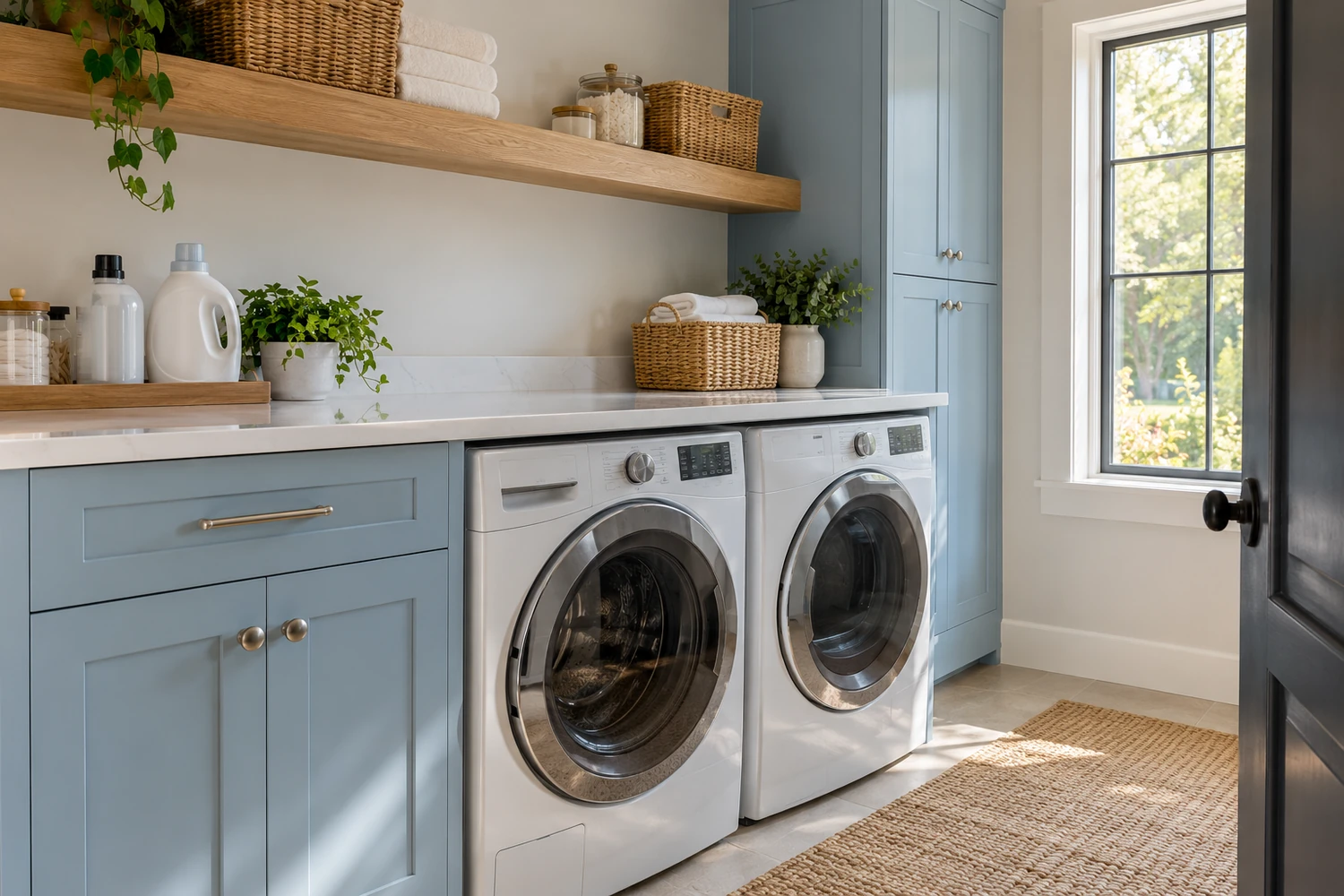
Practical laundry room shelf decor begins with contents the room genuinely needs. The oak shelf pictured holds a few linen baskets and a small accent, with the storage groups remaining easy to distinguish.

Choose baskets for their intended contents and the shelf’s capacity, following the installation and load instructions. Keep frequently used groups within comfortable reach. Do not put a heavy supply collection overhead merely because matching baskets look attractive there.
Leave room to lift a basket out without catching the shelf above or a neighboring object. A small plant or ceramic piece can add character when it does not obstruct that movement. If the shelf is already fully occupied by useful categories, let the baskets’ texture provide the decorative interest instead of forcing in another ornament.
Use a tray for a limited active supply group
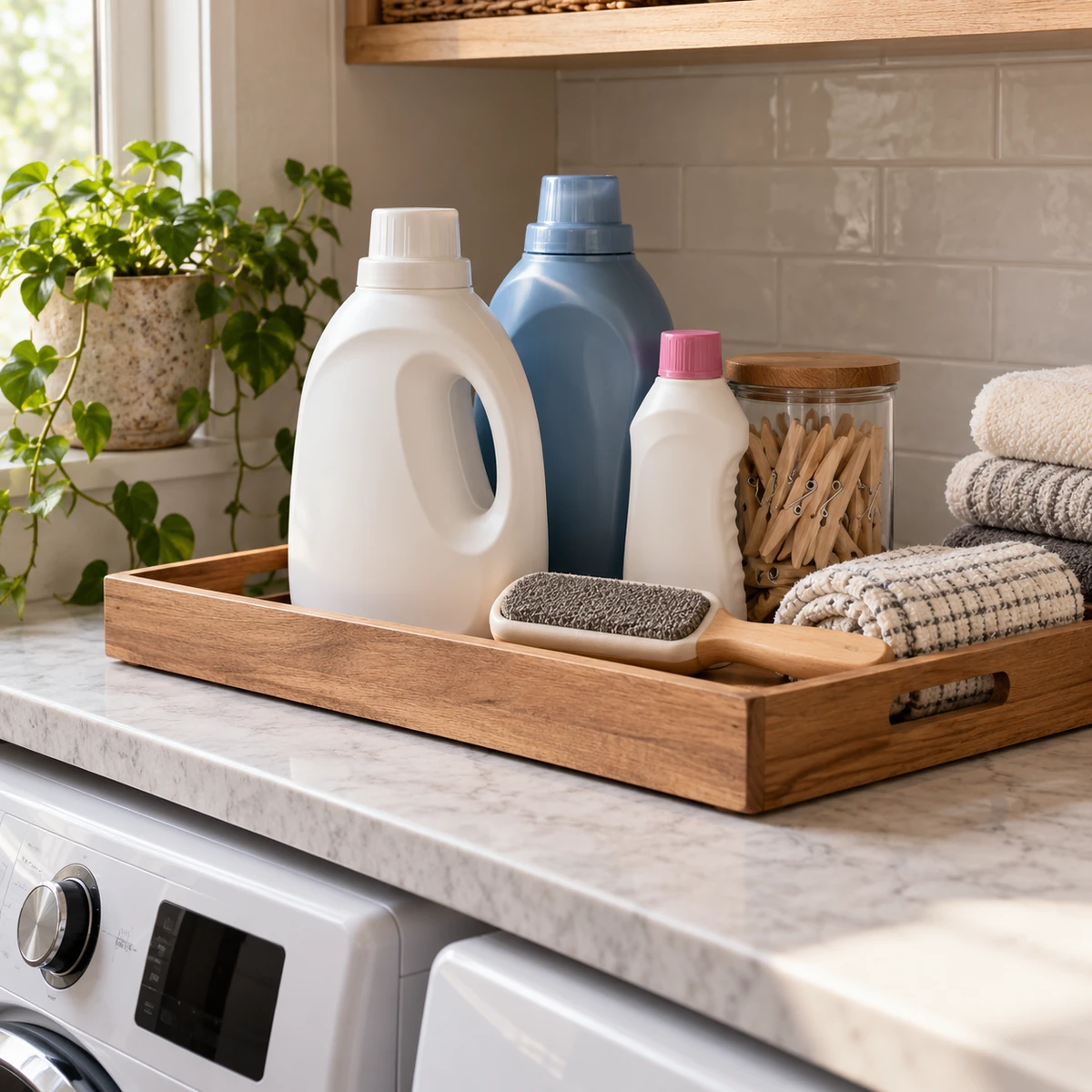
A tray can contain a few currently used supplies and make the counter easier to wipe. The pictured group keeps closed containers together beside a brush and folded cloths, rather than scattering small pieces across the whole surface.
Keep products in their original labeled packaging and follow their storage directions. Choose the tray for the actual containers, including handles and caps. Move it if it interferes with loading or folding, and return supplies to appropriate restricted storage when needed.
This is an optional working arrangement for a suitable household, not a universal recommendation to display laundry chemicals. If children or others who need protection can access the area, the product’s safe storage requirements take priority over an attractive countertop group. Decorative containment does not make a product safe to leave accessible.
Repeat color through a washable textile
A rust-colored textile can connect warm cabinetry and pale walls without adding more objects to the counter. The pictured room uses color at floor and towel level, creating a relationship between useful surfaces.
If you add a floor textile, check that it suits the location, remains stable and does not interfere with doors or appliance access. Follow its care instructions and the flooring guidance. A washable label is only useful if the item can be cleaned with the equipment you have.
You can also introduce color through a small towel or basket liner when floor space is too limited. Keep the palette manageable rather than repeating the accent everywhere. One or two visible details can make the room feel considered while leaving the appliances and working areas visually calm.

Make closed supply storage part of the design
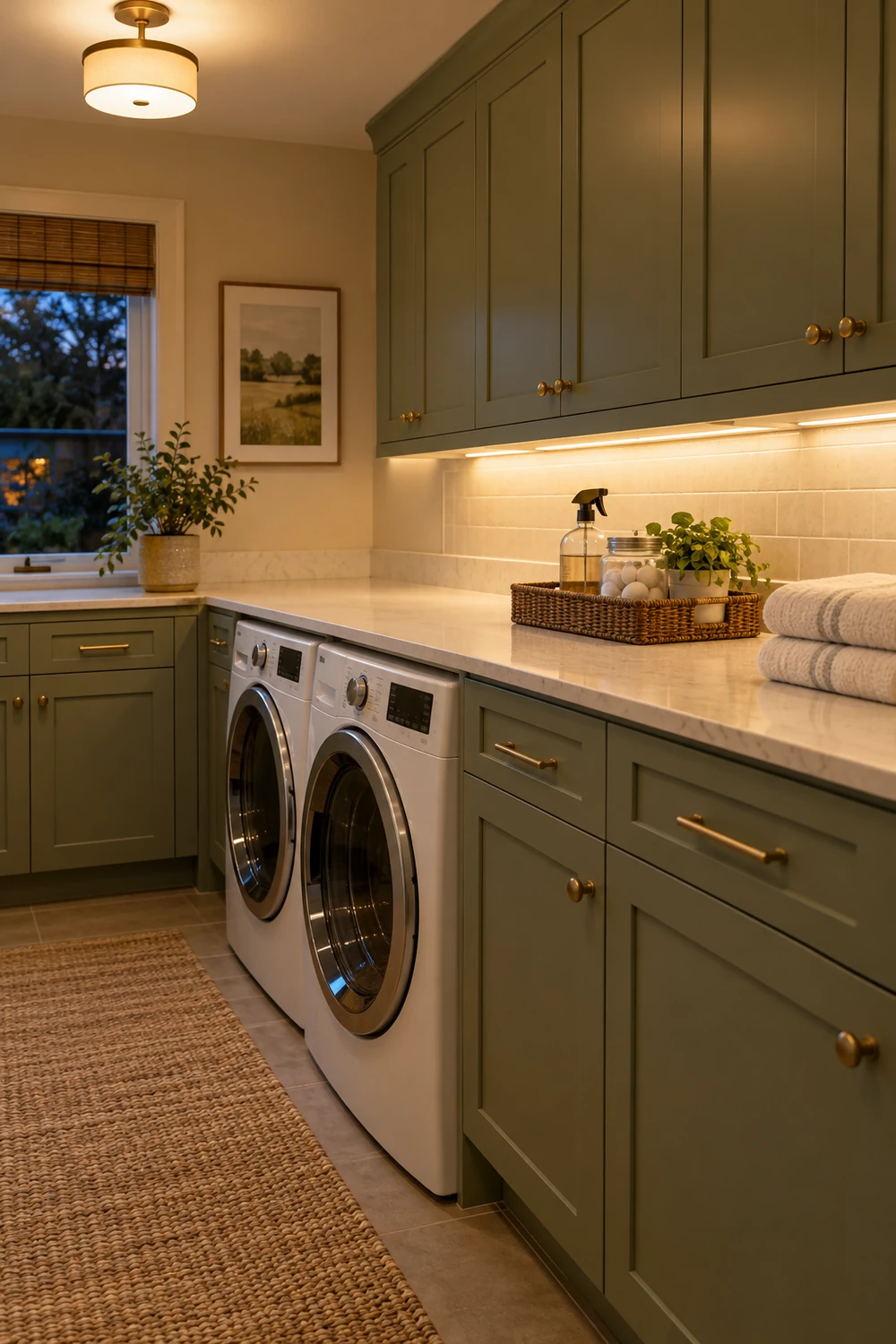
Closed cabinetry can provide a quieter view than a room full of exposed products. The sage cabinet pictured contributes color while keeping the main supply collection behind a door.
For liquid laundry packets, the CPSC advises keeping them sealed in their original packaging and locked up, out of children’s sight and reach. A high shelf or decorative jar is not a substitute for that guidance. Follow storage directions for other products as well.
The photographed latch illustrates restricted access; the image cannot establish that a particular cabinet is childproof or suitable for every household. Select and use an appropriate storage system for your circumstances. Let the cabinet finish, hardware and surrounding wall provide decoration while the supplies remain stored according to their safety requirements.

Keep the utility sink area easy to use
A utility sink can have a small, useful accessory group without becoming another display surface. The pictured caddy holds a limited set near the basin while the surrounding counter remains available.

Choose accessories that tolerate their intended use and can be cleaned appropriately. Keep the faucet controls and working edge clear, and move decorative pieces away if they make washing or rinsing awkward. Store chemicals according to their labels rather than treating every bottle as a sink-side accessory.
Repeat one material from elsewhere in the room if you want a connection: a simple basket, a restrained tray or a compatible finish may be enough. You do not need to style every corner. A clear, functional sink can balance a more decorative wall elsewhere in the room.
Use a hanging rail without losing the folding surface
A secured rail can give suitable garments a temporary hanging place. The pictured arrangement spaces the hangers and keeps the shirt from covering the entire counter below.
Follow the rail’s mounting and load instructions and the garments’ care labels. Check the longest item you normally hang, including how it affects access to the folding area. A rail placed too low may turn useful counter space into a place you can no longer reach.
Keep the hanging group limited to the current task rather than letting it become permanent overflow from a clothing closet. Remove finished items promptly so the rail remains available for the next load. The room feels more organized when each stage has a destination instead of several unfinished loads sharing one surface.

Add one vintage detail if it suits the room
A single vintage washboard can introduce history and texture without turning the laundry room into a themed collection. The pictured accent sits within an otherwise practical arrangement of cabinets and a work surface.
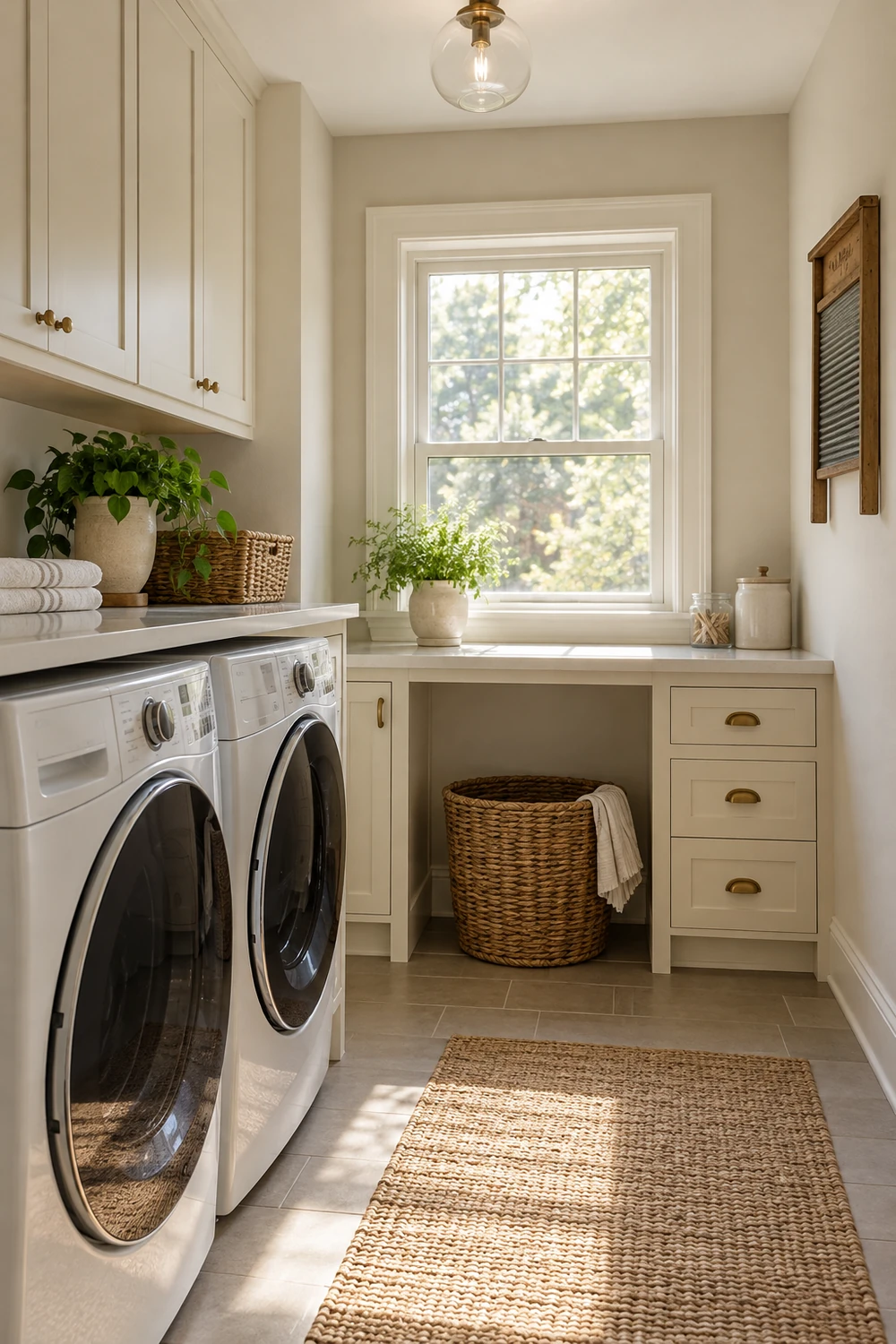
Choose a piece you enjoy and check its condition before displaying it. Keep rough, unstable or difficult-to-clean objects away from clothing and active work areas. Mount or position the piece appropriately for its weight and location.
Let it be an accent rather than the beginning of several competing vintage signs, containers and tools. If the room already includes patterned flooring or detailed cabinetry, a quiet wall may provide a better balance. A decorative reference to laundry history does not need to change how you store products or use modern appliances.
Keep farmhouse texture brief and useful
Reclaimed-looking wood, woven baskets and simple ceramics can bring warmth to a laundry room. The pictured shelf uses those textures while preserving a clear relationship to the cabinetry and appliances below.

Select shelving that is suitable for the room and installed for its intended load. Decorative character should not come at the expense of a stable, cleanable surface. Avoid rough edges that could catch textiles or a finish unsuitable for the location.
Use one or two textures to establish the mood, then let the useful objects fill the shelf. Farmhouse styling can remain a small material choice rather than a full-room theme. If baskets already hold the working categories, their repeated texture may be all the shelf decoration the room needs.
Map supplies, folding and hanging as separate roles
A simple workflow plan helps you decide where decoration can comfortably sit. Mark the place supplies return, the area you need for folding and any temporary hanging location. Keep those roles readable before assigning the remaining space to accents.
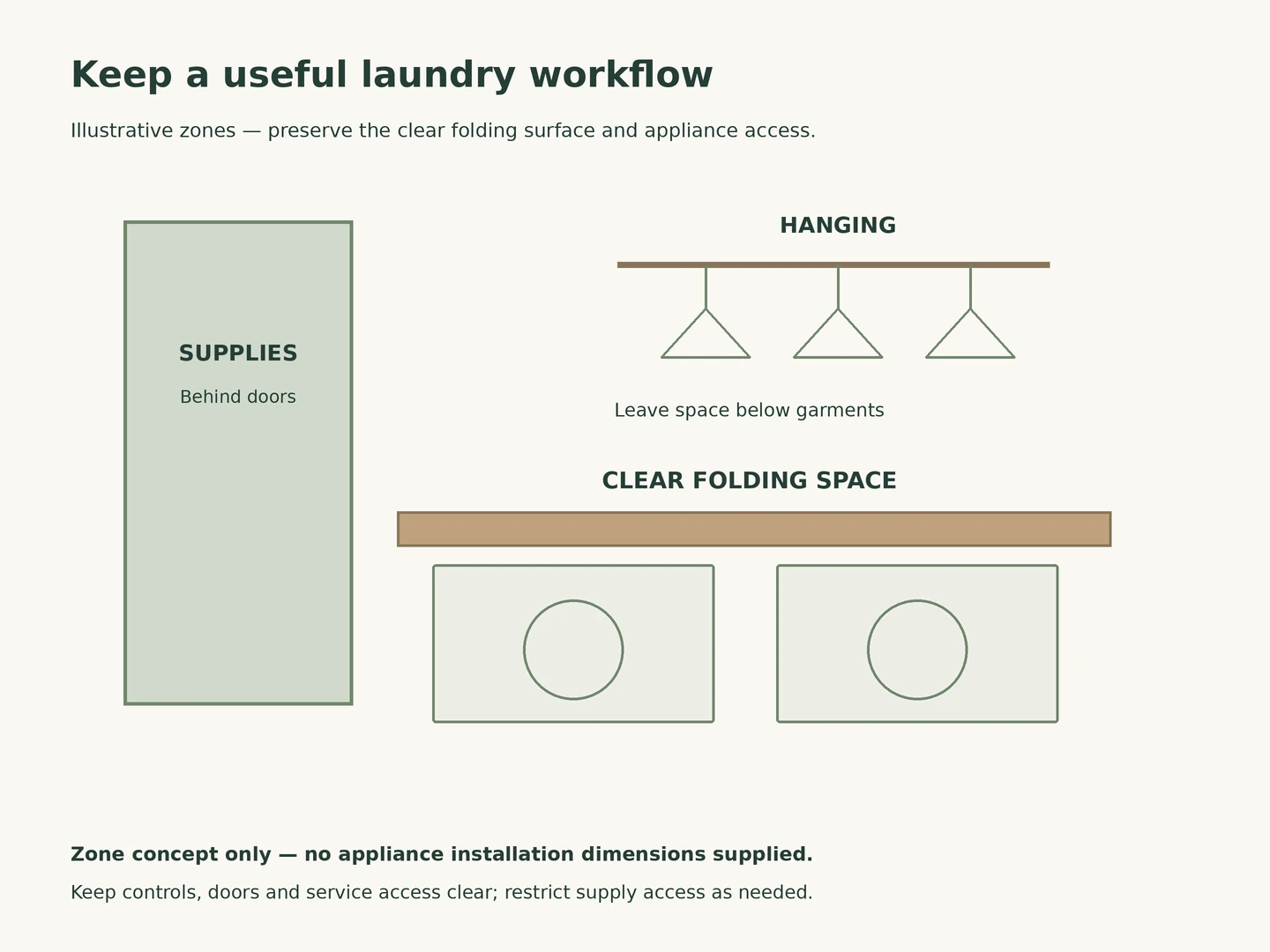
The diagram is a zone concept, not an appliance installation plan. It supplies no measured clearances. Follow the exact appliance manuals and relevant professional advice for installation, ventilation, access and servicing.
Move clean household linens to their long-term home instead of keeping every finished load here. The linen closet guide provides a separate shelf plan for that destination. Clear category planning also appears in organizing a pantry cabinet, although laundry products and food require entirely separate storage and product-specific handling.
Check the room with appliance doors open
A decorated room still needs to work during laundry. The open-door example shows why you should assess the aisle with the washer in use, not only with every front neatly closed.
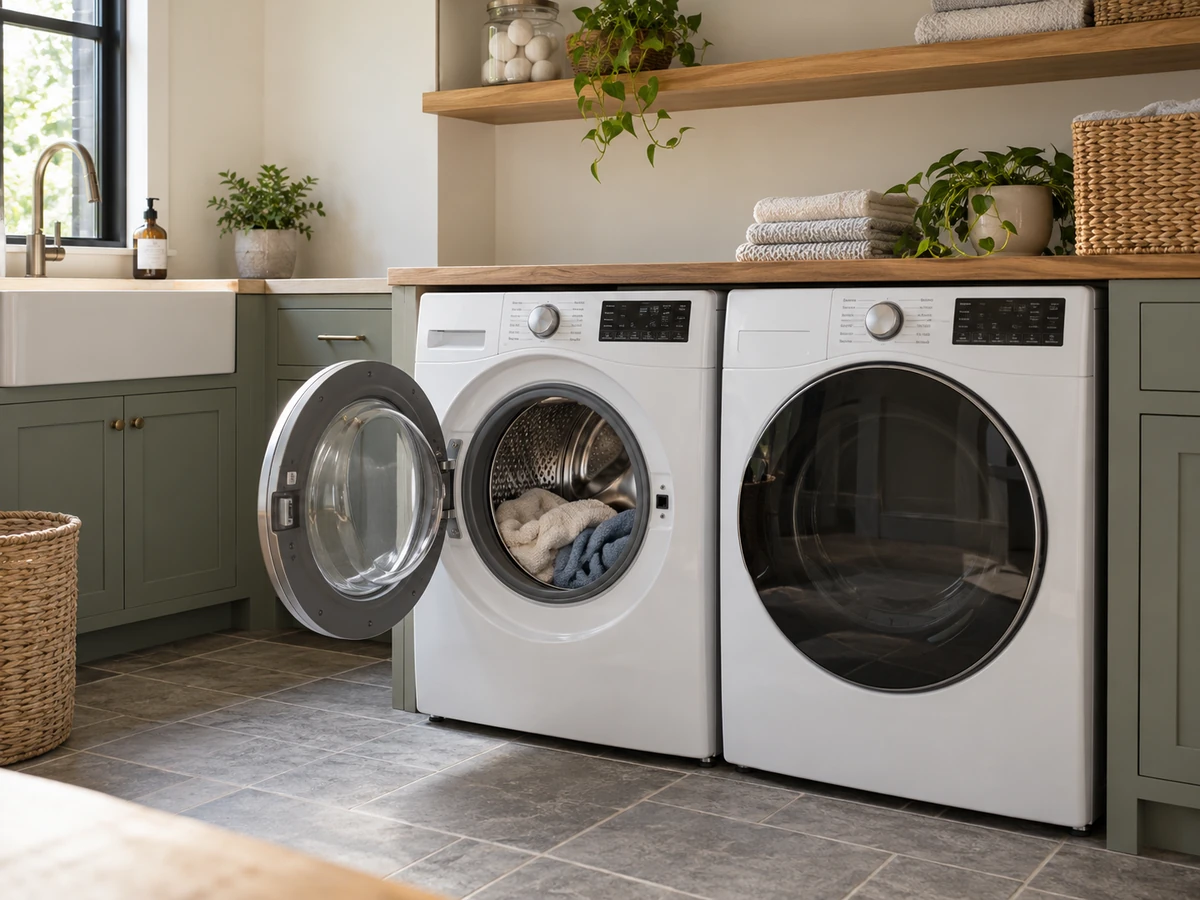
Open doors through their normal movement and carry a loaded basket to the work area. Check that accessories, floor textiles and storage containers do not obstruct controls, access or the route. Follow the appliances’ actual clearance requirements rather than estimating from a photograph.
If something gets moved every time you load the washer, give it a better home or remove it. Temporary work should not require dismantling the decorative arrangement. The most useful finishing details are the ones that stay comfortably in place while the room performs its everyday tasks.
Review the room after dark
Evening light changes how cabinet colors, shelf textures and framed art look. The pictured room uses warm work-area illumination while keeping the counter readable and the main route clear.
Switch on the lighting you normally use and try a simple task, such as sorting or folding. If a working area is poorly lit, address it with an appropriate lighting solution rather than adding decorative objects to distract from the problem. Follow fixture instructions and use qualified help where installation requires it.
When deciding how to decorate a laundry room, finish by removing what does not earn its place. Keep a clear work surface, a small connected palette and useful storage that is easy to restore. That approach makes the room welcoming without making laundry itself more complicated.