Entryway / Wall Decor
Entryway Wall Decor Ideas for Blank and Narrow Walls
A blank entrance wall does not always need a large arrangement. It needs a clear purpose and a relationship to the doorway. Art can give the arrival view a focal point, a mirror can support a last check before leaving, and hooks can make daily belongings part of a useful composition.
The best entryway wall decor ideas consider the wall from several angles: approaching the front door, stepping inside and passing through toward the next room. Start with one main element, then add only what fits comfortably around it.
Plan the wall before choosing individual pieces
Measure the usable wall area between trim, openings and controls. Mark the door’s movement and consider what people carry past it. A wall may look generous from the front while having very little practical room for projecting accessories.
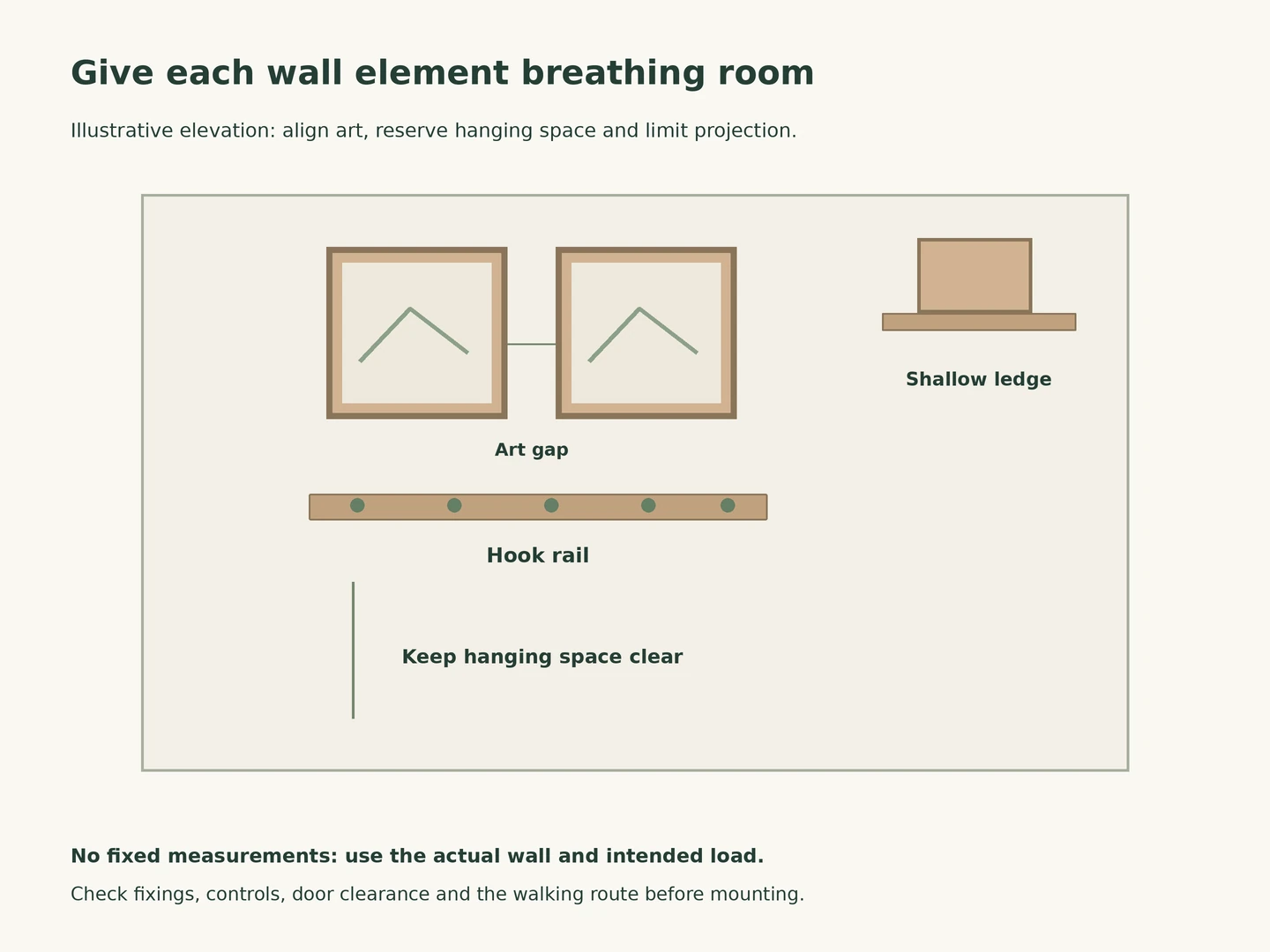
The diagram shows how art, hooks and a shallow ledge can have separate roles without filling every part of the wall. It is illustrative and supplies no fixed hanging heights or spacing measurements.
Use paper templates for frames and a temporary outline for hooks or ledges. Include the space occupied by hanging coats and bags, not just the hardware. Walk through the entrance with those outlines in place. Choosing an arrangement that works in movement is easier than correcting a crowded wall after everything has been installed.
Give a narrow wall one vertical artwork
A single tall piece can make a slim wall feel considered without requiring several small objects. The clay-colored example uses a vertical landscape to relate to the wall’s shape while leaving the surrounding trim readable.

Choose the frame by its outside dimensions rather than the artwork’s printed size. A broad mat and heavy frame can change the proportion substantially. Test the outline from the doorway and from the adjoining room before deciding on placement.
Small entryway wall decor ideas often benefit from this restraint. A clear single image gives the eye somewhere to land without turning the narrow passage into a gallery corridor. Let the wall color and frame material contribute to the arrangement, so you do not need another accessory to make the space feel finished.
Keep a gallery wall edited and connected
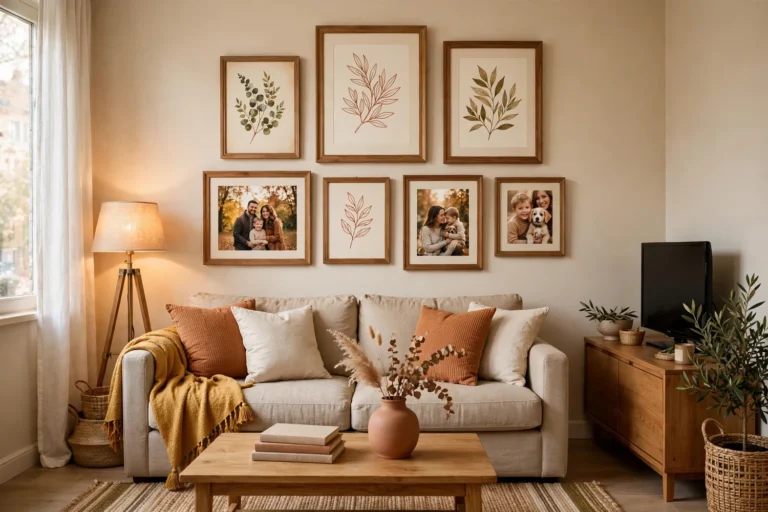
A gallery grouping works when the pieces feel related and the overall outline belongs to the available wall. The pictured five-frame arrangement combines different sizes while preserving open wall around the group.
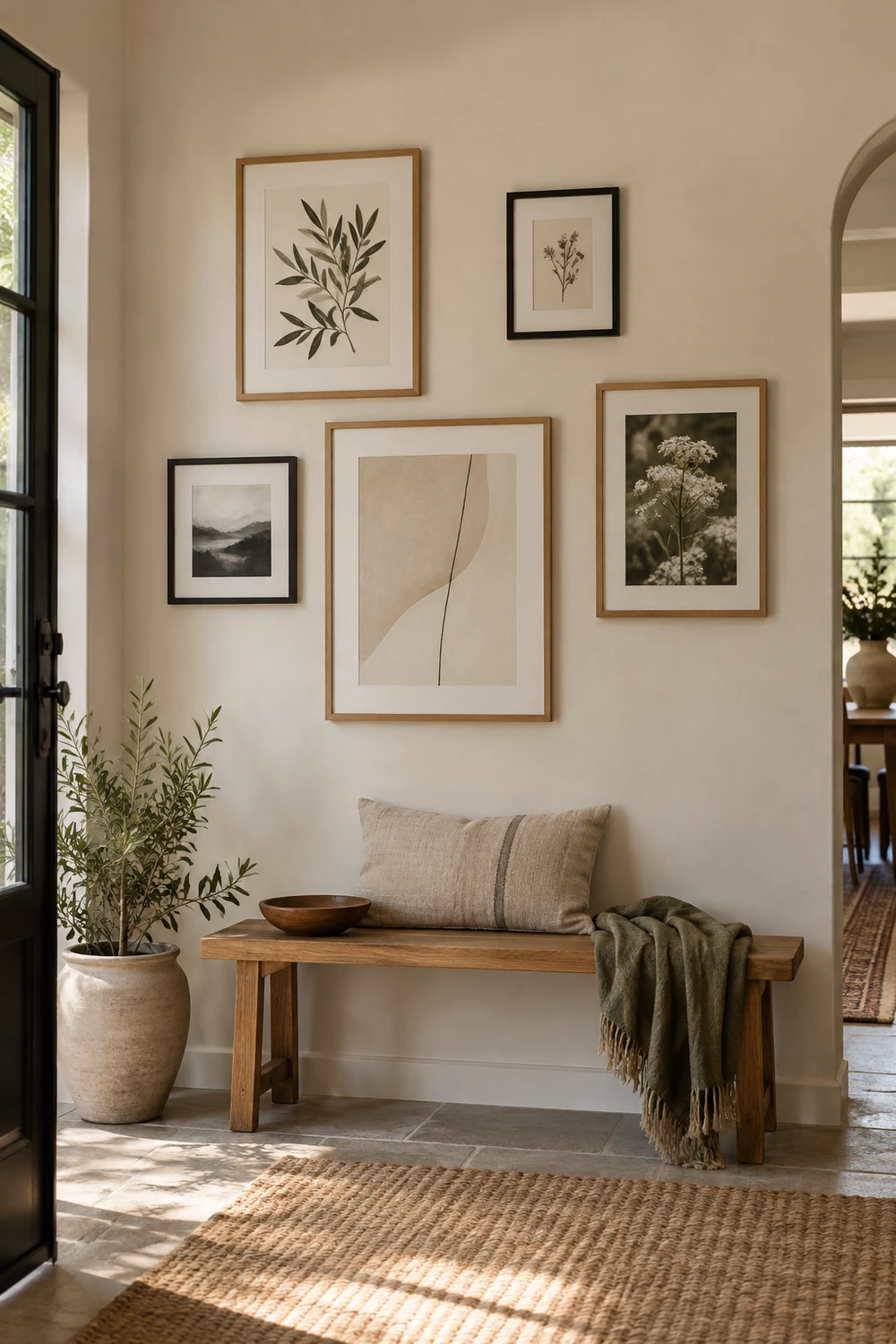
Lay the frames out on the floor first. Choose a connection, such as a restrained palette, similar subject matter or related frame materials. They do not need to match exactly, but each should have a reason to join the group.
Transfer the layout to paper templates and look at it as a whole. Avoid expanding the arrangement simply because another small picture is available. A bench beneath the group may provide context, but the wall composition should remain legible without turning this into a full furniture-styling project. Leave space where someone naturally stands, sits or moves past.
Stack two related prints on a slim section
Two vertically stacked pictures can suit a wall that is too narrow for a wide horizontal group. The blue-wall example uses related landscapes and similar frames to create a simple column.

Choose one alignment approach and make it deliberate. Frames of similar width can share a centerline; different sizes may look more settled when one edge lines up. Test both with templates rather than relying on a universal rule.
Keep the gap visually connected to the frame scale and the surrounding wall. There is no need to infer a measurement from the photograph. Look at the pair from normal viewing distance, including through the doorway. If the two images seem unrelated, adjust their spacing or choose a stronger connection in subject, color or frame finish.
Use a round mirror as a clear focal point
A round mirror can soften the vertical and horizontal lines around an entrance. The brass-framed example provides one distinct shape above a quiet lower area, rather than competing with several nearby artworks.
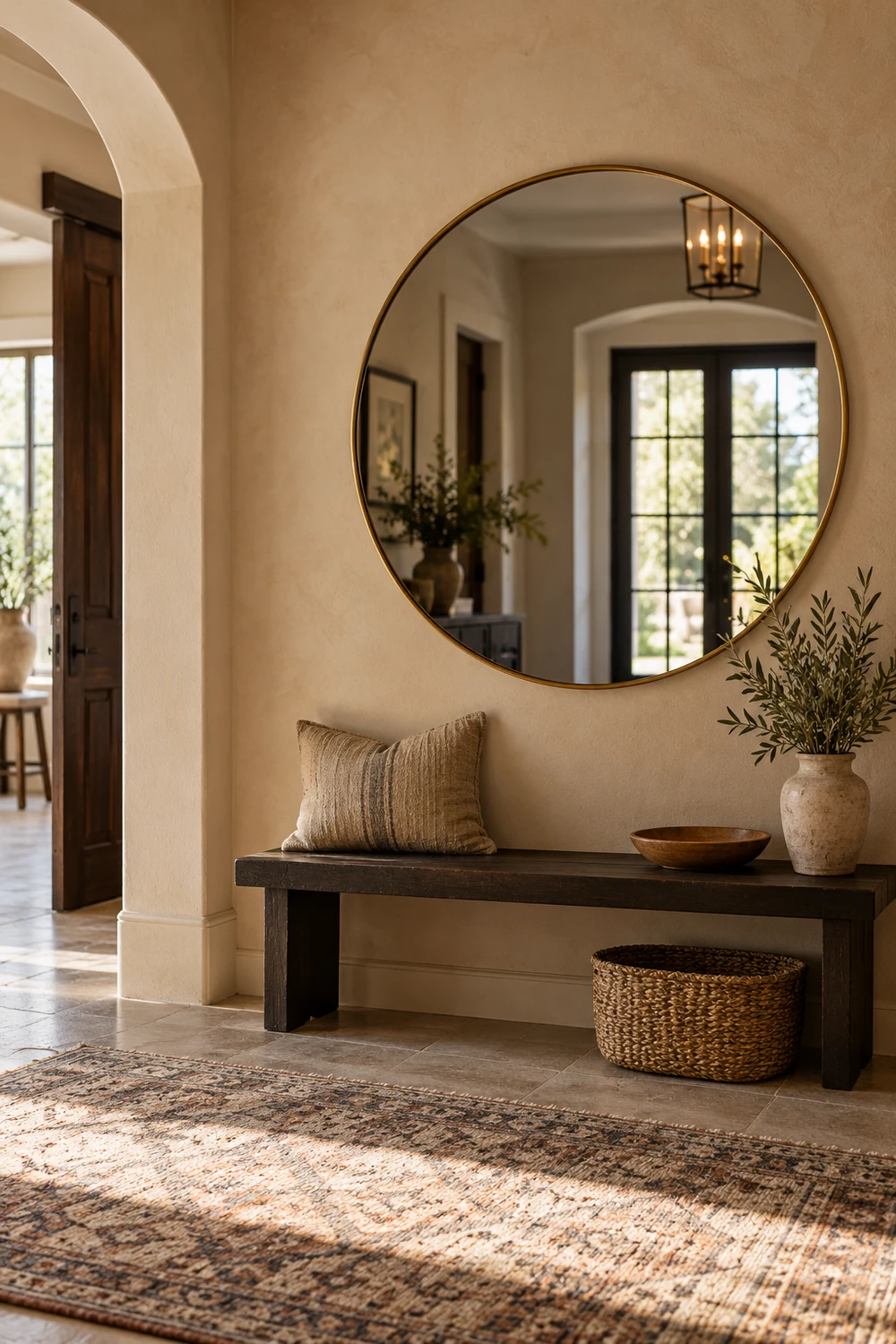
Check the reflected view before mounting. Stand where the mirror will be used and notice whether it reflects a pleasant part of the room, a bright light or a busy storage area. Move a paper outline to test the visual position, then confirm the real reflection with the mirror safely supported.
Follow the mirror’s mounting requirements for its weight and your wall construction. Its shape does not make it suitable for every surface. Choose the location for actual use as well as appearance, particularly if several household members need a comfortable view.
Choose a slim rectangular mirror for a longer view
A narrow rectangular mirror can fit beside a door or within a limited wall section. The oak-framed example uses vertical proportion to provide a longer reflected view without occupying a broad stretch of wall.
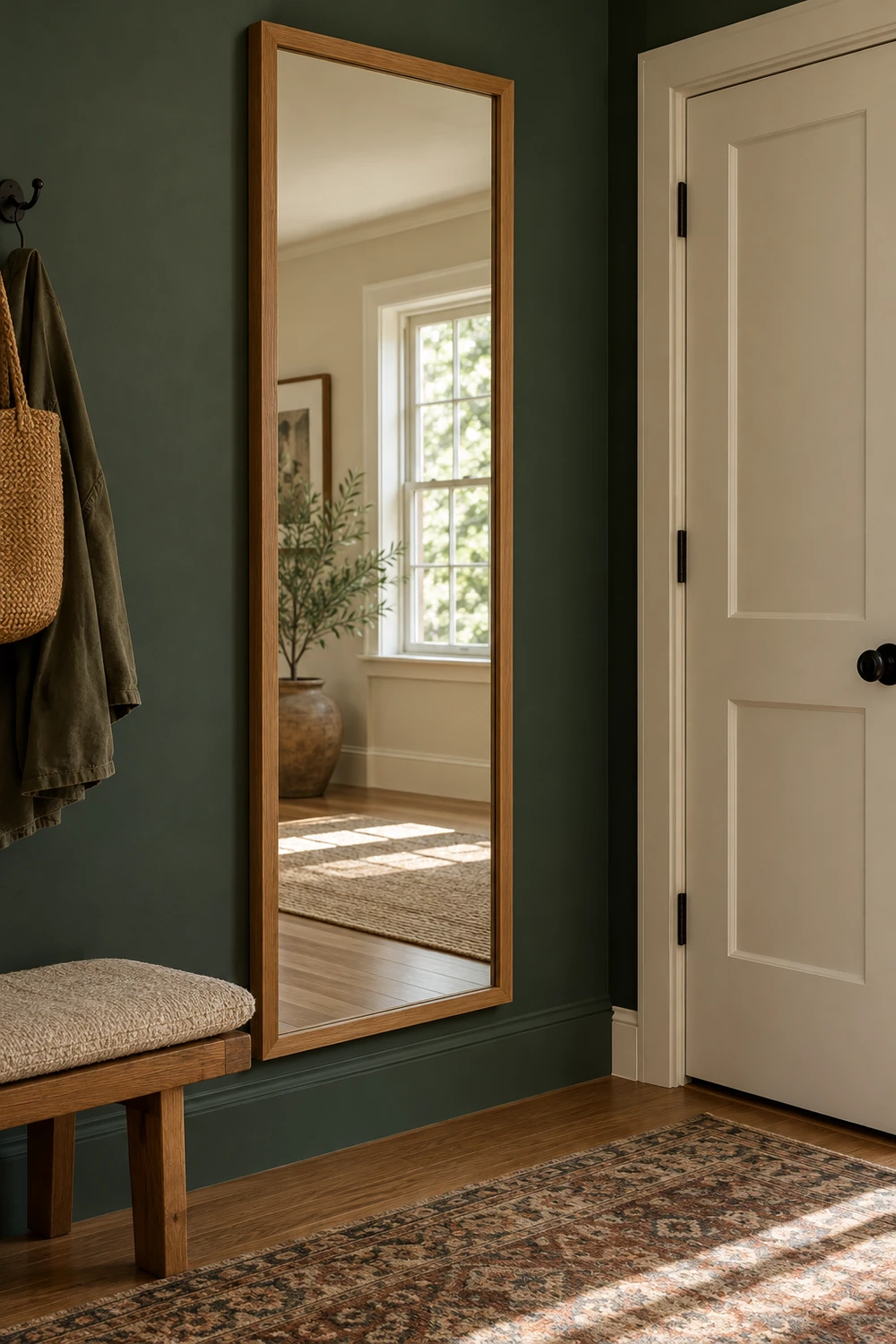
Measure the frame and check nearby door hardware. A mirror may look flat but still project enough to conflict with a swinging handle. Keep its edges out of the normal path of bags and coats.
Avoid claiming that a mirror will automatically make every entrance brighter or larger. Its effect depends on the reflection and the room. If lighting is the real problem, use entryway lighting ideas to plan that separately. The wall arrangement should support the mirror’s practical role rather than asking it to solve an unrelated lighting issue.
Make hooks part of a deliberate arrangement
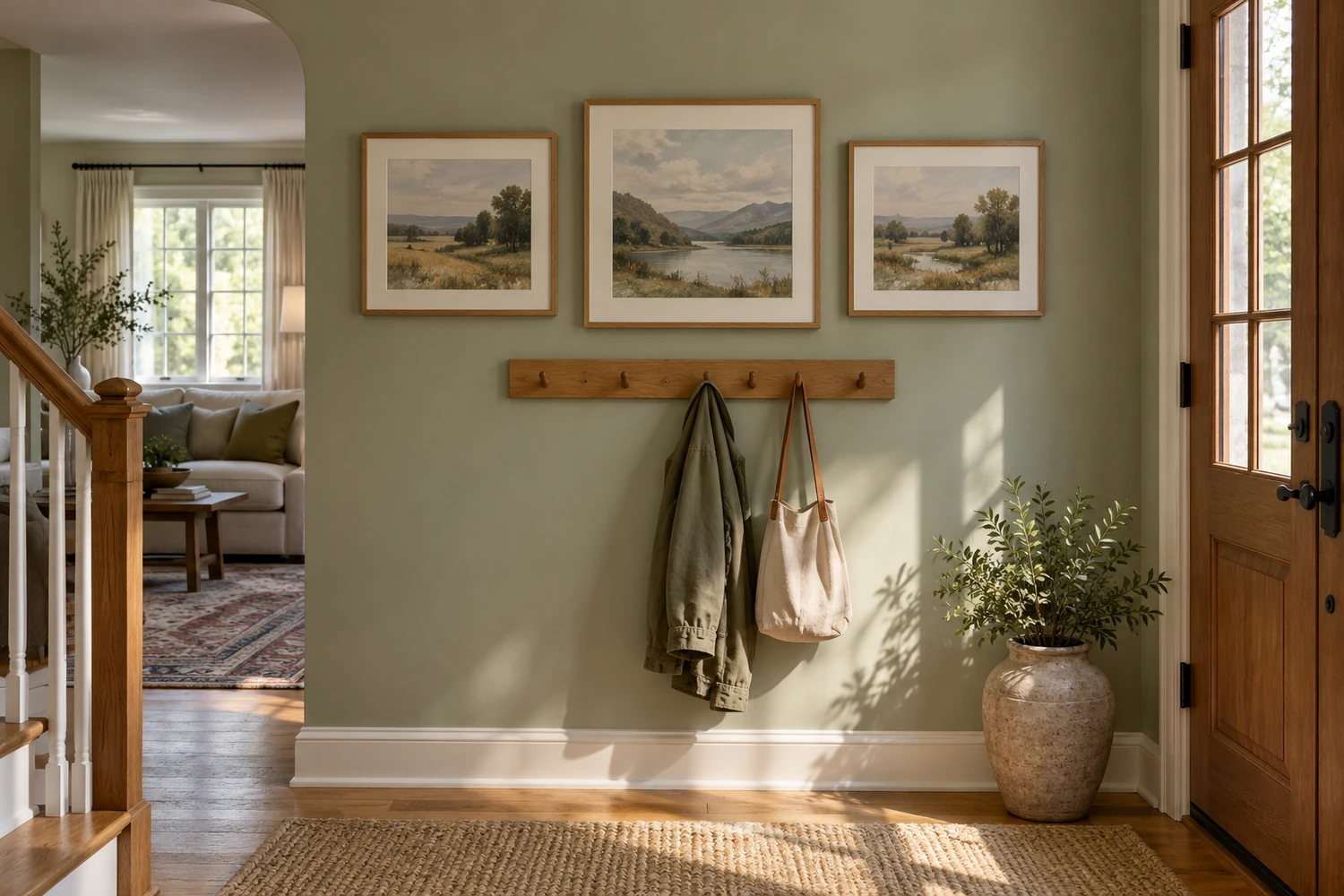
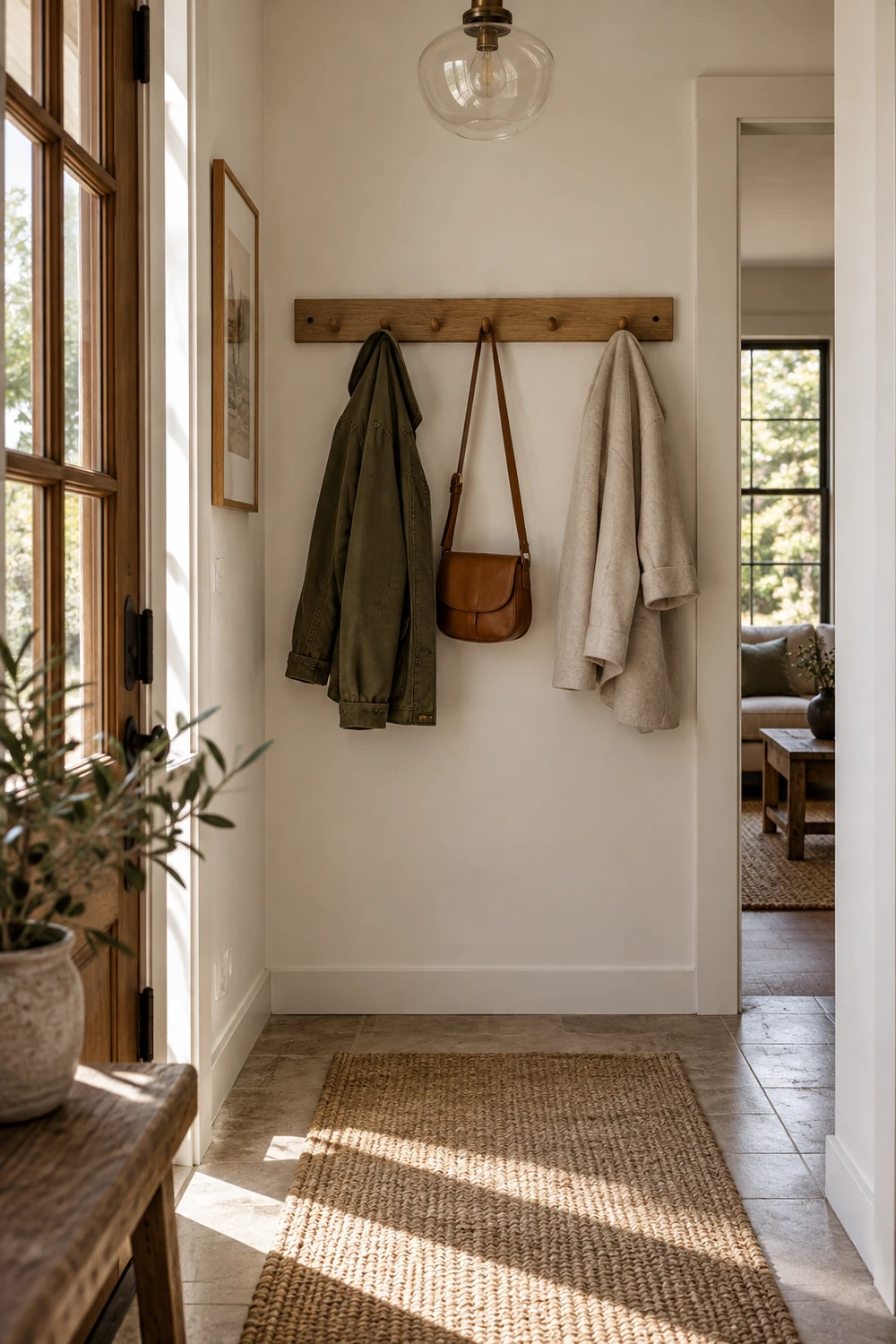
A hook rail can be useful wall decor when the daily items have enough room to hang comfortably. The pictured rail holds a limited group of outerwear and a bag, leaving the wall understandable instead of buried beneath several layers.
Choose hooks and mounting hardware for the wall and the intended load, following the product instructions. Decide how many everyday items the rail should hold and give overflow another home. Decorative spacing is not useful if all the coats collect on one hook.
Consider the full hanging length and projection of bags and jackets. Keep them clear of the door, seating and walking route. A useful hook area can feel warm and lived-in without becoming a permanent display of every coat the household owns.
Keep picture ledges shallow and lightly loaded
A shallow ledge can hold a small changing arrangement without a separate wall fixing for every lightweight frame. The blue-wall example uses two modest pieces, with enough open space that their outlines remain clear.
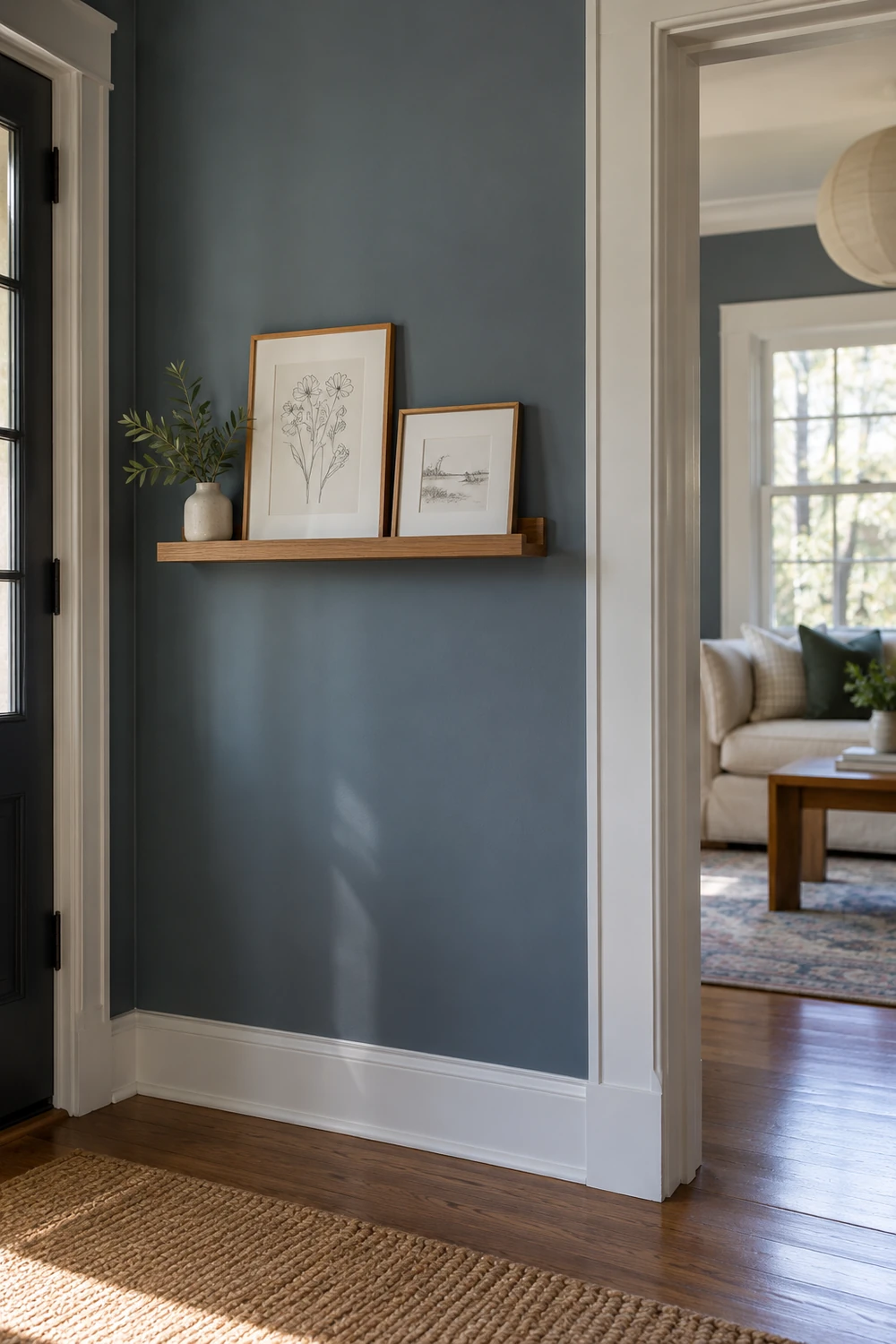
Check the ledge’s support, load rating and retaining edge. Follow its installation instructions and use only objects appropriate to the system. Do not assume a large mirror or heavy frame belongs on it because its bottom edge fits.
View the ledge from the side. Its depth and the objects on it should remain out of the route through the entrance. If you frequently brush past that wall, flat artwork may be a better choice. The benefit of a ledge is easy variation, not permission to build a deep collection above a busy passage.
Give keys and incoming mail a small destination
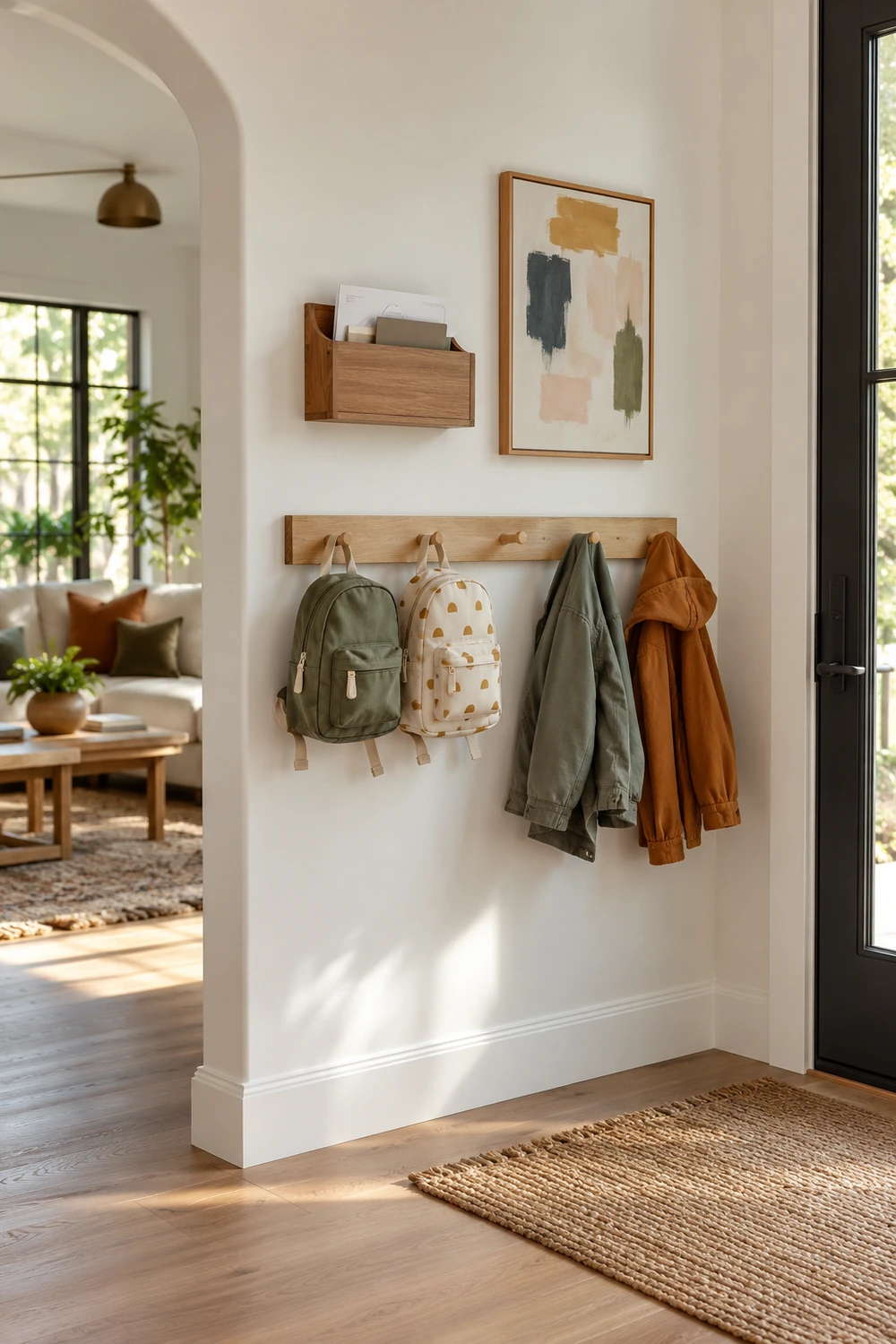
A compact wall organizer can create a landing place where there is no room for another table. The pictured wooden piece combines hooks for keys with a shallow pocket for a limited amount of mail.
Place it where the household naturally stops, while preserving access to the door and controls. Check that its projection does not catch a sleeve or bag. Keep its contents specific: daily keys and current incoming items, rather than an expanding archive.
Empty the mail section regularly and move documents to their next destination. If a console already provides this function, decide which location works better rather than maintaining two competing drop zones. For the surface itself, see console table decor ideas; this article keeps the focus on the wall.

Use removable mounting only for suitable lightweight pieces
A lightweight canvas can offer a practical wall accent when permanent fixings are unsuitable. The close view shows a removable mounting approach, but suitability depends on the exact product, wall finish and artwork.
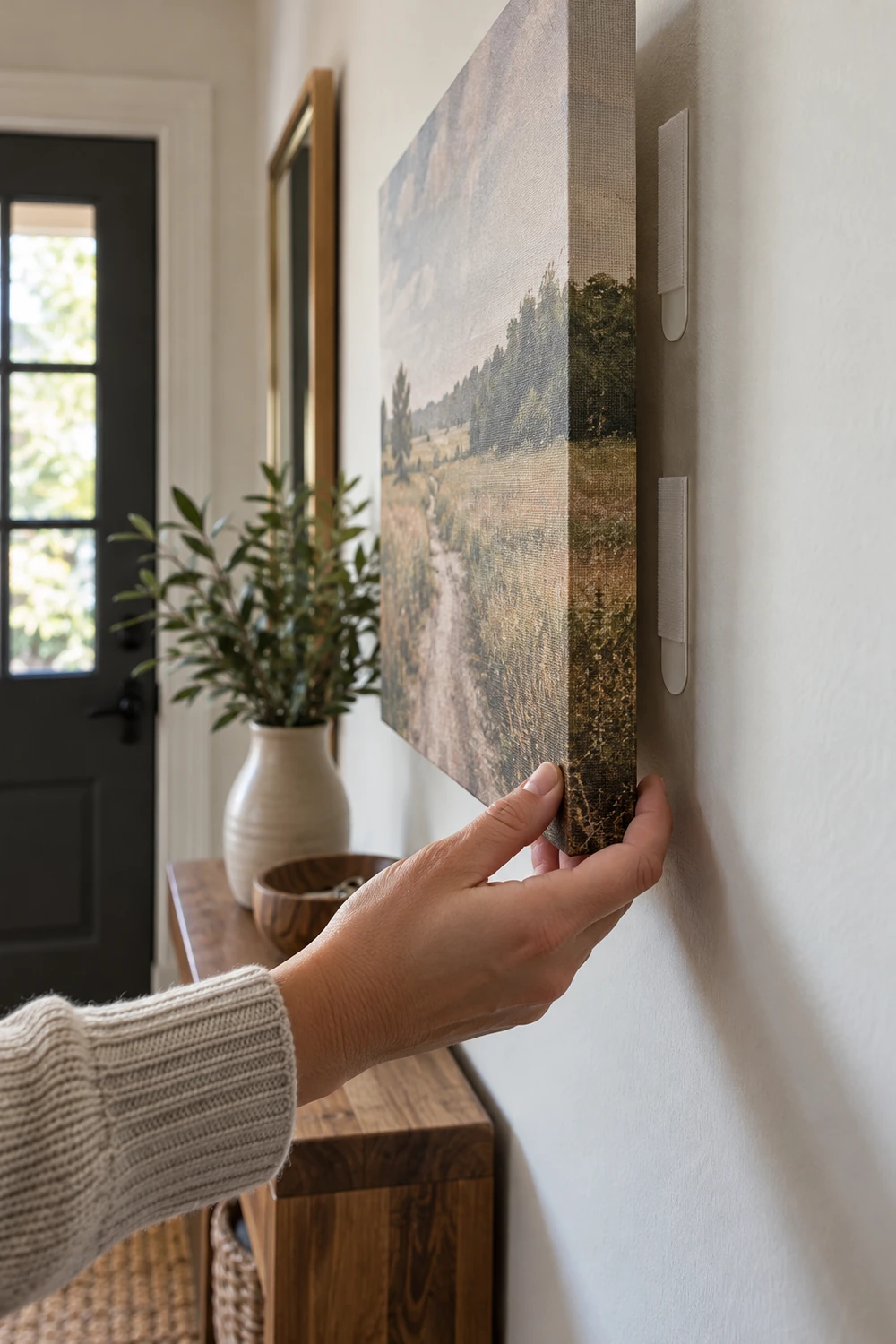
Read the mounting instructions, including surface preparation, weight limits and removal directions. Do not assume every adhesive is appropriate for textured paint, wallpaper or a freshly finished surface. Rental-friendly does not mean suitable for every wall.
Keep the arrangement modest and easy to adjust. One lightweight picture can define the arrival view without requiring a large set of removable fixings. If the mounting product cannot support the intended item under its stated conditions, choose a different artwork or an approved installation method rather than adding more strips without guidance.
Add textile texture without filling the passage
A light wall hanging can introduce softness and color where several framed pictures would feel formal or busy. The woven example repeats warm tones while keeping the wall arrangement simple.

Check the hanging system and the textile’s full dimensions, including fringe and any projecting rod. Secure it according to the product requirements and keep loose edges away from door movement and snagging points.
Choose a textile that suits the location and can be maintained appropriately. A heavily trafficked wall may need a more durable, flatter piece than a quiet recess. Let the texture be the main feature; adding several small ornaments beside it can dilute its effect. You can connect it to the room through one repeated color without matching every rug, cushion and accessory.
Work around switches and thermostats
Existing controls should remain easy to see and use. The pictured arrangement places artwork around switches and a thermostat instead of concealing them behind frames or making them awkward to reach.
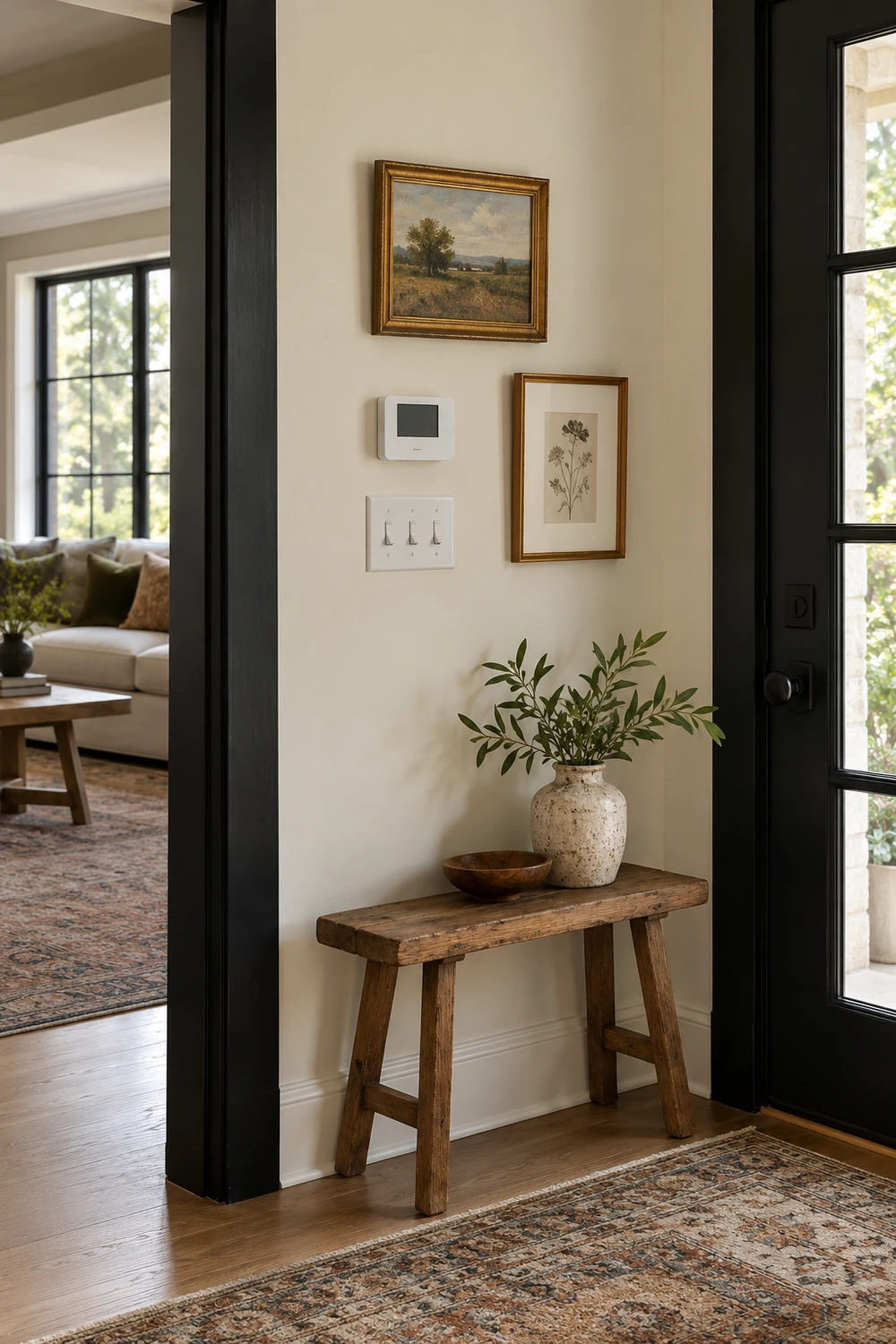
Mark these fixed elements on your paper plan before choosing frame sizes. Preserve any clearance or operating requirements given by the control manufacturer. Do not move or cover a control as a decorating shortcut.
An off-center art placement can look deliberate when it relates to the usable wall rather than the entire architectural section. Group the pictures within the available area and leave a clear visual boundary around the controls. The wall does not need perfect symmetry to feel settled; it needs a composition that respects the things already required to function there.
Connect materials through a few quiet details
Frame grain, a simple mat and a brass hook can bring several wall elements into the same visual conversation. The close view shows how texture and finish can provide connection without identical matching pieces.
Choose one or two relationships to repeat. Warm wood frames might relate to a door, while a small metal detail connects to existing hardware. You do not need every material represented in every object.
Look at the wall from a normal distance before adding more detail. Fine texture may be subtle, and that can be enough. Entryway wall decorating ideas often feel more natural when the arrangement has a clear focal point supported by quieter materials, instead of several equally prominent objects competing at the moment someone enters the home.

Check the wall through the open doorway
The first view inside may show only part of the wall. The doorway example makes that changing perspective visible: the arrangement needs to feel coherent before the visitor reaches its center.
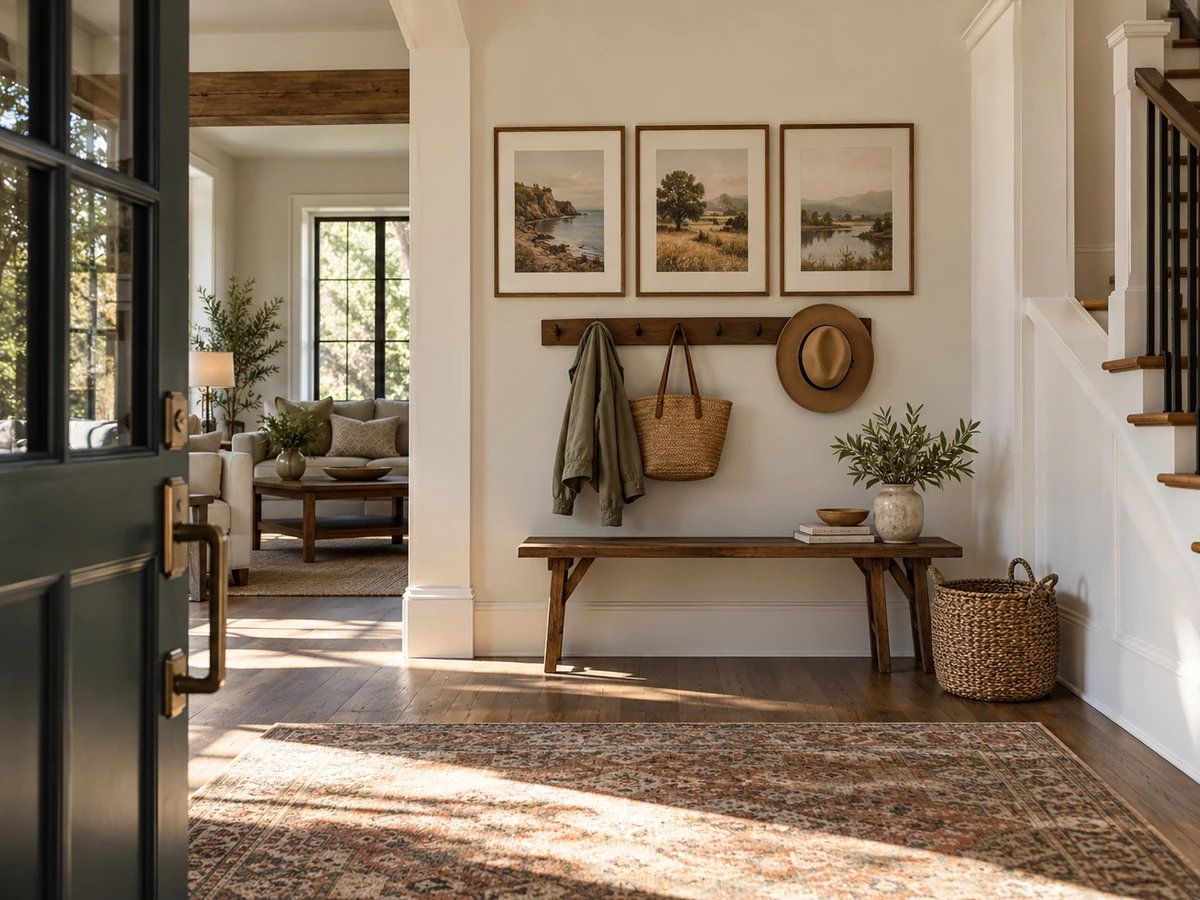
Open the door fully, then view the wall from outside and from the adjoining room. Notice whether a frame disappears awkwardly behind the door or a hook group intrudes into the passage. Adjust templates before making final fixings.
Keep floor decisions separate from the wall composition. A rug can connect the arrival area visually, but its fit and door clearance need their own assessment. Use entryway rug ideas for that task. Together, the floor and wall can feel related without requiring the same pattern or a complete room makeover.
Finish with a realistic family drop zone
A family entry wall can combine art with a modest everyday hanging area. The pictured arrangement gives bags, jackets and mail recognizable places while keeping the artwork readable above them.
Assign the useful storage first and choose art that fits comfortably around it. Check the setup with real bags and coats, since those objects occupy more space than empty hooks suggest. Keep occasional or seasonal overflow elsewhere.
Review the wall after a normal week. If papers collect beyond the organizer or one hook becomes overloaded, adjust the category rather than adding another decorative container automatically. The most useful ideas for entryway wall decor make arrival easier and give the home a welcoming first impression without obstructing the route into it.