
Household Storage / Linen Closets
Organizing a Linen Closet: A Practical Shelf-by-Shelf Guide
Organizing a linen closet works best when the shelves reflect how linens move through your home. Clean sheets need an obvious destination after laundry, towels need manageable stacks, and guest bedding needs a place where it stays together between visits. Matching baskets can help, but the system begins with deciding what belongs on each shelf.

You can make a useful plan without replacing the shelving. Sort what you have, give everyday items the easiest positions and reserve awkward spaces for lightweight things you retrieve less often.
Take inventory before rearranging the shelves
Empty one shelf at a time if the whole closet is too much to tackle at once. Group sheets by bed size, towels by use and guest linens by the set you put out together. Keep uncertain items separate while you decide whether they still serve the household.

The mixed closet shown here is a starting concept for the later shelf reset. Its architecture stays the same; the proposed improvement comes from clearer groups and more practical placement.
Count usable sets rather than individual pieces. An unmatched pillowcase may still be useful, but it should not make you think a complete sheet set is available. Separate worn utility linens from guest or everyday bedding so they do not gradually become mixed back into the main stacks.
Assign shelves according to frequency and reach
Put everyday linens where you can retrieve them comfortably. Less-used guest sets can sit above or below that zone, while lightweight seasonal reserves can occupy a less convenient upper shelf. Avoid assigning shelves solely by how symmetrical the arrangement looks.
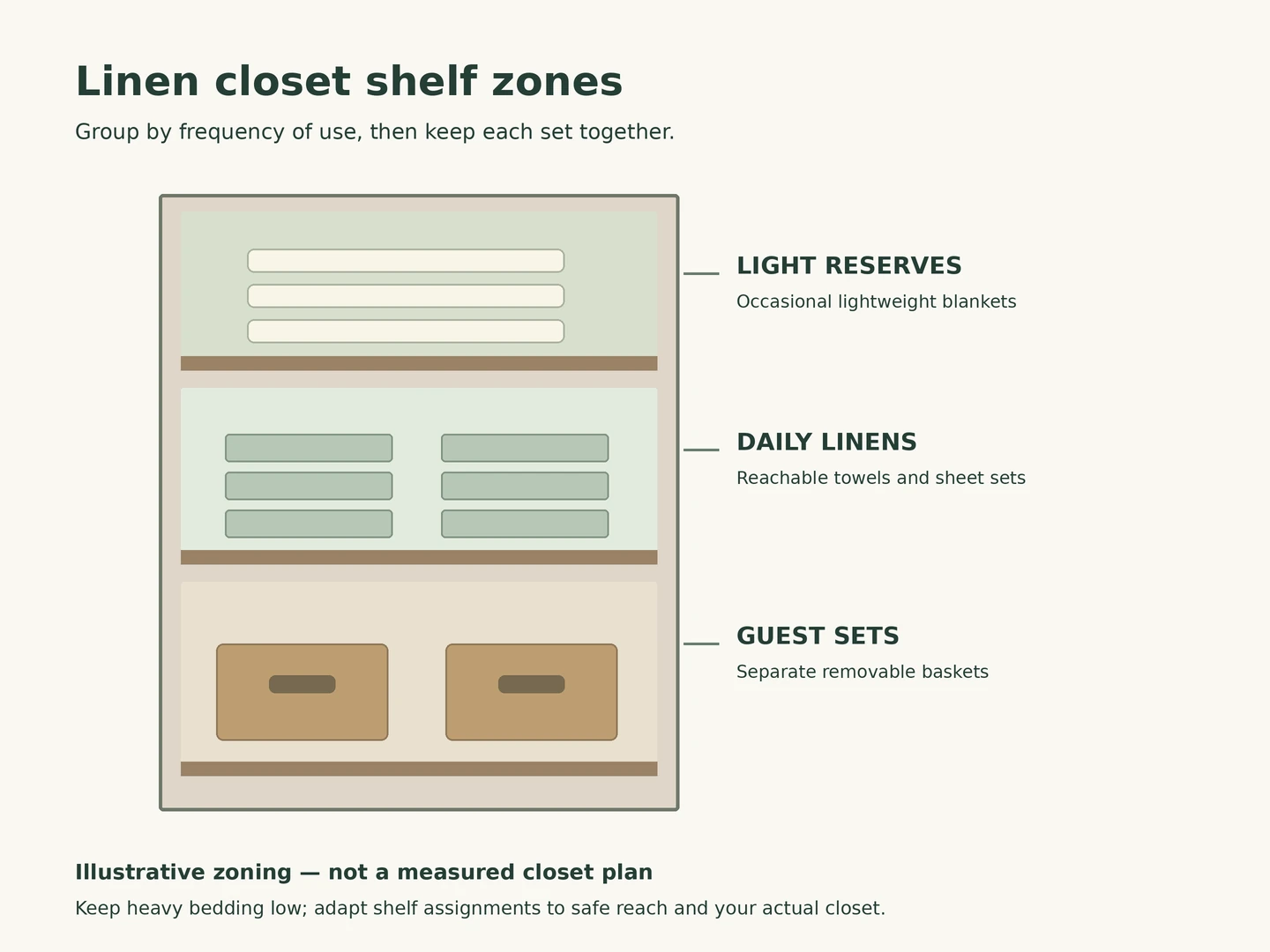
The diagram shows category relationships, not measured shelf heights. Adapt the zones to the people using the closet. A child helping with towels may need a different position than an adult collecting bedding.
Leave space above each stack for your hand. If you must drag a pile sideways to free the top item, reduce the stack or move it to a more suitable shelf. A practical layout makes both taking linens out and returning them after laundry feel straightforward, even when you are handling several items at once.
Keep complete sheet sets recognizable
Group each fitted sheet, top sheet and matching pillowcases together. Fold them into a manageable bundle or store the set in a container labeled by bed size. The aim is to collect a complete change of bedding without searching across several shelves.
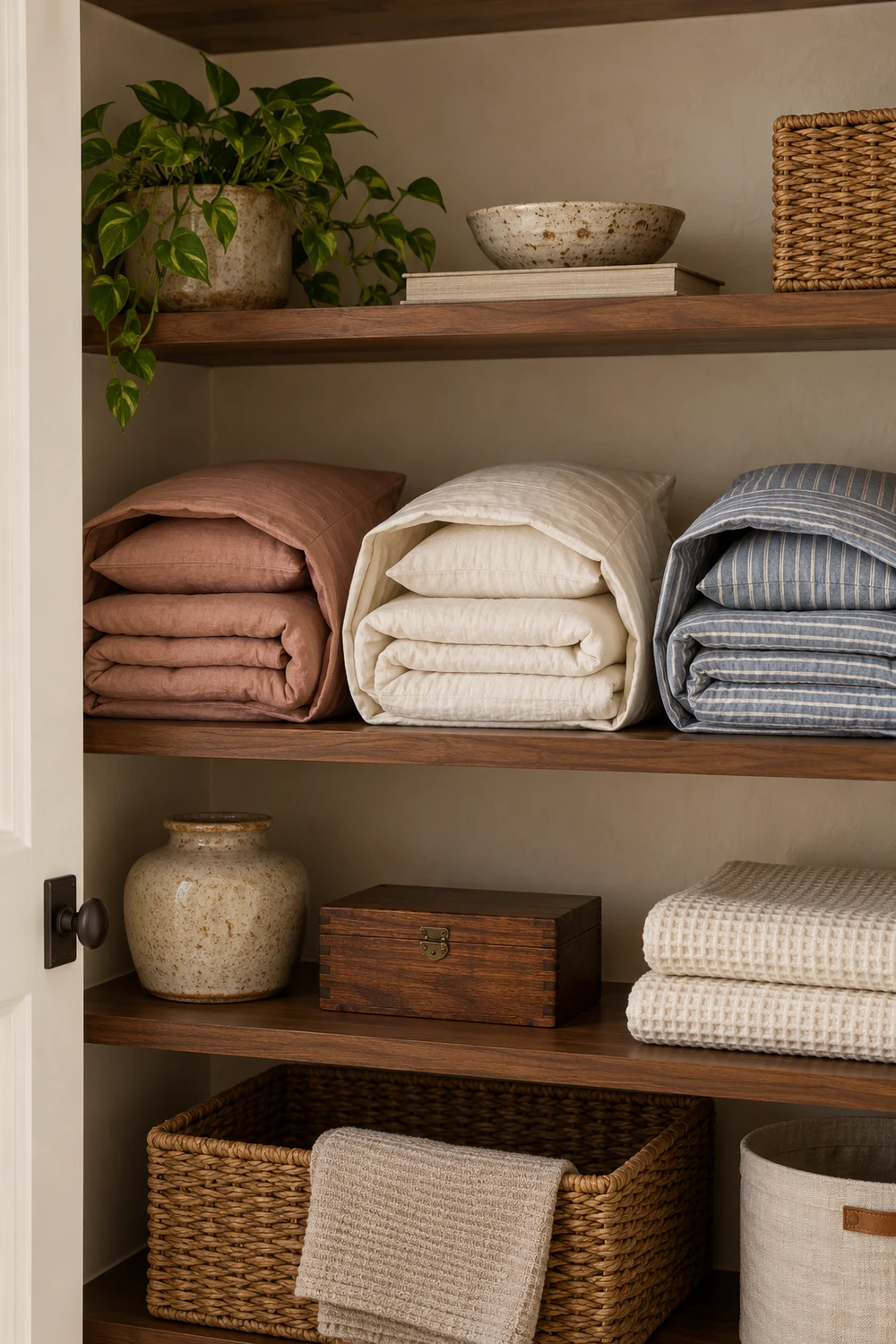
If different beds use similar colors, make size information easy to find. A discreet label on the shelf or bundle can prevent repeated unfolding. Keep specialty items, such as an extra-deep fitted sheet, with a clear note identifying the bed they suit.
Do not force every set into the same finished dimensions. Different fabrics and sizes fold differently. Consistent placement and clear identification matter more than producing identical stacks. Leave enough room for the full rotation of clean sets, including those currently on beds when you organize.
Use a pillowcase to contain a matching set
For compatible sets, one matching pillowcase can hold the folded sheets and remaining pillowcase. This keeps the pieces together without requiring another purchased organizer. The sage set shown here remains recognizable while its smaller parts stay contained.
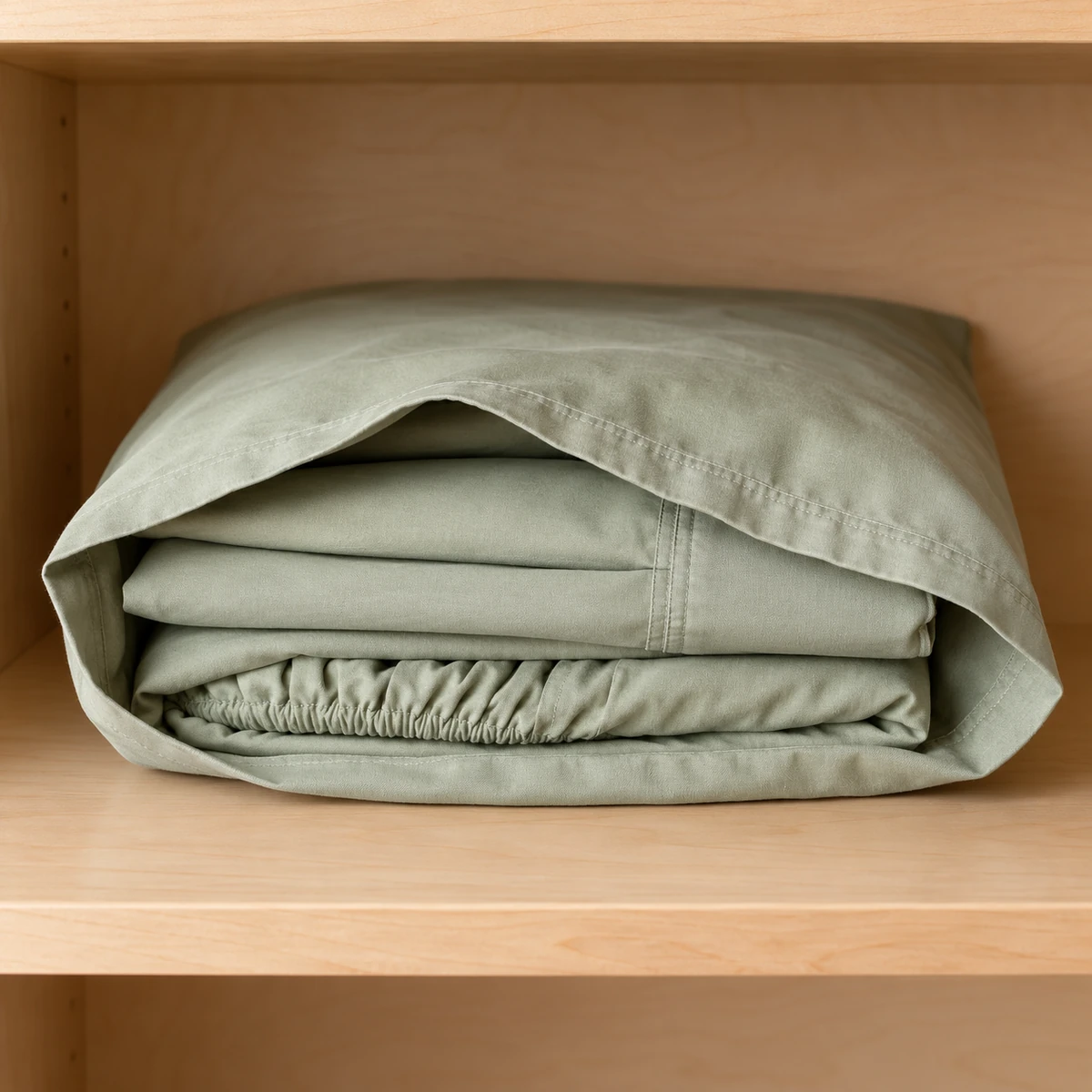
Fold the bundle loosely enough to slide into the case without straining seams. Tuck the open end neatly rather than packing several unrelated sets inside. If the contents make the bundle too bulky to lift comfortably, use a separate bin or another folding approach.
Let linens dry fully before putting them away and follow their care labels. A pillowcase is a grouping tool, not a substitute for appropriate storage conditions. Give the bundle a shelf position where it can be removed without disturbing the sets beside it.
Make towel stacks short enough to handle
Fold towels to suit the shelf depth and stack them in modest groups. The pictured stacks leave room to retrieve one towel without pulling over the rest. A smaller, stable pile is usually easier to maintain than a tall tower filling every inch above it.
Put frequently used sizes toward the front. If bath towels and hand towels share a shelf, give them separate footprints rather than layering one on top of the other. Keep washcloths together in a shallow container if they scatter easily.
This closet holds clean reserves. The bathroom still needs a separate arrangement for towels in use and towels drying between uses. See bathroom towel storage ideas for those room-specific decisions, rather than trying to move the entire linen supply beside the sink or shower.

Build a guest basket around an actual visit
A guest basket can hold the linens you normally prepare together: perhaps a bath towel, a hand towel and a washcloth. Keeping that group ready saves collecting items from several shelves when someone arrives.
Choose a basket you can lift when filled, and leave its handle accessible. Make separate guest bedding bundles if blankets and sheets would make one basket too heavy or awkward. A basket does not need to contain every possible comfort item to be useful.
Review the group after a visit. Return freshly laundered linens together and remove anything you no longer provide. If your household rarely hosts overnight guests, reserve a modest amount of space instead of maintaining an elaborate guest station that crowds the linens used every week.
Give deep shelves a visible front and a limited rear
Deep shelves can hide linens that are perfectly usable. Keep daily categories at the front and use the rear only for clearly identified, lightweight reserves. The pictured arrangement separates those roles without making the whole shelf a stack two piles deep.
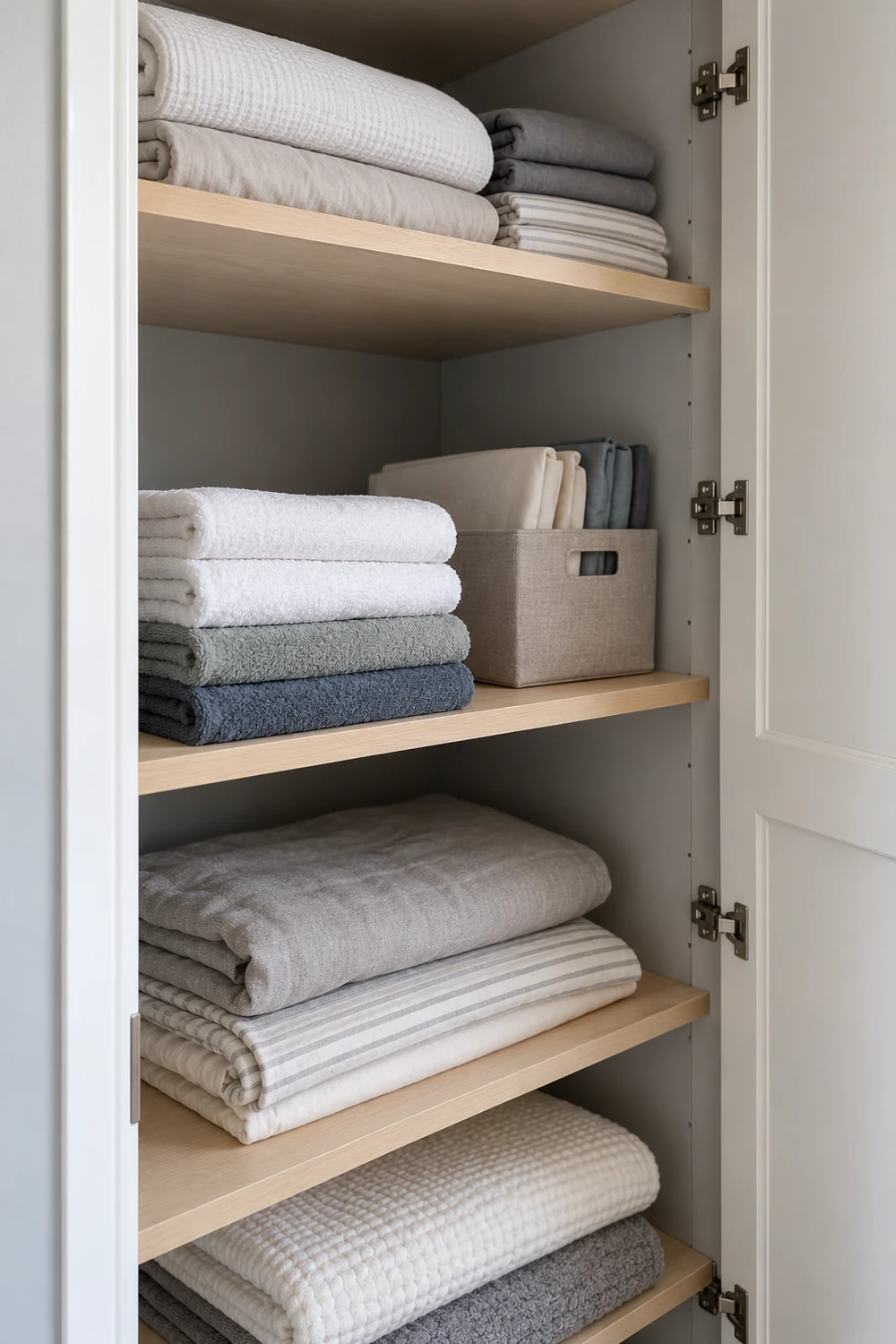
Use a removable container when it makes the rear group easier to retrieve. Label the front-facing side so you can identify the contents before moving anything. Avoid storing loose pillowcases behind a towel stack, where they are likely to be forgotten.
Do a retrieval test before finishing: take the rear container out and return it. If the front category must be completely dismantled, reduce what is stored behind it. The extra depth is useful only when you can reach its contents without turning a quick linen change into another sorting project.
Keep narrow closets easy to reach into
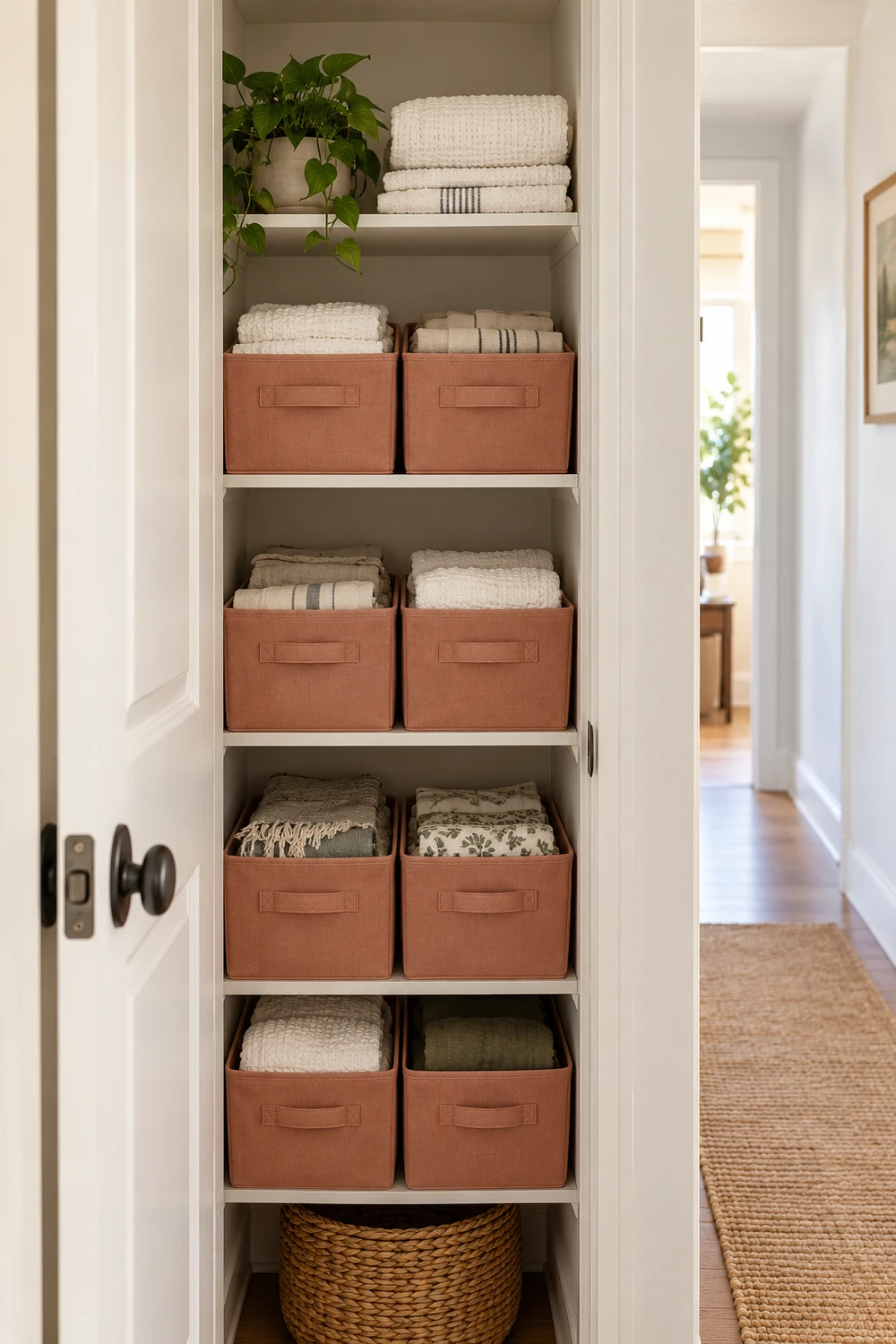
Small linen closet organization ideas should preserve retrieval space rather than fill every gap with another container. The narrow closet pictured uses bins sized to the shelf opening, with room to grasp and remove them.
Measure the narrowest usable opening, including the effect of hinges and door trim. A basket may fit on the shelf but fail to pass comfortably through the doorway. Test one container before buying a full matching set.
Choose fewer, broader categories when tiny compartments become difficult to manage. For example, one bin for guest pillowcases may work better than several narrow containers for different colors. Leave the front edge clear enough to read labels and lift the bin. A small closet feels more useful when every stored group can come out without scraping neighboring items.
Save upper shelves for lightweight blankets
Upper shelves suit light, less-frequently used blankets when they can be stored and retrieved safely. Fold them into stable bundles rather than placing a heavy, loose pile above the everyday linen zone.

Keep the front edge tidy so a blanket does not trail down into the shelf below. Avoid storing heavy baskets overhead simply because the upper shelf is empty. Follow the shelving system’s capacity information and use suitable access equipment when a shelf is beyond comfortable reach.
Rotate seasonal blankets when household needs change. You do not need winter and summer options equally accessible all year. Moving a light seasonal group forward at the right time is easier than permanently crowding daily sheets with every blanket the household owns.
Label destinations rather than individual folds
Simple shelf labels such as “Towels” and “Sheets” tell everyone where clean laundry belongs. They are especially useful in a shared household, where one person’s intuitive arrangement may not be obvious to someone else.
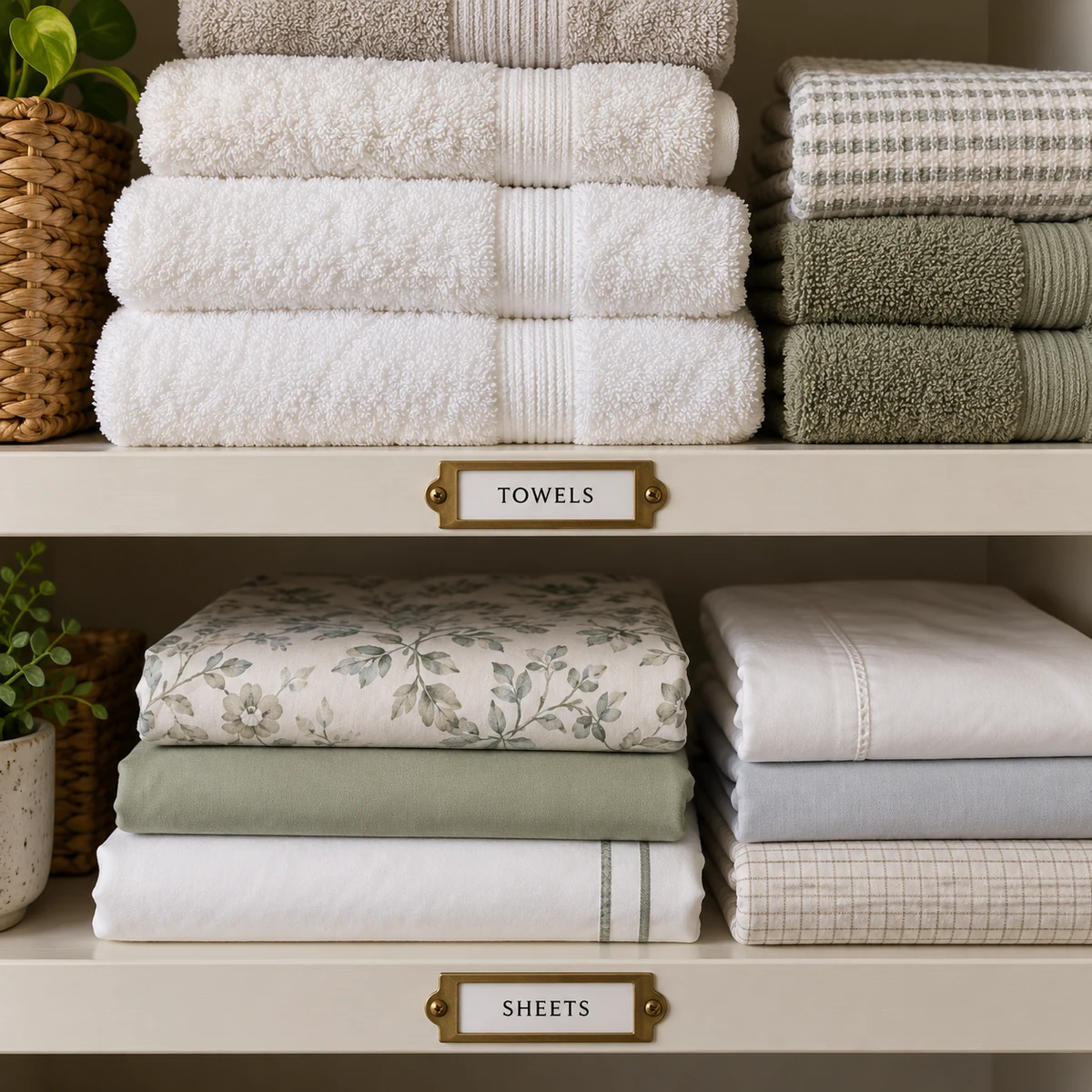
Place labels where the contents will not hide them. Use names people already use, including bed sizes or room names where helpful. Avoid decorative wording that makes a basic category harder to understand.
Linen closet organizing should survive a busy laundry day. A label can remain useful even when the stack is not perfectly folded. If a category changes, update the label promptly rather than leaving an old destination in place. Clear categories reduce the need for one person to supervise every return to the closet and make it easier to spot when a shelf is getting overfilled.
Contain bulky bedding without disguising what it is
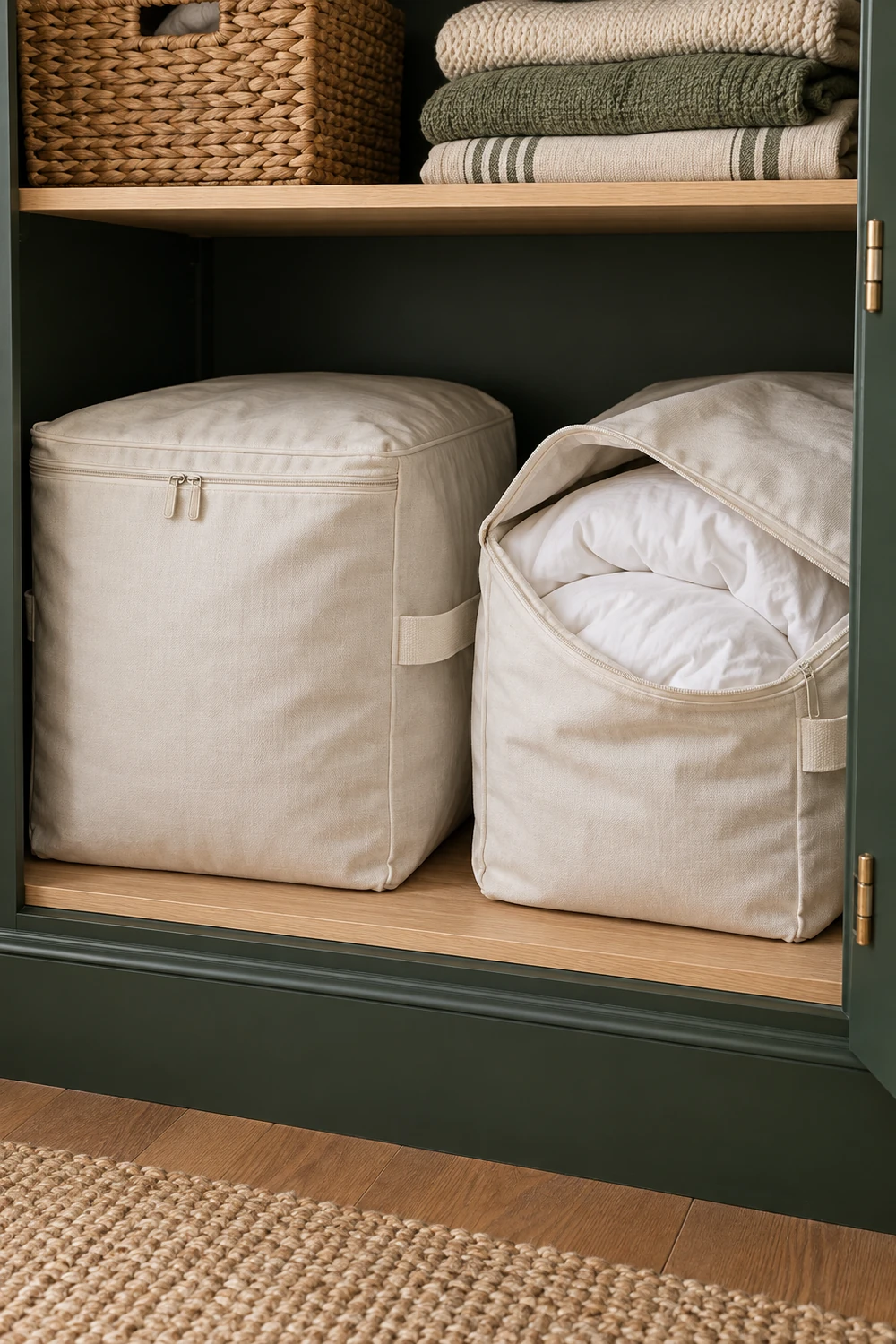
Fabric storage bags can group bulky bedding and keep loose corners from spreading across a shelf. Choose a bag suited to the item and its care requirements, with a label identifying the contents and the bed they belong to.
Do not pack bedding away while damp or assume a bag solves an unsuitable closet environment. Follow the bedding and storage product instructions. If compression is inappropriate for the filling, choose a roomier container instead.
Check that the filled bag can be lifted comfortably and that it does not block access to neighboring categories. Large bags often become difficult to handle when they combine several unrelated pieces. One clear bedding group per bag is easier to retrieve and return than a mystery bundle that must be emptied to find a single blanket.
Test the proposed shelf reset with a real laundry load
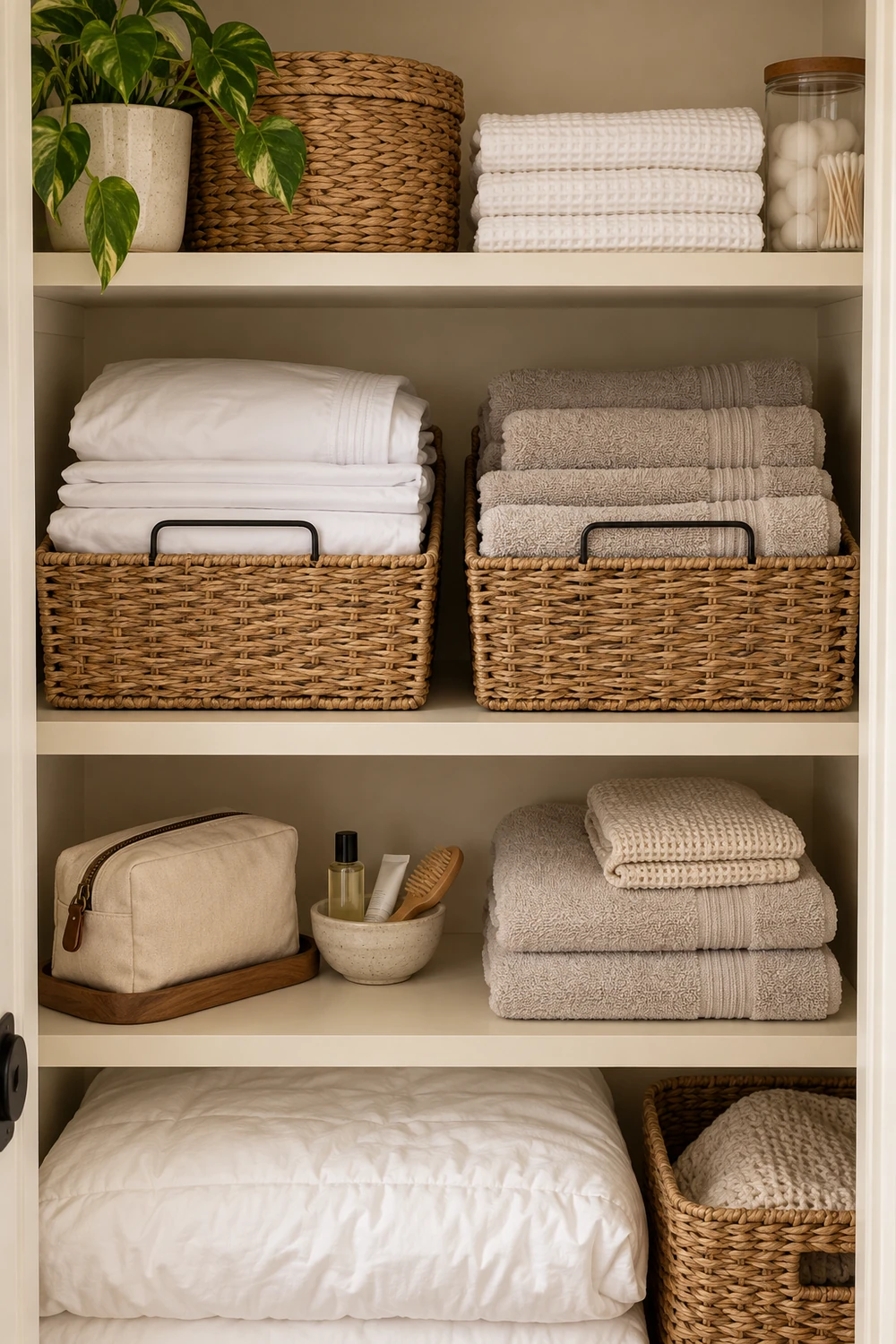
The revised closet keeps the same five-shelf structure while making categories easier to distinguish. Its usefulness comes from the relationship between the shelves: everyday linens are accessible, guest groups stay together and bulkier reserves have their own place.
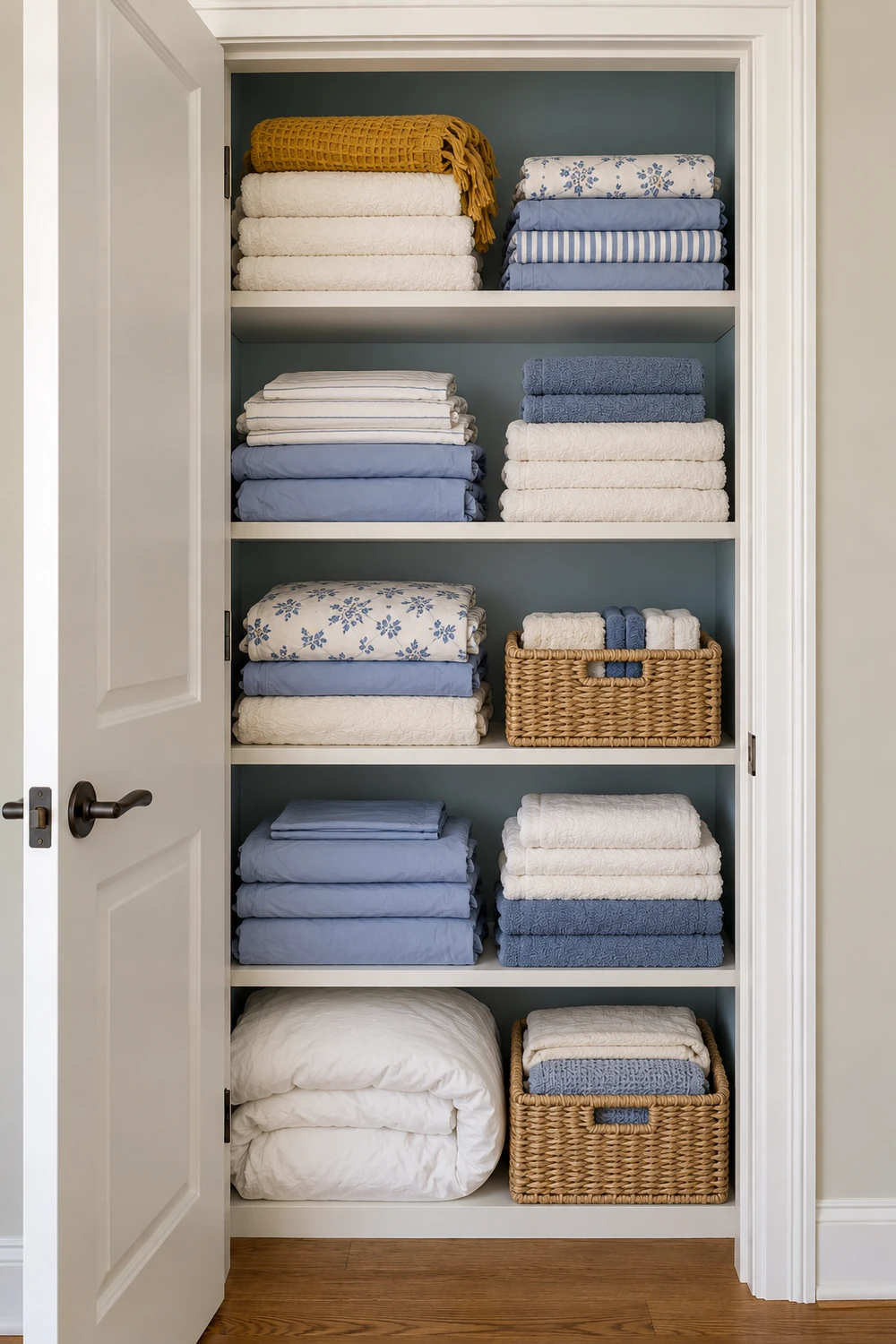
Before considering the job finished, put away a normal load of clean linens. Include the largest towel or sheet bundle you regularly handle. If the arrangement only works with some household linens missing, it needs more breathing room.
Move a category rather than compressing everything harder. The easiest system is one you can restore quickly after laundry, without rebuilding a display. Leave a little unassigned space so an extra guest towel or a change in bedding does not immediately overwhelm the shelf plan.
Keep the everyday shelf simple to reset
The reachable middle shelf should hold the linens you use most often, with enough separation to return each group easily. This is the part of the closet that needs to work on an ordinary weekday, not just after a major cleanout.
During a quick weekly check, straighten unstable stacks and return misplaced pieces. If towels repeatedly land on the sheet shelf, adjust the layout or labels instead of assuming people will memorize a complicated system.
Keep small bathroom tools in organized drawers and pipe-adjacent supplies in the under-sink cabinet. Limiting the linen closet to its intended household categories gives clean sheets, towels and bedding enough room to remain visible and ready for use.

